
Singapore MRT & Transport Guide: Getting Around Like a Local
How to use the MRT, buses, SimplyGo and the Tourist Pass: fares, the airport run, Sentosa, etiquette and the best apps, all in one place.
| Network | 6 MRT lines, plus LRT and extensive buses |
|---|---|
| Best payment | SimplyGo: tap a contactless card or phone |
| Typical fare | About S$1.19 to S$2.50, rarely over S$3 |
| Operating hours | About 5:30am to midnight daily |
| Tourist Pass | 1/2/3-day approx S$17/24/29, unlimited rides |
| Airport to city | MRT via Tanah MerahMap, about S$2, 30 to 45 min |
| Signage | All in English; step-free and air-conditioned |
| Handy apps | Google Maps, Citymapper, MyTransport.SG |
1. The big picture: getting around Singapore
2. The MRT network: all six lines
3. How to pay: what to tap with
4. Fares and how to save
5. The Singapore Tourist Pass: is it worth it?
6. From Changi Airport to the city
7. Buses, taxis and Grab
8. Getting to Sentosa
9. Popular routes and journey times
10. Operating hours and rush hour
11. MRT etiquette and the rules
12. Accessibility, families and luggage
13. The best apps for getting around
14. Beyond the island: Johor Bahru and ferries
15. Common mistakes to avoid
16. Summary and what’s next
Getting around Singapore is one of the easiest parts of any trip here. The best way to travel is the MRT combined with SimplyGo: just tap a contactless Visa, Mastercard or Amex card, or your phone, at the gate, and the correct distance-based fare (usually S$1.19 to S$2.50) is charged automatically, with no ticket, top-up or deposit. The island is small, roughly 50km east to west, so most journeys take 20 to 40 minutes, every sign is in English, and stations are cool, clean and step-free. This guide covers the MRT lines, how to pay, fares and the Tourist Pass, getting from the airport, buses and Grab, SentosaMap, etiquette and the best apps. For everything else about your trip, start with our complete Singapore travel guide.
1. The big picture: getting around Singapore
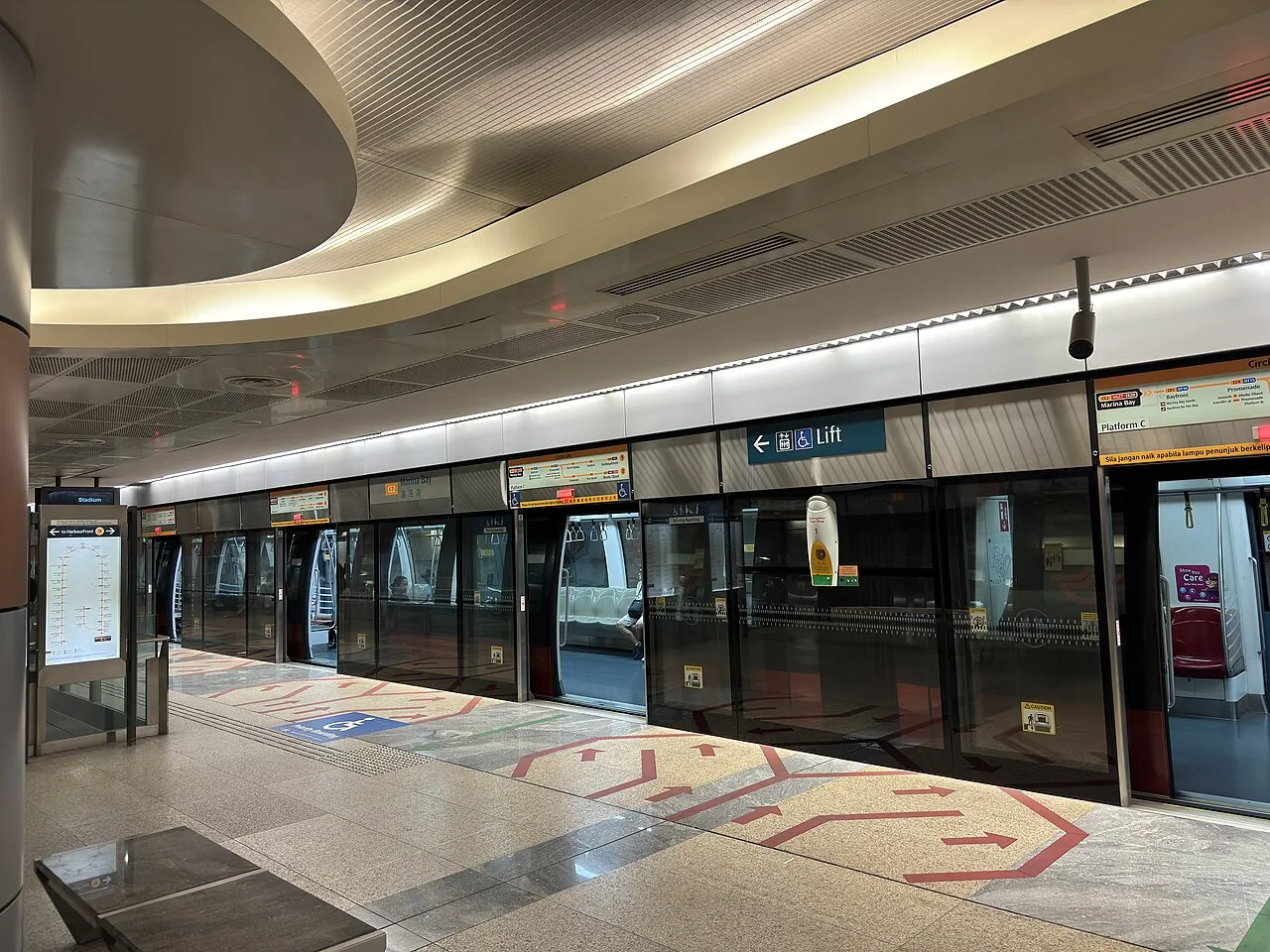
Singapore is small and its public transport is world-class, so the MRT (Mass Rapid Transit) rail network plus a contactless card will get you almost anywhere on the island in 20 to 40 minutes.
The country measures only about 50km east to west, and the rail and bus network is dense, punctual and spotlessly clean. Every station and sign is in English, everything is air-conditioned, and stations are fully step-free.
This is the SimplyGo era. You no longer buy tickets at all: you simply tap your own contactless bank card or phone at the gate and go. That single change has made Singapore one of the most visitor-friendly transport systems anywhere, and the rest of this guide shows you how to use it like a local. Where cash is still needed, and when a shop may lawfully refuse it, are covered in our guide to money in Singapore.
2. The MRT network: all six lines
Singapore’s MRT has six colour-coded lines that between them reach almost every attraction, and learning the colours is really all you need to navigate.
Each line is known by a colour and a two-letter code in its station numbers (for example NS for the red North-South Line). Big interchanges such as Dhoby GhautMap, Jurong EastMap, Outram Park and Marina Bay let you switch between lines without leaving the paid area.
| Line | Colour | Key stops | Best for |
|---|---|---|---|
| North-South (NSL) | Red | Marina Bay, Orchard, Dhoby Ghaut, WoodlandsMap | Orchard shopping, the north |
| East-West (EWL) | Green | Changi AirportMap branch, Tanah Merah, Bugis, Jurong East | The airport, city and west |
| North-East (NEL) | Purple | HarbourFrontMap, Chinatown, Little India, Dhoby Ghaut | Chinatown, gateway to Sentosa |
| Circle (CCL) | Orange | Dhoby Ghaut, Botanic Gardens, HarbourFront | Looping between the radial lines |
| Downtown (DTL) | Blue | Bugis, Chinatown, Bayfront | Gardens by the BayMap, Marina Bay SandsMap |
| Thomson-East Coast (TEL) | Brown | Woodlands, Orchard, Marina Bay, Gardens by the Bay | The newest line, north to the coast |
Bayfront (on the Downtown and Circle lines) is the stop for Gardens by the Bay and Marina Bay Sands, while HarbourFront (on the North-East and Circle lines) is your gateway to Sentosa. Jurong East, in the west, is a major interchange and the future hub of the Jurong Region Line.
3. How to pay: what to tap with
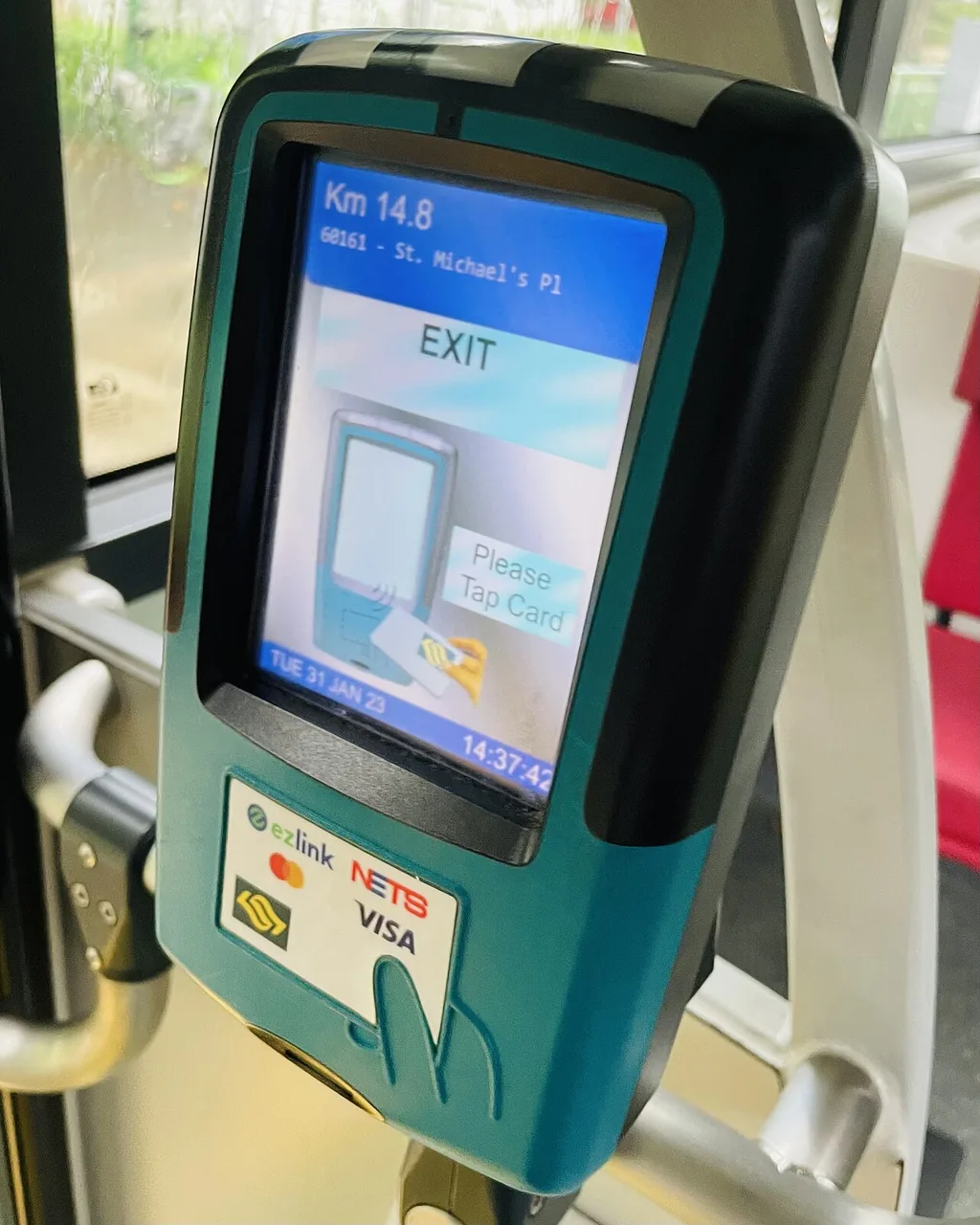
The simplest way to pay is SimplyGo: tap any contactless Visa, Mastercard or Amex card, or a phone wallet, straight at the gate, with no card to buy, no deposit and no top-up.
Paper Standard Tickets were discontinued in 2022, so you must use a contactless card, a stored-value card or a Tourist Pass. Here is how the four options compare.
| Option | How it works | Best for |
|---|---|---|
| SimplyGo (contactless) | Tap your own bank card or phone; the fare is auto-charged | Almost everyone |
| EZ-Link / NETS card | Physical stored-value card (about S$5 non-refundable plus credit), top up and tap | No contactless card, or want a souvenir |
| Singapore Tourist Pass | Unlimited rides for 1 to 3 days (see below) | Heavy riders, about 4+ trips a day |
| Cash | Buses only, exact fare with no change; never on the MRT | Emergencies only |
An EZ-Link card links to the SimplyGo app too, so you can check your balance and travel history on your phone.
4. Fares and how to save
MRT and bus fares are distance-based and cheap, usually S$1.19 to S$2.50 and rarely more than S$3 even right across the island, and transfers between them are free within one journey.
The rule that saves you money is the transfer, or tag-out, rule: after you tap out, tap in again on your next MRT or bus within about 45 minutes (as long as you are not repeating the same line), and the whole trip counts as one continuous, distance-based fare with no transfer penalty. You can usually chain several legs this way.
The MRT does not take cash at all. On buses you can pay the exact cash fare (no change is given), but tapping a contactless card is far easier and is what unlocks the free transfers. For more ways to keep costs down across your trip, see our Singapore on a budget guide.
5. The Singapore Tourist Pass: is it worth it?
The Singapore Tourist Pass gives unlimited MRT, LRT and basic bus rides for a flat price, and it only pays off if you ride a lot, roughly four or more trips a day.
It is a special stored-value card sold for 1, 2 or 3 days at about S$17, S$24 and S$29 respectively (some sellers also offer 4-day and 5-day versions around S$37 and S$45). You can buy it at Changi Airport, at SimplyGo Ticket Offices in selected MRT stations, or online.
Because ordinary contactless fares are so low, most visitors doing three or four short hops a day actually spend less just tapping a bank card. The pass wins on packed sightseeing days with lots of longer rides. When it expires, the card can be topped up and reused as a normal EZ-Link card.
Remember this is a transport pass, not an attractions pass: it saves on rides, not on entry tickets. For sightseeing passes that bundle attraction admission, see our Singapore attraction passes guide.
6. From Changi Airport to the city
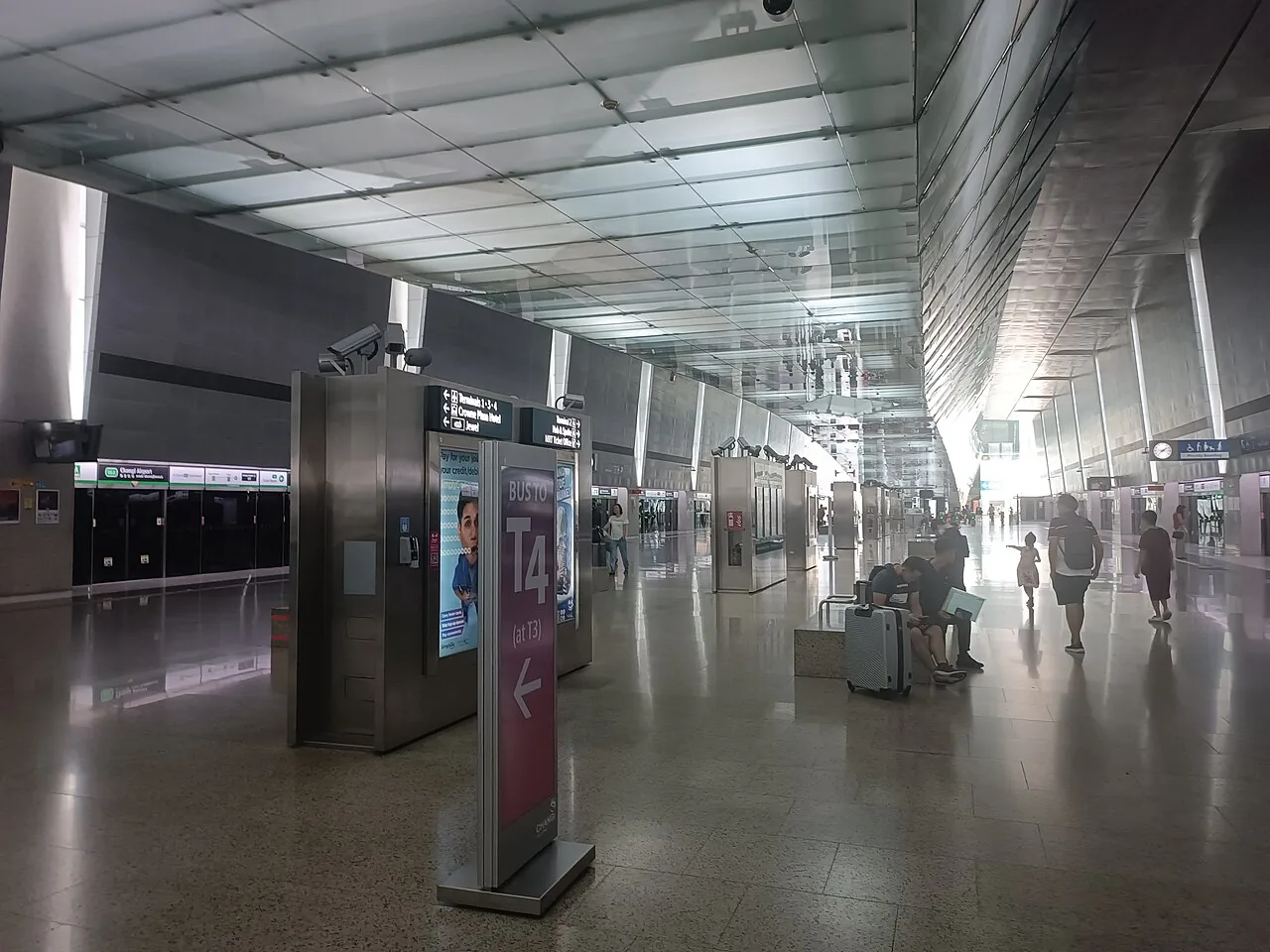
From Changi Airport, the cheapest way into the city is the MRT: ride two stops on the green line to Tanah Merah, change to a city-bound train, and you reach downtown in about 30 to 45 minutes for around S$2.
- Find the station. The Changi Airport MRT station sits below Terminals 2 and 3; from Terminal 1 or 4, take the free Skytrain or shuttle first.
- Ride the green line. Board the East-West (green) Line and travel two stops to Tanah Merah.
- Change at Tanah Merah. Cross the platform to a city-bound East-West Line train (towards Tuas Link or Jurong East).
- Ride into the city. Continue to City Hall, Bugis or Raffles Place, about 30 to 45 minutes in total for roughly S$2.
Prefer door to door? A taxi or Grab takes 20 to 30 minutes and costs about S$25 to S$40, with a late-night surcharge between midnight and 6am. Private transfers and hotel shuttles are also options. (The TEL extension to Changi Airport itself is a longer-term project, around 2040.)
Before you leave, the free indoor Rain VortexMap waterfall at Jewel, right beside Terminal 1, is worth a look. For terminals, lounges, layover plans and everything airport-specific, see our full Changi Airport guide.
7. Buses, taxis and Grab
Beyond the MRT, Singapore’s buses reach everywhere the trains do not and cost the same on a tap, while Grab and taxis cover late nights, luggage and out-of-the-way spots.
Buses use exactly the same contactless payment and distance-based fares as the MRT, and many routes are wonderfully scenic. Tap your card on boarding and again when you alight, and the free transfer between bus and train still applies.
Grab and ride-hailing
Grab is the region’s ride-hailing super-app: cashless, with the price metered up front, and ideal for late nights, heavy bags, groups, or places off the rail network such as Mandai and the zoo. Gojek, TADA and ComfortDelGro are alternatives.
Taxis
Street taxis are metered, honest and tip-free, with a few surcharges (peak hours, late night, the airport and the central business district). You can flag one down at a taxi stand or book through an app.
8. Getting to Sentosa
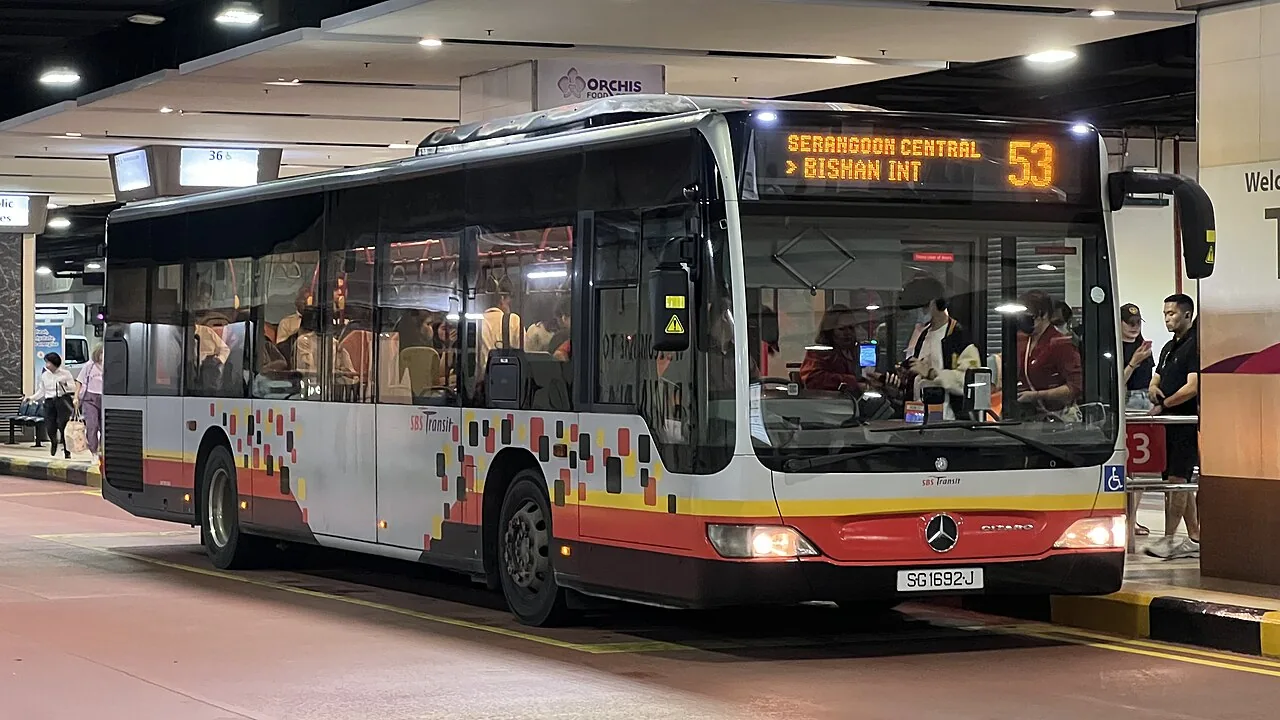
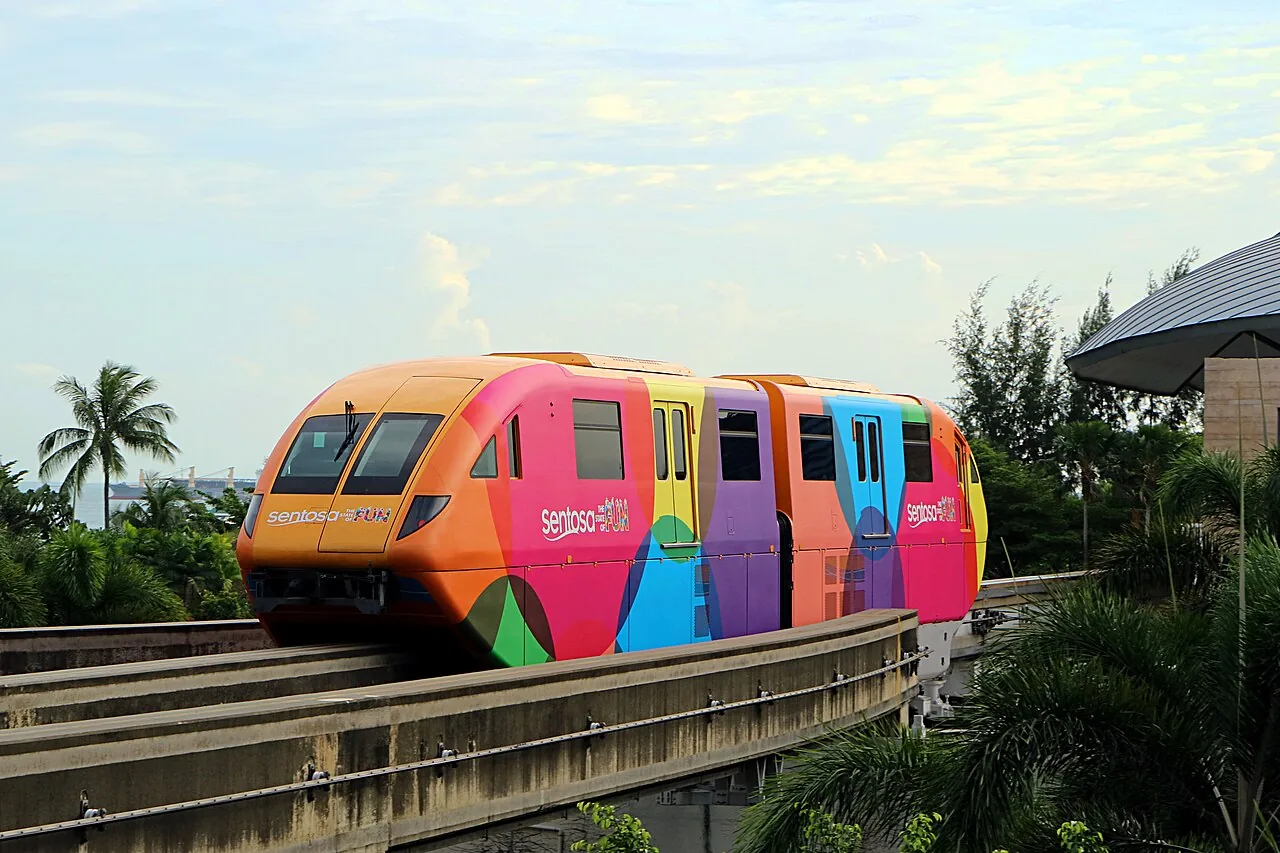
To reach Sentosa, take the MRT to HarbourFront, walk into VivoCityMap, and cross to the island by the Sentosa Express monorail, the free boardwalk, or the cable car.
From HarbourFront station (on the North-East and Circle lines), follow the signs into VivoCity mall. From its third floor you have three ways across to Sentosa.
| Option | Cost | Notes |
|---|---|---|
| Sentosa Express monorail | About S$4 | Quick and easy; not covered by the Tourist Pass |
| Sentosa Boardwalk | Free | A sheltered, scenic 10 to 15 minute walk |
| Cable car | Premium | The best views, at the highest price |
Once on the island, the Sentosa Express, internal buses and beach trams are all free. Just remember the Tourist Pass does not include the Sentosa Express, so budget for that leg separately. For what to see and do once you arrive, see our Sentosa Island guide.
9. Popular routes and journey times
Because the island is so compact, most trips between the big sights take well under 40 minutes by MRT.
These approximate times assume off-peak travel and include a typical transfer.
| Route | By MRT | Approx. fare |
|---|---|---|
| Changi Airport to Marina Bay | ~45 min | ~S$2 |
| Orchard to Marina Bay Sands | ~15 min | ~S$1.30 |
| Dhoby Ghaut to Gardens by the Bay | ~15 min | ~S$1.30 |
| City centre to HarbourFront (for Sentosa) | ~15 to 20 min | ~S$1.30 |
| Marina Bay to Jurong East | ~35 min | ~S$2.10 |
For a day-by-day plan that strings these journeys together efficiently, see our Singapore itinerary guide.
10. Operating hours and rush hour
The MRT runs from roughly 5:30am until around midnight every day, with trains every 2 to 5 minutes at peak and 5 to 7 minutes off-peak.
First trains leave terminal stations between about 5:25 and 5:35am, and last trains depart around 11:30pm to midnight. Aim to be on a platform well before then, as services end earlier at outer stations.
| When | Frequency | Notes |
|---|---|---|
| Peak (7 to 9am, 6 to 8pm) | Every 2 to 5 min | Crowded; avoid large luggage |
| Off-peak | Every 5 to 7 min | The most comfortable time to ride |
| Late night | Reduced service | Check the last-train times |
11. MRT etiquette and the rules
Singapore’s transport is famously orderly, and a few rules carry real fines, so it pays to know them before you tap in.
- No eating or drinking on trains or in paid station areas, not even water (a fine of up to S$500).
- No smoking (up to S$1,000) and no flammable goods on board.
- No durians, thanks to the smell.
- Stand on the left of escalators and walk on the right.
- Let passengers off first, then board and move to the centre of the carriage.
- Always tap out at the end of your ride, or you pay the maximum fare.
Priority seats near the doors are reserved for the elderly, pregnant and less mobile passengers, so offer yours if someone needs it.
12. Accessibility, families and luggage
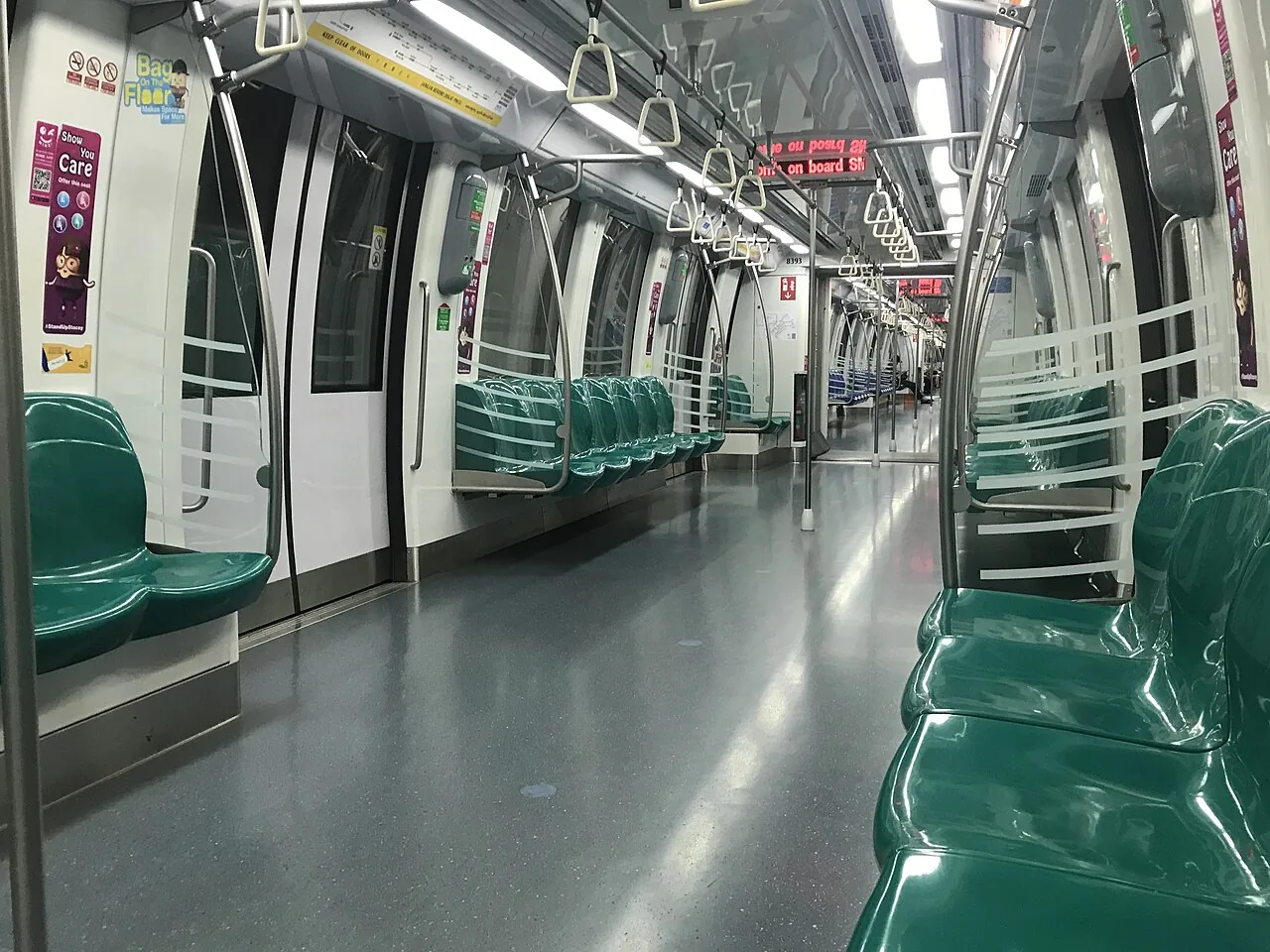
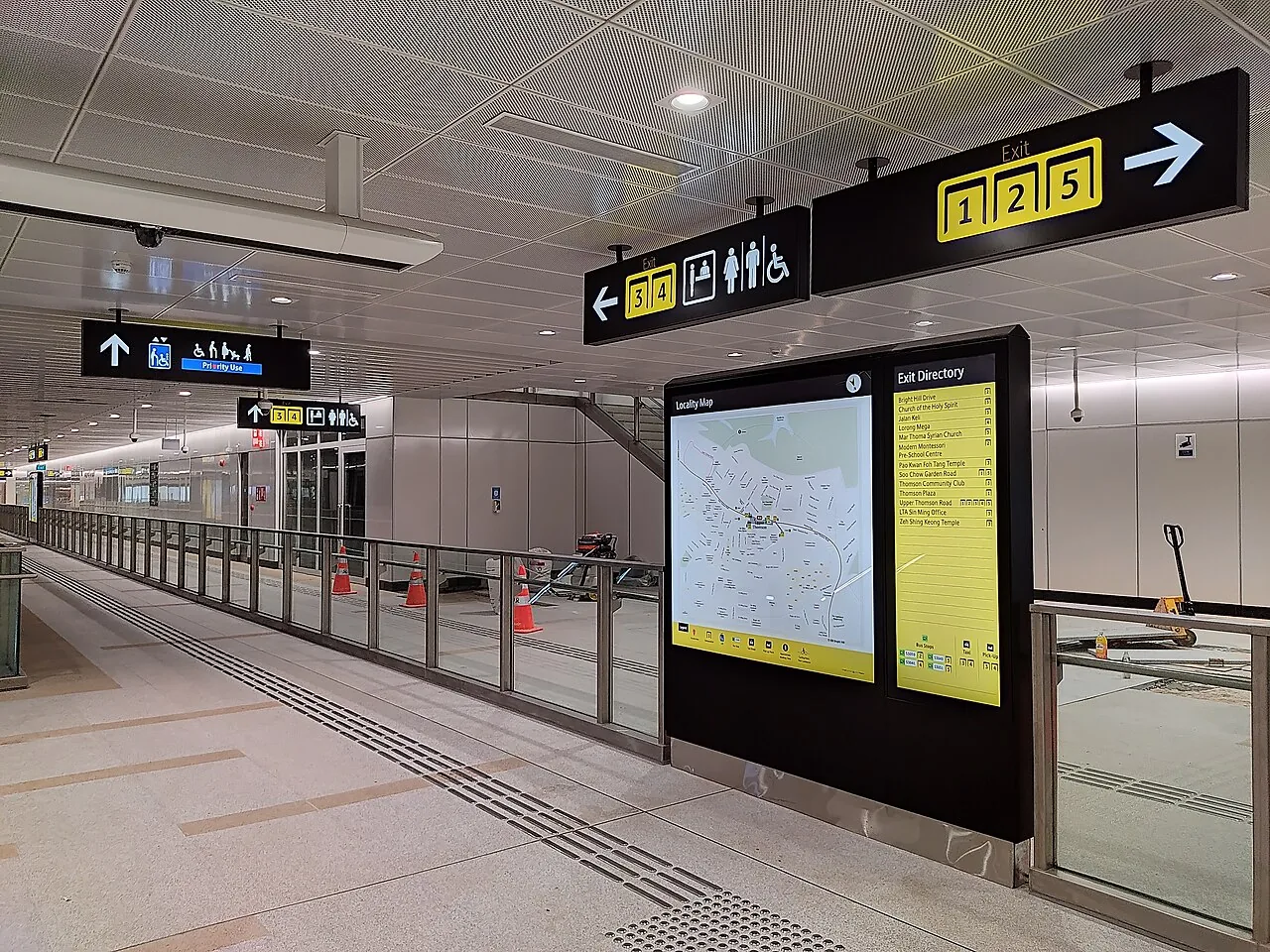
Every MRT station is step-free and family-friendly, with lifts, tactile paving, platform screen doors, wide fare gates, priority seats and nursing rooms.
Stations and trains are fully air-conditioned and have space for strollers and wheelchairs, while platform screen doors keep platforms safe for small children. Lifts connect the street, concourse and platform at every station, so you rarely need to carry a pushchair or heavy suitcase up stairs.
13. The best apps for getting around
The easiest way to plan any journey is a phone app: Google Maps and Citymapper both give accurate, real-time MRT and bus directions across Singapore.
- Google Maps for reliable door-to-door routing and live timings.
- Citymapper for transit-focused options and departure boards.
- MyTransport.SG, the official LTA app, for bus arrivals and service alerts.
- SimplyGo to check your fares and card balance.
- Grab for ride-hailing when the trains do not reach.
Every one of these needs mobile data, so it is worth getting connected the moment you land.
For the data options compared side by side, see our Singapore eSIM and SIM guide.
14. Beyond the island: Johor Bahru and ferries
Singapore is also a springboard to Malaysia and Indonesia, by causeway bus, the coming RTS Link rail, and ferries to nearby islands.
Johor Bahru, Malaysia
Today, buses cross the Woodlands Causeway (and the Tuas Second Link) to Johor Bahru. From around the end of 2026, the new RTS Link rail will connect Woodlands North to Bukit Chagar in JB in about five minutes, transforming the crossing, with passenger service expected in early 2027.
Ferries and islands
Ferries from HarbourFront and from Tanah Merah reach the Indonesian resort islands of Batam and Bintan. Closer to home, a bumboat from Changi Point takes you to rustic Pulau Ubin, and day-trip boats reach the quiet Southern Islands. To plan any of this around the weather, see our best time to visit guide.
15. Common mistakes to avoid
Most transport slip-ups are easy to avoid once you know them: forgetting to tap out, buying the wrong pass, and assuming the Tourist Pass covers Sentosa.
- Forgetting to tap out, which triggers the maximum fare. Tap out every time.
- Buying the Tourist Pass without doing the maths. For three or four short rides a day, plain contactless is usually cheaper.
- Eating or drinking on the train, an easy and avoidable fine.
- Expecting the Tourist Pass to cover the Sentosa Express. It does not.
- Missing the last train around midnight; check the times and keep Grab as a backup.
- Paying cash on a bus with no change given, when a tap is easier and unlocks the free transfer.
16. Summary and what’s next
Getting around Singapore comes down to one habit: tap a contactless card or phone at every gate, tap out at the end, and let the MRT do the rest.
| Before you ride | Why it matters |
|---|---|
| A contactless card or phone wallet ready (SimplyGo) | Tap and go, no ticket needed |
| Google Maps or Citymapper installed | Live door-to-door directions |
| Mobile data active (an eSIM) | Keeps the maps working |
| Know your last-train time | Trains stop around midnight |
| Remember to tap out | Avoids the maximum fare |
With transport sorted, plan the rest of your trip: find a base near a station in our where to stay guide, see the sights at Gardens by the Bay and Marina Bay Sands, eat well at the hawker centres, follow a ready-made itinerary, and check the best time to visit. It all ties back to our complete Singapore travel guide.
🎡Things to Do53
🍜Food6
🏨Where to Stay10
🚇Getting Around3
🧭Travel Tips20
Frequently asked questions
Plan the rest of your trip with our complete Singapore travel guide