
Singapore’s World War II Sites: Opening Hours, Monday Closures, Ticket Prices and How to Reach Each One
| The list | The heritage board trail names fifty sites, but many are working military land, a prison, or a single plaque beside a park path |
|---|---|
| Mondays | Changi Chapel, Bukit Chandu, the Former Ford Factory and the Battlebox all close on Mondays |
| Prices | Indoor museums are free for Singaporeans and charge visitors; the National Museum is the dearest of them |
| The Battlebox | Basic entry costs nothing, but you now have to reserve a slot on the official booking page |
| Fort Siloso | The fort, the Surrender Chambers and the Skywalk are all free, with guided walks on two Saturdays a month |
| Distances | Kranji sits at the northern edge and Changi at the eastern one, so they do not fit into the same day |
1. Fifty sites on the list, far fewer you can walk into
2. Four of the five indoor museums close on Mondays
3. Changi Chapel and Museum, at the eastern end
4. Johore Battery, where the British destroyed their own guns
5. The Former Ford Factory and the room where the surrender was signed
6. The Battlebox: free entry, but you have to book it
7. Reflections at Bukit Chandu and the Malay Regiment
8. Fort Siloso and the Surrender Chambers, free on Sentosa
9. The Skywalk, the free guided walks and the Friday night tour
10. Kranji War Cemetery and the wall of names
11. If a name in your family is at Kranji
12. Labrador Nature Reserve and its scattered batteries
13. The memorials in the city centre, all within a short walk
14. The Sook Ching screening site and the plaques around town
15. The National Museum, where the separate places join up
16. The Padang and the old City Hall steps
17. The Japanese Cemetery Park at Serangoon
18. Bukit Batok, Pasir Panjang and Alexandra Hospital
19. Changi Beach and Punggol Beach, both parks today
20. The sites you cannot enter, and why that helps
21. What visitors actually pay
22. Grouping the sites into half-days
23. Going with children, and what to bring
24. When to go, and what happens on 15 February
1. Fifty sites on the list, far fewer you can walk into
Of the fifty places on the heritage board trail, the ones with an exhibition you buy a ticket for are Changi Chapel and Museum, Reflections at Bukit Chandu, the Former Ford Factory, the Battlebox and the National Museum.
Search for wartime Singapore and the first thing you find is the heritage board booklet. It runs to fifty sites, grouped by part of the island, and it takes in landing beaches, airfields, the ridge where the last battle was fought, the beaches where the massacres happened and a row of buildings in the civic district. On paper it looks like weeks of visiting.
On the ground it works out differently. Much of the list is now an air base, a naval port or a prison that is still operating. Much of the rest is a plaque beside a park path, which is worth reading but takes five minutes. Splitting the list into places you stop at and places you stand in front of is what makes the planning work.
The list sorted by what you can do there
| Kind | Where | What to check first |
|---|---|---|
| Ticketed indoor exhibitions | Changi Chapel and Museum, Reflections at Bukit Chandu, Former Ford Factory, Battlebox, National Museum | Closing day and last admission |
| Free but with opening hours | Fort Siloso, Kranji War Cemetery, Japanese Cemetery Park | Go while it is light |
| Outdoors and always open | Johore Battery, Civilian War Memorial, Esplanade Park, Labrador, Kent Ridge, Changi Beach | Shade and weather |
| Closed to the public | Tengah, Seletar, Sembawang, Changi Prison, the Changi barracks | Leave them off the plan |
Why so little survives
Singapore is small and it was built over fast. Housing estates now stand where fighting took place, and the land the army used is still army land. There is one more reason the northwest is missing from every itinerary: the beaches where the invasion came ashore lie inside a live firing area, so nobody can walk them. That part of the story is told through the displays at Kranji and Bukit Chandu instead of on the ground where it happened.
If you want to widen the trip beyond this subject, things to do in Singapore sorts the rest of the island by interest.
2. Four of the five indoor museums close on Mondays
Changi Chapel and Museum, Reflections at Bukit Chandu, the Former Ford Factory and the Battlebox all shut on Mondays.
The day of the week matters more here than it does anywhere else in Singapore. Most attractions on the island open daily, which encourages people to plan without thinking about it, and this subject punishes that habit. Two of these museums are run by the heritage board, one by the National Archives and one by a cultural operator, and all four take Monday as their closing day.
There is a partial exception. Changi Chapel and Museum and Reflections at Bukit Chandu open when a public holiday falls on a Monday. Singapore has a good scatter of public holidays, so it is worth checking rather than assuming.
Opening hours across the sites
| Site | Open | Hours | Last admission |
|---|---|---|---|
| Changi Chapel and Museum | Tuesday to Sunday, open on public holidays | 09:30 to 17:30 | 17:00 |
| Reflections at Bukit Chandu | Tuesday to Sunday, open on public holidays | 09:30 to 17:00 | 16:30 |
| Former Ford Factory | Tuesday to Sunday, closed on the first day of Chinese New Year | 09:00 to 17:30 | 17:00 |
| Battlebox | Tuesday to Sunday, public holidays included | 10:00 to 18:00 | 17:00 |
| National Museum of Singapore | Daily | 10:00 to 19:00 | 18:30 |
| Fort Siloso | Daily | 09:00 to 18:00, exhibits from 10:00 | 17:30 |
| Japanese Cemetery Park | Daily | 07:00 to 19:00 | None |
| Kranji War Cemetery | Daily | Daylight hours | None |
What to do with a Monday
If Monday is the only day you have, put Fort Siloso in the morning and the city memorials in the afternoon. The fort opens daily, costs nothing and fills half a day on its own. Come back into town for the Civilian War Memorial and Esplanade Park, then finish at the National Museum, which also opens every day. That way you still see one exhibition. For wet weather alternatives across the city, see the rainy day guide.
3. Changi Chapel and Museum, at the eastern end
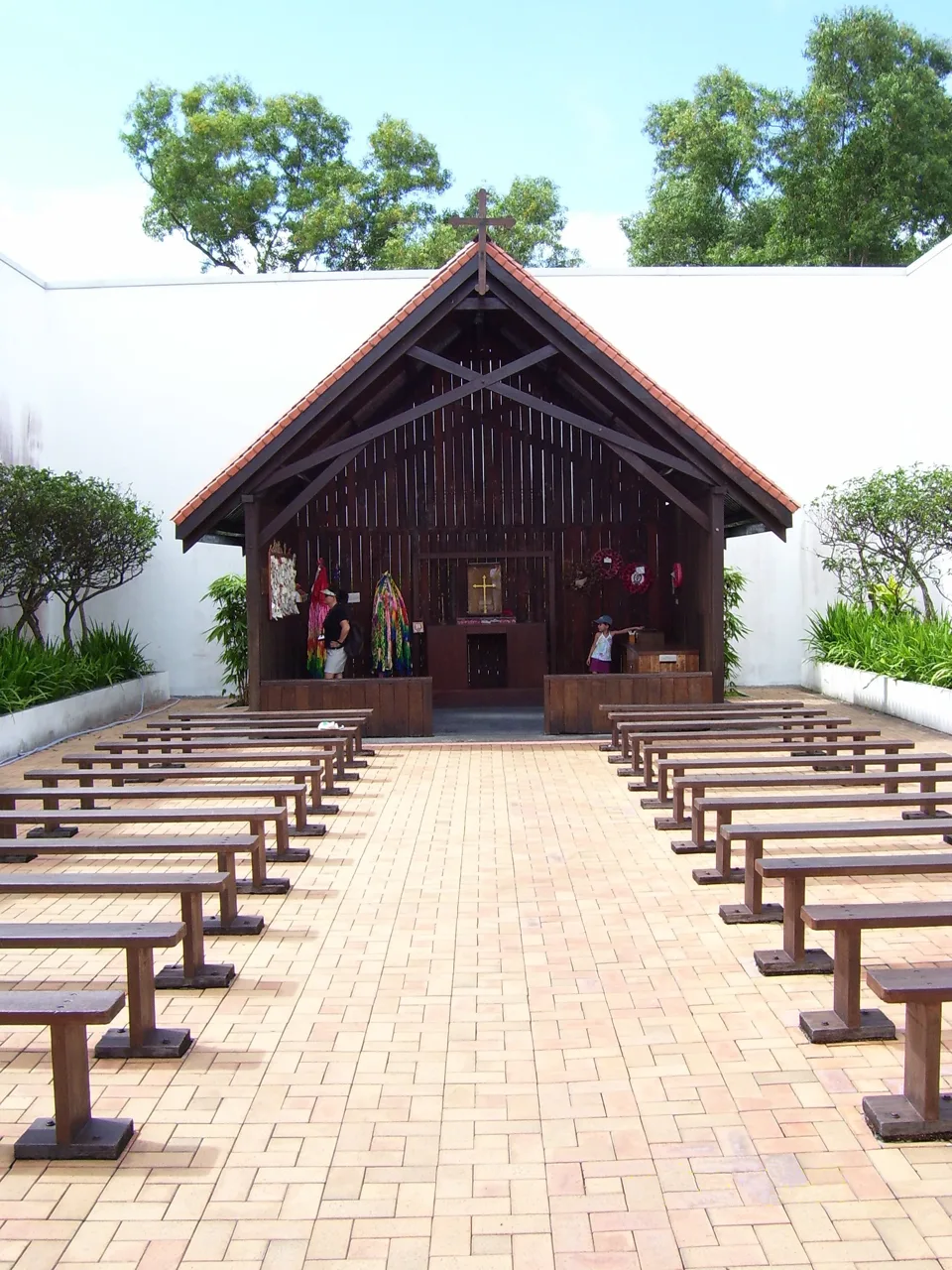
The museum rebuilds one of the chapels that prisoners put up inside the camp. If you only see one exhibition, make it this one.
After the island fell, Changi became the district where Allied prisoners of war and civilian internees were held. Inside the camps people built chapels, painted murals on the walls and produced a secret newsletter. The chapel standing in the museum courtyard today is a reconstruction; the original was shipped to Australia after the war and stands there now.
What makes the displays work is the angle they take. Instead of listing units and operation dates, they follow what people made, how they got news in and out, and what they held onto. It reads without any background reading, and an hour to an hour and a half covers it.
Getting there and what it costs
| Item | Detail |
|---|---|
| Address | 1000 Upper Changi Road NorthMap |
| MRT | Upper Changi on the Downtown Line, then bus 2 |
| Bus | Services 2 and 29 stop at the entrance; service 5 leaves a ten minute walk |
| Adult visitor | 9 Singapore dollars |
| Senior or student | 7 Singapore dollars |
| Family ticket | 27 Singapore dollars for up to five people, three adults maximum |
| Children | Six and under go free |
There is a car park but it is small. Daytime parking is charged by the hour with a daily cap, and from the evening through to early morning it is a flat fee per entry. If you are driving, the cap is the number that matters. Hours and prices are listed on the official visitor page.
What to add to the same trip
Johore Battery is under ten minutes away by car. A little further on, Changi Beach Park holds the massacre plaque, and the jetty beside it is where boats leave for Pulau Ubin. Grouped that way, an eastern half day involves very little travelling.
4. Johore Battery, where the British destroyed their own guns
This is the site of the guns the defenders wrecked before the surrender. It is free, outdoors and open whenever you arrive.
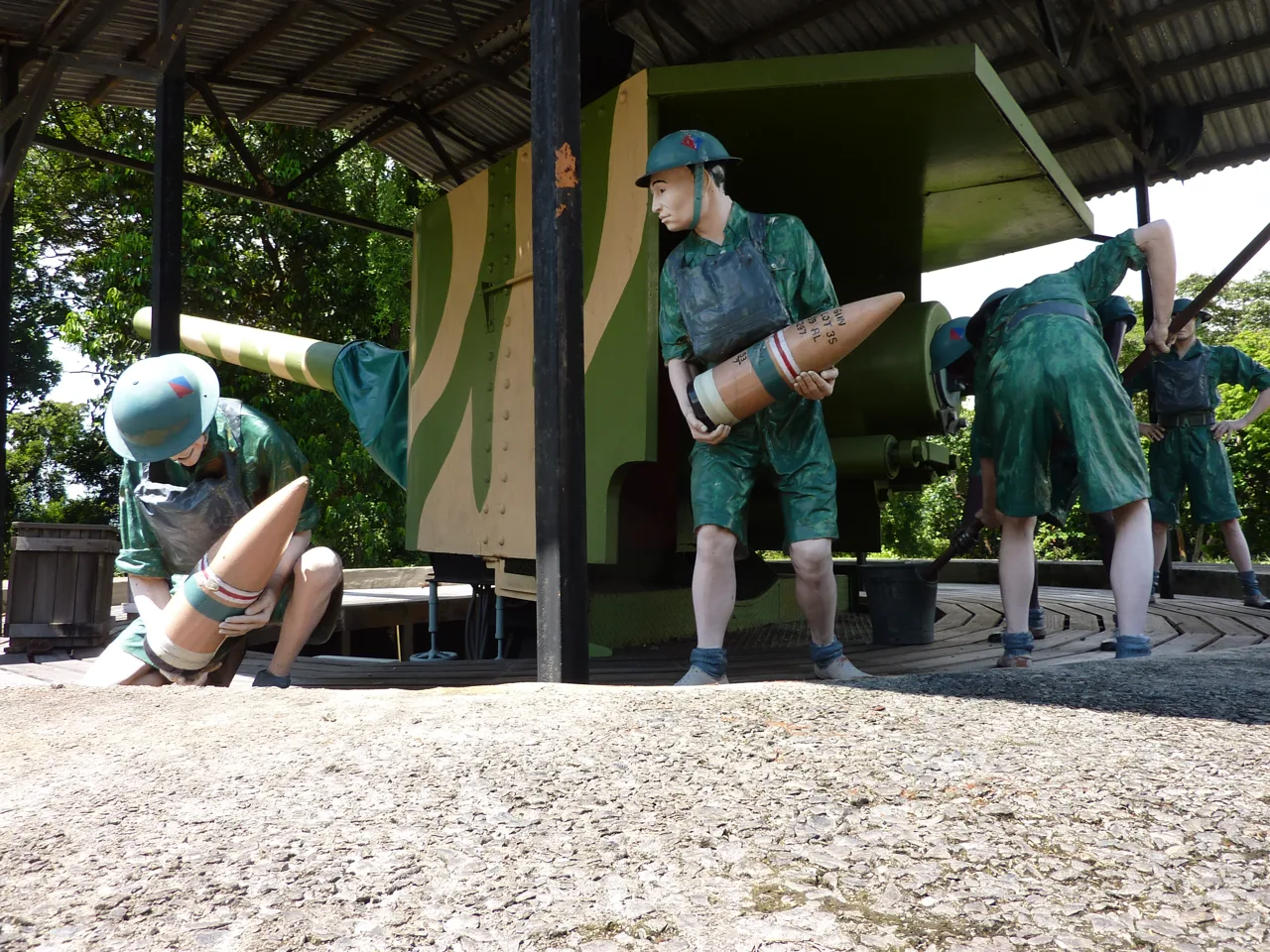
Turn into Cosford RoadMap and you find a very large gun and a shell taller than a person standing beside it. Both are replicas. Three fifteen-inch guns stood here originally, big enough that people called them the monster guns.
The story usually told is that Singapore’s guns faced out to sea and could not answer an attack that came overland. That version does not hold. Two of the guns here could swing landward, and in the final days they fired towards Johor Bahru and the Causeway and joined the fighting at Bukit Timah and Pasir Panjang. The problem lay in the ammunition. The shells stocked here were made to punch through the armour of a warship, and they did much less against infantry on the ground.
What is on the site
| On site | Detail |
|---|---|
| Replica gun | Built to the size of the fifteen-inch guns that stood here |
| Replica shell | Modelled at the weight of the real thing, over eight hundred kilograms |
| Tunnel entrance | The shaft that brought ammunition up is marked out |
| Interpretive panels | The layout of the battery and the directions it fired in the final days |
Twenty minutes covers it. There is almost no shade, so the middle of the day is hard going. Visiting Changi Chapel and Museum first and coming here in the late afternoon makes it comfortable.
5. The Former Ford Factory and the room where the surrender was signed
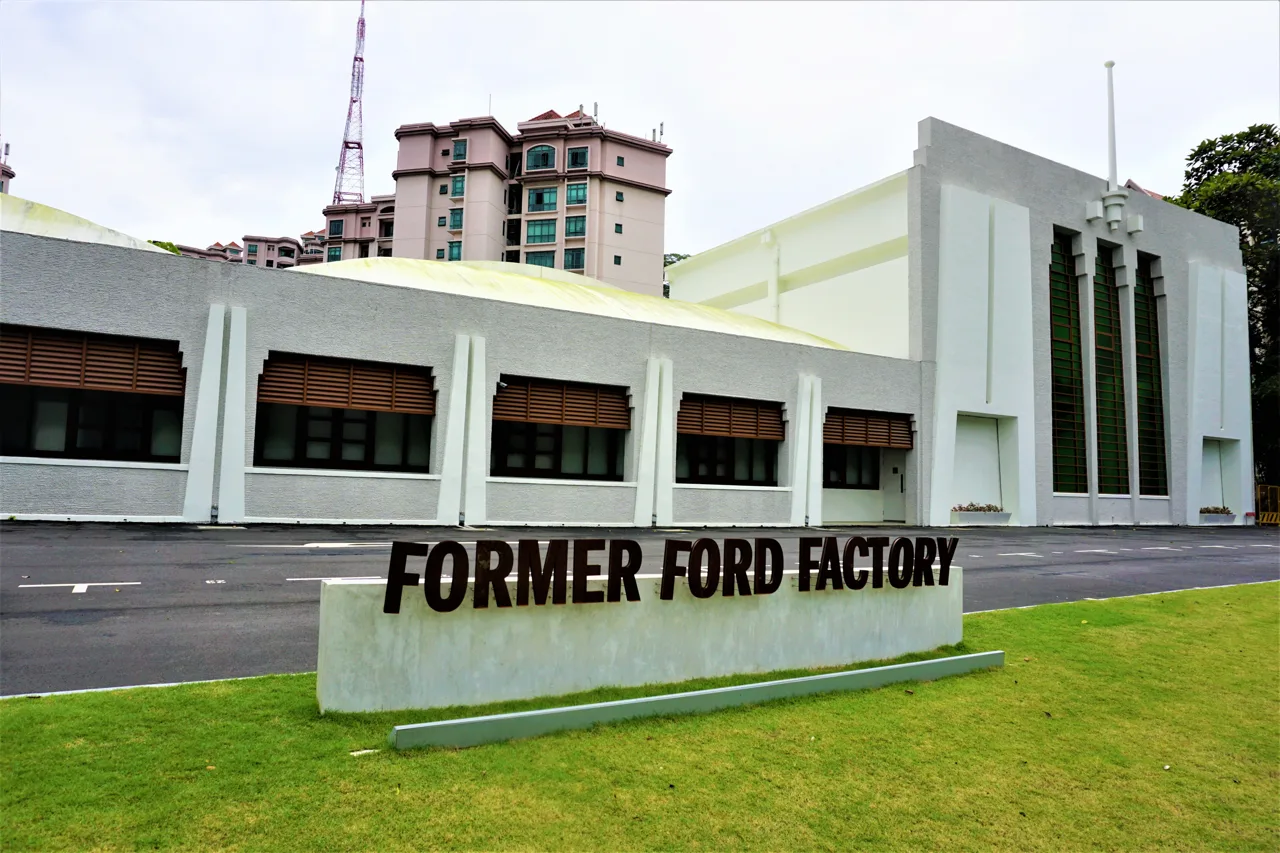
The room in which the British surrender was signed has been rebuilt inside this building. Hume station is three minutes away on foot.
The white building on Upper Bukit Timah Road opened as a Ford assembly plant. Two months later the war reached Malaya, and four months after it opened, on the day the island fell, the surrender was signed in a meeting room here. The National Archives of Singapore runs it as an exhibition now.
The displays run in order: the months before the fall, the occupation itself, and the way that memory settled into post-war Singapore. The signing room has been rebuilt from photographs taken at the time. Behind the building there is a small garden planted with the crops people grew and ate during the occupation years.
Getting there
| How | Detail |
|---|---|
| MRT | Hume on the Downtown Line, Exit 1, then three minutes uphill |
| Bus | 67, 75, 170, 171, 173, 178, 184 and 961 along Upper Bukit Timah Road |
| Address | 351 Upper Bukit Timah RoadMap |
| Price | 7.13 Singapore dollars for visitors, tax included; six and under free |
| Payment | Card or NETS. American Express and Diners are not accepted |
Hume station opened only recently, which is why older write-ups still send you to Beauty World or Hillview for a bus. You no longer need to change. Opening hours and admission are on the National Archives page.
Nearby
Continue along the same road and you reach Bukit Timah Nature Reserve. The fighting of the final three days ran across this ridge, though what you see today is forest trail rather than anything of the battle.
6. The Battlebox: free entry, but you have to book it
This underground bunker below Fort Canning HillMap lets you in for nothing, but only with a reservation made in advance.
The bunker was the underground command post of the British headquarters, and the meeting that settled the surrender took place inside it. Down the stairs, narrow corridors run between small rooms, and the operations room holds maps and signalling equipment.
The pricing catches people out. Basic admission costs nothing, but each hour holds a limited number of visitors, so turning up without a booking may leave you outside. Slots are taken online rather than on the door. A paid version adds a forty-minute audio tour, two projection rooms and a pair of souvenir glasses, and costs twenty Singapore dollars for an adult visitor. Allow sixty to seventy-five minutes either way.
The two ways in
| Included | Basic | With audio |
|---|---|---|
| Admission | Yes | Yes |
| Forty minute audio tour | No | Yes |
| Projection rooms | No | Two |
| Adult visitor | Free | 20 Singapore dollars |
| Child aged five to seventeen | Free | 15 Singapore dollars |
| Booking | Required on the official page | Bought on the official page |
Bring a phone and earphones if you are taking the audio version. Devices are lent on site but there are not many of them. Children of four and under go in free without the audio guide or glasses, and children of twelve and under must be with a paying adult.
What being underground means
Stairs and tight corridors make this a poor fit for a pram, and anyone uncomfortable in enclosed spaces should think about it beforehand. The air down there is cool, which is welcome after the walk up the hill. Bookings cannot be cancelled or changed, so leave yourself room around the slot you pick.
7. Reflections at Bukit Chandu and the Malay Regiment
This centre covers the fighting on Pasir Panjang Ridge and the regiment that held it. It occupies a bungalow on the hill.
Two days before the island fell, the last approach to the city ran across Pasir Panjang Ridge, and the unit holding it was the Malay Regiment. They were heavily outnumbered and did not give way, and that stand is the centre of the exhibition.
The ground floor is arranged in three parts: how the regiment came to be formed, how the battle unfolded, and what happened afterwards. The building itself dates from the war years, so the windows and floors are original. It spent a long stretch closed for redevelopment before reopening.
The walk up is steep
| Item | Detail |
|---|---|
| Address | 31-K Pepys RoadMap |
| MRT | Pasir Panjang on the Circle Line, Exit A, then fifteen to twenty minutes uphill |
| Bus | 10, 30, 51, 143, 175, 176 and 188, then the same walk |
| Parking | None on site. Kent Ridge ParkMap Carpark C is about a hundred metres away and free |
| Adult visitor | 7 Singapore dollars |
| Senior or student | 5 Singapore dollars |
| Family ticket | 21 Singapore dollars for up to five people, three adults maximum |
The climb from the station is genuinely steep and hot even in the shade. A car will take you to the door. Hours and prices are on the official visitor page.
It joins onto Kent Ridge Park
A canopy walk begins beside the building and runs two hundred and eighty metres at treetop height into Kent Ridge Park. The whole ridge is the ground the battle was fought over. The park has exercise stations and ponds and draws walkers early in the morning. Seeing the exhibition and then walking the ridge puts the account and the terrain together.
8. Fort Siloso and the Surrender Chambers, free on Sentosa
This is the only preserved coastal fort left in Singapore and it charges nothing. The Surrender Chambers, the tunnels and the coastal guns are all included.
The British built it in the 1880s to cover the approaches to the harbour. Sentosa was called Blakang Mati then, and batteries stood at several points around the island; Siloso is the one that survived intact. It was gazetted as a national monument a few years ago.
The guns here could also traverse both seaward and inland, and in the days before the surrender they fired towards West Coast Road, the Jurong River and Tengah Airfield. The idea that they were pointing the wrong way does not survive contact with the record. What did go wrong was the ammunition, which was armour-piercing, and the time it took before they were turned on land targets.
The Surrender Chambers
Inside the fort there is a separate room dealing with the two surrenders. Wax figures recreate the British surrender of 1942 and the Japanese surrender of 1945, with a video documentary running alongside. Seeing both scenes in one room gives the three years and seven months between them a shape you can hold.
| Item | Detail |
|---|---|
| Hours | Daily, 09:00 to 18:00 |
| Exhibits open | 10:00 |
| Last admission | 17:30 |
| Price | Free for everyone |
| Time needed | An hour and a half to two hours |
| Where | Siloso PointMap, Sentosa |
On the island, take the beach shuttle from Beach Station to Siloso Point. How to get onto Sentosa and what it costs is covered in getting to Sentosa, and the rest of the island in the Sentosa guide. The fort’s hours are on the official Sentosa page.
9. The Skywalk, the free guided walks and the Friday night tour
The approach to the fort is itself a walkway through the treetops. It is free too and takes wheelchairs.
From Siloso Point the fort sits up a hill, and the Skywalk carries you up it. The walkway runs a hundred and eighty-one metres and climbs to eleven storeys above the ground. A lift saves the stairs, and when the lift finishes for the night the stairs beside it stay open. Twenty to thirty minutes is enough for the walk, and the view takes in the fort grounds and the sea beyond.
Guided options
| Option | When | Price | Notes |
|---|---|---|---|
| Free guided walk | Second and third Saturday of the month, 11:00 and 15:00 | Free | Meets at the Skywalk lobby, first come first served |
| Audio experience | All opening hours | Paid | Runs in your own browser |
| Night experience | Fridays, 20:00 to 21:30 | 90 Singapore dollars each | Half price when four or more book together |
| Skywalk lift | Daily, 09:00 to 22:00 | Free | Stairs stay open when the lift stops |
The night tour follows a guide holding a kerosene lamp through the dark tunnels. It lasts ninety minutes, takes a minimum of two people and a maximum of ten, and asks you to arrive fifteen minutes early. The headline price looks steep, though four people booking together halves it, so it works out very differently for a group.
What to bring
The fort mixes open ground and enclosed rooms, and the tunnels are dark underfoot. Shoes with grip help. Drinks are sold around the island but not inside the fort itself, so pick something up before you climb. Arriving late in the afternoon is the easiest way to miss the exhibits.
10. Kranji War Cemetery and the wall of names
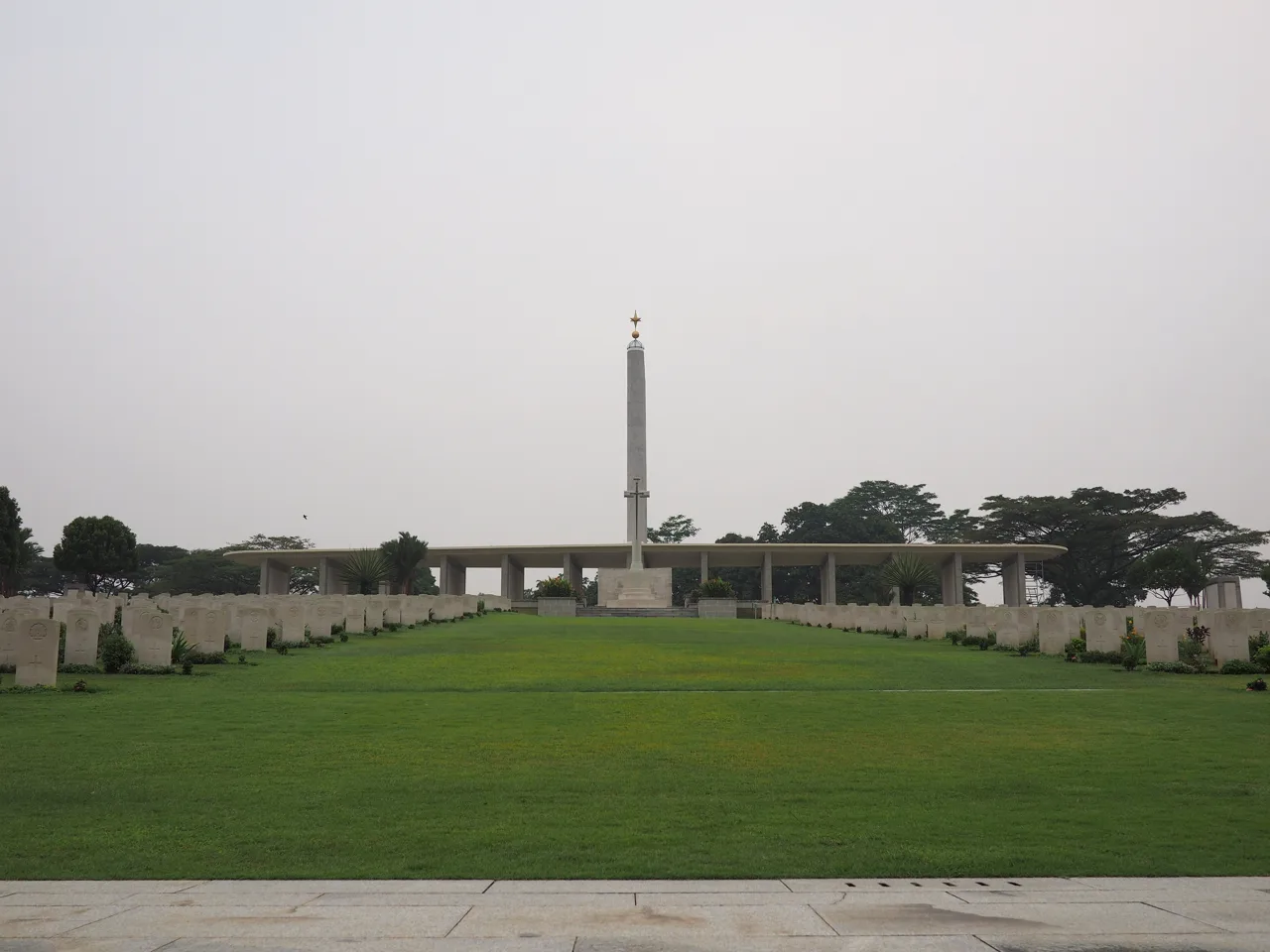
More than four thousand graves lie on the slope, and the memorial behind them carries the names of over twenty thousand people who have no grave. Entry is free.
It stands on Woodlands Road at the northern edge of the island. The site began as a Japanese prisoner of war camp, and prisoners who died were buried on the hill behind it. After the war that hill was chosen as the permanent cemetery for Allied dead, and graves were brought in from elsewhere in Singapore and from Saigon.
Walking up, you pass rows of white headstones and reach the Singapore Memorial above them. It was built for those who were never buried, and twelve walls carry their names. Seen from above the structure takes the outline of a wartime fighter aircraft. Standing at the walls and reading a few of the names is what makes the length of that list mean something.
Getting there
| Item | Detail |
|---|---|
| Address | 9 Woodlands RoadMap |
| MRT | Kranji on the North South Line, then bus 170 or 178 |
| From the city | Over forty minutes |
| Price | Free |
| Hours | Open through daylight hours |
| Time needed | Forty minutes to an hour |
Kranji State Cemetery next door
Just outside the war cemetery lies the Kranji State Cemetery, established for people who made a significant contribution to the country. Two former presidents are buried there, Yusof Ishak and Benjamin Sheares. The two grounds are a short walk apart.
This part of the island is undeveloped and the sun is strong with little cover. Bring a hat and water, and go early or late in the day if you can.
11. If a name in your family is at Kranji
The Commonwealth War Graves Commission publishes the register, so you can find a grave or a panel reference before you travel.
Many of the people who come to Kranji are visiting one name rather than the cemetery as a whole. Australian, British, Indian, Malayan and Dutch service personnel are all commemorated here, along with those lost across the wider campaign in the region. Searching the register beforehand saves a long walk in the sun, because the grounds are large and the memorial panels are dense.
It helps to know how the references work before you set off. A person with a known grave has a plot, row and grave number; a person without one has a column and panel number on the Singapore Memorial instead. The staff at the entrance keep a register on site, but arriving with the reference already written down makes the visit far calmer.
What visitors usually do
| Step | Detail |
|---|---|
| Look up the record | Search the Commonwealth register for the name before you leave home |
| Note the reference | Plot, row and grave for a burial; column and panel for a memorial name |
| Pick your hour | Early morning has shade on the slope and far fewer people |
| Bring flowers | There are no florists nearby, so buy them in town |
| Allow extra time | The bus from Kranji station is not frequent |
The cemetery is maintained year round and the grounds are kept immaculate, which surprises visitors who expect something more weathered. There is no charge and no ticket, and nobody will hurry you.
12. Labrador Nature Reserve and its scattered batteries
The remains of a coastal battery lie among the paths of a seafront park. It is free and open whenever you arrive.
Walk in from Labrador Park stationMap and you reach a park along the water. This headland carried another of the batteries built to cover the harbour, and gun emplacements and reconstructed structures now sit beside the walking paths. The only rocky sea cliff on the mainland that the public can reach is also inside this park.
The park is well kept, so this works better as a walk that happens to pass war remains than as a visit built around them. Birds are everywhere and the tree cover holds up even in the middle of the day.
One path is closed at the moment
The Berlayar Creek boardwalk on the western side is shut for improvement works. It runs through mangrove and it is the stretch many people come for, so it is worth knowing before you set out. The park notices carry the date it is due back. Everything else, including the battery remains, stays open.
| Item | Detail |
|---|---|
| MRT | Labrador Park on the Circle Line |
| Price | Free |
| What you see | Battery remains, a replica of the Dragon’s Teeth Gate, the sea cliff, the coastal path |
| Currently closed | Berlayar Creek boardwalk |
| Time needed | About an hour |
There are two playgrounds, toilets and somewhere to buy a drink, so it holds up as a stop with children.
13. The memorials in the city centre, all within a short walk
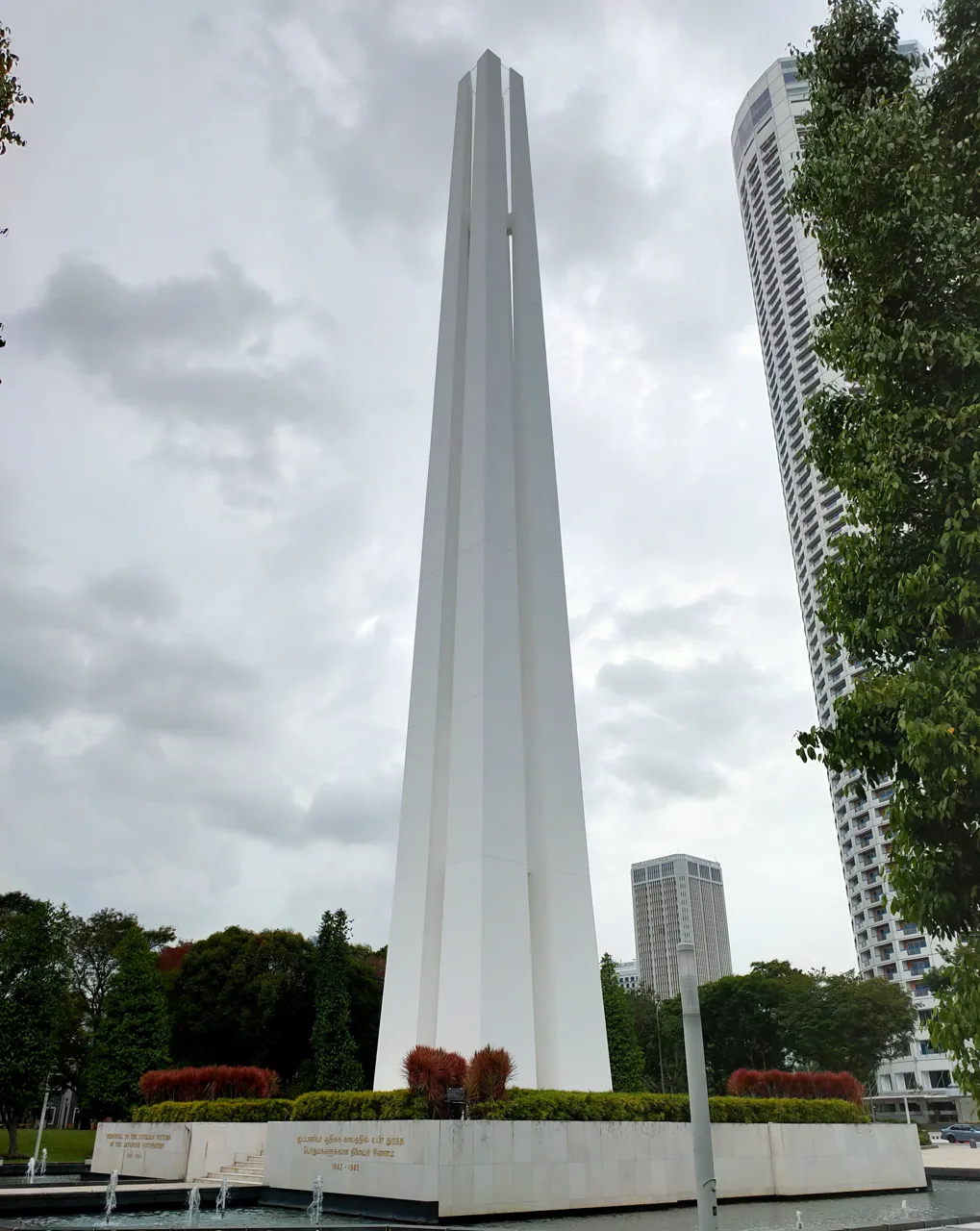
The Civilian War MemorialMap and the memorials in Esplanade Park stand within about ten minutes of each other. All of them are free and open at any hour.
In the park on Beach Road, four white columns rise side by side. This is the Civilian War Memorial, the first monument in Singapore raised for the civilians killed during the occupation. The four columns stand for the Chinese, Malay, Indian and Eurasian communities.
It exists because of what came out of the ground in the early 1960s. Foundation work for housing and industry uncovered mass graves in several districts, with more than forty found in one area of Siglap alone. The Singapore Chinese Chamber of Commerce took on the work of recovering and reinterring the remains and set up a fund committee to build the memorial. Until then every war monument in Singapore commemorated service personnel only.
Esplanade Park
Walk towards the river and you reach Esplanade Park. The Lim Bo Seng MemorialMap stands here in marble, and beside it the Cenotaph commemorates the dead of both world wars and is itself a national monument. A little further along, a marker records the Indian National Army monument that once stood on this ground.
| Memorial | Where | For whom |
|---|---|---|
| Civilian War Memorial | War Memorial Park, Beach Road | Civilians killed during the occupation |
| Lim Bo Seng Memorial | Esplanade Park | A resistance figure who died in captivity |
| The Cenotaph | Esplanade Park | The dead of both world wars |
| Indian National Army marker | Esplanade Park | The monument that stood here during the occupation |
Half an hour covers all four. City Hall and Esplanade stations are both close. Evening is the comfortable time, and the walk carries on naturally into the city districts.
14. The Sook Ching screening site and the plaques around town
A single plaque marks it, in the middle of Chinatown. The site is a shopping complex and hawker centre today.
The marker stands on Upper Cross Street outside Hong Lim Complex. Soon after the occupation began, this whole area became a screening zone. Barbed wire ran from South Bridge Road to New Bridge Road, and the perimeter took in Elgin Bridge, North Bridge Road and the edge of Kreta Ayer. Men were called out and made to queue. Those who passed were released; those who did not were loaded onto lorries and taken to outlying areas.
Stand there now and you are among people buying groceries and eating lunch. Most walk past the plaque without seeing it. If Chinatown is already on your route, it costs nothing to stop.
Other markers around the civic district
| Site | What is there now |
|---|---|
| Sook Ching screening centre | A plaque outside the complex on Upper Cross Street |
| Former Cathay Building | The cinema building on Handy Road, used for broadcasting and propaganda during the occupation |
| Kempeitai East District Branch | The YMCA building at the top of Orchard Road |
| Former St Joseph’s Institution | The old art museum building on Bras Basah Road, currently closed to visitors |
The Bras Basah building housed the Singapore Art Museum for years. The museum has moved to Tanjong Pagar Distripark and the original building is not open, so this one is a look from the pavement.
15. The National Museum, where the separate places join up
A permanent gallery on the second floor covers the occupation years. It opens daily, Mondays included.
Visiting several of these sites in turn can leave the events sitting apart from one another. Where the landings began, why the defence collapsed within ten days, what people ate and how they lived through three years and seven months: the National MuseumMap sets all of that out in order. It is the domed white building on Stamford Road.
The occupation gallery is built around objects and testimony, including ration cards, occupation currency and photographs people hid. The space is deliberately darker than the galleries on either side of it.
Prices and hours
| Item | Detail |
|---|---|
| Address | 93 Stamford Road |
| MRT | Bras Basah, Bencoolen or Dhoby Ghaut |
| Hours | Daily, 10:00 to 19:00 |
| Last ticket sales | 18:00 |
| Last admission | 18:30 |
| Adult visitor | 20 Singapore dollars |
| Senior or student | 15 Singapore dollars |
| Children | Six and under go free |
On the first Saturday and the first and third Thursday of the month the museum opens an hour early, which is the quietest time to go through the galleries. The building is undergoing restoration and upgrading work, so parts of it may be closed on the day you visit.
16. The Padang and the old City Hall steps
The place where the British surrendered and the place where the Japanese surrendered are a short walk apart in the civic district.
The Padang is the open field at the centre of town. After the fall, European civilians were gathered here before walking out to the internment camps at Changi. Three and a half years later the direction reversed on the same ground. The Japanese surrender was signed on the steps of City Hall, facing the field.
City Hall and the old Supreme Court together are now National Gallery Singapore. Go inside and you can see the steps and the chamber above them. The gallery charges admission. The Padang and the steps outside are free to walk up to.
What else is on this square
| Place | Price | Notes |
|---|---|---|
| The Padang | Free | An open field. Closed to the public when a match is on |
| City Hall steps | Free | You can walk right up to the building |
| Inside National Gallery | Paid | A gallery ticket is required |
| St Andrew’s Cathedral | Free | Used as an emergency hospital during the fighting |
St Andrew’s Cathedral is the white church beside the Padang. In the final days before the surrender it took in the wounded. You can go in outside service times.
Fifteen minutes covers all four. The Civilian War Memorial and Esplanade Park are inside the same walk, so a civic district half day takes in nearly everything the centre holds on this subject.
17. The Japanese Cemetery Park at Serangoon
This is the oldest and largest Japanese cemetery in Southeast Asia. It opens from seven in the morning until seven in the evening and costs nothing.
It lies inside a residential neighbourhood in Serangoon Gardens. It began in the late nineteenth century as a burial ground for Japanese residents who died in Singapore. During the occupation an association set up by the military administration managed it, and the Japanese Association of Singapore looks after it today.
Inside it is quiet and heavily planted. Following the paths between the stones you pass the names of people who lived here in the nineteenth century alongside markers connected to the war years. It sits differently from the other places on this list, so it helps to decide what you are going to look at before you arrive.
Before you go
| Item | Detail |
|---|---|
| Address | 43 Chuan Hoe AvenueMap |
| Hours | Daily, 07:00 to 19:00 |
| Price | Free |
| Getting there | Buses towards Serangoon Gardens, then a walk. No station nearby |
| Time needed | About half an hour |
Public transport into the neighbourhood is fiddly and a car is quicker. It remains an active cemetery, so dress and behave accordingly.
18. Bukit Batok, Pasir Panjang and Alexandra Hospital
All three are free, outdoors, and marked only by a plaque or a facade. They suit a detour rather than a dedicated trip.
On the hill at Bukit Batok there was once a memorial raised by the Japanese army. A plaque marks the spot today and the approach runs up from Lorong Sesuai. Trails in Bukit Batok Nature Park are closed for maintenance work at present, which may limit how close you can get, so read the notices at the park entrance first.
At the corner of Pasir Panjang Road and Science Park Road a machine-gun pillbox still stands. It was one of a series built in the 1930s at intervals that let their fields of fire overlap. It sat inside the sector held by the Malay Regiment and covered the ammunition depots and the military hospital. You can see it from the pavement.
Alexandra Hospital
The hospital on Alexandra Road still treats patients. It opened as a British military hospital, and the day before the island fell Japanese troops entered the grounds; close to three hundred patients and medical staff were killed over two days. The British reoccupied it after the war and it passed to the Singapore government in the early 1970s.
Because it is a hospital there is no visitor facility. There is signage near the entrance and you can look at the building and grounds from outside. Patients and families are coming and going, so keep it quiet.
| Site | Price | Current state |
|---|---|---|
| Bukit Batok memorial plaque | Free | Park trails under maintenance, access may be limited |
| Pasir Panjang machine-gun pillbox | Free | Standing at the roadside |
| Alexandra Hospital | Free | A working hospital. View from outside only |
19. Changi Beach and Punggol Beach, both parks today
Both beaches were massacre sites and both are public parks now. A plaque marks each of them.
At Changi Beach ParkMap the marker stands near the promontory. Men who failed the screening were brought to this beach. Today there are barbecue pits along the sand, a playground for children and a view across to Pulau Ubin. Both belong to the same stretch of sand.
Punggol Beach carries a similar plaque. It is harder to reach and has fewer facilities around it, so if you have already seen the Changi marker there is not much reason to make the second trip.
Putting the eastern day together
Starting at Changi Chapel and Museum, going on to Johore Battery, then reading the plaque at Changi Beach Park and sitting by the water afterwards makes a natural order. The park has food and bicycle hire so the timing is easy to adjust. Changi Airport is close by, which makes this a workable last day.
20. The sites you cannot enter, and why that helps
A large part of the list is military land, a prison or an airport. Ruling them out early saves wasted journeys.
Search around this subject and you will find landing beaches and airfields named as though you could visit them. Many cannot be visited at all. The northwest coast where the invasion came ashore lies inside a live firing area. Tengah and Sembawang are air force sites. Seletar became a civil airport and there is nothing there to tour.
Leave these off the plan
| Name | What it is now |
|---|---|
| Sarimbun Beach and Lim Chu Kang landing | Inside a live firing area |
| Tengah Airfield | An air force base |
| Sembawang Airfield and the naval base | Military installations and port land |
| Seletar Airfield | Seletar Airport |
| Changi Prison | Still operating. Only the old gate and wall are visible from the road |
| The Changi barracks | Military ground |
| Beach Road Camp | Redeveloped |
| Kallang Airfield | Inside a redevelopment area |
| Ama Keng Village and the Jurong-Kranji defence line | Nothing remains |
The old gate, wall and turrets of Changi Prison are gazetted as a national monument and can be seen while passing along Upper Changi Road North. Lingering there or taking a lot of photographs is not a good idea.
21. What visitors actually pay
Indoor museums are free for Singaporeans and permanent residents and charge everyone else. Outdoor sites cost nothing whatever passport you hold.
Most national institutions in Singapore work this way. Residents get free entry to what their taxes fund, and visitors pay at the counter. That is why a local blog can call one of these places free while you find yourself at a ticket desk.
Visitor prices
| Site | Adult | Senior or student | Children |
|---|---|---|---|
| National Museum of Singapore | 20 Singapore dollars | 15 Singapore dollars | Six and under free |
| Battlebox with audio | 20 Singapore dollars | Not offered | Five to seventeen, 15 Singapore dollars |
| Changi Chapel and Museum | 9 Singapore dollars | 7 Singapore dollars | Six and under free |
| Reflections at Bukit Chandu | 7 Singapore dollars | 5 Singapore dollars | Six and under free |
| Former Ford Factory | 7.13 Singapore dollars | Same | Six and under free |
| Battlebox, basic entry | Free | Free | Free |
| Fort Siloso, Kranji, Japanese Cemetery Park | Free | Free | Free |
When the family ticket pays off
Changi Chapel and Museum and Reflections at Bukit Chandu both sell a family ticket for up to five people with a maximum of three adults. Three adults travelling together come out ahead on it; two adults do better buying separately.
Neither of those two takes cash. The Former Ford Factory accepts cards and NETS but not American Express or Diners. Other ways to keep costs down across the trip are collected in the budget guide.
22. Grouping the sites into half-days
Choose one part of the island and you will fit in three or four places. Combining opposite ends leaves you on trains all day.
Kranji is at the northern edge and Changi at the eastern one. Put both into a single day and the travelling outlasts the visiting. The southern group around Bukit Chandu and Labrador, and the civic district group around the Battlebox and the memorials, are each close enough to walk.
By area
| Area | Order | Time |
|---|---|---|
| East | Changi Chapel and Museum, Johore Battery, Changi Beach Park | Half a day |
| South | Reflections at Bukit Chandu, canopy walk, Kent Ridge Park, Labrador | Half a day |
| Civic district | National Museum, Battlebox, Padang and City Hall, Civilian War Memorial, Esplanade Park | A full day |
| Sentosa | Skywalk, Fort Siloso, Surrender Chambers | Half a day |
| North | Kranji War Cemetery, Kranji State Cemetery | Half a day, mostly travel |
| West | Former Ford Factory, Bukit Timah | Half a day |
How far two days gets you
With two days available, give the first to the civic district and pick either the east or the south for the second. The civic district walks well and holds enough indoor space to survive rain. A third day is where Kranji fits. You will be using the network heavily, so check cards and fares in the transport guide first.
If this is a first visit to Singapore and the trip is short, half a day in the civic district serves better than a whole day on the subject. The three-day itinerary shows how it slots in beside everything else.
23. Going with children, and what to bring
Fort Siloso and the outdoor sites work well with children. The exhibitions about the killings need a decision from you.
Fort Siloso keeps children moving because there are tunnels to walk through and guns to stand beside, and the Skywalk has a lift for prams. Labrador and Kent Ridge have playgrounds and paths, so there is somewhere to stop between the historical parts.
Changi Chapel and Museum, Reflections at Bukit Chandu and the Civilian War Memorial deal squarely with imprisonment and with civilians being killed. Older children handle this with someone to talk it through with; younger children benefit from being told beforehand what sort of place they are going to. The Battlebox has stairs and narrow passages and will not take a pram.
What to pack
| Item | Why |
|---|---|
| Shoes with grip | Bukit Chandu is a climb and the fort tunnels are slick |
| Hat and water | Kranji and Johore Battery have almost no shade |
| A light layer | Indoor galleries run cold |
| A card that pays | The heritage board museums do not take cash |
| Umbrella | Long outdoor stretches and sudden showers |
At cemeteries and memorials, keep voices down and do not put anything on the headstones. Photography is generally allowed, though flash is banned in most gallery spaces. Other family planning sits in Singapore with kids.
24. When to go, and what happens on 15 February
This is a subject with a lot of walking in it, so early morning or late afternoon is easier. On 15 February sirens sound nationwide in the evening.
Kranji, Johore Battery and Changi Beach all have very little shade. Linking those three in the middle of the day is hard work. Starting at nine, finishing the outdoor part before noon and moving to indoor exhibitions afterwards is the order that holds up. Ways to make the early start work are in Singapore in the early morning.
Total Defence Day
Singapore fell on 15 February 1942 and the date is kept every year as Total Defence Day. It is not a public holiday, so shops and trains run normally. At twenty past six in the evening the national warning sirens sound for one minute. Visitors who have not been told find it alarming; it is a drill. Museums are busier around this date because schools and institutions run commemorative programmes.
Following the dates on the ground
| Date | What happened | Where you can see it |
|---|---|---|
| 8 December 1941 | The war reached Malaya and Singapore | National Museum, Former Ford Factory |
| Night of 8 February 1942 | Landings began on the northwest coast | Kranji, and in the displays only |
| 13 February 1942 | Fighting on Pasir Panjang Ridge | Reflections at Bukit Chandu, Kent Ridge |
| 15 February 1942 | The British surrender was signed | Former Ford Factory, Battlebox, Fort Siloso |
| Late February 1942 | The screenings and killings | Upper Cross Street plaque, Changi Beach, Civilian War Memorial |
| 12 September 1945 | The Japanese surrender was signed | City Hall steps, Surrender Chambers at Fort Siloso |
Following that order across the island takes two days rather than one. With a single day, beginning at the Former Ford Factory, going on to the Battlebox and finishing at the City Hall steps keeps the account in sequence.
🎡Things to Do51
🍜Food4
🏨Where to Stay10
🚇Getting Around4
🧭Travel Tips16
Frequently asked questions
Changi Chapel and Museum if you want an indoor exhibition, Kranji War Cemetery if you want to be outdoors.
Changi Chapel and Museum stands in the district that held Allied prisoners and civilian internees, and it rebuilds one of the chapels the prisoners put up inside the camp. The displays follow what people made and how they passed news around, so it reads well even without background. Kranji War Cemetery holds more than four thousand graves, and the memorial behind them carries the names of over twenty thousand people who have no grave at all. The two sit at opposite ends of the island, so pick one per day.
The National Museum, Fort Siloso, Kranji War Cemetery and the Japanese Cemetery Park all open on Mondays. The other indoor museums do not.
Changi Chapel and Museum and Reflections at Bukit Chandu close on Mondays, though they open when a Monday falls on a public holiday. The Former Ford Factory and the Battlebox close on Mondays as well. Everything outdoors stays open regardless of the day: Johore Battery, the Civilian War Memorial, the memorials in Esplanade Park, Labrador Nature Reserve and Kent Ridge Park. A Monday works best if you put Fort Siloso in the morning and the city memorials in the afternoon.
Outdoor sites are free, and the indoor museums charge visitors while Singaporeans go in free. The National Museum charges the most.
Changi Chapel and Museum asks nine Singapore dollars for an adult visitor and seven for a senior or student. Reflections at Bukit Chandu asks seven and five. The Former Ford Factory has one visitor price of 7.13 Singapore dollars, tax included. The National Museum is twenty for an adult. Kranji War Cemetery, Fort Siloso, the Japanese Cemetery Park and Johore Battery cost nothing whatever passport you hold. Basic entry to the Battlebox is also free, but it has to be reserved.
Yes, even for the free entry. Each time slot holds a limited number of people.
The official booking page is the only place that releases the free slots. There is no queue on the day; you pick a time online beforehand. A paid version adds a forty-minute audio tour and two projection rooms and costs twenty Singapore dollars for an adult visitor. Children of four and under enter free without the audio guide, and children of twelve and under must come in with a paying adult. Bookings cannot be cancelled or moved.
The fort, the tunnels and the Skywalk are all free. Getting onto Sentosa is the only cost.
Fort Siloso is the only preserved coastal fort left in Singapore and it charges nothing at the gate. The Surrender Chambers, the underground magazines and the coastal guns are all included. The Skywalk that leads up to it runs a hundred and eighty-one metres through the canopy, climbs eleven storeys, is free as well and takes wheelchairs. Ways onto the island and what they cost are set out in getting to Sentosa.
The outdoor sites and Fort Siloso work well. The exhibitions about the massacres need more thought.
Fort Siloso holds children’s attention because they can walk through tunnels and stand next to real guns, and the Skywalk has a lift. Labrador and Kent Ridge have playgrounds and shade. Changi Chapel and Museum, Reflections at Bukit Chandu and the Civilian War Memorial deal directly with imprisonment and with civilian deaths, so younger children need some preparation and someone to talk it through with. The Battlebox has stairs and narrow corridors and does not suit a pram.
Take the North South Line to Kranji, then a bus for two stops. The address is 9 Woodlands Road.
Bus 170 or 178 from outside Kranji station drops you across from the entrance. From the city centre the trip runs past forty minutes, since this is the northern edge of the island. The Kranji State Cemetery sits just outside the war cemetery and holds the graves of two former presidents. Entry is free and the grounds open through the day. There is little shade, so bring a hat and water.
Pick one part of the island and you will manage three or four. Crossing from one end to the other eats the day.
In the east, Changi Chapel and Museum, Johore Battery and the Changi Beach plaque make half a day. In the south, Reflections at Bukit Chandu, Kent Ridge Park and Labrador join up on foot. In the city, the Battlebox, the Civilian War Memorial, Esplanade Park and the National Museum are all walkable. Kranji in the north and the Former Ford Factory in the west each need a trip of their own.
Hume on the Downtown Line, about three minutes on foot from Exit 1.
Older guides still tell you to change onto a bus at Beauty World or Hillview, because Hume station opened only recently. That change is no longer needed. If you are coming by bus, services 67, 75, 170, 171, 173, 178, 184 and 961 run along Upper Bukit Timah Road. This is the building where the British surrender was signed, and the room has been rebuilt from photographs taken on the day.
15 February, kept as Total Defence Day. Sirens sound across the country that evening.
Singapore fell on 15 February 1942, and the date is marked every year. It is not a public holiday, so shops and trains run as normal. At twenty past six in the evening the national warning sirens sound for one minute. It startles visitors who were not expecting it, and it is only a drill. Museums are busier around this date because schools and institutions run programmes.
No. It is still a working prison.
Changi Prison held civilian internees during the occupation and remains in use today, so there is no public access. The original entrance gate, wall and turrets survive and are gazetted as a national monument, visible from Upper Changi Road North. The prisoner and internee story is told instead at Changi Chapel and Museum nearby. The two are a few bus stops apart rather than a walk.