
Halal Singapore: A Muslim Traveller’s Guide to Food, Prayer & Getting Around
Singapore is one of the easiest non-Muslim-majority cities in the world for a Muslim traveller — halal food on almost every street, mosques and prayer rooms everywhere, and a whole Malay-Muslim quarter to eat your way through. Here’s exactly how to spot certified food, where to eat, where to pray, and how to plan a worry-free trip.
| Halal food | Easy to find — 1,200+ MUIS-certified eateries island-wide |
|---|---|
| Certifier | MUIS (the Islamic Religious Council of Singapore) — look for its logo |
| Verify it | HalalSG app or the HalalSG online directory; new certs carry a QR code |
| Best halal areas | Kampong Glam, GeylangMap Serai, TekkaMap Centre (Little India), Adam Road |
| Local dishes | Halal versions of chicken rice, laksa, satay, nasi lemak, chilli crab all exist |
| Where to pray | Mosques island-wide; prayer rooms in malls, attractions & every airport terminal |
| Hotels | Several Muslim-friendly hotels with prayer mats, qibla markers & halal breakfast |
| Heads-up | In mixed hawker centres, check each stall’s own halal logo — some sell pork |
1. Is Singapore good for Muslim travellers?
2. How halal certification works here (and how to check)
3. Hawker centres: the one rule to remember
4. Local dishes you can absolutely eat
5. Kampong Glam: eat without checking a label
6. Geylang Serai: the Malay heartland
7. More halal food hubs: Tekka & Adam Road
8. Halal chilli crab & a proper seafood feast
9. Halal buffets & sit-down restaurants
10. Where to pray: mosques, suraus & the airport
11. Visiting the mosques (etiquette & hours)
12. Muslim-friendly hotels
13. Attractions, Sentosa & family days out
14. Ramadan & Hari Raya: a special time to visit
15. Practical tips for a smooth halal trip
If you’re Muslim and wondering whether Singapore is an easy place to travel, the short version is: yes, very. About one in six residents is Muslim, halal food is genuinely everywhere — not a niche you have to hunt for — and there’s a single, trusted certification body (MUIS) so you always know what’s safe to eat. Mosques and prayer rooms are dotted across the island, malls and the airport have dedicated suraus, and there’s a whole Malay-Muslim neighbourhood, Kampong Glam, where you can eat without checking a single label. This guide walks you through how halal works here, the dishes you can absolutely eat (including local icons like chicken rice and chilli crab), the best areas and stalls, where to pray, which hotels make life easy, and how to handle Ramadan and Hari Raya. For the bigger picture of the city, see our Singapore travel guide.
1. Is Singapore good for Muslim travellers?
Yes — Singapore is one of the easiest non-Muslim-majority countries in the world for a Muslim traveller. Halal food is abundant and certified by a single trusted authority, mosques and prayer rooms are everywhere, and whole neighbourhoods are effectively halal by default.
About 15–16% of residents are Muslim, mostly from the Malay community, alongside Indian-Muslim and Arab Singaporeans. That long-rooted community means halal isn’t a special-request afterthought here — it’s woven into daily life. You’ll see the halal logo in shopping-mall food courts, at hawker stalls, in fast-food chains and at hotel buffets, and you’ll never be far from a mosque or a quiet prayer room. Combine that with one of the world’s best public-transport systems, a safe, clean, English-speaking city and a genuinely multicultural mindset, and the practical worries that can shadow a trip elsewhere mostly melt away.
The rest of this guide is the detail: how to read the certification, what you can eat, where to go, and where to pray — so you can spend your energy enjoying the city instead of vetting every meal.
2. How halal certification works here (and how to check)
One body certifies halal in Singapore: MUIS, the Islamic Religious Council of Singapore. Look for its Halal logo or certificate, and when in doubt verify the outlet on the free HalalSG app or the HalalSG online directory.
A real MUIS certificate, usually displayed near the entrance or counter, names the outlet, its address and the certified category, and shows a validity period and a certificate number. Newer certificates carry a QR code you can scan to confirm authenticity on the spot — handy because Singapore has been rolling the certification system over to a new digital format. The simplest habit: if you see the clean, official logo, you’re good; if something looks off — a photocopied or altered sign, a mismatched name — open the HalalSG app and search the outlet.
3. Hawker centres: the one rule to remember
Singapore’s hawker centres are the best cheap eating on the planet — but most are mixed, so certification is stall-by-stall, not building-by-building. Check the individual stall’s own halal logo.
In a typical hawker centre you’ll find a pork-based stall, a seafood stall and a halal Malay stall a few steps apart. That’s normal and nothing to worry about — you simply choose the stall displaying the MUIS logo. Some centres and food courts are entirely or heavily halal (more on those below), which makes life even easier. If you want the full hawker experience and how it all works, our hawker food guide breaks it down; the only extra step for a Muslim diner is glancing at each stall’s signage before you order.
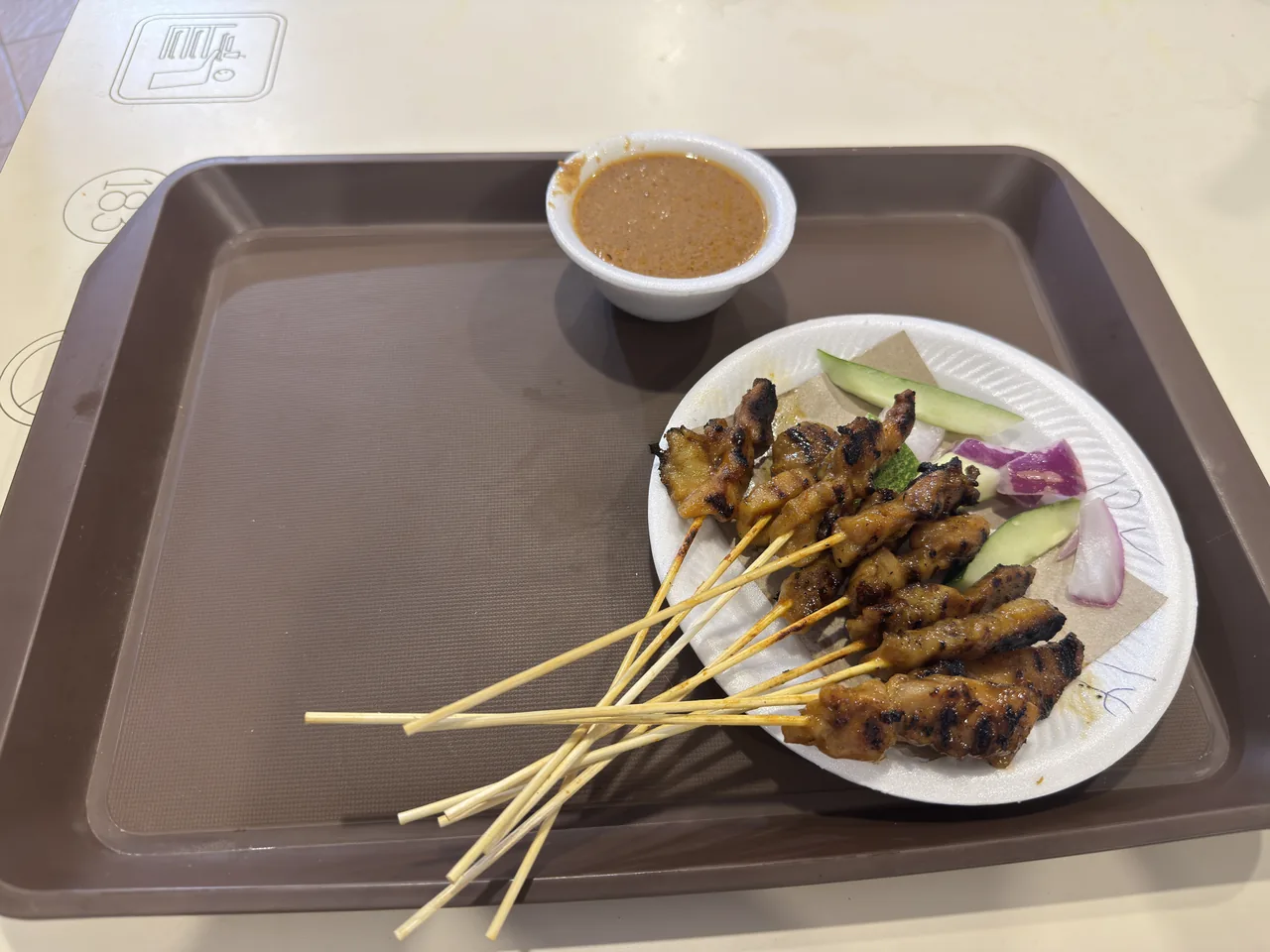
Good news: dishes like satay, nasi lemak, mee goreng, roti prata, murtabak and ayam penyet are very often run by halal stalls, so the local hawker classics are well within reach.
4. Local dishes you can absolutely eat
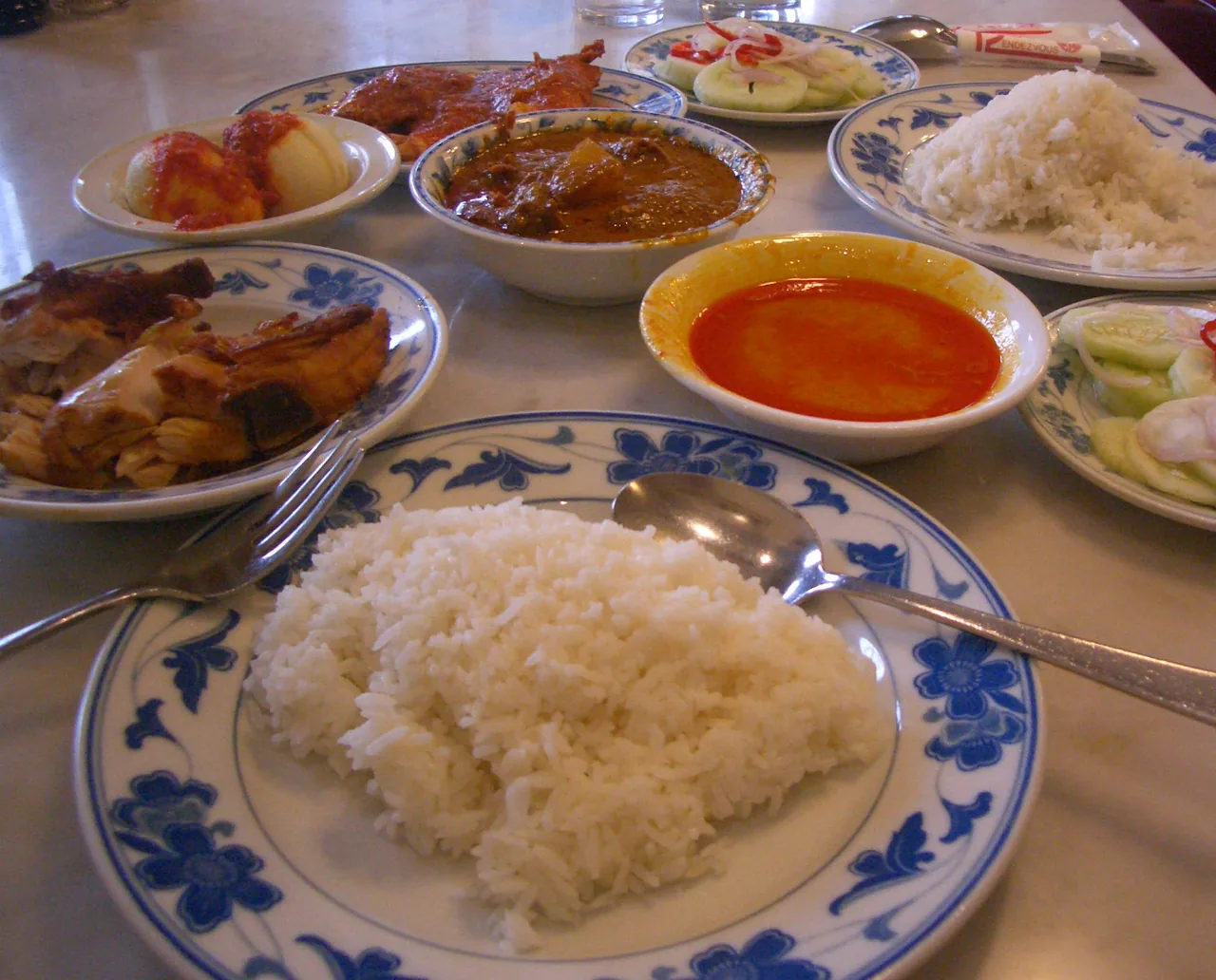
Almost every Singapore icon has a halal-certified version — including the ones people assume are off-limits. Here’s the quick map of what to look for.
| Dish | Halal situation |
|---|---|
| Hainanese chicken rice | Classic stalls vary; dedicated halal stalls and buffets serve it — pick one with the logo |
| Satay | Very commonly halal (chicken, beef, mutton) — a safe, classic choice |
| Nasi lemak / nasi padang | Malay staples — widely halal, especially in Malay areas |
| Laksa | Halal versions common; check the stall |
| Roti prata / murtabak | Indian-Muslim classics — very widely halal |
| Chilli & black pepper crab | Choose a halal-certified seafood restaurant (some famous brands aren’t) |
| Ayam penyet, mee goreng, mee rebus | Malay/Indonesian favourites — widely halal |
| Bak kut teh, char siew, lard-fried noodles | Traditionally pork-based — not halal; skip these |
The headline: you can eat Singapore’s national dishes as a Muslim traveller. The two to plan slightly ahead for are chicken rice (pick a certified stall) and chilli crab (book a halal seafood place). Everything else is easy.
5. Kampong Glam: eat without checking a label
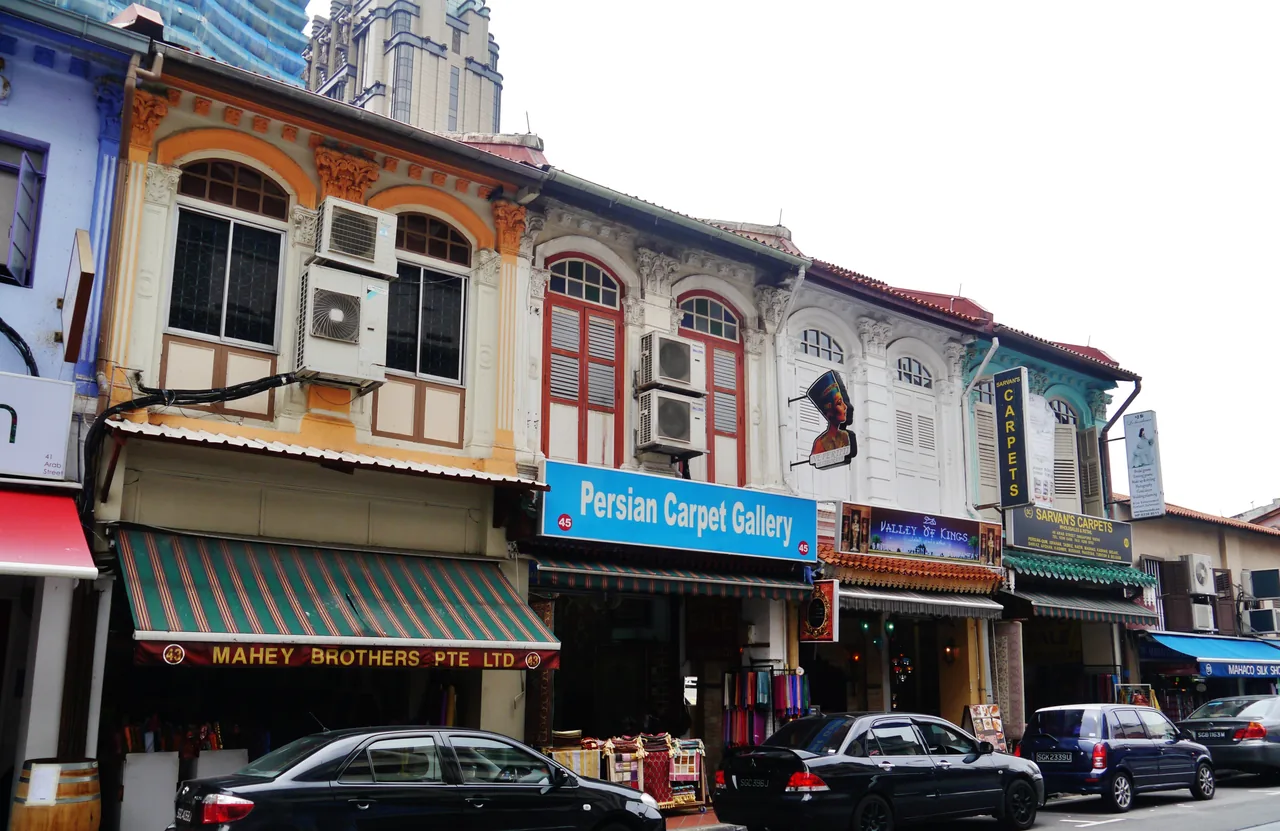
Kampong Glam — the historic Malay-Muslim quarter around Sultan Mosque, Arab StreetMap and BussorahMap Street — is the single best base for halal eating. Much of it is halal by default, and the variety is superb.
This is where you wander rather than plan. Nasi padang spreads, Malay and Indonesian home cooking, Middle Eastern mezze and shisha cafés, Turkish grills, and the legendary Zam ZamMap Restaurant, an Indian-Muslim institution serving murtabak since 1908. Sultan Mosque anchors the whole neighbourhood, so prayer is never more than a short walk from your table. Even the trendy strip of Haji LaneMap sits within the same few blocks, mixing cafés and boutiques with the heritage. For the full neighbourhood — history, shopping and sights — see our Kampong Glam guide.
If you only have limited time and want a worry-free food district, this is the one to pick.
6. Geylang Serai: the Malay heartland
Geylang Serai is the cultural home of Singapore’s Malay community — a designated Malay heritage district with a big, mostly halal food scene and the island’s largest Ramadan bazaar.
The Geylang Serai MarketMap & Food Centre packs in dozens of halal hawker stalls where a good plate runs around S$3–8 — Malay and Indian-Muslim cooking at its most authentic and affordable. Nearby, Wisma Geylang SeraiMap has sit-down restaurants and community spaces, and the Malay Heritage CentreMap tells the community’s story. During the holy month of Ramadan the area transforms into a sprawling bazaar of hundreds of stalls that draws huge crowds well into the night — one of the best food experiences in the city if your trip lines up with it. Bak kut teh is built on pork ribs. How the mutton and beef versions came about is covered in our bak kut teh guide.
7. More halal food hubs: Tekka & Adam Road
Beyond the two big quarters, two more spots are local halal favourites: Tekka Centre in Little India for Indian-Muslim food, and Adam Road Food CentreMap for halal hawker classics.
Tekka Centre, in the heart of Little India, has a busy hawker section with many halal Indian-Muslim stalls — biryani, roti prata, murtabak and rich curries — plus a wet market downstairs. Adam Road Food Centre, near the Botanic Gardens, is a compact centre beloved by locals, home to the famous Selera Rasa Nasi Lemak among other halal stalls. Both are easy to reach by MRT and give you that authentic, sit-on-a-plastic-stool hawker experience without the label-checking, since the halal stalls are clearly marked.
8. Halal chilli crab & a proper seafood feast
Chilli crab is the one splurge worth planning: skip the most famous tourist brands (several aren’t halal) and book a halal-certified seafood restaurant instead. They do exist — and they do the full spread.
Halal seafood specialists serve chilli crab, black pepper crab, butter prawns, cereal prawns, sambal stingray and the rest, often at gentler prices than the riverfront big names. A handful of well-known halal seafood restaurants around the island have built their reputation exactly on this, and several halal hotel buffets (below) also include crab. The key is simply to confirm certification before you commit — call ahead or check the HalalSG app — because crab is the dish where the obvious choices most often aren’t certified.
Treat it as your one big dinner out, pair it with rice or mantou buns, and you’ve had the quintessential Singapore seafood night without compromise.
9. Halal buffets & sit-down restaurants
For an easy, everything-in-one-place meal, Singapore’s halal buffets are excellent — several serve the full hawker repertoire in a halal-certified kitchen.
Straits KitchenMap at the Grand Hyatt is the classic, with chicken rice, satay, roti prata, laksa and local desserts all under one halal-certified roof. PARKROYAL COLLECTION Marina Bay and the Carousel at Royal Plaza on Scotts run popular halal buffets too. For à la carte, the historic Zam Zam in Kampong Glam is a must for murtabak, and there are halal options spanning Western, Korean, Japanese and Middle Eastern cuisines across the malls. If you’d rather not think about it for one meal, a halal buffet lets you try a dozen local dishes in a single sitting — great for families and first-timers.
10. Where to pray: mosques, suraus & the airport
Prayer is genuinely easy in Singapore. Mosques are spread across the island, major malls and attractions have prayer rooms (suraus/musollah), and every terminal at Changi AirportMap has prayer facilities — the T3 transit prayer room is open 24 hours with wudu.
In the food districts you’re never far from a mosque: Kampong Glam has Sultan Mosque and Hajjah FatimahMap Mosque, Chinatown has Masjid JamaeMap, and Little India has Masjid Abdul GaffoorMap — all welcoming and beautiful. Shopping malls in town and on Orchard Road typically have a surau, and large attractions usually offer a quiet space; just ask staff or check a mall directory. A prayer-time and qibla app keeps you on schedule and pointed the right way, and many hotels will provide a prayer mat and mark the qibla in your room if you ask.
If you’re connecting through Changi with time to spare, you can pray, eat halal and even shower without leaving the terminal — see our Changi & Jewel guide.
11. Visiting the mosques (etiquette & hours)
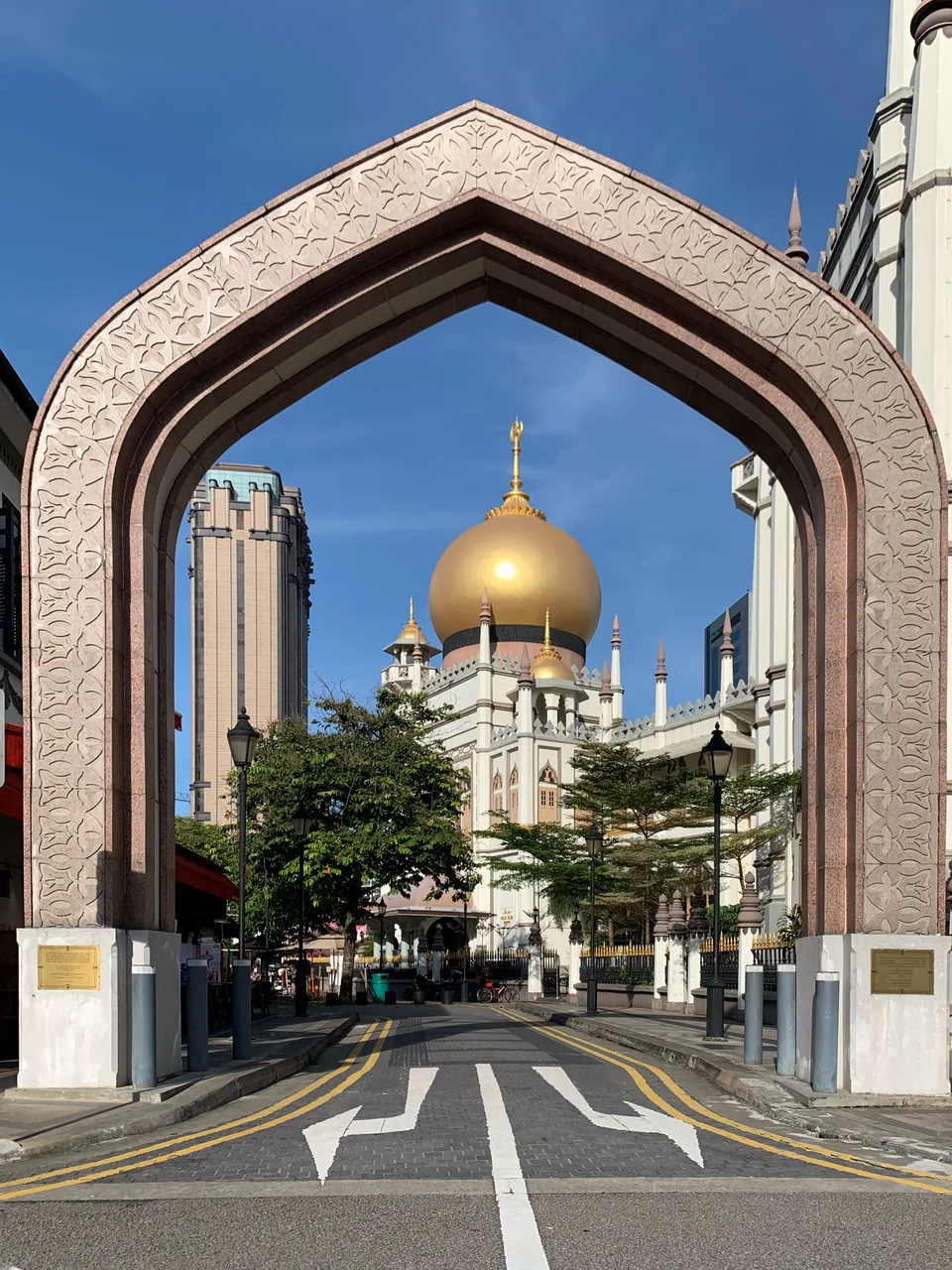
Singapore’s mosques are worth visiting in their own right, and non-Muslims are welcome outside prayer times. Sultan Mosque is the showpiece — free, with free guided tours — as long as you dress modestly and follow a few simple rules.
Sultan Mosque (Masjid Sultan), with its great golden dome, generally opens to visitors Saturday to Thursday from 10:00 to 12:00 and 14:00 to 16:00, and Fridays from about 14:30 to 16:00 (timings can change around prayers and Friday congregation, so check on the day). Dress so your shoulders and knees are covered; robes are lent free at the entrance if you need one, and you remove your shoes before entering. Non-Muslim visitors admire the interior but stay out of the main prayer hall, especially during prayers. The same modest-dress courtesy applies at Masjid Jamae and Masjid Abdul Gaffoor. Visit respectfully and these are some of the most atmospheric, photogenic spots in the city.
12. Muslim-friendly hotels
You don’t need a fully halal hotel to be comfortable, but several Singapore hotels go further for Muslim guests — prayer mats, qibla marked in the room, a bathroom water spray, and halal-certified kitchens or breakfast.
Names that come up again and again include Fairmont Singapore (prayer mats and timetables, a halal-certified café, and Ramadan iftar with transport to nearby mosques), Royal Plaza on Scotts (halal kitchens and prayer clothing for guests), Grand Mercure Roxy (a halal kitchen and qibla direction in rooms), Village Hotel Bugis (right by Kampong Glam) and the Grand Hyatt (home to Straits Kitchen). Even at hotels without a halal kitchen, a prayer mat and qibla information are usually a quick request away. For choosing a neighbourhood — Bugis and Kampong Glam are especially convenient for halal food and mosques — see our where to stay guide and our budget guide.
13. Attractions, Sentosa & family days out
The big attractions are easy too: halal food is available at or near most of them, and there’s space to pray. SentosaMap and Universal StudiosMap are particularly well covered.
Universal Studios Singapore has several halal restaurants inside the park, and nearby on Sentosa the Good Old Days food court near Siloso Beach serves halal local classics like nasi lemak, laksa and ayam penyet, while Malaysian Food Street has some halal stalls. VivoCity, the mall you pass through to reach Sentosa, has halal-certified eateries for an easy meal before or after. Gardens by the BayMap, the Singapore ZooMap, the aquarium and the rest of the headline sights all have food options and quiet corners — see our Sentosa guide, Gardens by the Bay guide and, if you’re travelling with little ones, our Singapore with kids guide. Plan meals around halal outlets and you can do a full day at any major attraction without a hitch.
14. Ramadan & Hari Raya: a special time to visit
If your trip overlaps Ramadan, you’re in for a treat — the Geylang Serai bazaar, special iftar spreads and a festive buzz. Because Ramadan shifts about 11 days earlier each year, check the exact dates for your travel year.
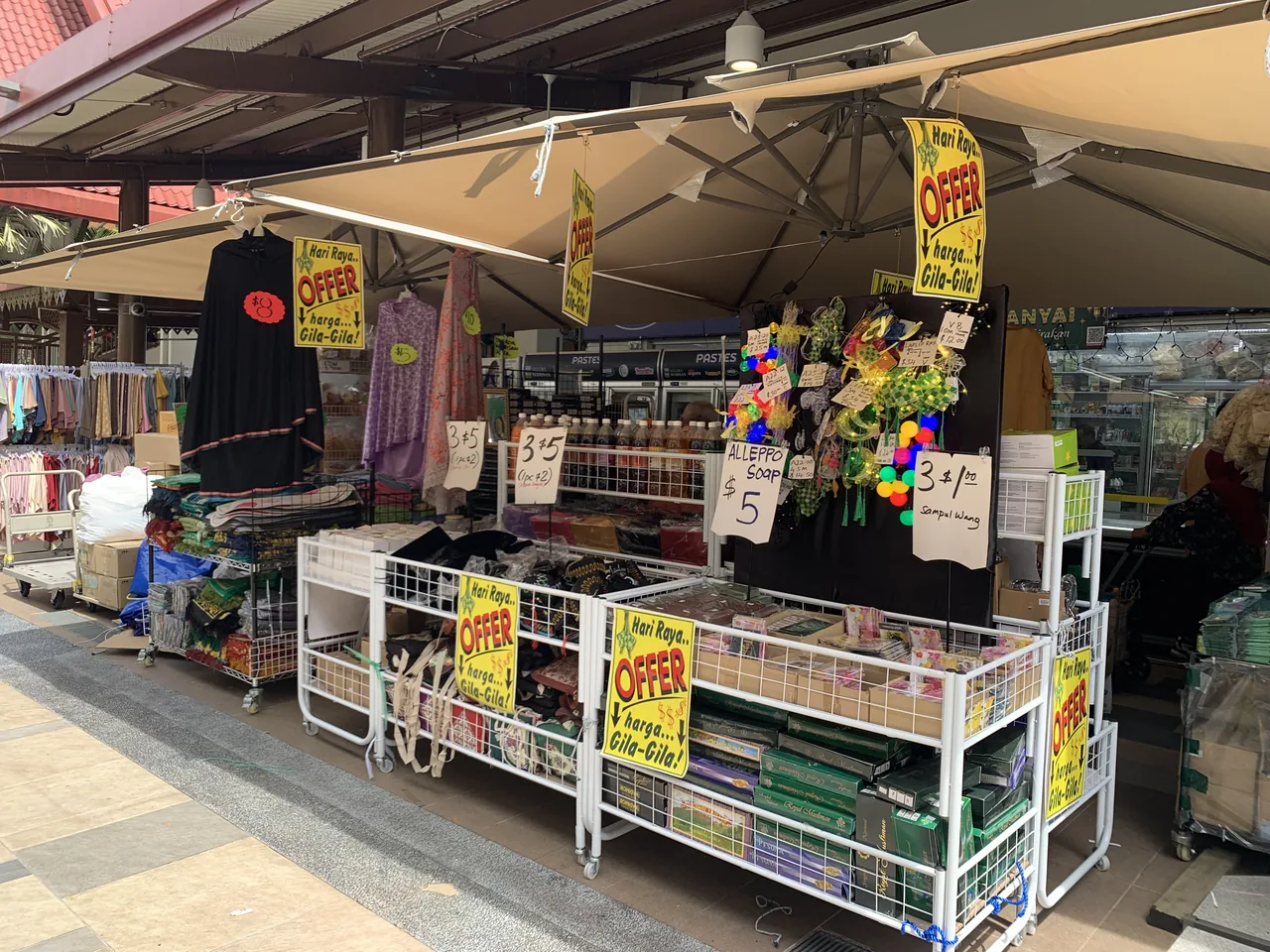
During the holy month, Geylang Serai hosts the island’s biggest Ramadan bazaar — hundreds of stalls selling food, snacks and festive goods, open late into the evening, with the whole area lit up and packed after sunset. Many restaurants and hotels run buka puasa (iftar) buffets, and the mood across the Malay neighbourhoods is wonderful. As a rough guide, in 2026 the Geylang Serai bazaar ran from mid-February to late March, with Hari Raya Puasa on 21 March; in 2027 Ramadan begins around early February. Hari Raya itself is a public holiday and a beautiful time to be in the city, though do book food and accommodation ahead, as it’s busy. For the wider seasonal picture, see our best time to visit guide.
15. Practical tips for a smooth halal trip
A few small habits make Singapore effortless for a Muslim traveller.
- Install the HalalSG app (by MUIS) to verify any restaurant’s certification on the spot.
- Use a prayer-time & qibla app for accurate salah times and direction wherever you are.
- Base yourself near Bugis/Kampong Glam for the easiest mix of halal food, mosques and transport.
- Glance at each hawker stall’s logo in mixed centres — don’t assume the whole building is halal.
- Plan chilli crab and chicken rice a little ahead (a certified seafood place; a halal chicken-rice stall).
- Ask your hotel for a prayer mat and qibla direction — it’s a routine request here.
- Stay connected with a local eSIM so you can look up halal spots and prayer rooms as you go.
Do these and the practical side takes care of itself, leaving you free to enjoy one of Asia’s most rewarding food cities. Start planning the rest of your trip with our Singapore travel guide.
🎡Things to Do53
🍜Food5
🏨Where to Stay10
🚇Getting Around4
🧭Travel Tips20
Frequently asked questions
Eat your way through the Malay-Muslim quarter — see our Kampong Glam guide →