
Rainy Day in Singapore: 25+ Indoor Things to Do (Rain Won’t Ruin Your Trip)
It rains often in Singapore, but it almost never ruins a day. Storms are usually short, heavy afternoon bursts that clear fast, and the whole city is built to stay dry. Here’s exactly what to do when the sky opens up, from climate-controlled gardens and aquariums to the world’s tallest indoor waterfall, plus how to get around without getting soaked.
| Does it rain a lot? | Yes — rain falls year-round, but usually as short afternoon storms |
|---|---|
| How long do storms last? | Often 30 minutes to 2 hours, then it clears — rarely an all-day washout |
| Wettest months | November to January (Northeast Monsoon); showers also Jun–Sep mornings |
| Top rain move | The climate-controlled domes at Gardens by the BayMap (with an indoor waterfall) |
| Stay dry | MRT, covered linkways and connected malls let you cross town without an umbrella |
| Best for families | Science CentreMap, the aquarium, Jewel’s Canopy Park, hands-on museums |
| Carry | A compact umbrella or a light poncho; check the NEA weather radar app |
| Heads-up | Taxis and Grab surge in heavy rain — book early or wait out the worst |
1. Will rain ruin my Singapore trip?
2. When does it rain, and for how long?
3. The golden rule: Singapore is built for rain
4. Rain move #1: the climate-controlled domes
5. Dive into the aquarium
6. Museums & galleries
7. Jewel Changi & the Rain Vortex
8. Malls: shelter, shop, eat, repeat
9. Eat your way through the storm
10. Active indoors: skydiving, climbing & more
11. Quiet & cosy: spas, tea & calm
12. Practical rainy-day tips
13. Indoor attractions at a glance
14. Where to shelter, neighbourhood by neighbourhood
15. Free & cheap things to do in the rain
16. A sample rainy-day plan
If a wet forecast has you worried about your Singapore trip, relax: rain here is a fact of life, not a trip-killer. The classic Singapore storm is a short, dramatic afternoon downpour that clears within an hour or two, and even when it lingers, the city is engineered to keep you dry — covered walkways, an enormous connected MRT, and mall after climate-controlled mall. There’s genuinely more to do indoors here than most cities offer in the sun: a rainforest dome with its own waterfall, a giant aquarium, the world’s tallest indoor waterfall at the airport, world-class museums, and food courts made for lingering. This guide covers what to do when it pours, when the rain tends to come, and the small tricks that keep a wet day fun. For the bigger weather picture and the best months to visit, see our best time to visit guide.
1. Will rain ruin my Singapore trip?
No — and it’s worth saying clearly. Singapore rain is mostly short, heavy afternoon storms that clear within an hour or two, and the whole city is built to keep you dry. With a couple of indoor options ready, a wet day here is still a great day.
This is a tropical city that rains in every month of the year, so on a trip of a few days you should simply expect to meet a storm or two. The good news is twofold. First, the rain rarely settles in: the typical pattern is a dramatic downpour, often with thunder, that passes and gives way to sunshine and that warm, steamy after-rain glow. Second, Singapore handles rain better than almost anywhere — a vast covered MRT network, sheltered walkways, and one climate-controlled mall, museum or attraction after another. You can fill a full day indoors here and never feel like you’re settling.
The rest of this guide is your wet-weather toolkit: when the rain comes, where to go the moment it starts, and the small habits that keep a rainy day smooth.
2. When does it rain, and for how long?
It can rain any time of year, but the wettest stretch is roughly November to January, and most storms are short — think 30 minutes to two hours, then it clears.
Singapore has two monsoons. The Northeast Monsoon (December to early March) is the wettest, peaking around November to January with the occasional longer, greyer spell. The Southwest Monsoon (June to September) is drier overall but throws sudden morning ‘Sumatra squall’ storms. The inter-monsoon months (April–May and October–November) bring the classic build-then-burst afternoon thunderstorm. Whatever the season, the day-to-day reality is similar: heat builds, clouds stack up, a sharp storm rolls through, and then it’s bright again.
3. The golden rule: Singapore is built for rain
Before you worry about specific attractions, know this: you can cross much of the city without an umbrella. The MRT, covered walkways and connected malls mean rain is more of an inconvenience than an obstacle.
The MRT is mostly underground or covered and links directly into malls and several attractions, so a storm need not interrupt your day at all. The city centre is stitched together with sheltered link-bridges and covered walkways, Orchard Road has underground connections between its big malls, and the CityLink and basement networks let you walk for ages without seeing the sky. The practical upshot: plan your wet hours around places that connect, and you’ll barely get damp. Our getting around guide explains the network and passes.
4. Rain move #1: the climate-controlled domes
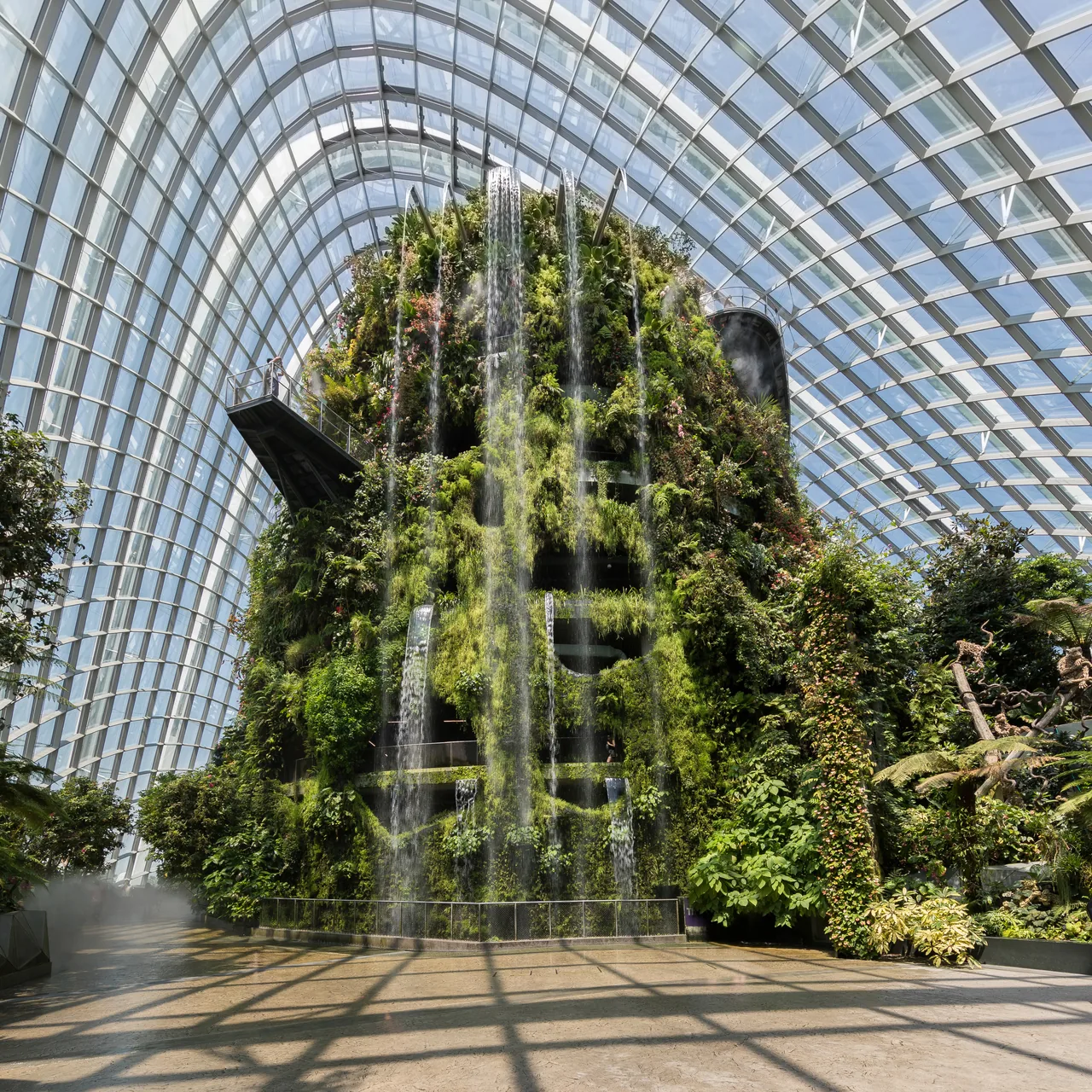
If it’s pouring, go straight to Gardens by the Bay’s two conservatories. They’re sealed glass domes, so the weather is irrelevant — and the Cloud Forest is built around a 35-metre indoor waterfall.
The Flower DomeMap is a vast, cool greenhouse of plants from Mediterranean and semi-arid regions; the Cloud Forest is the showstopper, a misty indoor mountain you climb on walkways, wrapped around one of the tallest indoor waterfalls in the world. Honestly, it’s even better in the rain, when water sheets down the glass and the whole place feels lush and tropical. Allow two to three hours for both, and book ahead to skip the queue. See what’s inside in our Gardens by the Bay guide.
5. Dive into the aquarium
The Singapore Oceanarium on SentosaMap (the much-expanded former S.E.A. Aquarium)Map is entirely indoors and easily fills two or three rainy hours.
Recently rebuilt and roughly tripled in size, it walks you through habitat after habitat of sharks, rays, jellyfish and reef life, culminating in a giant ocean viewing panel that’s mesmerising whatever the sky is doing. It’s a short, sheltered hop on Sentosa, pairs well with the island’s other indoor spots, and is a reliable family win. Buy ahead so you’re not queuing in the wet.
6. Museums & galleries
Singapore’s museums are world-class and tailor-made for a wet afternoon — most are air-conditioned, central and easy to reach by MRT.
The ArtScience MuseumMap at Marina Bay SandsMap is the crowd-pleaser, with its immersive ‘Future World’ of light, water and digital art that kids and adults both love. The National GalleryMap Singapore, in the grand old Supreme Court and City Hall, holds Southeast Asia’s finest art and has lovely cafés to wait out a storm. Add the National MuseumMap for the Singapore story, the Asian Civilisations MuseumMap by the river, and the jewel-box Peranakan MuseumMap. Many cluster around the City Hall/Bras Basah area, so you can chain two or three with minimal time outside.

7. Jewel Changi & the Rain Vortex
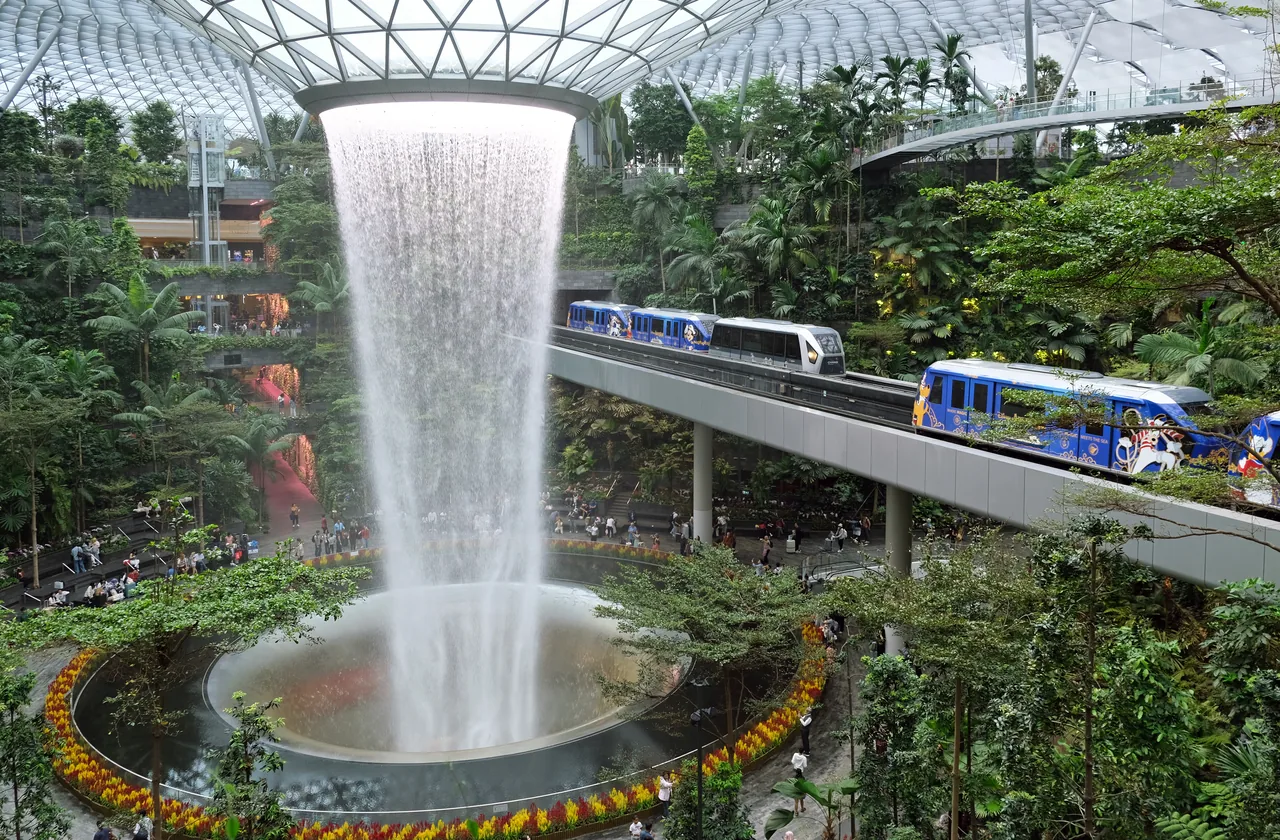
There’s a perfect irony to a rainy day: head to the airport’s Jewel and watch the world’s tallest indoor waterfall while it pours outside.
The HSBC Rain Vortex plunges about 40 metres through seven storeys at the centre of Jewel ChangiMap AirportMap, ringed by an indoor forest valley, hundreds of shops and a huge food selection — all under one giant glass dome. After dark it becomes a free light-and-sound show. Upstairs, Canopy Park has bouncing nets, walking nets and hedge mazes (great for kids), all sheltered. It’s a direct MRT ride and one of the best rainy outings in the city; our Changi & Jewel guide has the full rundown.
8. Malls: shelter, shop, eat, repeat
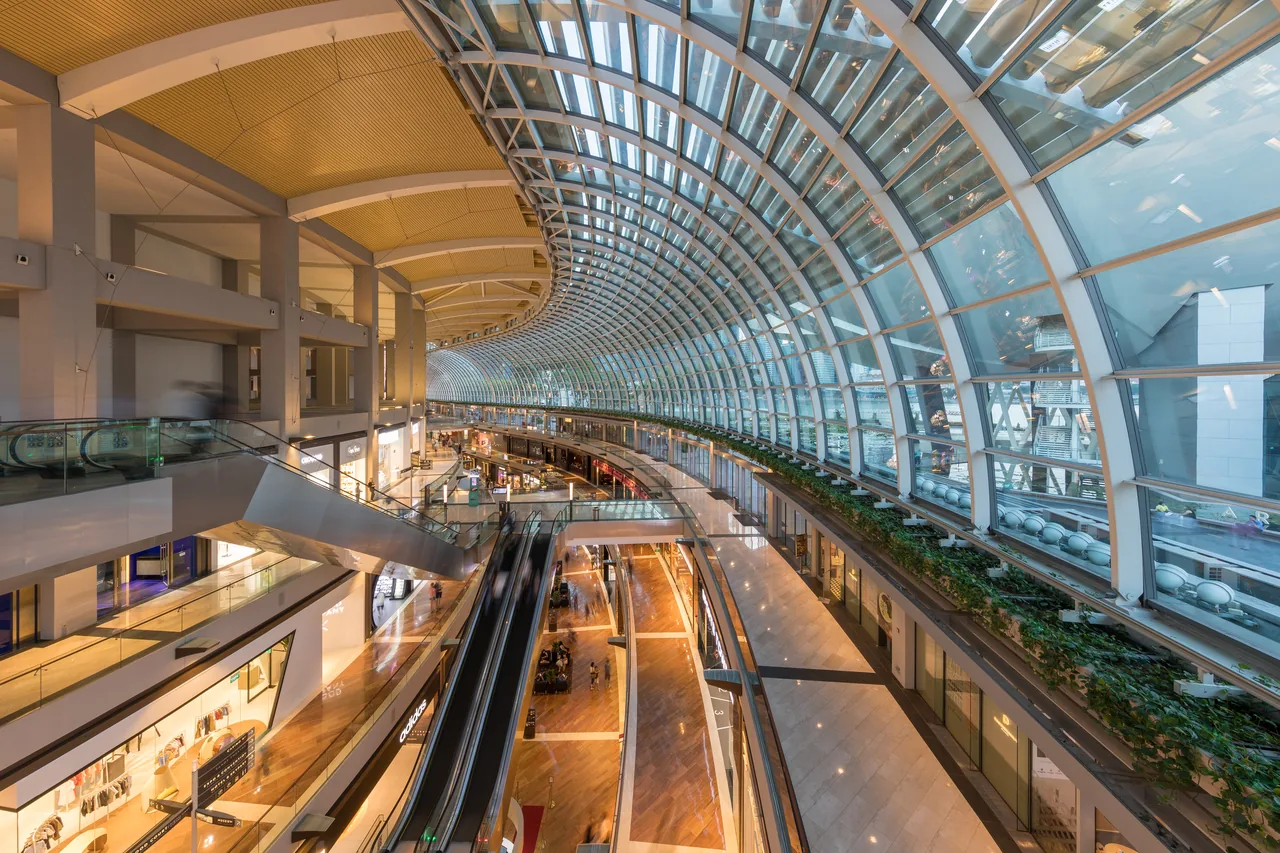
Singapore’s malls aren’t an afterthought — they’re climate-controlled mini-cities of food, cinemas, art and play, and many connect straight to the MRT.
On Orchard Road, ION OrchardMap, Ngee AnnMap City and the surrounding malls link up so you can wander for hours without an umbrella. At the bay, the Shoppes at Marina Bay Sands pairs luxury shopping with a canal and the ArtScience Museum next door. VivoCityMap is the gateway to Sentosa and has sea views and a rooftop, BugisMap+ and Bugis Junction cover the youthful and quirky, and FunanMap leans tech, indoor climbing and creative. Even if you’re not a shopper, malls are where Singapore eats, watches films and waits out the weather. For the bigger picture of where to go, see our things to do guide.
9. Eat your way through the storm
Rain is the perfect excuse to do what Singapore does best: eat. Hawker centres, food courts and kopitiams are indoors, cheap and built for lingering.
Duck into a hawker centre and graze your way through chicken rice, laksa, char kway teow and a cold drink while the storm passes — our hawker food guide tells you what to order and where. Malls have whole basement food halls and air-conditioned food courts if you want comfort with your meal, and the city’s café and high-tea scene is made for a slow, dry afternoon. A long, lazy meal is a perfectly good ‘activity’ when the sky is grey.
10. Active indoors: skydiving, climbing & more
Rain doesn’t have to mean sitting still. Some of Singapore’s most fun experiences are entirely indoors.
- iFlyMap Sentosa — indoor skydiving in a vertical wind tunnel; a genuine adrenaline hit, fully sheltered.
- Indoor climbing & bouldering — air-conditioned walls at spots like Funan, Kallang Wave and Aperia malls.
- Science Centre Singapore — hands-on exhibits and shows that swallow a whole afternoon (great for families).
- Trampoline parks, bowling & escape rooms — easy group fun across the malls.
- Museum of Ice CreamMap — a playful, very Instagrammable indoor experience.
- Cinemas — multiplexes in nearly every mall, often with recliner halls.
Many of these sit inside malls, so you can combine an activity with food and shopping without going back out into the rain.
11. Quiet & cosy: spas, tea & calm
Sometimes the best response to a storm is to slow right down — and Singapore is excellent at indoor calm.
Treat the rain as permission to book a spa or foot-reflexology session, settle into a grand hotel for afternoon high tea, lose an hour in a bookshop or the striking National Library, or simply find a window café and watch the downpour with a kopi. These low-key, fully indoor options are perfect when you’ve been on your feet for days, and they turn a ‘bad weather’ afternoon into the restful part of the trip.
12. Practical rainy-day tips
A few small habits keep a wet day in Singapore stress-free.
- Check the radar: the NEA myENV app (or weather.gov.sg) shows storms coming so you can time your dashes.
- Carry compact rain gear: a folding umbrella or a packable poncho; cheap umbrellas are sold everywhere when it rains.
- Lean on the MRT: it’s dry, fast and connects to malls and attractions — your default in wet weather.
- Book Grab early: rides surge and get scarce in heavy rain, so don’t leave it to the last minute.
- Dress for humidity: quick-dry clothes and sandals or grippy shoes beat anything that stays soggy.
- Stay flexible: swap your outdoor and indoor plans around the forecast rather than fighting it.
- Don’t fear a little rain: when it’s warm and light, locals just carry on — sometimes the storm is worth watching.
13. Indoor attractions at a glance
Not sure where to start? Here’s a quick comparison of Singapore’s best fully-indoor attractions for a rainy day — by area, how long they take, and who they suit best.
| Attraction | Area | Time | Best for |
|---|---|---|---|
| Cloud Forest & Flower Dome | Marina Bay | 2–3h | Everyone — the top rainy-day pick |
| Singapore Oceanarium | Sentosa | 2–3h | Families, marine lovers |
| ArtScience Museum | Marina Bay | 1.5–2h | Art & tech fans, kids (Future World) |
| National Gallery | City Hall | 1.5–3h | Art lovers, architecture |
| Science Centre | Jurong East | 2–4h | Families, curious kids |
| Jewel Rain Vortex & Canopy Park | Changi | 2–3h | Everyone; great on an airport day |
| iFly indoor skydiving | Sentosa | ~1h | Thrill-seekers |
| National Museum | City Hall | 1.5–2h | History & first-timers |
All of these are fully covered, and most connect to the MRT or sit inside a mall, so you can reach them without getting wet. If you only do one, make it the Gardens domes; if you’re near the airport, make it Jewel.
14. Where to shelter, neighbourhood by neighbourhood
Wherever you are when the rain starts, there’s usually a dry cluster of things to do close by. Here’s where to head by area.
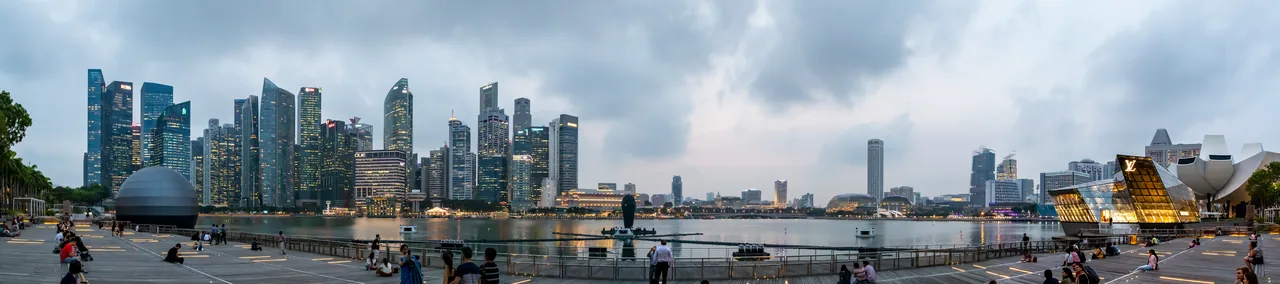
- Marina Bay: the Gardens domes, ArtScience Museum and the Shoppes at Marina Bay Sands sit within a short, partly-covered walk — the richest rainy cluster in the city.
- City Hall & Bras Basah: the National Gallery, National Museum, Asian Civilisations Museum, Peranakan Museum and Funan mall, several linked underground via CityLink and basement passages.
- Orchard Road: a chain of connected malls — ION Orchard, Ngee Ann City, Paragon and 313@Somerset — with basement and bridge links for hours of dry shopping, eating and cinema. See our Orchard Road guide.
- Sentosa: the Singapore Oceanarium, iFly and indoor zones, with VivoCity at the gateway for a dry meal before or after.
- Changi & Jewel: the Rain Vortex, Canopy Park and endless shops and food under one glass dome — ideal on an arrival or departure day.
- Bugis & Kampong Glam: Bugis+ and Bugis Junction malls, plus sheltered shophouse lanes, cafés and the National Library nearby.
For the lay of the land and how the districts connect, see our Singapore neighbourhoods guide.
15. Free & cheap things to do in the rain
A wet day doesn’t have to cost anything. Many of Singapore’s best rainy options are free or nearly so.
- Window-shop the malls — air-conditioned, free, and endlessly connected; perfect for aimless dry wandering.
- The EsplanadeMap — free performances on its indoor stage most evenings, plus free-access foyers and a library by the bay.
- National Library (Bugis) — a calm, design-led tower to read, work or simply watch the rain from a high window.
- Jewel’s Rain Vortex — the waterfall and surrounding gardens are free to wander; you only pay for Canopy Park up top.
- Hotel and museum lobbies — grand, dry spaces (the ArtScience Museum and the big bayfront hotels) to regroup and dry off.
- A long hawker meal — the cheapest and most local way to wait out a storm; see our hawker food guide.
Pair one or two of these with a single paid attraction and you’ve got a full, low-cost rainy day. For more ways to save, see our budget tips throughout the main guide.
16. A sample rainy-day plan
Here’s an easy, mostly-connected day for when the forecast is grim — heavy on Marina Bay, where the indoor sights cluster.
| Time | Do this (all sheltered) |
|---|---|
| Morning | Gardens by the Bay domes — Flower Dome & Cloud Forest (indoor waterfall) |
| Lunch | Food hall at the Shoppes at Marina Bay Sands, or a nearby hawker centre |
| Early afternoon | ArtScience Museum’s Future World, right at Marina Bay Sands |
| Late afternoon | National Gallery or National Museum (City Hall area), with a café break |
| Evening | Dinner and a film or shopping in a connected mall; or head to Jewel for the Rain Vortex light show |
Swap in the Singapore Oceanarium on Sentosa or a Sentosa indoor day if you’re based that side. The point is simple: keep your wet hours among places that connect, and the rain becomes a non-event. Start planning the rest of your trip with our Singapore travel guide.
🎡Things to Do52
🍜Food6
🏨Where to Stay10
🚇Getting Around4
🧭Travel Tips20
Frequently asked questions
Make the domes your rainy-day plan — see our Gardens by the Bay guide →