
Lazarus, St John’s and Kusu: The Boat You Book Decides the Day
Two companies sail to Singapore’s Southern Islands, and one of them says you cannot cross from Kusu to St John’s at all. Here is what each operator runs, what it costs, and what is on the four islands once you land.
| Where you sail from | Marina South Pier. On weekends there is also a boat from the Sentosa jetty at the Cove |
|---|---|
| Where you land | Not St John’s main jetty but Pulau Seringat on Lazarus, 15 to 20 minutes’ walk away |
| Last boat back | Leaves Kusu at 16:15 on a weekday. Weekends and public holidays add a later sailing |
| Cheapest fare | S$10 return if you skip the Sisters. S$15 covers the usual island hopping ticket |
| Shops and water | One convenience store on Lazarus, Friday to Sunday only. No taps or fountains anywhere |
| Free and indoors | The marine park gallery on St John’s, and on a weekday it closes at 14:30 |
1. Two operators, and they do not agree with each other
2. The boat no longer lands where the old advice says
3. The timetable, and what it does to your day
4. What you pay depends on what you leave out
5. There is a boat from Sentosa, but only at weekends
6. Lazarus is three islands wearing one name
7. St John’s was a quarantine station, then a prison, then a laboratory
8. The free gallery on St John’s is the one indoor thing out here
9. Kusu is shaped like the story told about it
10. For one month a year, Kusu runs on different rules
11. The Sisters’ Islands reopened with a boardwalk and a forest trail
12. A second marine park is coming, off Lazarus and Kusu
13. What each island actually has
14. Both places to stay on Lazarus close at the end of January 2027
15. The rules that bite, and how to fit the day together
1. Two operators, and they do not agree with each other
Singapore Island Cruise and Marina South Ferries both sail to these islands, and they publish different routes. This is the first thing to settle, because it decides which crossings exist for you.
The sharpest difference is a crossing that one says is impossible. Island Cruise states in its own service notes that there is no ferry from Kusu back to St John’s or Lazarus. Marina South Ferries lists exactly that crossing, both in its afternoon loop and as an inter island shuttle.
| Singapore Island Cruise | Marina South Ferries | |
|---|---|---|
| Sails from | Marina South Pier | Marina South Pier, plus Sentosa at weekends |
| Shape of the day | One loop: pier, Lazarus, Kusu, pier | Morning loop one way, afternoon loop reversed |
| Kusu back to St John’s | States there is none | Lists it, including express shuttles |
| Sisters’ Islands | Shuttle from Lazarus | Direct from the pier |
| Later sailing | Weekends and public holidays only | Runs to early evening |
So decide the shape of the day before you buy. If you want to finish on St John’s rather than Kusu, one operator supports it and the other does not. Booking on price alone is how people end up stranded on the wrong island watching a boat go the other way.
Marina South Pier itself sits at the end of a North South line branch, which makes getting there straightforward. Parking is limited enough that the operator recommends against driving.
2. The boat no longer lands where the old advice says
The main jetty at St John’s is closed for repair works, so ferries are rerouted to the Pulau Seringat jetty on Lazarus. The operator puts the walk from there across to St John’s at 15 to 20 minutes.
This quietly inverts most of what has been written about these islands. The familiar description has you landing at St John’s and strolling over the causeway to Lazarus for the beach. At present it runs the other way: you land on Lazarus, and St John’s is the one you walk to.
It matters more than a detour usually would, because the two islands hold different things. The toilets, changing rooms and showers are on St John’s. The beach and lagoon are on Lazarus. If you land on Lazarus, change and shower before you sail, and someone in the group cannot manage the walk, that is a problem you want to know about on the pier rather than on the sand.
It also stretches every walking figure written for the old arrangement. The marine park gallery on St John’s, for instance, is described as a 30 to 40 minute walk from the St John’s jetty. Landing at Seringat instead adds the causeway crossing to the front of that.
One caution. This is a temporary arrangement tied to the works, and one operator’s printed timetable still carries a note about returning from St John’s main jetty. Take the service notice over the timetable image, and confirm when you book.
3. The timetable, and what it does to your day
The last boat back leaves Kusu at 16:15 on a weekday. On weekends and public holidays there is one more at 18:15. Everything else follows from those two numbers.
Singapore Island Cruise runs the loop hourly through the middle of the day. Sailings out to Lazarus start at 09:00 and the last one leaves at 15:00, with the onward legs timed so that each boat feeds the next.
| Pier to Lazarus | Lazarus to Kusu | Kusu to pier |
|---|---|---|
| 09:00 | 09:50 | 10:15 |
| 10:00 | 10:50 | 11:15 |
| 11:00 | 11:50 | 12:15 |
| 12:00 | 12:50 | 13:15 |
| 13:00 | 13:50 | 14:15 |
| 14:00 | 14:50 | 15:15 |
| 15:00 | 15:50 | 16:15 |
| No later sailing | 17:50 | 18:15, weekends and public holidays |
Read the last full row across and the trap shows itself. Take the 15:00 out and you have 50 minutes on Lazarus before the onward boat, then 25 minutes on Kusu before the final one. That is not a day at the beach, it is a tour of two jetties.
Which is why the operator advises against arriving after 15:00 at weekends, on top of the crowding it warns about. On a weekday the squeeze is worse still, because the 17:50 and 18:15 sailings are not running and 16:15 is the end of the line.
The Sisters add a further constraint. The shuttle from Lazarus goes at 10:00, 12:00 and 14:00 and returns at 11:15, 13:15 and 15:15, so each visit is a fixed 75 minutes. Take the 14:00 and you return at 15:15, which still connects to the 15:50 onward to Kusu, but nothing after that.
Also worth knowing: the operator asks you to be at the jetty 15 minutes before departure, and the Sisters service is suspended on weekdays other than public holidays, with maintenance closures on the first and third Wednesday of the month.
4. What you pay depends on what you leave out
The cheapest ticket is S$10 return, and it buys the same three islands as the S$15 one. The difference is the Sisters.
Fares come straight from the operator’s own booking system, so these are what you pay rather than a reseller’s figure.
| Ticket | Adult | Child | Notes |
|---|---|---|---|
| Kusu, Lazarus and St John’s, no Sisters | S$10 | S$10 | Single price, the cheapest way over |
| Island hopping pass from the pier | S$15 | S$12 | Child rate also covers seniors. Family ticket S$50 |
| Pier to Lazarus | S$15 | S$12 | Under twos free |
| Pier to the Sisters | S$18 | S$12 | Seniors S$12 |
| Sentosa to Lazarus | S$20 | S$15 | Weekends only. Family ticket S$64 |
The family tickets are worth checking rather than assuming. Two adults and two children from the pier come to S$54 bought separately against S$50 as a family ticket, so it saves S$4. From Sentosa the same group is S$70 separately against S$64, saving S$6. Neither is dramatic, but both are free money for one extra click.
Age brackets are worth reading too, because they are not the usual ones. The other operator counts a child as 1 to 12, an adult as 13 to 59 and a senior as 60 to 99, with under ones free. A 13 year old pays adult here.
Set against the mainland, the whole thing is remarkably cheap. A day on a real beach for S$10 return is the lowest cost outing of its size in Singapore, and the cost guide puts that next to what the ticketed attractions charge.
5. There is a boat from Sentosa, but only at weekends
Marina South Ferries runs a separate service between the Sentosa jetty at the Cove and Lazarus, weekends only. Departures are at 09:00, 11:00 and 15:00, with returns at 10:30, 12:30 and 17:00.
Treat those two columns as separate lists rather than matched pairs. The useful consequence is the spread: take the first boat out and the last one back and the island is yours for most of the day, while the 15:00 out with the 17:00 back is a short evening visit.
It costs a third more than sailing from Marina South Pier, S$20 against S$15 for an adult. The case for paying it is location, not the boat. If you are already staying on Sentosa, the alternative is crossing back to the mainland and out to the pier, which costs you the better part of an hour each way.
If you are staying anywhere else in town, the pier is the obvious choice.
6. Lazarus is three islands wearing one name
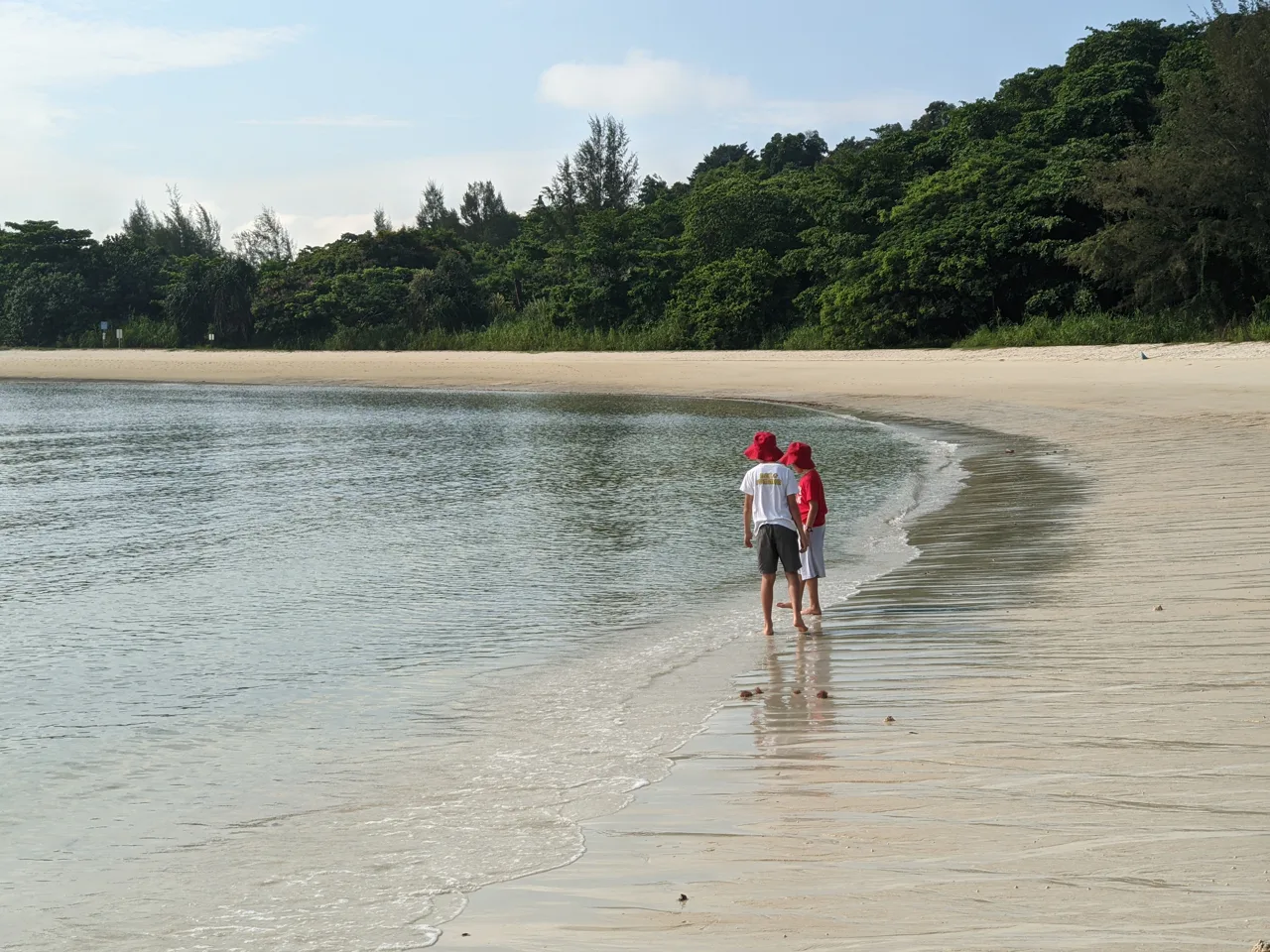
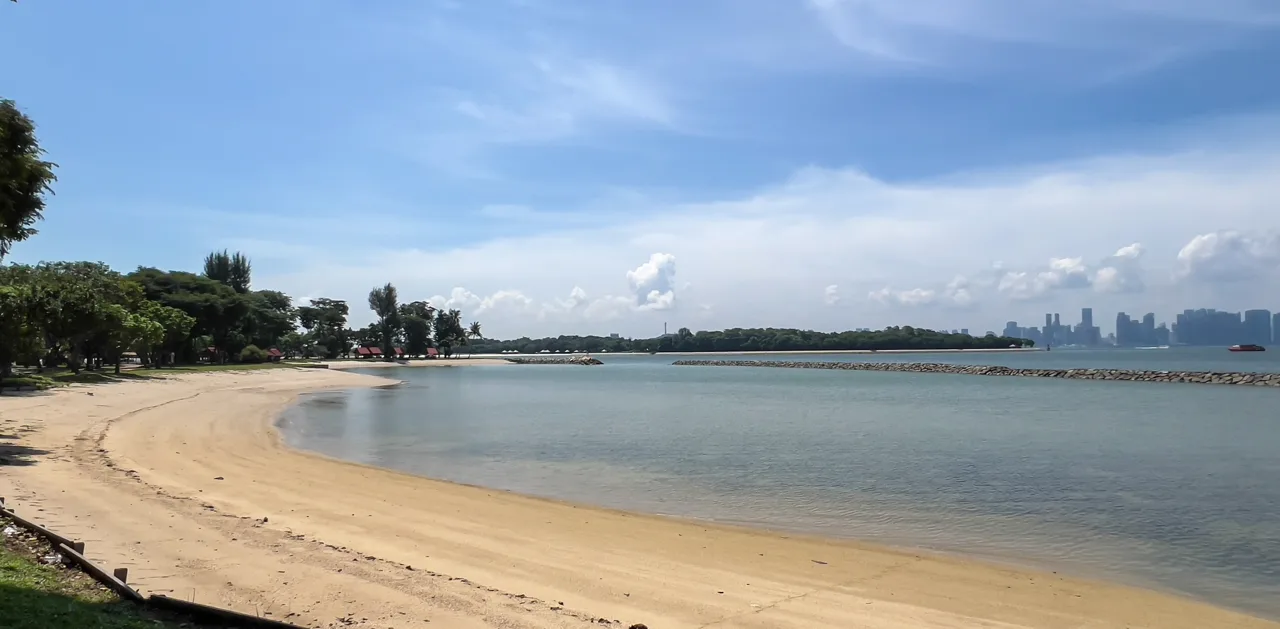
The Lazarus you walk on is not one island. It is the original Lazarus, Kias and Seringat, joined into a single landmass by reclamation, and a causeway links the result to St John’s.
That is worth knowing because it explains the shape of a visit. The reclaimed ground gave the island its long curved bay and the shallow lagoon behind it, which is why the swimming here is better than anywhere else in the group. It is also why the walk between the jetty and the beach feels longer than the map suggests: you are crossing what used to be open water.
The beach is the reason most people come, and it earns the reputation on a weekday. On a Saturday the same sand carries the crowd from every boat that came out that morning.
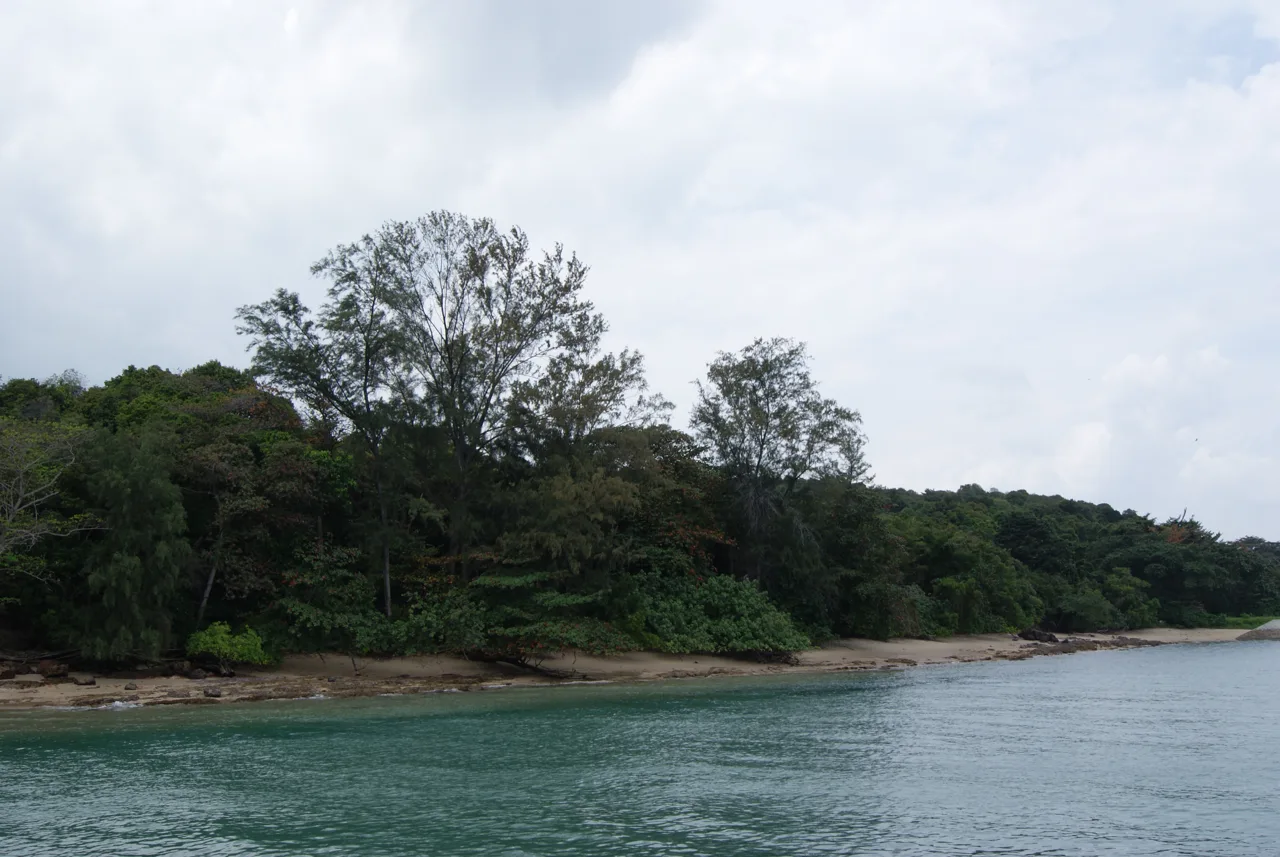
Two practical points that the postcard never mentions. There are no toilets on the beach itself and no bins anywhere on Lazarus, so whatever you carry on comes back off with you. And the island holds one of the few natural rocky shores left in Singapore along with the largest tract of mature native coastal forest in the Southern Islands, which is exactly the sort of thing that gets fenced off once a marine park designation lands nearby.
7. St John’s was a quarantine station, then a prison, then a laboratory
The island you now walk to for the toilets held one of the largest quarantine stations in the world. It could take 6,000 people at a time.
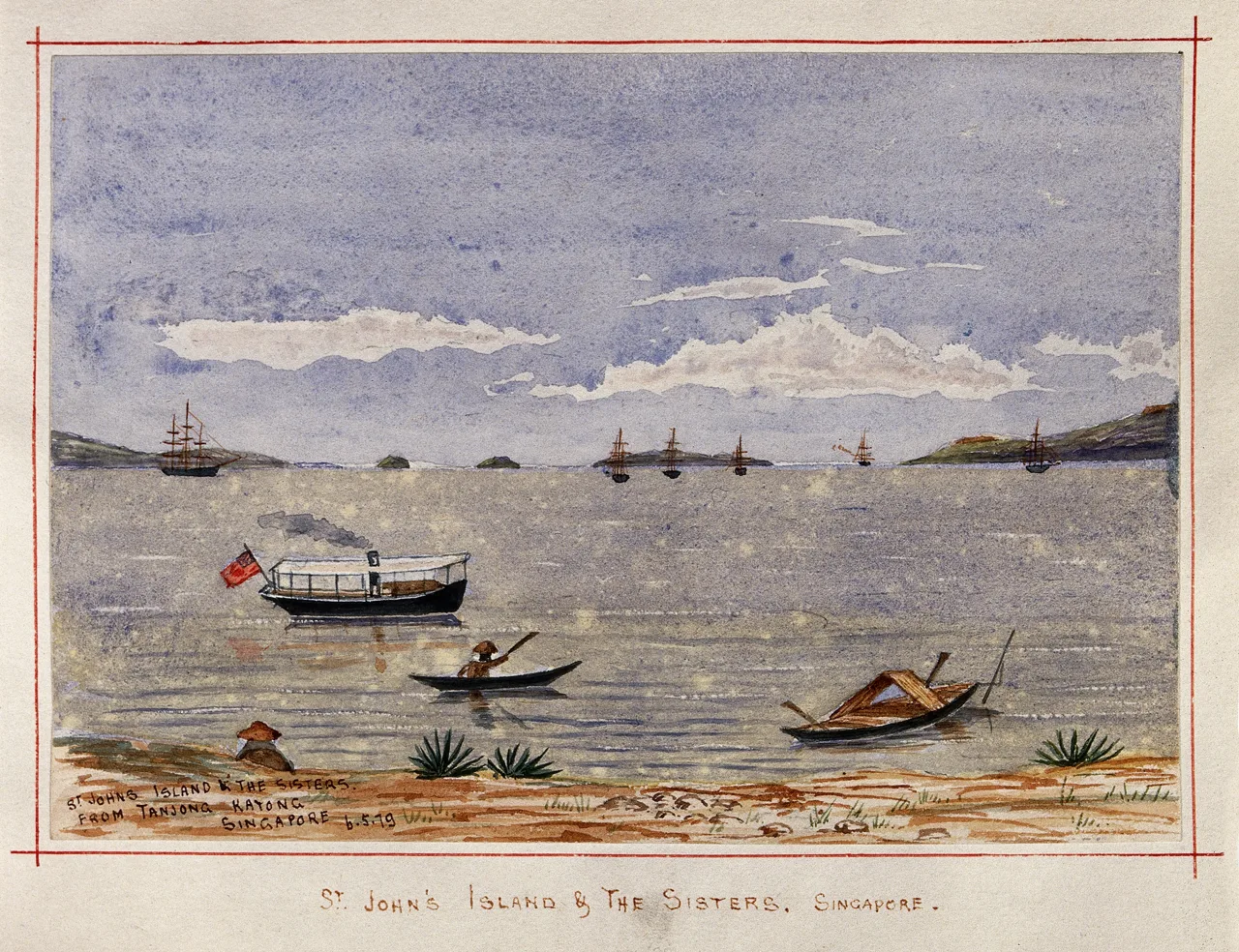
It began with cholera. An outbreak in the 1870s led to an attap roofed lazaretto being built here in 1874, and in the same year the SS Milton arrived carrying around 1,300 cholera stricken Chinese labourers. For decades afterwards this was the gate every arriving migrant and pilgrim passed through before being allowed onto the main island.
| Period | What the island was |
|---|---|
| From 1874 | Quarantine station, built after a cholera outbreak |
| Second World War | Used by the Japanese to hold prisoners of war |
| From 1948 | Three wards turned into detention barracks for anti colonial political prisoners |
| 1955 to 1975 | Opium treatment centre, converted to a drug rehabilitation centre in 1973 |
| From 2002 | Marine research laboratory, Singapore’s only offshore one |
The 1948 line is the one that surprises people. Among those held in the detention barracks were Devan Nair, who later became Singapore’s third president, and the unionists Lim Chin Siong and James Puthucheary. A short ferry ride from the city centre, on an island now sold as a beach day, is where a good deal of Singapore’s political argument was physically parked.
The research came last. The Tropical Marine Science Institute was set up in 1998 and the marine laboratory here launched in 2002, which is why the low buildings scattered across the island look institutional rather than recreational. They are still working buildings, so the island reads as a place of work with a beach attached rather than the other way round.
8. The free gallery on St John’s is the one indoor thing out here
The marine park runs a Public Gallery at its outreach and education centre on St John’s, admission is free, and it is air conditioned. On these islands that combination exists nowhere else.
Inside are aquarium tanks, a viewing pool holding sea cucumbers and anemones, and coral pieces you are allowed to pick up and handle. It is small, and it is aimed at explaining what is in the water you have just been swimming in rather than at filling an afternoon.
| Day | Gallery closes | What that means for the boat |
|---|---|---|
| Weekday | 14:30 | Shuts nearly two hours before the 16:15 last sailing |
| Saturday | 15:30 | Comfortable against the later weekend boat |
| Sunday and public holidays | 17:30 | Open almost until the last sailing |
So the gallery is the first thing on the islands to close, and on a weekday it closes early. It opens at 10:00 every day, which on a weekday leaves a window of four and a half hours from a boat that lands at the earliest around 09:35.
The walk is the other constraint. The gallery sits among the research buildings and is described as a 30 to 40 minute walk from the St John’s jetty. With boats currently landing at Seringat instead, add the causeway crossing to the start of that, which is the single strongest argument for taking the earliest sailing you can.
9. Kusu is shaped like the story told about it
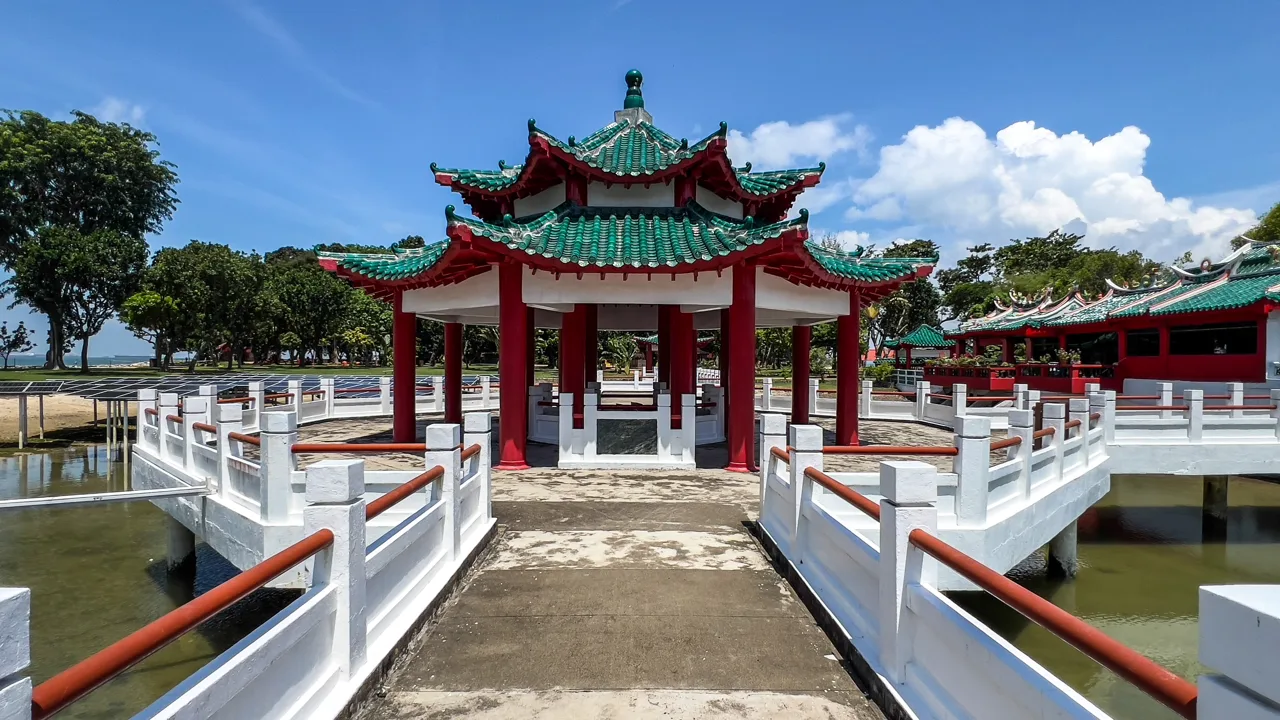
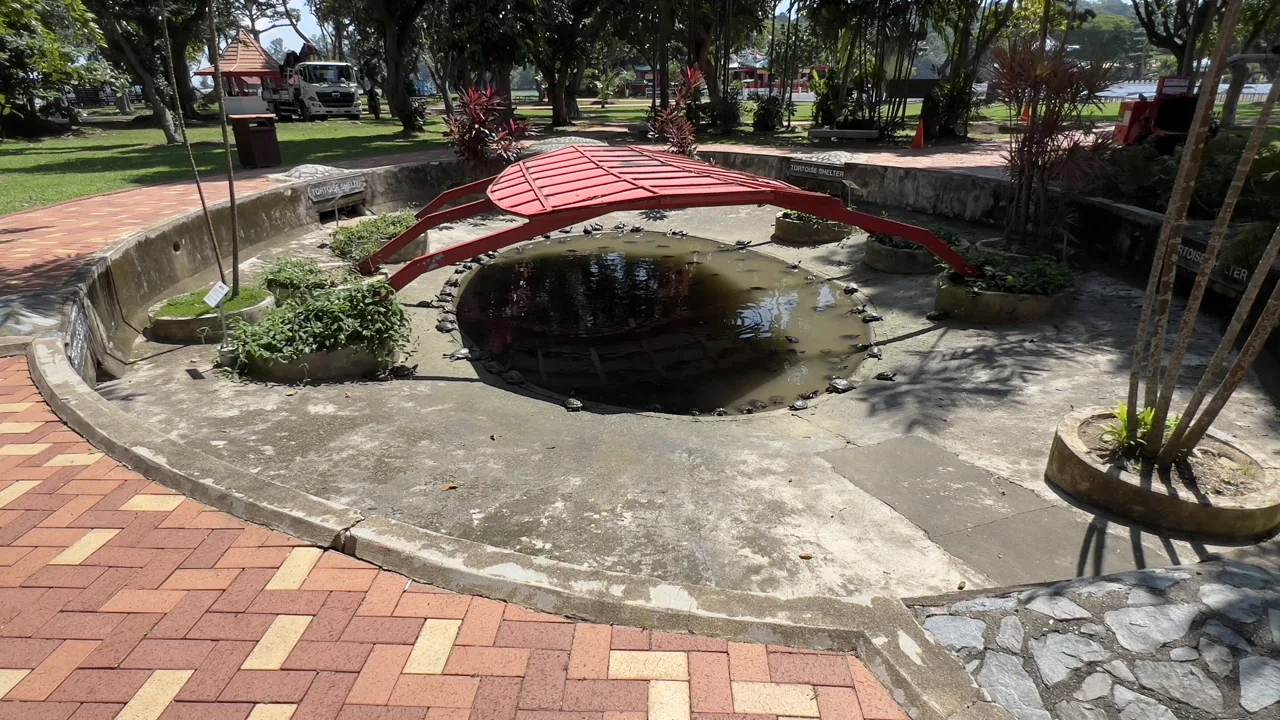
Kusu means tortoise, and before reclamation the island actually looked like one at high tide. The rocky outcrop where the temple stands was the head; the mound where the shrines sit was the body.
The legend follows the shape rather than the other way round. A tortoise is said to have turned itself into an island to save two shipwrecked sailors, and the island had a regional reputation for holiness as far back as the 1870s. It sits about 5.6 kilometres south of the main island and carries several names, including Pulau Sakijang Pelepah and Peak Island.
Two places of worship share it. The Tua Pek Kong temple on the outcrop was built in 1923 by a businessman named Chia Cheng Ho, and it is the one every photograph shows. Up a steep flight of 152 steps on the hill above are three Malay shrines, or keramats, commemorating a pious man called Syed Abdul Rahman, his mother Nenek Ghalib and his sister Puteri Fatimah, all of whom lived in the nineteenth century.
Those 152 steps are the part people underestimate. There is no shade worth the name on the climb and no water on the island, and the visit is usually squeezed into the 25 to 60 minutes your boat allows before it leaves. If the shrines are the reason you came, take an earlier sailing rather than the last loop.
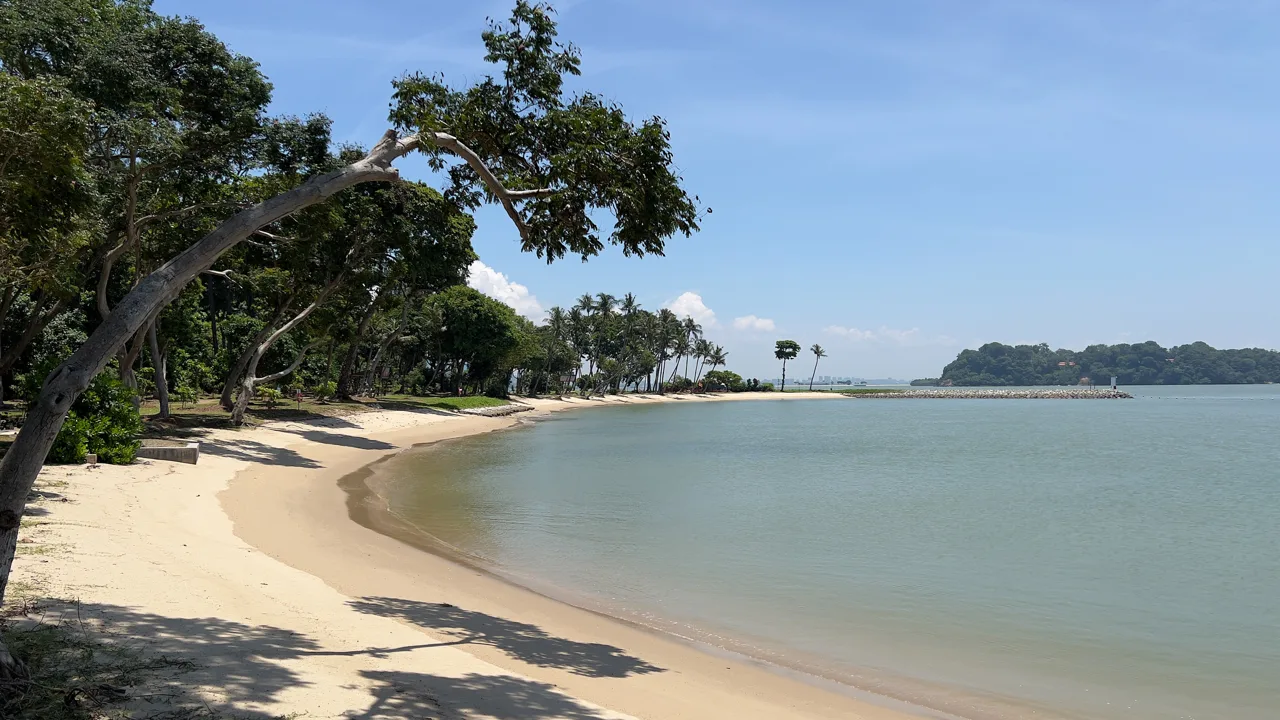
The beaches are the surprise. Kusu has a lagoon and a crescent of sand on its north side, and because most visitors head straight for the temple, they stay quieter than Lazarus does on the same day.
10. For one month a year, Kusu runs on different rules
During the pilgrimage season the land authority appoints a single ferry operator, sailings go hourly, and a surcharge applies. Your choice of boat disappears for the duration.
It falls in the ninth lunar month, which normally puts it in October or November and which is also the birthday month of the deity the temple is dedicated to. Devotees come to the temple and the hilltop shrines, and the numbers are large enough that the ordinary timetable could not carry them.
The replacement service is longer at both ends. The first sailing leaves the pier at 07:00 and the last one leaves Kusu at 19:00, which is nearly three hours beyond the usual weekday finish.
So the season cuts both ways. If you want to see the island at its most alive, this is the only time to go. If you wanted an empty beach, pick another month, and check before booking, because the lunar calendar moves the dates every year. Which months are wettest is set out in the best time to visit.
11. The Sisters’ Islands reopened with a boardwalk and a forest trail
Singapore’s first marine park closed for three years of works and reopened in late 2024 with considerably more to walk on than it had before. Most writing about the Sisters still describes the old version.
Big Sister’s Island is the public half. Small Sister’s is kept for conservation and research, holds the turtle hatchery, and is not open to visitors, so anything you read about seeing turtles hatch is not describing a trip you can book.
| What is there now | Detail |
|---|---|
| Floating boardwalk | 220 metres, rises and falls with the tide, doubles as a coral habitat and research site |
| Coastal forest trail | 230 metres, finishing at a view deck on the island’s highest point |
| Lagoon tidal pool | Enhanced as an outdoor classroom. No lifeguard, and strong currents are posted |
| Guided walk | Free, monthly, roughly an hour and a quarter on a Sunday morning |
| Bendera Bay | A 3.9 hectare lagoon, closed for research |
| Power and water | Net zero, with a solar farm and a desalination plant on site |
The marine park was designated in 2014 and covers roughly 400,000 square metres. Two dive trails run off it, a shallow one at 4 to 6 metres with giant clams, anemones and clownfish, and a deeper one at 10 to 16 metres over coral rubble and silt where sea fans and the Neptune’s cup sponge appear.
That sponge is the reason marine scientists talk about these waters at all. It was believed extinct until one was found in Singapore in 2011. Alongside it the park counts over 100 species of reef fish and over 200 species of sponge, plus fluted giant clams that reach 40 centimetres, and the occasional bamboo shark, hawksbill turtle or eagle ray.
The constraint has not changed, though. Sailings are restricted rather than frequent, the service is suspended on weekdays other than public holidays, and the islands close for maintenance on the first and third Wednesday of the month. A visit is a fixed 75 minutes on the shuttle from Lazarus, which is enough for the boardwalk and the trail and not much else.
12. A second marine park is coming, off Lazarus and Kusu
The waters off southern Lazarus and the Kusu reefs are being designated as Singapore’s second marine park. The Sisters, thirty seconds of boat ride away, are the working model for what that means.
The site was picked on evidence rather than convenience. A national ecological survey identified the eastern foreshore of Lazarus South and the Kusu reefs as exceptionally biodiverse, and the reasoning is specific: the Lazarus reefs act as a sink for coral larvae drifting from the Sisters, while the Kusu reefs are extensive and well consolidated enough to suit coral transplanting. A programme to plant 100,000 corals in Singapore waters over ten years runs alongside it.
Look at how the Sisters operate and the pattern is already visible. Service is suspended on weekdays other than public holidays, the islands close for maintenance twice a month, and the most biodiverse lagoon of the lot is shut to visitors entirely. Protection and open access pull against each other, and access is what gives.
Nothing about today’s trip changes yet. It is worth knowing because it points the same way as the jetty works and the shop: the rules on these islands are moving, so the sensible habit is to check the operator’s notices in the week you travel rather than trusting a guide written earlier.
13. What each island actually has
The facilities are split across the islands rather than repeated on each one. That is the practical reason the jetty change matters so much.
| Lazarus | St John’s | Kusu | Sisters’ | |
|---|---|---|---|---|
| Toilets | Not on the beach. At Seringat near the jetty | Yes | Yes | Limited |
| Changing and showers | No | Yes | No | No |
| Shop | Friday to Sunday only | None | None | None |
| Indoors if it rains | No | The free marine park gallery | The temple | No |
| Barbecue pits | No | First come, first served | First come, first served | No |
| Swimming | Lagoon and beach | Poor, murky water is a common complaint | Lagoons | Tidal pool, strong currents posted |
| Shade on the walk | Some | Little. The jetty walk runs about 20 minutes exposed | Little on the 152 steps | The forest trail is shaded |
The single biggest change to how these islands are described is the shop, and it is only half a change. Lazarus now has a convenience store selling daily essentials and ready to eat meals, near the tiny house site on Seringat, open Friday to Sunday from 10:00 to 18:00.
The rest of the time it is exactly as strict as it ever was. The land authority still advises bringing enough food and drinking water to last the whole day, because the other islands have no retail or food outlets at all, and there are no taps or drinking fountains to fall back on.
Two gaps to plan around even on the days it opens. The first ferry reaches the island before the shop unlocks, so an early start still needs water carried in. And the shop is on Lazarus, so once you have walked over to St John’s or sailed on to Kusu, you are back to what is in your bag.
14. Both places to stay on Lazarus close at the end of January 2027
The tiny house site and the glamping tents beside it have both announced they are winding up, and the reason given is not demand.
The tiny house operator says its concession agreement carries a fixed end date, and final bookings run to the end of January 2027. The site holds five compact solar powered units with composting systems, in the region of 139 to 167 square feet each, at rates that start around S$284 a night. The glamping operation next door, nine tents split between couple and family layouts with a communal lodge, closes on the same timeline.
After that the only legal way to spend a night out here is a permit and your own tent. Camping is allowed in designated areas only, the permit goes through the land authority’s online system, and it has to be applied for at least 14 days ahead. Open fires are banned anywhere on the islands, which rules out the beach fire people tend to imagine.
Whether an overnight is worth it is a narrower question than it looks. There is no shop after Sunday, no restaurant, and the last boat leaves whether you are ready or not. What a night buys is the hour after the day trippers have gone, which on a Saturday is genuinely the only time these islands are quiet. Anywhere with a roof and room service is on Sentosa instead.
15. The rules that bite, and how to fit the day together
Open fires are banned outright, camping needs a permit applied for at least 14 days ahead, and feeding the monkeys is prohibited. These come from the land authority rather than from signage improvised on site.
Rubbish is the rule that catches day trippers. Bins exist on some islands but not on Lazarus, and the instruction is to use a bin where there is one or carry your waste back to the mainland. Barbecue pits on St John’s and Kusu are first come, first served, which is the legal way to cook.
The safety notice worth reading is about box jellyfish. Sightings have been recorded in Singapore waters and advisories are posted on the islands. There are no lifeguards on any of these beaches and no clinic on any of them, and the marine park adds its own warning about sudden strong currents in the Sisters’ lagoon. The notices at the jetty are the actual safety briefing rather than decoration.
With all of that on the table, the day assembles itself in one of three shapes.
| If you want | Take | What you give up |
|---|---|---|
| The beach, unhurried | An early boat to Lazarus, stay put, last sailing back | Kusu and the shrines |
| The history and the gallery | Earliest sailing, walk straight over to St John’s | Swimming time, and on a weekday the gallery shuts at 14:30 |
| The temple and the 152 steps | An early or middle loop so Kusu is not the last 25 minutes | A full afternoon on the sand |
| The marine park | The 10:00 or 12:00 shuttle from Lazarus, weekend or public holiday only | 75 fixed minutes, and the first and third Wednesday are out |
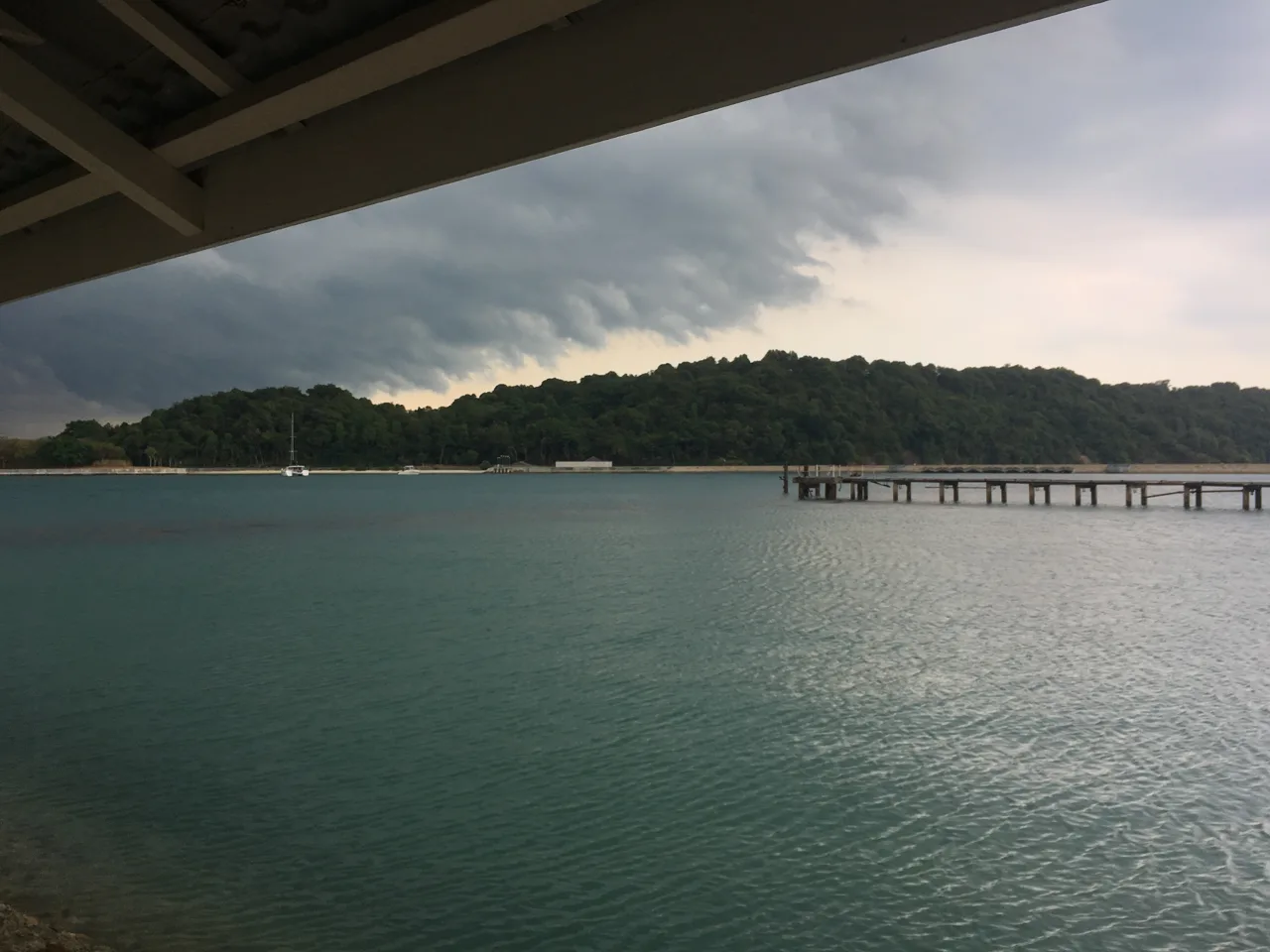
One last practical point. There is no shelter from a squall out here beyond the odd shed, and the boats stop for lightning. If the sky turns while you are waiting, the queue for the next sailing is where everyone else will be too. For an island trip on the other side of Singapore, with bumboats that leave when they fill rather than to a timetable, see Pulau Ubin.
🎡Things to Do51
🍜Food4
🏨Where to Stay10
🚇Getting Around4
🧭Travel Tips16
Frequently asked questions
Only on one operator, and only if you accept a rushed finish.
Singapore Island Cruise runs a loop out to Lazarus, on to Kusu, then back to the pier, and states plainly that it has no sailing from Kusu back to St John’s or Lazarus. Marina South Ferries does list Kusu to St John’s crossings. So the answer depends entirely on whose boat you are standing on, which is why the ticket matters more than the itinerary here.
The one that leaves out the Sisters, at S$10 return.
The standard island hopping pass is S$15 and the Sisters’ Islands ticket is S$18. The Sisters are a marine park with restricted sailings, so unless you specifically want the boardwalk and the coastal trail, dropping them saves money and removes a timing constraint.
At Pulau Seringat on Lazarus, not at St John’s main jetty. That jetty is closed for repair works.
From Seringat it is roughly a 15 to 20 minute walk across to St John’s. Much of the older writing about these islands assumes you land at St John’s and walk over to Lazarus, which is now the wrong way round. Confirm the arrangement with your operator before you travel, because it reverts when the works finish.
On a weekday it leaves Kusu at 16:15. Weekends and public holidays add a sailing at 18:15.
That single difference changes how much island you get. Miss it and there is no later service and nowhere to stay, so treat the return sailing as the fixed point and build the day backwards from it.
One thing, and it is free: the marine park Public Gallery on St John’s Island.
It is air conditioned, holds aquarium tanks and a viewing pool with sea cucumbers and anemones, and lets you handle pieces of coral. The catch is the closing time, which changes by day: 14:30 on a weekday, 15:30 on Saturday, 17:30 on Sunday and public holidays. On a weekday that is the earliest thing on the islands to shut.
It used to be true everywhere. Now there is one convenience store on Lazarus, open Friday to Sunday, 10:00 to 18:00.
Outside those three days, and before it opens in the morning, you are back to carrying everything. The land authority still advises bringing enough food and drinking water for the whole day because the other islands have no shops at all.
On St John’s yes, including changing rooms and showers. On Lazarus, no.
There are facilities over at Seringat near the jetty. Since the walk between Seringat and St John’s runs 15 to 20 minutes, plan around that rather than assuming something will turn up on the beach.
Yes, and the lagoon on Lazarus is the usual spot.
There are no lifeguards anywhere out here, and the marine park notice for the Sisters warns specifically about sudden strong currents in its lagoon. The authorities have also posted advisories about box jellyfish sightings in Singapore waters, so read the notices at the jetty rather than assuming the water is the same as a resort beach.
Camping needs a permit applied for at least 14 days ahead, and both paid stays on Lazarus have announced an end date.
The tiny house site and the glamping tents beside it are both closing at the end of January 2027, which the tiny house operator attributes to a fixed end date in its concession agreement rather than to demand. After that the only legal way to spend a night out here is a permit and your own tent, in a designated area, with no open fires.
A good deal more than before. The marine park reopened after three years of works with a floating boardwalk and a coastal forest trail.
The boardwalk runs 220 metres, rises and falls with the tide and doubles as a coral habitat. The trail is 230 metres through coastal forest and finishes at a view deck on the island’s highest point. There is also a free monthly guided walk. Small Sister’s Island, which holds the turtle hatchery, is not open to visitors.
The rules change completely. One operator is appointed, sailings go hourly, and a surcharge applies.
It falls in the ninth lunar month, which usually lands in October or November. During it the first boat leaves the pier at 07:00 and the last one leaves Kusu at 19:00, so the day is far longer than usual. If you want a quiet beach, this is the period to avoid.
On weekends only, from the jetty at the Cove.
It costs more than sailing from Marina South Pier, S$20 against S$15 for an adult. It only makes sense if you are already staying on Sentosa, where it saves the trip back into town to reach the pier.