
Money in Singapore: where to change cash, what the 230 licensed money changers show, and the GST refund
| Where to change | The Arcade at 11 Collyer Quay, 53m from exit C of Raffles Place MRT, holds 26 licensed money changers in one building |
|---|---|
| At the airport | All 27 money-changer counters and all 23 ATM points at Changi are listed as 24 hours |
| Cash | Older hawker stalls and small shops still take cash only, so carry a small amount in notes |
| GST refund | You need at least SGD 100 at one shop and you must be 16 or older on the purchase date |
| Declaration | Carrying more than S$20,000 in or out means filing a report before you travel |
| Big notes | The $1,000 and $10,000 notes are no longer issued but are still legal tender |
1. Change a little, put the rest on a card
2. 26 of Singapore’s 230 licensed money changers are in one building
3. Lucky Plaza on Orchard Road, People’s Park in Chinatown
4. The other 138 buildings have exactly one counter each
5. All 27 money-changer counters at Changi run 24 hours
6. The 23 ATM points hold different banks at each spot
7. How to read the two figures on a money changer board
8. A shop can refuse cash if it posts a notice
9. Twenty coins per denomination, and no more
10. Seven notes, two of which are no longer printed
11. Brunei dollars are exchanged at par at any bank
12. Hawker centres are where the cash goes
13. Prepaying the hotel shrinks everything else
14. Prebooked tickets cut both the queue and the cash
15. The GST refund starts with who you are
16. SGD 100 at one shop, three receipts maximum
17. At the airport, the refund comes before check-in
18. Card, Alipay or cash, with different waiting times
19. Rooms, services and anything already used are excluded
20. Over S$20,000 in cash has to be declared
21. Crossing into Malaysia or Indonesia changes the currency
22. Clearing out the last of your Singapore dollars
1. Change a little, put the rest on a card
Most of what you spend in Singapore can go on a card. Trains and buses, department stores, restaurants and attraction tickets all take cards, and a hotel booked and paid for in advance leaves nothing to settle on arrival.
Cash survives in a narrow band: older hawker stalls, small shops inside wet markets, the occasional street vendor. Plates of food at those places are cheap, so a handful of notes covers several days.
Work out the amount backwards
Start by listing what you can pay for before you fly. Accommodation and attraction tickets are the two big items, and both are usually payable online. What is left is food, transport and small purchases.
Transport goes on a card, which narrows real cash needs down to meals and small shopping. For a short trip that is a modest number, and you can change it in one visit rather than hunting for counters every day.
Then set aside whatever you need in the first few hours. A late-night landing, a first stop at a hawker centre or a taxi that prefers cash all fall into that window, and the airport counters are open whatever time you arrive.
For what a day actually costs and where the spending concentrates, the Singapore budget guide breaks it down line by line. Where you sleep moves both your transport and your food spending, so the guide to choosing an area is worth reading alongside it.
Which card taps you through the gates, and whether you need a separate transit card at all, is covered in the Singapore transport guide. This page stays with changing and spending money.
2. 26 of Singapore’s 230 licensed money changers are in one building
The Monetary Authority of Singapore publishes a register of every licensed money changer in the country, and it lists 230 of them. Group the addresses by building and they spread across 163 buildings, but one building alone holds 26.
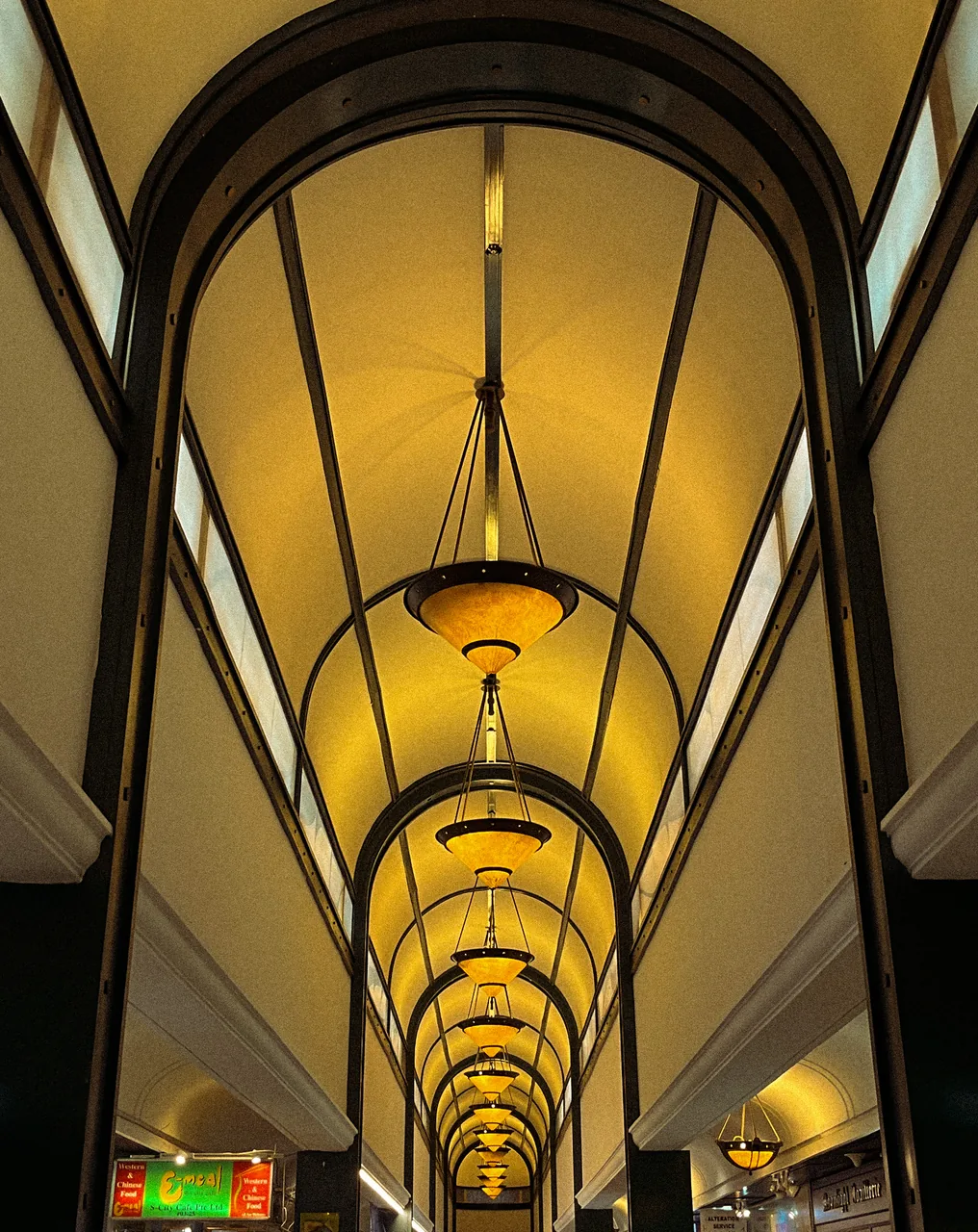
That building is The ArcadeMap at 11 Collyer Quay, 53m from exit C of Raffles Place MRT. Twenty-six licences under one roof means 11% of every money-changing licence in Singapore is on one short walk.
Why the concentration matters
A counter makes its money on the gap between the rate it buys a currency at and the rate it sells at. When 26 counters can see each other’s boards, that gap gets squeezed in a way it never does for a single shop in a suburban mall.
You do not need to visit all of them, and you barely need to change floors. Eighteen of the 26 are on level 2, four more on level 1, and the remaining four are scattered on levels 3, 5 and 12. Walking past four or five boards takes a couple of minutes and tells you what the going rate looks like that morning, which is the entire advantage of going there.
Getting there and when to go
Raffles Place is on both the North South and East West lines, so most of the city reaches it without a change. Come up to street level and the office towers start immediately, with the Arcade among them.
This is the financial district, which means weekend and public holiday closures. Individual counters set their own days and the register does not record opening hours at all, so aim for the middle of the day rather than early morning if you are going on a Saturday.
What else is within walking distance of Raffles Place is set out in the guide to Singapore’s districts.
3. Lucky Plaza on Orchard Road, People’s Park in Chinatown
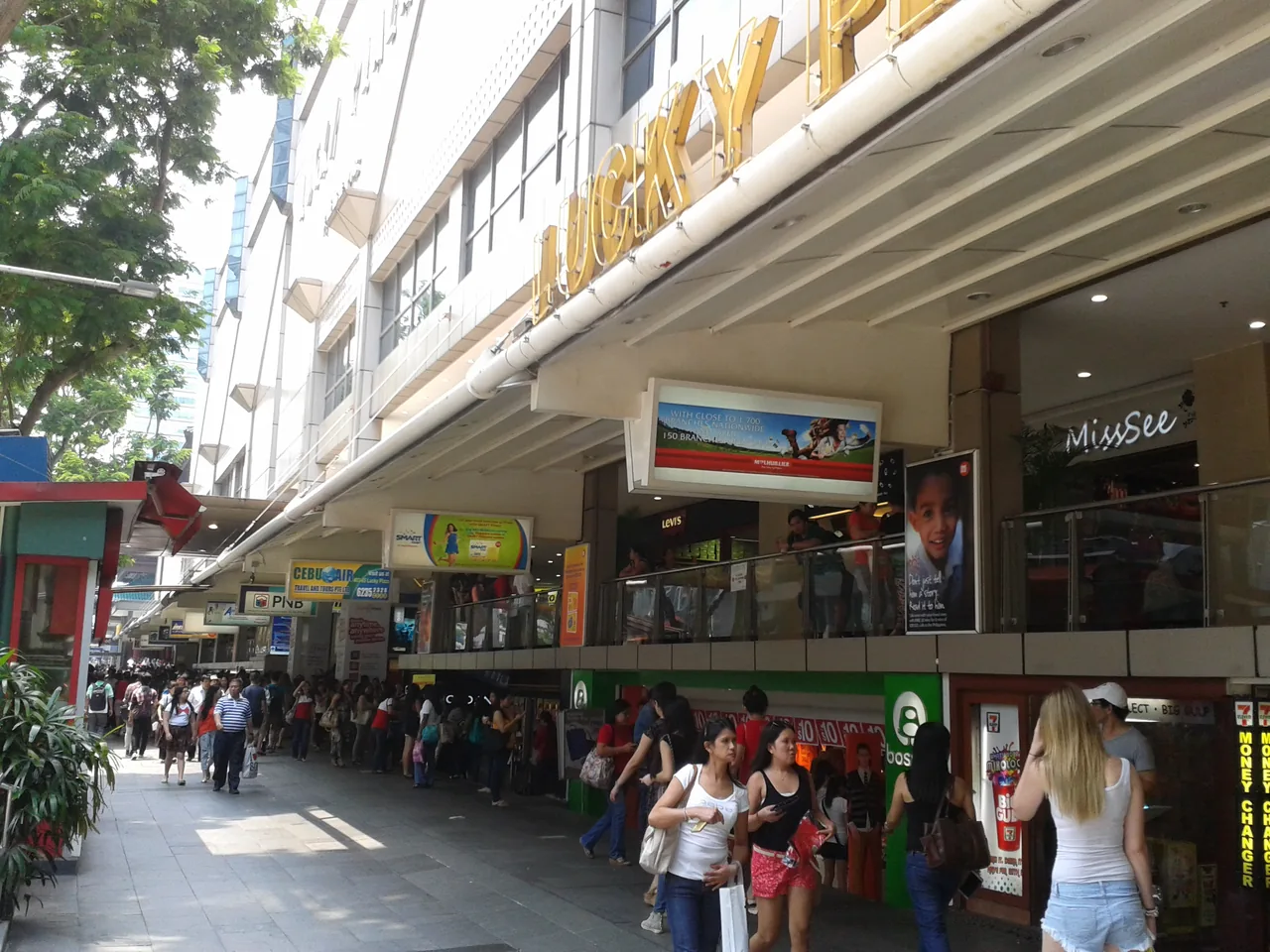
If you are staying near Orchard Road, the money changers are inside Lucky PlazaMap at 304 Orchard Road. That single mall holds 14 licences, the second largest cluster in the country after the Arcade.
Seven of the 14 are in the basement and five more on level 1, so not finding one immediately does not mean there are none. It is an easy stop between shopping centres rather than a separate trip.
Chinatown splits across two buildings
Chinatown’s counters sit in two buildings 244m apart, a three minute walk. People’s Park ComplexMap at 1 Park Road holds five licences and People’s Park CentreMap at 101 Upper Cross Street holds another five.
The names are close enough to confuse, but they are separate buildings. Ten counters between them gives you something to compare while you are in the area for the temples and the market. The Chinatown guide covers what else is worth the walk.
Smaller clusters around the city
Several buildings hold two licences each: Parco Bugis Junction at 200 Victoria Street, 3 New Bugis Street, Suntec City Mall at 3 Temasek Boulevard, Raffles City at 252 North Bridge Road, High Street Centre at 1 North Bridge Road, Orchard Plaza at 150 Orchard Road, Parklane Shopping Mall at 35 Selegie Road, and NEX at 23 Serangoon Central.
Little India has counters tucked inside its shopping complexes, though they vary building by building. If that district is on your route anyway, the Little India guide is the place to start.
Add those clusters to the Arcade, Lucky Plaza and the two People’s Park buildings and the top twelve buildings account for 66 licences, which is 29% of the national total.
4. The other 138 buildings have exactly one counter each
Of the 163 buildings in the register, 138 hold a single licence. Those are neighbourhood malls and residential shopping blocks in Tampines, WoodlandsMap, Jurong and similar districts, serving people who live there rather than visitors.
There is nothing wrong with them. They are licensed by the same regulator under the same rules, and for a small amount the difference in rate is not worth a train ride.
When the one nearby is the right choice
If the mall by your hotel has a counter and you need a day’s spending money, use it. The time you would spend travelling to a cluster costs more than the spread on a small sum.
For a larger amount the calculation flips. A single counter has nobody next door to undercut it, and you have nothing to compare its board against.
They are also the ones most likely to be closed on a public holiday, with no second counter in the building to fall back on.
5. All 27 money-changer counters at Changi run 24 hours
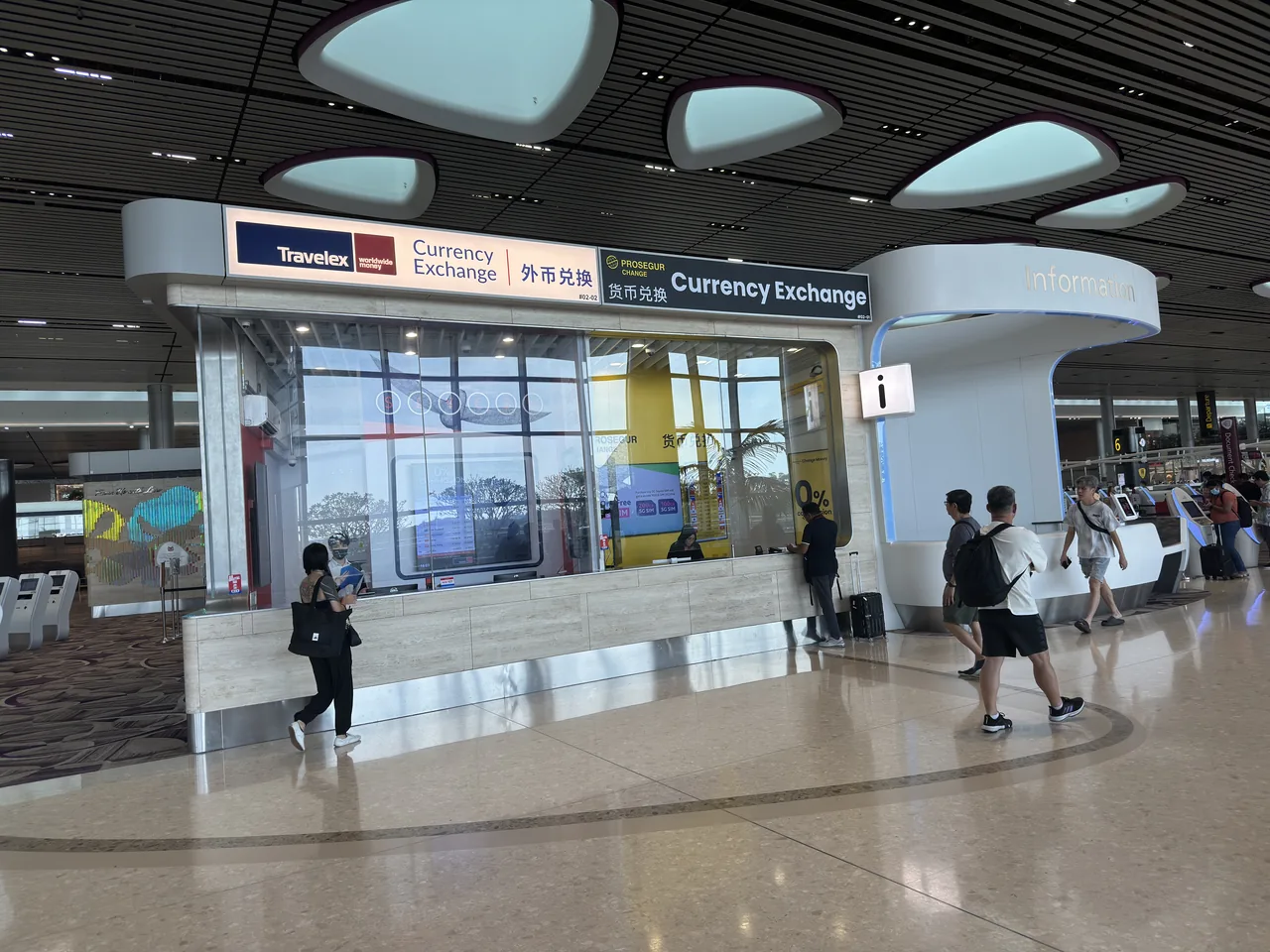
Changi AirportMap lists 27 money-changer counters and every one of them is marked as 24 hours. Travelex operates 14 and Prosegur operates 13.
The licence register, meanwhile, shows only two licences registered to a Changi Airport address. Licences are issued to companies while counters are opened separately, which is why the two counts look nothing alike.
The operators do not cover the same terminals
Travelex has five counters in Terminal 1, four in Terminal 2 and five in Terminal 3, and none at all in Terminal 4. Prosegur has five in Terminal 1, four in Terminal 2 and four in Terminal 4, and none in Terminal 3.
Every terminal has at least one operator, so arriving passengers are covered regardless. It only matters if you hold a card or a membership tied to a particular brand, and even then the Skytrain ride between terminals is rarely worth it.
Before and after immigration
Counters are split between the public areas you reach on arrival and the transit areas past departure immigration. Money for your first day is changed on the public side; leftover notes on the way home can go either side.
How to get from the airport into the city, and how long it takes at each hour, is in the Singapore transport guide. If you are only passing through between flights, the layover guide covers what fits into the time you have.
6. The 23 ATM points hold different banks at each spot
Changi lists 23 ATM locations and all of them are 24 hours. Most are banks of machines rather than single units, so one stop usually gives you a choice.
Which banks, though, changes from spot to spot. DBS, OCBC and UOB appear most often, with HSBC, Maybank, Citibank, Bank of China, ICBC and SBI filling in elsewhere. In Terminal 3 the central arrival hall has HSBC only, while the southern end has Bank of China and ICBC and nothing else.
Two of them sit beside the money changers
In the Terminal 1 transit area the directory places two ATM points explicitly next to the money changers, one on the east side and one on the west. That is the one place in the airport where you can compare a withdrawal against a counter rate without walking anywhere.
Withdrawals can attract a fee from your own bank and sometimes from the machine operator as well. One larger withdrawal usually costs less in total than several small ones.
Somewhere to leave the bags
Changi also has eight baggage storage counters, again all 24 hours. Per 24 hours and including GST, loose items are S$5, anything under 10kg is S$10, anything over 10kg is S$15 and extra-large items are S$18.
That is worth knowing on the way out, when a late flight leaves you with a full day in the city and a suitcase you would rather not push around.
7. How to read the two figures on a money changer board
Every board shows two figures for each currency, one for buying and one for selling. The counter buys your foreign notes at one rate and sells you Singapore dollars at the other, and you always land on the less favourable side.
The gap between them is the counter’s income. It varies by building, by currency and even between neighbours on the same floor, which is exactly why a building with 26 counters behaves differently from a mall with one.
Common currencies get better treatment
Singapore’s counters handle a wide range of currencies, but the ones they see all day are priced more tightly than the ones they see once a week. If your currency is unusual here, expect a wider gap.
Some counters simply do not handle a given currency. If it is not on the board, walk to the next one rather than asking each in turn.
Larger sums are negotiable
Above a certain amount many counters will improve on the posted rate if you ask. The board is a starting position rather than a fixed price, and asking costs nothing.
Count what you are handed before you walk away. That is ordinary practice at every counter and nobody will be offended.
8. A shop can refuse cash if it posts a notice
Section 13(4) of the Currency Act 1967 lets a business post a written notice setting out what it will not accept. That can be particular denominations, or cash altogether.
With the notice displayed, refusing your cash is lawful. Without it, you are entitled to pay in legal tender. The distinction has become practical as card-only cafes and unstaffed shops have spread.
What this looks like in practice
Look for a sign at the door or at the till. Newer cafes, some food halls and most self-service kiosks are cashless, and they say so.
The lesson is the same as the hawker centre one, pointed the other way: carrying only cash strands you as surely as carrying no cash. Keep both.
Singapore’s other everyday rules, including the ones that carry fines, are set out in the guide to rules and etiquette.
9. Twenty coins per denomination, and no more
Section 13(3) of the Currency Act 1967 caps a single transaction at 20 coins of each denomination. That is 20 five-cent pieces, 20 ten-cent pieces, and so on up to the dollar coin.
Past that limit a shop may refuse without breaking any rule. Buyer and seller can agree to more before the transaction begins, but the shop is never obliged.
Why coins pile up here
Paying cash at hawker stalls returns change in coins, and a few days of that leaves a heavy wallet. Trying to clear it in one payment runs straight into the limit.
Spend them in ones and twos at convenience stores and vending machines instead, or round your order so less change comes back. Coins are also the hardest thing to convert at the end of a trip.
Five denominations in circulation
The current coins are the Third Series, issued on 25 June 2013: five, ten, twenty and fifty cents plus the one dollar coin.
The one-cent coin stopped being issued on 1 April 2002. Any that are still circulating remain legal tender, though you are unlikely to see one.
10. Seven notes, two of which are no longer printed
The notes in circulation are the Portrait Series, launched on 9 September 1999, in seven denominations. Two, five, ten, fifty, one hundred, one thousand and ten thousand dollars.
Earlier series had nine denominations. This one dropped the $1 and the $500, which is why a single dollar in Singapore arrives as a coin.
The two large notes
MAS stopped issuing the $1,000 note on 1 January 2021 and the $10,000 note on 1 October 2014. Neither was withdrawn, so both remain legal tender and both are still occasionally handed over at counters.
Spending one is another matter. A hawker stall will not have change for a thousand dollars, and even large shops may want to examine it. Break big notes where breaking them is routine.
11. Brunei dollars are exchanged at par at any bank
Under the Brunei-Singapore Currency Interchangeability Agreement, the two currencies exchange at par and free of charge at banks in both countries. MAS sets this out directly in its own guidance.
If your trip includes Brunei in either direction, leftover notes are not stranded. Take them into a bank in Singapore and they convert one for one.
Shops are not obliged to take them
Bank exchange and shop acceptance are separate questions. MAS says plainly that private businesses cannot be compelled to accept Brunei currency in Singapore, although it encourages them to.
In practice some will and many will not. If you are carrying Brunei notes, convert them at a bank first rather than testing each till.
12. Hawker centres are where the cash goes
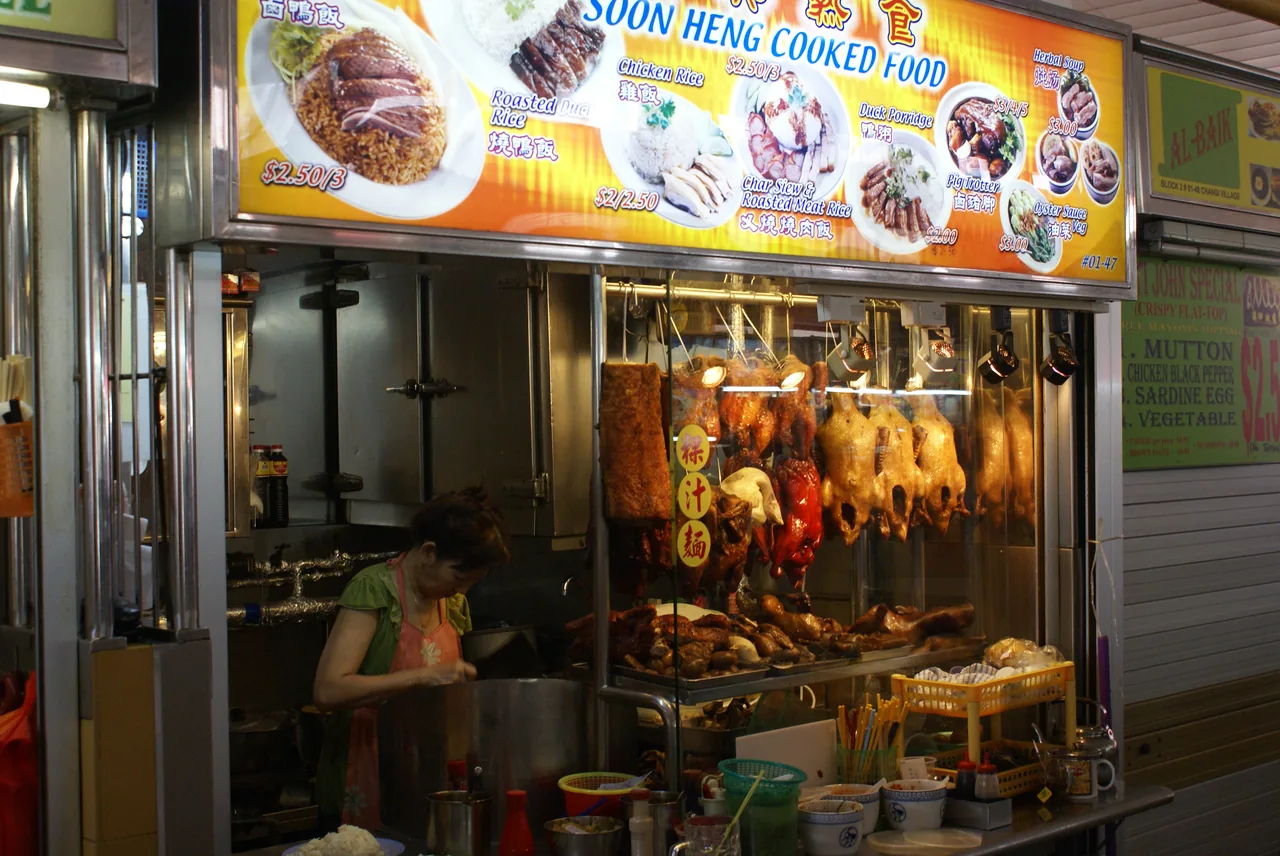
Hawker centres are the last stronghold of cash in Singapore. Card terminals and QR codes have spread through them, but long-running stalls that take notes only are still easy to find.
Because a plate costs so little, a few small notes go a long way. Hand over a fifty and you may be told there is no change, so break notes down before you queue.
The ordering sequence is its own skill
Securing a table before you order, taking a number, ordering drinks separately from food: each centre has its own rhythm, and stalls occasionally have their own rules on top. The hawker centre guide walks through it.
That guide also maps which centres sit near the usual sightseeing routes and what is worth ordering at each. For the dish that draws the longest queues, there is a separate chicken rice guide.
13. Prepaying the hotel shrinks everything else
Hotels sell rooms both ways, payable now or payable at the desk. Paying in advance takes the largest single item out of your on-the-ground spending, and with it most of the reason to change a large sum.
A card is usually held at check-in as a deposit even when the room is already paid. No money moves, but the hold reduces your available limit for a few days, which is worth knowing if the limit is tight.
No GST refund on rooms
Accommodation is excluded from the tourist refund scheme entirely. The tax on a hotel bill is not coming back, so budget for it as a real cost rather than a recoverable one.
Which district suits your plans, and what each one does to your daily travel time, is set out in the guide to where to stay.
14. Prebooked tickets cut both the queue and the cash
Buying attraction tickets before you arrive removes a payment and usually a queue. It also means you are not standing at a ticket window working out whether your card will be accepted.
Where several attractions are on the list, combined passes exist and are worth comparing against individual tickets before you commit to either.
Some places still sell at the door only
Smaller museums, neighbourhood attractions and one-off exhibitions often have no online sales at all. Those are paid for on the spot, so leave a little cash for them.
If the itinerary is still open, the Singapore trip planning guide lays out what is worth booking ahead and what can wait.
15. The GST refund starts with who you are
Tax paid on goods bought in Singapore can be reclaimed on departure, but only by visitors who meet a specific definition. You must be 16 or older on the day of purchase and not a Singapore citizen or permanent resident.
Crew members of the flight you depart on are excluded outright, whatever their nationality.
Pass holders are excluded
Anyone holding a work-related pass falls outside the scheme. That covers the Work Permit, Training Work Permit, S Pass, Employment Pass, Training Employment Pass, Personalised Employment Pass, EntrePass, Work Holiday Pass, Miscellaneous Work Pass and Letter of Consent.
Dependant’s Passes, Long Term Visit Passes and Student’s Passes are excluded on the same basis. The test is applied at three moments: the purchase date, any point during the three months before it, and the day you submit the claim.
16. SGD 100 at one shop, three receipts maximum
The threshold is SGD 100 including GST, spent at a single shop. Below that there is no claim.
Where one purchase does not reach the threshold, up to three receipts from the same day can be combined. They must carry the same GST registration number and the same shop name, which usually allows different branches of one chain but never two different brands.
Your passport has to be there
The shop captures your passport details electronically at the moment of purchase, and only the physical passport is accepted. A photocopy or a photo on your phone will be turned away.
Leaving the passport in the hotel safe therefore rules out a claim on anything bought that day. Before you leave the shop, check that you have both the receipt and the eTRS transaction it generates.
Not every shop takes part
Participation is voluntary. Retailers either run the scheme themselves or work through one of the two Central Refund Agencies, Global Blue Singapore and Global Tax Free, and display that agency’s sign in the shop.
No sign usually means no refund. For anything expensive, ask before you pay rather than after.
17. At the airport, the refund comes before check-in
Claims can only be made at Changi and Seletar. Leaving by bus across the Causeway or by ferry does not qualify, however much you bought.
Changi has nine refund points, all 24 hours: the departure halls of all four terminals, the transit areas of all four terminals, and one on level 1 of Jewel.
Checked bags first, hand luggage later
Anything bulky or going into the hold has to be processed before you check in. The departure hall kiosks are near check-in rows 3 and 4 in Terminal 1, row 12 in Terminal 2, between rows 5 and 6 in Terminal 3, and between rows 3 and 4 in Terminal 4.
High-value items you intend to carry on board are handled after immigration, at the kiosks in the transit lounge. That is the easier route when the purchase is small and valuable.
Customs may want to see the goods
At the kiosk you scan your passport, confirm your eligibility, confirm which purchases are leaving with you, and read the outcome. If a physical inspection is required, you take the goods, the original receipts and your boarding pass to the customs counter.
Pack accordingly. Anything you are claiming on should be reachable rather than buried, and the whole process is one more reason to arrive early.
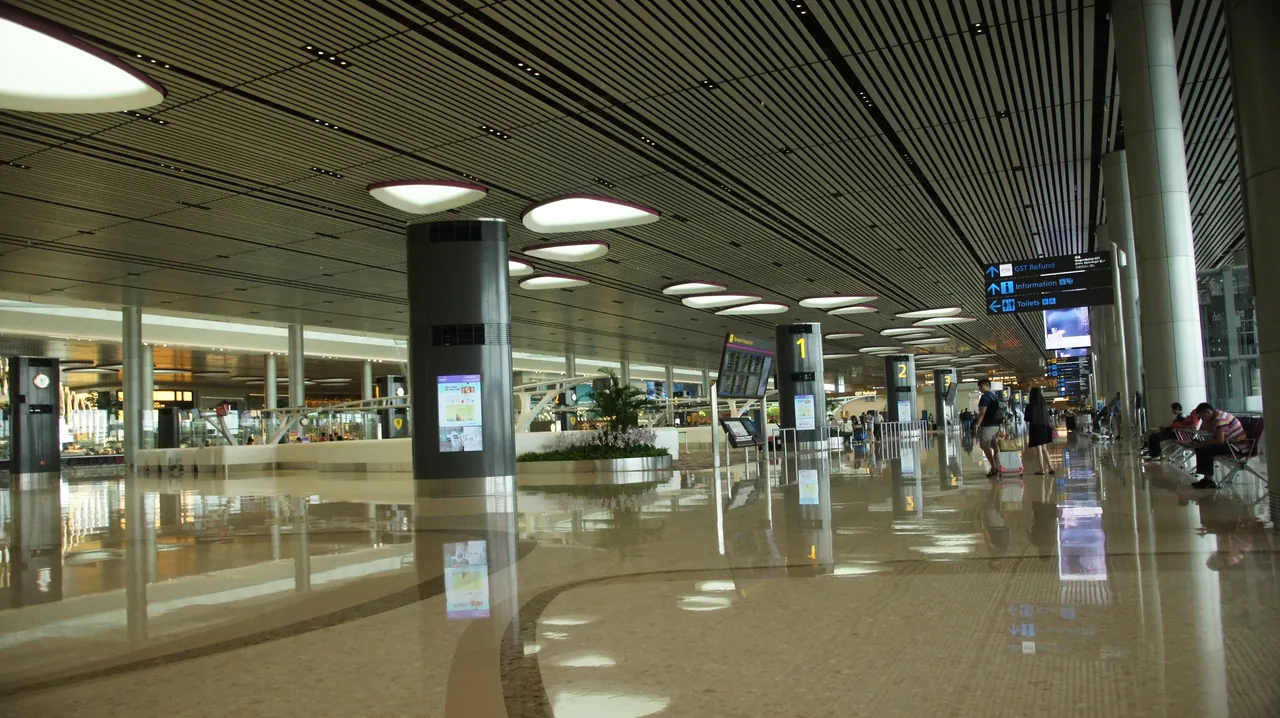
18. Card, Alipay or cash, with different waiting times
At Changi you choose between a credit card refund, an Alipay refund and cash. Seletar offers the first two only.
A credit card refund arrives within ten days. Alipay pays out immediately. Cash is collected in person at the GST Cash Refund counter in the transit lounge after immigration.
The handling fee comes off the top
The refund agency and the counter operator both take a fee, so the amount you receive is less than the GST you paid. IRAS states this in its own guidance rather than leaving it to the agencies to explain.
On small claims the fee eats most of the benefit, which is a reason not to contort your shopping to reach the hundred-dollar threshold.
Two separate deadlines
You must depart within two months of the purchase, and you must collect within two months of approval. They are different clocks and it is easy to conflate them.
Transactions can be checked in advance through the scheme’s online service or its app, which is useful if a shop’s paperwork looked uncertain.
19. Rooms, services and anything already used are excluded
The scheme covers goods you carry out of the country yourself. Everything outside that description is excluded, and the list is specific.
Accommodation of any kind is out, including hotels, hostels and boarding houses. Services are out entirely, which takes in restaurant meals, spa treatments, tours and tickets.
Goods that fall outside anyway
Anything consumed wholly or partly in Singapore is excluded, as is anything exported for business or commercial purposes, and anything sent out as freight rather than carried.
Sealed goods are the cleanest case. Clothes or shoes bought and then worn during the trip sit in a grey area you would rather not be arguing about at a customs counter.
20. Over S$20,000 in cash has to be declared
Carrying more than S$20,000 in physical currency and bearer negotiable instruments, in or out, triggers a reporting duty. Foreign currency counts at its equivalent value.
It applies whether the money is yours or someone else’s, whether you travel alone or with others, and splitting a sum across a group does not remove the obligation.
More than banknotes
Alongside coins and printed money, the rule covers bearer negotiable instruments. Bills of exchange, cheques payable to “Cash”, cheques where “or bearer” has not been crossed out, promissory notes, bearer bonds, money orders and postal orders all count.
Most holidaymakers never approach the threshold. People moving for study or a long stay sometimes do, and that is where the rule bites.
Filing it is quick
Reports go in online within the 72 hours before arrival or departure, through the e-727 service, the immigration app, or as a follow-on step after completing the Singapore Arrival Card.
If anything changes, including your travel dates, void the report and file a new one. Leaving an inaccurate report standing is itself treated as a false report. Failing to file at all carries a fine of up to S$50,000 or up to three years’ imprisonment, and the money can be seized.
When and how the arrival card is filed is covered in the Singapore entry requirements guide.
21. Crossing into Malaysia or Indonesia changes the currency
A day across the border needs the other country’s money. Johor Bahru runs on ringgit, Batam and Bintan on rupiah.
You can change at a Singapore counter before you go or on arrival at the other side. For a day trip the amounts are small and cards cover much of it, so there is little to gain from changing a lot in advance.
Land and sea departures do not qualify for the refund
The GST refund is available at Changi and Seletar only. Leaving by bus to Malaysia or by ferry to Indonesia means the tax on goods bought in Singapore stays where it is.
If you are returning to Singapore and flying home from there, the claim simply waits for your final departure. Plan it around the flight rather than the border crossing.
Each route has its own practicalities: the Johor Bahru day trip guide, the Melaka overnight guide and the Batam and Bintan guide cover ferries, buses and border timings. For the longer run north, see the Kuala Lumpur guide.
22. Clearing out the last of your Singapore dollars
The airport counters are open at any hour, so changing back on departure is always possible. You pay the spread a second time doing it, which is the argument for not over-changing in the first place.
Spending the balance is tidier than converting it. A last meal, a bag of coffee, something at the terminal: Changi has enough shops and restaurants to absorb whatever is left.
Coins will not convert
Most counters take notes back and refuse coins. Spend the coins during the trip and keep the notes for the counter, or keep a few notes for a future visit.
Singapore notes hold their status indefinitely, including the denominations no longer being printed, so money kept in a drawer for a few years still spends.
If the wait before your flight is long, Jewel and the terminals themselves have plenty to fill it. The Jewel Changi Airport guide and the layover guide cover both.
🎡Things to Do53
🍜Food6
🏨Where to Stay10
🚇Getting Around4
🧭Travel Tips19
Frequently asked questions
Singapore gives you unusually good choice on the ground. The regulator lists 230 licensed money changers, and 26 of them are in one building beside Raffles Place MRT, so you can compare several counters without walking more than a corridor.
That only matters if you are changing a meaningful amount. If cards will cover your hotel, your transport and most of your meals, you are changing pocket money, and the difference between counters is small enough to ignore. Change a little at the airport on arrival and settle the rest in town if you want both.
Yes. All 27 counters are listed as 24 hours in the airport directory. A 3am arrival can still change money before leaving the terminal.
The operators are split across terminals, though. Travelex is in Terminals 1, 2 and 3 but not Terminal 4. Prosegur is in Terminals 1, 2 and 4 but not Terminal 3. Whichever terminal you land in has a counter, so use the nearest one rather than crossing the airport for a brand.
A small amount, yes. Long-established hawker stalls and small neighbourhood shops still take cash only. A plate of food costs little, so a few notes cover a day of eating.
The reverse also happens. Under the Currency Act a business can post a written notice saying it will not take cash, or will not take particular denominations, and that refusal is lawful. Carrying only cash can leave you stuck at a card-only counter, so bring both.
Only up to 20 coins of each denomination in a single transaction. That limit is written into section 13(3) of the Currency Act 1967.
Beyond that the shop can refuse, and refusing is not unlawful. Both sides can agree to more before the transaction starts, but nobody has to. Spend coins gradually at convenience stores rather than saving them for one heroic payment.
It is legal tender and you can spend it. MAS stopped issuing the $1,000 note on 1 January 2021 and the $10,000 note on 1 October 2014, but stopping issuance is not the same as withdrawing it.
In practice a small shop may not have change for it. Break large notes at a bank, a hotel or a large store rather than at a hawker stall.
SGD 100 including GST, at one shop. If a single receipt does not reach it, you may combine up to three receipts from the same day.
The receipts have to carry the same GST registration number and the same shop name. Different branches of the same chain usually qualify; different brands do not.
Visitors aged 16 or over on the purchase date who are not Singapore citizens or permanent residents. Crew of the aircraft you depart on are excluded.
Holders of work passes, dependant passes, long term visit passes and student passes are also excluded. The test applies on the purchase date, at any point in the three months before it, and again on the day you claim.
No. Accommodation in a hotel, hostel or boarding house is excluded, and so are all services.
Goods you have used in Singapore, goods exported for business purposes and anything shipped as freight are excluded too. The scheme covers goods you personally carry out of the country.
Ten days for a credit card refund. Alipay pays out immediately, and cash is collected at the refund counter after immigration.
You will not get back the whole of the GST you paid. The refund agency and the counter operator deduct a handling fee, which the tax authority states plainly in its own guidance.
Before you check in, if the goods are going into your checked bags. Go to the GST refund area in the departure hall first, then to the airline counter.
If you are hand-carrying the goods, claim in the transit area after immigration. Changi has nine refund points and all of them are 24 hours. Once a claim is approved you must leave within 12 hours.
There is no limit, but anything over S$20,000 has to be declared. The same threshold applies leaving as arriving.
File online in the 72 hours before you travel, either through the dedicated service, the immigration app, or immediately after completing the Singapore Arrival Card. Splitting the money across a group does not avoid it, and neither does carrying it for someone else.
The airport counters are open all night, so you can change back on the way out. You will lose a little on the spread, so spending the balance on a last meal is usually tidier.
Coins are the real problem, since most counters will not take them back. Keep notes, spend coins. If your trip continues to Malaysia or Indonesia, hold on to some Singapore dollars and change them across the border instead.