
What Language Do They Speak in Singapore? English, Singlish and the Four Official Languages Explained
English is spoken at home by 48.3% of residents, but only 11.8% of those aged 85 and over. How far English gets you depends a lot on who is standing in front of you.
The first sentence you hear is four words long
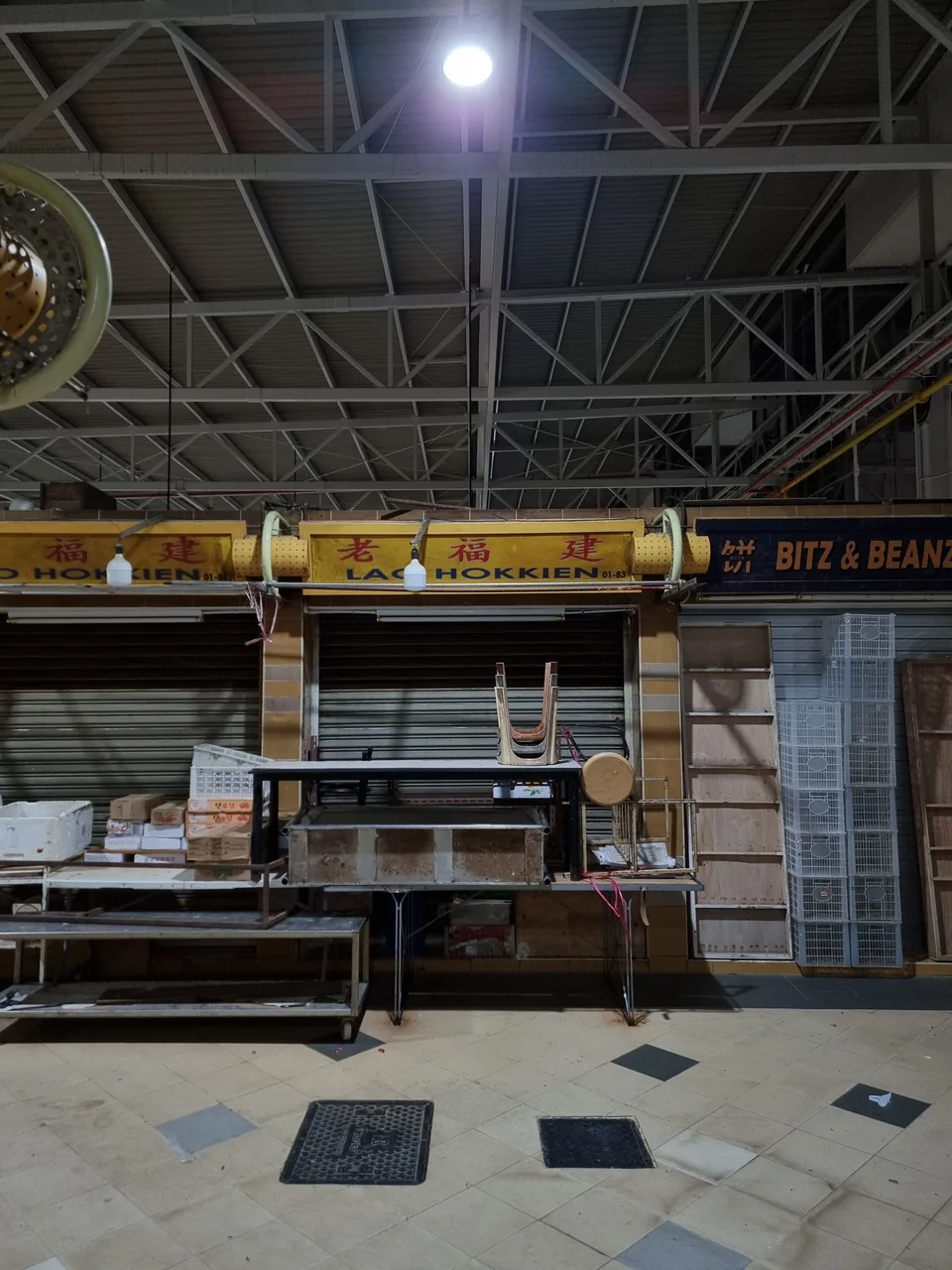
Walk into a hawker centre on your first evening and the opening line is usually short. “You want what?” comes across the counter, and once you answer, “Eat here or take away?” follows. Both are perfectly clear once you are used to them, and both are shorter than the sentences you were taught in school.
Nothing has gone wrong. Singapore runs two layers of English at once. There is the standard English of signage, government letters, classrooms and hotel front desks, and there is the spoken register that people use with each other. Most residents move between the two without thinking about it, several times a day.
The second layer is called Singlish. The National Library Board describes it as Singapore Colloquial English, a form that became an observable phenomenon in the 1970s. It keeps English words, then borrows grammar, rhythm and vocabulary from Malay, Tamil, Hindi, Hokkien, Cantonese and Teochew.
For a visitor, the practical question is where each layer shows up. Airport information counters, hotel staff, museum desks and large retail chains stay close to standard English. Hawker stalls, wet markets, older taxi drivers and neighbourhood shops move towards the shorter register, where words get dropped and the pace picks up.
So the four words at the counter are not broken English. They are the fastest English available in that spot. The person behind the counter almost certainly went to school in English and grew up speaking something else at home, and both of those facts are about to become useful.
By day three the missing words stop registering as missing. By day six you are answering the same way. The coffee vocabulary sits in the hawker centre guide, so from here we follow where that sentence came from instead.
Yes, English works, and here is how far
If you only want the short answer: you can travel through Singapore in English without learning a single local phrase. Signs, menus, ticket machines, station announcements, museum labels, government forms and bus stop displays are in English.
The census gives the shape of it. Among residents aged 5 and over, 48.3% speak English at home more than any other language. Add everyone who speaks English as their second language at home and the figure reaches 74.2%. Only 6.4% speak English and nothing else.
That last number matters more than it looks. Most people you meet are working in at least two languages, and English is often the one they switch into for you rather than the one they were using a second earlier. That switch is why the register can change mid-conversation.
Where English is the working language, it is completely the working language. Hospitals write prescriptions in English. The courts run in English. Schools teach every subject except the mother tongue subject in English. Emergency operators answer in English.
So the honest answer to “is Singapore English speaking” is yes. What changes is the speed, and the speed depends on one thing you can see before anyone opens their mouth.
The age of the person in front of you changes the answer
The 2020 census counted 3,596,284 residents aged 5 and over and broke the home language question down by age band. The result reads almost like a field guide to daily life here.
Among 5 to 9 year olds, 75.5% speak English at home. It is 68.7% for teenagers, 56.4% in the late twenties, and 46.9% in the late forties. By the late sixties it has fallen to 29.5%, and among people aged 85 and over it is 11.8%.
Translate that into a day of sightseeing. The barista, the mall staff, the ticket counter at Gardens by the BayMap and the hotel receptionist are usually under 40, and English arrives first and fast. Full sentences work. Jokes work.
The uncle who has run the same noodle stall since the 1980s is in a different band. English is there, but it is his second or third language, and pointing at the menu with a number of fingers held up is genuinely quicker than a full sentence. This is not rudeness on either side, it is two people picking the fastest channel.
The same logic applies to wet markets, older coffee shops, neighbourhood hardware stores and some taxi drivers. If you want a rule of thumb: shorter sentences for older faces, normal sentences everywhere else.
Where you sleep decides how often you meet each group, because the older trades cluster in certain districts; the neighbourhood accommodation guide sets out what each area is like on the ground. Meanwhile there is one word that works on everybody.
One word does most of the work: can
If you learn one local usage before landing, make it “can”. It means yes, it is possible, that works, go ahead. “Can or not?” asks whether something is possible. “Can” answers it. “Cannot” closes it.
This is not slang picked up from social media. It was quoted from a podium in 2000, when Prime Minister Goh Chok Tong launched the Speak Good English Movement and used it as an example. He described a caddy in Zimbabwe asking, “Would you permit me to test your putter?”, then wrote that in Singapore the same question would come out as “Can try your putter or not?”
The same speech quotes “Got old balls give me can or not?” for asking whether some used golf balls could be spared. Whatever the speech thought of the grammar, it captured the pattern precisely: subject and auxiliary drop away, and the verb carries everything.
“Got” is the other workhorse. It means there is, or do you have. “Got vegetarian?” at a stall is a complete and perfectly polite question. “Where got?” is a mild denial, closer to “no there isn’t” than to a real question.
Visitors sometimes worry that using these forms sounds like mockery. In practice, asking “Can?” while pointing at a dish is read as efficiency, not imitation. The line people do notice is putting on the accent, which is a different thing entirely.
Between “can”, “got” and a pointed finger, you can order, ask for a smaller portion, check whether a seat is free and find out whether a stall takes cards.
Lah, leh and lor are not decoration
“Okay lah.” “Like that leh.” “Cannot lor.” The endings carry attitude, and the National Library Board lists them as a standard feature of Singlish rather than as filler.
Roughly, lah settles a matter. It can reassure, soften, or push someone along, depending on the tone. Leh leans towards mild objection or a request for another look at the problem. Lor carries resignation, a sense that this is how it is and nobody is delighted about it.
The difference is easy to hear once you know it exists. “Cannot lah” is a firm no. “Cannot lor” is a no with a shrug attached, and often means the person would have helped if they could.
You do not need to use these yourself. Hearing them correctly is the useful part, because it tells you whether to try a different stall or to wait thirty seconds while someone finds a solution.
Saying a word twice changes what it means
Repetition in Singlish follows rules, and the National Library Board sets them out by word class. Nouns repeated refer to someone close: “Where is your boy boy?” asks after a son or a boyfriend.
Adjectives repeated intensify. “Don’t always eat sweet sweet things” is a warning about very sweet food. Verbs repeated three times mark an action in progress: “I walk walk walk then I fall down” means the fall happened while walking, and “Bus always stop stop stop” describes a bus that keeps halting.
Doubling a verb does the opposite and softens it. “Cry cry” is a small cry, not a long one. A pattern that sounds like broken grammar turns out to be carrying tense and intensity in a different place.
Then there are the omissions. The same source notes that tense marking, plurals, articles and linking verbs are routinely dropped, with the examples “You walk so slow”, “She shop here yesterday” and “Teck very rich”.
Notice what survives in those sentences. Time is set by the word “yesterday”, not by the verb. Comparison is set by “so”, not by an adverb ending. Nothing that a listener needs is actually missing, which is why locals understand each other at speed.
For a visitor the first day is the hardest. By the third day the gaps stop registering as gaps and the speed stops being a problem.
Mandarin gets you further than you might expect
Mandarin is the language most spoken at home by 29.9% of residents. Add the 27.1% who lead with English and use Mandarin alongside it, and 57.0% of people aged 5 and over have Mandarin in the house.
If you speak Mandarin, that opens a second channel, and it is most useful exactly where English is slowest: older stalls, traditional medicine shops, fabric and hardware stores, and the back lanes of Chinatown.
With younger staff the opposite is often true. Among 5 to 9 year olds, 47.1% grow up with both English and Mandarin at home, and when that generation is at work, English tends to come out first. Reading the age of the person is again the shortcut.
The Mandarin you hear has its own colour. Speakers whose families used Hokkien, Teochew or Cantonese moved into Mandarin within living memory, and the older sound system left traces in the tones and the rhythm.
The script is simplified, following Ministry of Education rounds in 1969, 1974 and 1976 that ended with the mainland system, so signage, menus and government pages in Chinese all come out simplified. That is the picture today. Go back one generation in the same shop and a different language was crossing the counter.
The grandmother and the grandchild do not share a language
The most striking line in the census is the dialect row. Among residents aged 85 and over, 60.5% speak a Chinese dialect at home, with Hokkien alone at 26.8%. Among 5 to 9 year olds, the figure is 0.3%.
That is a complete turnover inside three generations. The great-grandmother grew up in Hokkien or Teochew. Her grandchildren grew up in English and Mandarin. In many families the two ends of the table genuinely cannot hold a conversation without a translator in the middle.
You can watch it happen in a hawker centre. A stallholder will speak dialect sideways to the neighbouring stall, Mandarin to a customer in her sixties and English to you, in the space of about twenty seconds.
The 65 to 69 band sits in the middle: 37.4% Mandarin, 29.5% English, 20.0% dialect. That band runs many of the older food stalls you will pass. Inside one family the same split appears, with the middle generation translating between the two ends of the table.
A language does not empty out of a nation’s kitchens by accident. This one has a start date, and it is 7 September 1979.
7 September 1979: the day dialects were asked to step back
On 7 September 1979, Prime Minister Lee Kuan Yew launched the Speak Mandarin Campaign. The target was not English. It was the Chinese dialects that most Chinese Singaporean families were using at home.
The National Library Board gives three stated aims: simplify the language environment, improve communication among Chinese Singaporeans from different dialect groups, and support the national bilingual education policy.
That policy dated from 1966. English was set as the first language, with a mother tongue alongside it, and by the 1970s the continued strength of dialects at home was working against it. A committee formed in August 1979 to run the campaign, chaired by Ow Chin Hock, then senior parliamentary secretary at the Ministry of Culture, and drawing in the Chinese press, cultural and educational bodies, trade associations and clan associations.
The campaign did what it set out to do. Dialects at home fell from 14.3% in 2010 to 8.7% in 2020, and among the youngest band they are now a rounding error.
Mandarin and English filled the space. Twenty years later, on a Saturday morning in April, the government turned on the English instead.
29 April 2000: a prime minister tells a golf story
At 10.30am on 29 April 2000, in the auditorium of the Institute of Technical Education headquarters on Dover Drive, Prime Minister Goh Chok Tong launched the Speak Good English Movement. The full text of the speech sits in the National Archives.
The argument was economic. Singlish, the speech said, “uses Chinese syntax” and often translates Chinese phrases directly, which makes sentences hard for outsiders to follow. The examples given were “You got money, sure can buy one” and “This is my one”, the second traced back to 这是我的.
Then came the golf story. Playing in Zimbabwe, the prime minister was impressed by a caddy who asked, “Would you permit me to test your putter?” and later, “Would you have some used balls to spare me?” He gave away all his used balls and some new ones, and noted that the caddy had not finished secondary school but had picked up his English from the golfers around him.
The speech also carried a number from the Ministry of Education that is worth holding onto: “Sixty per cent of our children start school with little exposure to English at home.” That was the country in 2000.
It ended with a request to retire one phrase, “You see me no up”, used to accuse someone of looking down on you. And in the middle of it, a television character was named.
And it named a television character, which is where the story gets unusual.
The sitcom contractor who was sent to English class
Phua Chu Kang was one of the most popular Singaporean television series of the 1990s. The lead character was a contractor whose catchphrases spread faster than the show itself: “Use your blain” and “Don’t pray pray”, with brain and play flattened into blain and pray.
In his 1999 National Day Rally, Goh Chok Tong singled out the character as a factor in the spread of Singlish among young viewers, and suggested he attend adult basic education classes in English.
The broadcaster agreed. The Television Corporation of Singapore announced it would tone down Singlish across its programmes, and the character was duly written into English lessons.
Senior Minister Lee Kuan Yew made the same case that year at a National Day event in Tanjong Pagar, in a line that is still quoted: “Singlish is a handicap we must not wish on Singaporeans.”
A government arguing with a sitcom about grammar sounds odd from outside. From inside, a country with no natural resources was betting everything on being understood. Which makes the current wording of the same campaign worth reading twice.
And then the official position softened
The Speak Good English Movement still exists. Its current description of itself includes a sentence that would have been hard to imagine in 2000: “The Speak Good English Movement recognises the existence of Singlish as a cultural marker for many Singaporeans.”
The stated job now is narrower and gentler. The movement aims to help people who speak only Singlish, and people who think Singlish is standard English, to use standard English when they need it, and to understand the difference between standard English, broken English and Singlish.
The National Library Board records the same shift, noting that the government came to recognise Singlish as a cultural marker and that the movement’s role changed accordingly, towards helping people code-switch between settings.
Its steering committee reflects that. The chairman is Jason Leow and the deputy chairman is Associate Professor Ludwig Tan of the Singapore University of Social Sciences, sitting alongside people from the National Library Board, broadcasting, publishing, hospitals and the literary festival.
For a visitor this is worth knowing before you form an opinion about the English you hear at a stall. The person serving you can almost certainly produce textbook English if the situation calls for it, and has decided that this situation does not.
The numbers turned over inside twenty years
In the 2000 census, 23% of residents aged 5 and over spoke English at home more than any other language. In 2010 it was 32.3%. In 2020 it was 48.3%.
Mandarin moved the other way over the same decade, from 35.6% to 29.9%. Until 2010 Mandarin was ahead of English on this measure. In 2020 the order had swapped.
Malay went from 12.2% to 9.2% and Tamil from 3.3% to 2.5%, while Chinese dialects fell from 14.3% to 8.7%.
Put the 2000 speech next to the 2020 table and the contrast is sharp. A country where six in ten children arrived at school with little English at home now has three in four of its 5 to 9 year olds using English at home.
That is why the language you meet depends so heavily on age. An 85 year old grew up in dialect, a 50 year old was schooled in English and Mandarin, and a 10 year old speaks English at the dinner table. All three are in the same food centre at lunchtime.
One road, four names
Serangoon RoadMap runs through Little India and carries its history in its name. The National Library Board traces it to the Malay “Ranggong”, a marsh bird of the stork family, with a second reading from the phrase “di-serang dengan gong”, a reference to gongs used to drive animals away from the forest.
The same entry lists the other names the road has carried. In Chinese it is hou gang lu, the road behind the port. In Hokkien it is au-kang and in Cantonese hau-kong, meaning back creek.
So one street has a Malay origin, a Mandarin name, a Hokkien name and a Cantonese name, and the version printed on the MRT map is the English transliteration of the first one.
Dhoby GhautMap works the same way. The name comes from the Hindi dhoby, a washerman, and ghaut, the steps at the water’s edge, after the Indian washermen who worked at a stream there. In Tamil the area was known as the street of the dhobies.
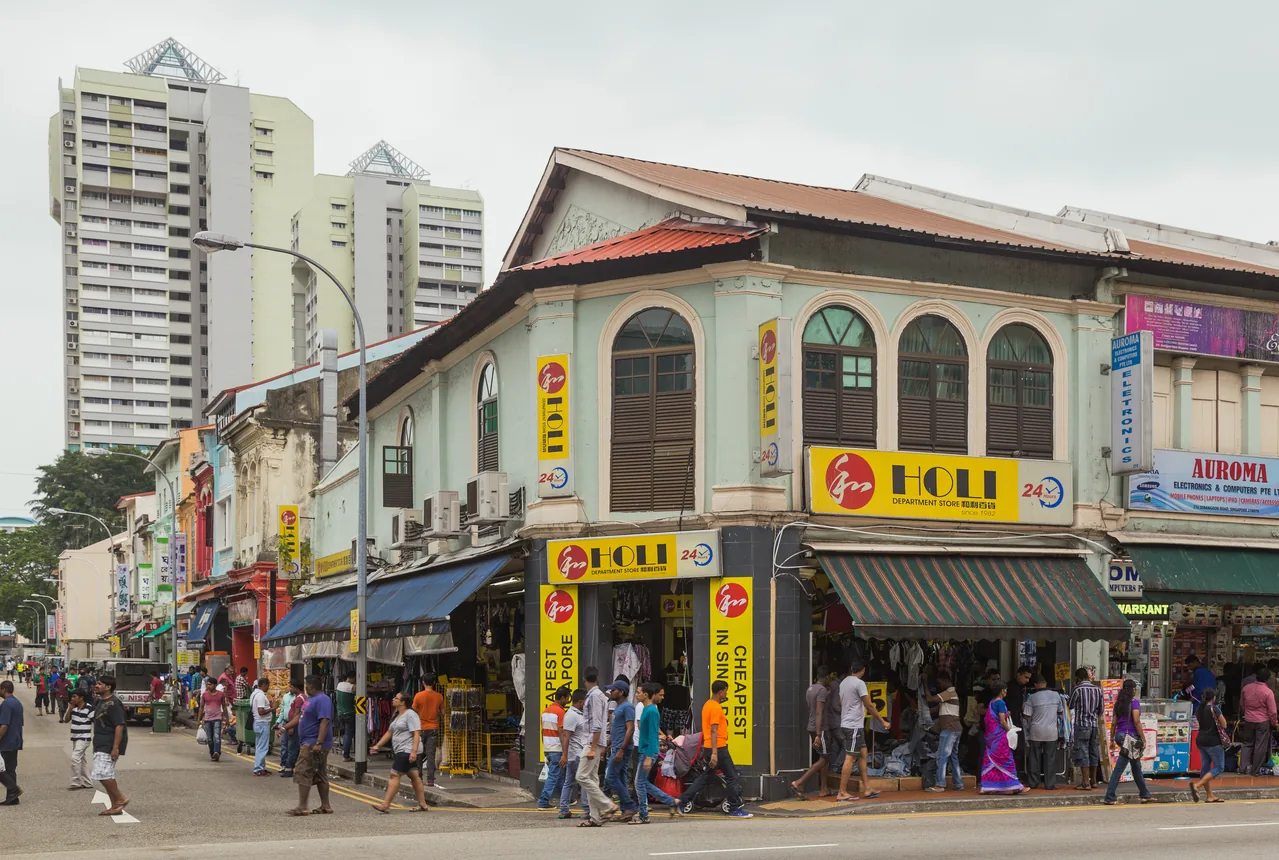
Once you notice this, station names stop being labels. Walking through Little India or Kampong Glam, the shopfront signs stack the same four languages in different orders.
The national anthem is sung in Malay
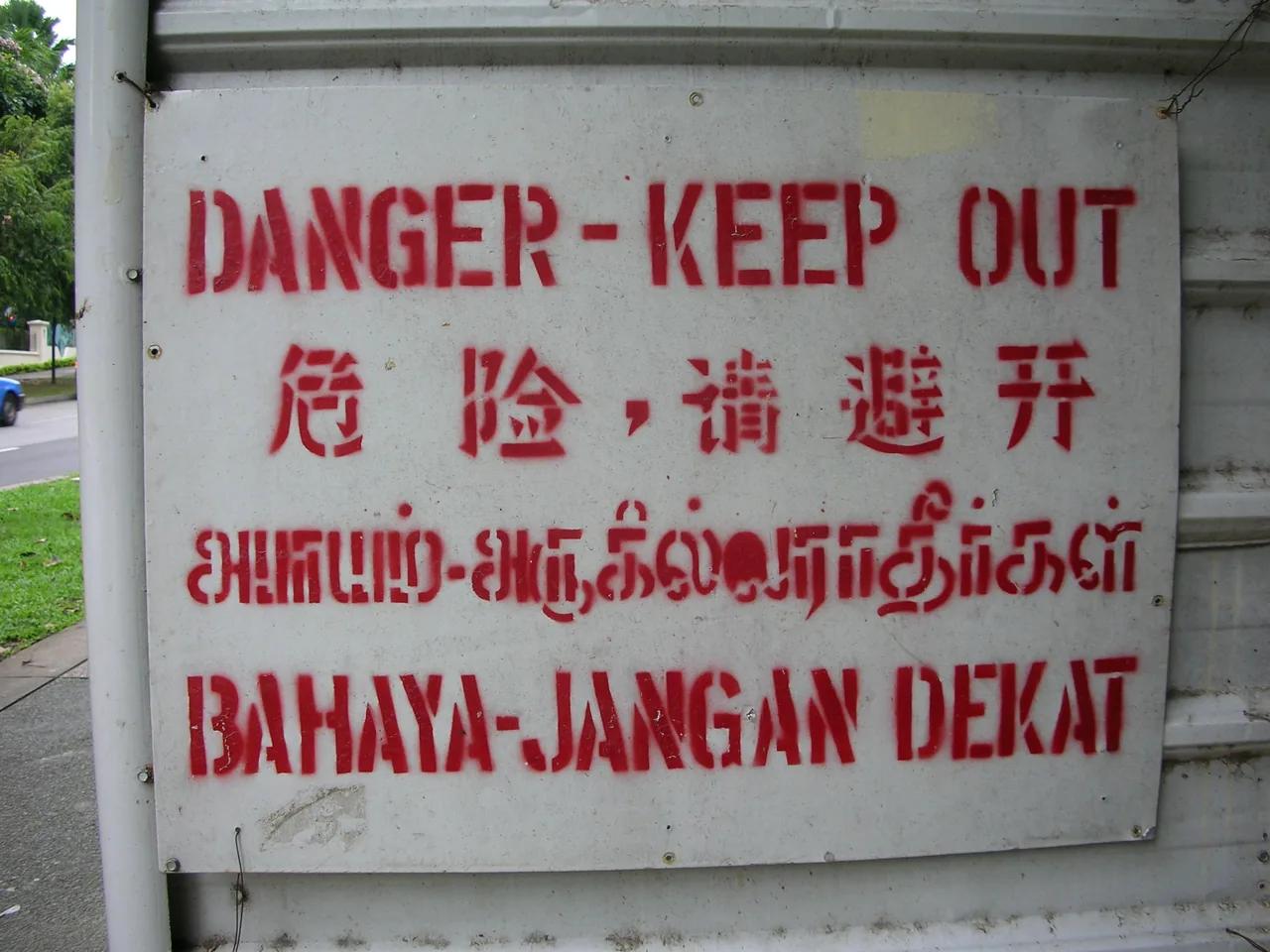
Article 153A of the Constitution names four official languages: Malay, Mandarin, Tamil and English. The second clause of the same article goes further and names a national language, and that language is Malay, written in Roman script.
This is why “Majulah Singapura” is sung in Malay. Zubir Said composed it in 1958, authorised translations exist in the other three official languages, and the version that is sung is the Malay one. Its use is regulated under the National Symbols Act 2022, in force from 1 August 2023.
The same constitutional article includes a proviso that nobody may be prohibited or prevented from using, teaching or learning any other language. Four languages carry official status, and everything else stays legal to speak, teach and learn.
Malay also sits in the street names, the food vocabulary and the military drill commands. Singapore was part of the Malay world long before it was a city state, and was inside the Federation of Malaysia until 1965.
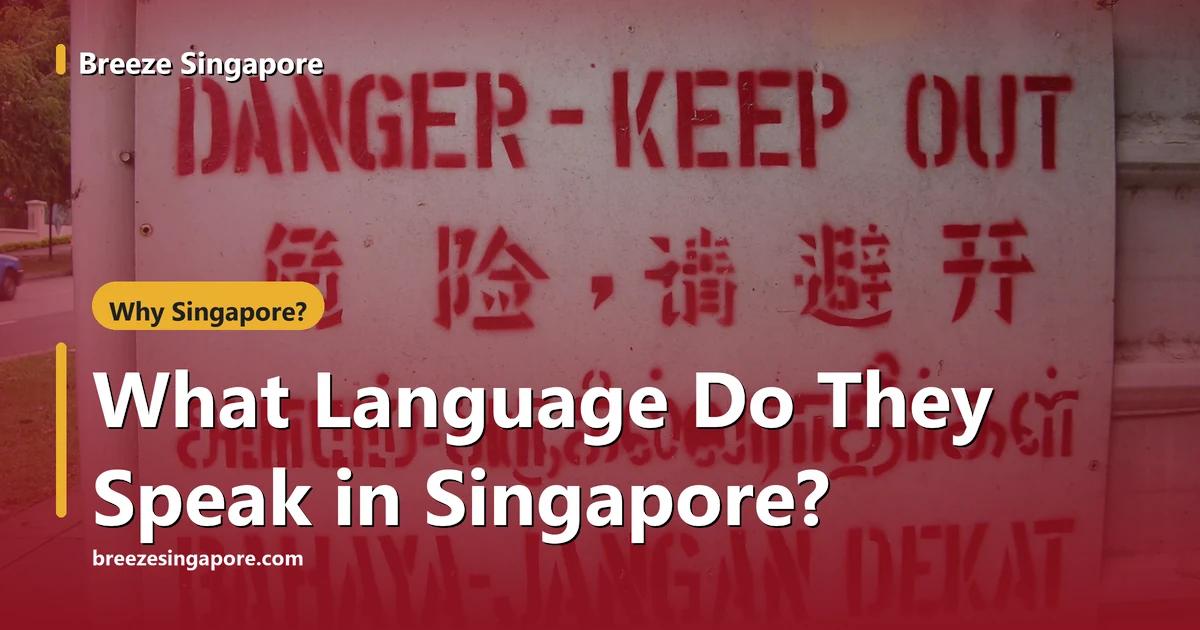
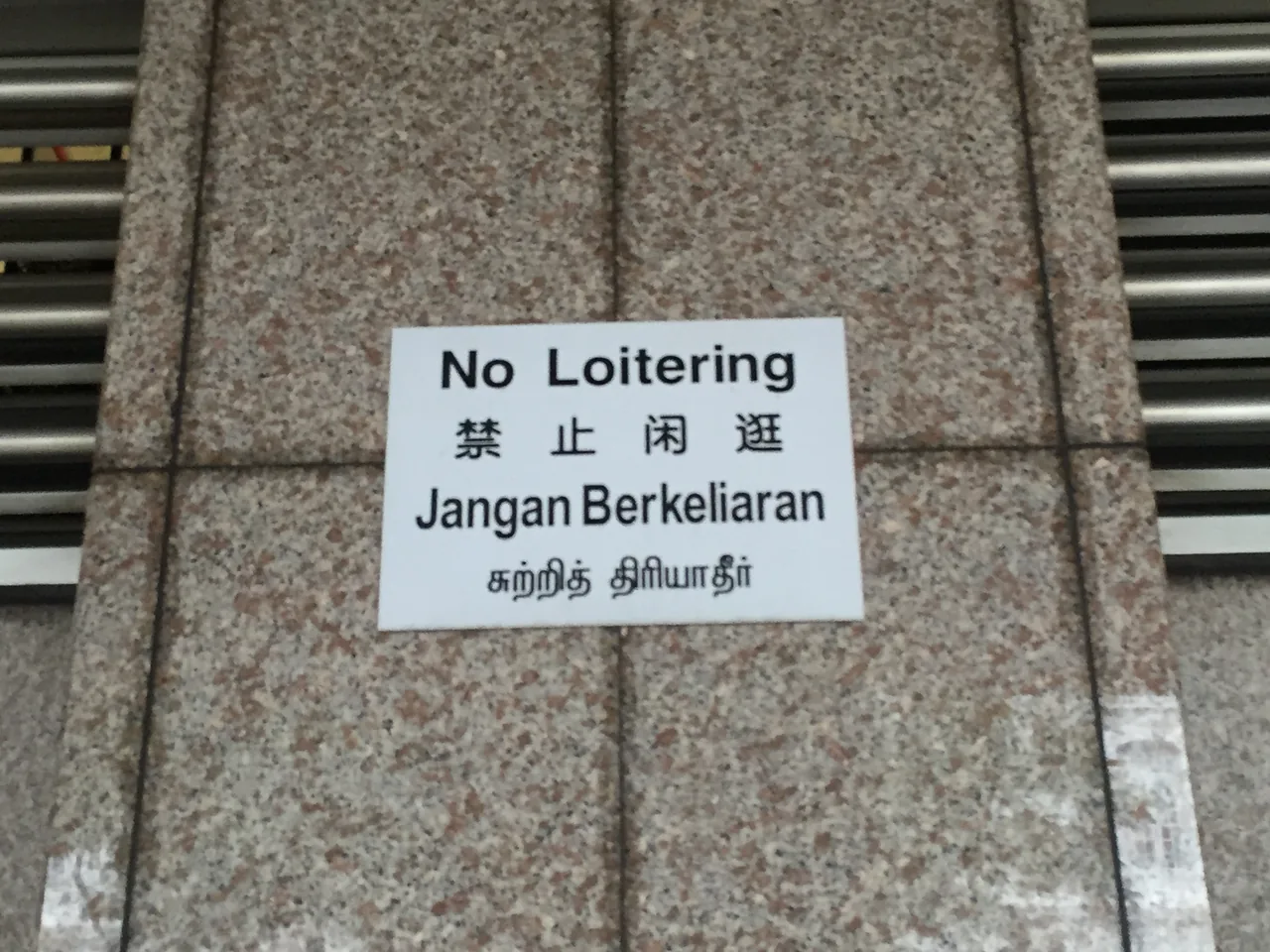
You will meet the four languages together on public notices, where safety and regulatory signs are often printed in all of them. It is the quickest visual summary of the policy you will see anywhere in the city.
Every child still studies a second language
Ministry of Education guidance is unambiguous: Mother Tongue Language is a compulsory subject, taught as a second language while everything else is taught in English. The three official mother tongues are Chinese, Malay and Tamil.
Assignment follows ethnicity. Students registered with a double-barrelled race take the mother tongue matching the first component, with an application route to the second. Eurasian students and those of other races may apply to take any of the three.
Indian students who do not speak Tamil can take Bengali, Gujarati, Hindi, Punjabi or Urdu. Those classes are run outside the ministry and outside school hours.
The policy is still being tightened rather than loosened. On 14 September 2024, at the 13th Mother Tongue Languages Symposium, Education Minister Chan Chun Sing announced that from 2026 students who score AL1 or AL2 in Mother Tongue at the primary leaving examination can take Higher Mother Tongue in secondary school regardless of their overall score, and that from 2025 Primary 1 and 2 pupils spend 30 minutes of mother tongue curriculum time on reading, rolling out to all levels by 2029.
The practical effect for a traveller is simple. Anyone under about 45 serving you today went through this system, which is why they can usually switch languages mid-sentence without breaking stride.
What to do when a sentence does not land
The most useful habit is to shorten rather than to repeat. If a full sentence does not get through, drop to the noun and a gesture: “This one, two”, while pointing, resolves most stall transactions.
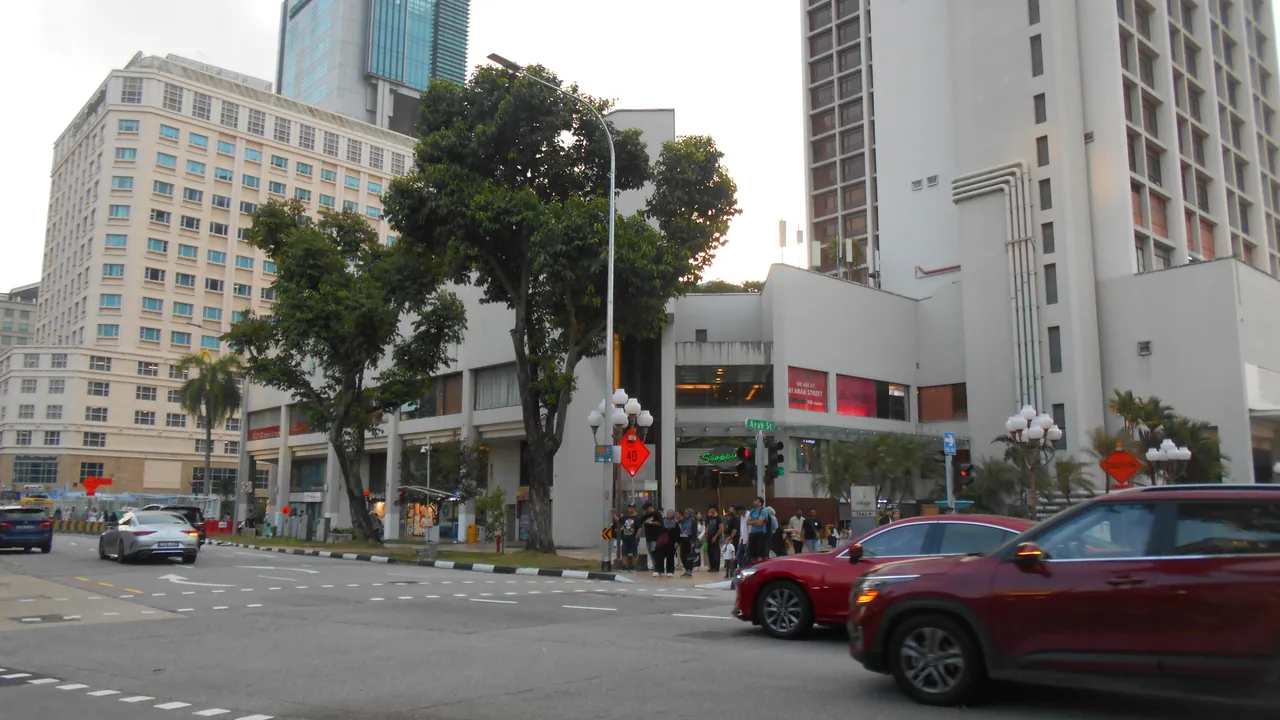
Naming a place works better than describing it. Taxi drivers and passers-by navigate by MRT station names, mall names and building names, and those are unambiguous. Street names repeat across the island and road numbers rarely help.
Writing the destination down is normal and nobody finds it odd. Showing a booking screen or a map pin is faster than pronouncing an unfamiliar Malay or Tamil place name under time pressure.
Speed matters more than vocabulary. English here is spoken quickly with clipped endings, so asking someone to slow down usually solves more than asking them to rephrase.
And if you need to be understood immediately, use the sentence structure locals use. “Got seat?” gets a faster answer than “Excuse me, would you happen to know whether any of these seats are free?”
The numbers to call, and the language they answer in
Police is 999. Ambulance and fire is 995. Those two cover the genuine emergencies, and both are answered in English.
If you cannot speak, the police accept SMS on 70999. For a transfer that is not an emergency there is a separate non-emergency ambulance line on 1777, and the police hotline for anything less urgent is 1800 255 0000.
Traffic Police information runs on 6547 0000. If you receive a call or a message that feels like a scam, the helpline to check it against is 1799.
Give the location first. An MRT station name, a mall name or a hotel name places you instantly; a street name may not, because several roads share similar names across different parts of the island.
You will want a working data connection for maps and calls from the moment you land. The options and current prices are set out in the Singapore eSIM and SIM card guide.
At the clinic, the pharmacy and the immigration counter
Healthcare runs in English. Consultations, prescriptions and dosage instructions are written in English, and private clinics in tourist districts see foreign patients constantly.
Public hospitals are where you hear the whole census at once. Staff move between English, Mandarin, Malay and Tamil depending on the patient, often within the same corridor.
Describing symptoms works best in plain words and gestures rather than medical vocabulary. Point to the place, say when it started, and say what makes it worse.
Immigration and customs are conducted in English, and the arrival card is completed online before you fly. The requirements are in the Singapore entry guide.
Tax refunds, currency exchange and card payments are also handled in English, and the thresholds and counters are covered in the money and GST refund guide.
A short list of words that will come up
“Take away” means to go. “Dabao”, from Hokkien, means the same thing and is used just as often at stalls.
“Can” and “got” you already have. “Where got” is a denial rather than a question. “Shiok” means intensely satisfying and is used mostly about food.
“Agak agak” comes from Malay and means to estimate or eyeball a quantity; “kaypoh”, from Hokkien, describes someone who cannot resist other people’s business. Both are listed by the National Library Board as examples of how Singlish borrows.
“Uncle” and “auntie” are ordinary respectful address for anyone visibly older, with no family relationship implied. Stallholders, taxi drivers and shopkeepers are addressed this way all day.
On menus, Malay and Hokkien do most of the work. Nasi is rice, mee is noodles, teh is tea. Those three words alone tell you what a stall sells, and the dishes themselves are set out in the hawker guide and the chicken rice guide.
What you will hear on the way to the airport
By the end of a few days the pattern becomes automatic. “Can lah” means the matter is settled and you can stop asking. “Cannot lor” means the answer is no and the person wishes it were not.
Older stallholder, fewer words. Younger staff, normal sentences. Mandarin speakers, aim at the older end of the room and you will be understood faster than in English.
And the reason all of this sounds the way it does is on the public record: dialects were set aside from 1979, English was corrected from 2000, and the official position now is that both registers can exist as long as people can switch between them.
The rest of the practical planning sits in the Singapore travel guide, and if the rules and fines are on your mind, those have their own page in the fines and etiquette guide.