
What to Buy in Singapore: Prices, Where to Buy, and What Can Go Home
| Bak kwa does not fly home | Bak kwa is processed meat, and most of the countries readers fly home to refuse it at the border, gift quantities included. |
|---|---|
| Pork floss is the same problem | Skipping the slab and buying the floss changes nothing, and the substitutes are fish floss, prawn roll and mini crunch. |
| The cheapest item is the most Singaporean | Prima Taste laksa paste is S$2.35 for 80g at Cold Storage, and two for S$4.00 at FairPrice. |
| Tax-free does not mean cheaper | Bak kwa costs more through the airport shop than at the brand store in town, so check the item rather than trusting the label. |
| Two famous names are not what they look like | TWG Tea was founded in Singapore in 2008, and Tiger Balm is not all made here, so read the box if origin is the point. |
| Kaya needs a checked bag | A jar of kaya or a bottle of sauce bought in town is over 100ml, so it travels in the hold rather than the cabin. |
1. What to buy at S$3, S$10, S$30 and S$80
2. Is the airport actually cheaper? Not automatically
3. Tea: which TWG to pick, and teabags or a tin
4. Coffee: Bacha, and why the coffee bags travel best
5. Snacks: IRVINS salted egg, and which bag size to take
6. Cake and tarts: Bengawan Solo, and how kueh lapis travels
7. Bak kwa: what it costs, by meat and by weight
8. Bak kwa cannot go home, and neither can pork floss
9. The supermarket, where the best souvenir costs S$2.35
10. Ointment: Tiger Balm, and whether it can go in the cabin
11. Fashion: is buying Charles & Keith here actually an advantage?
12. A souvenir that looks like one: RISIS gold-plated orchids
13. Things to hand out: what covers how many people, and for how much
14. Liquids at the scanner: what has to go in the checked bag
15. Can it go home with you? A straight yes or no by country
16. Where to buy: the Orchard, Mustafa and Changi circuit
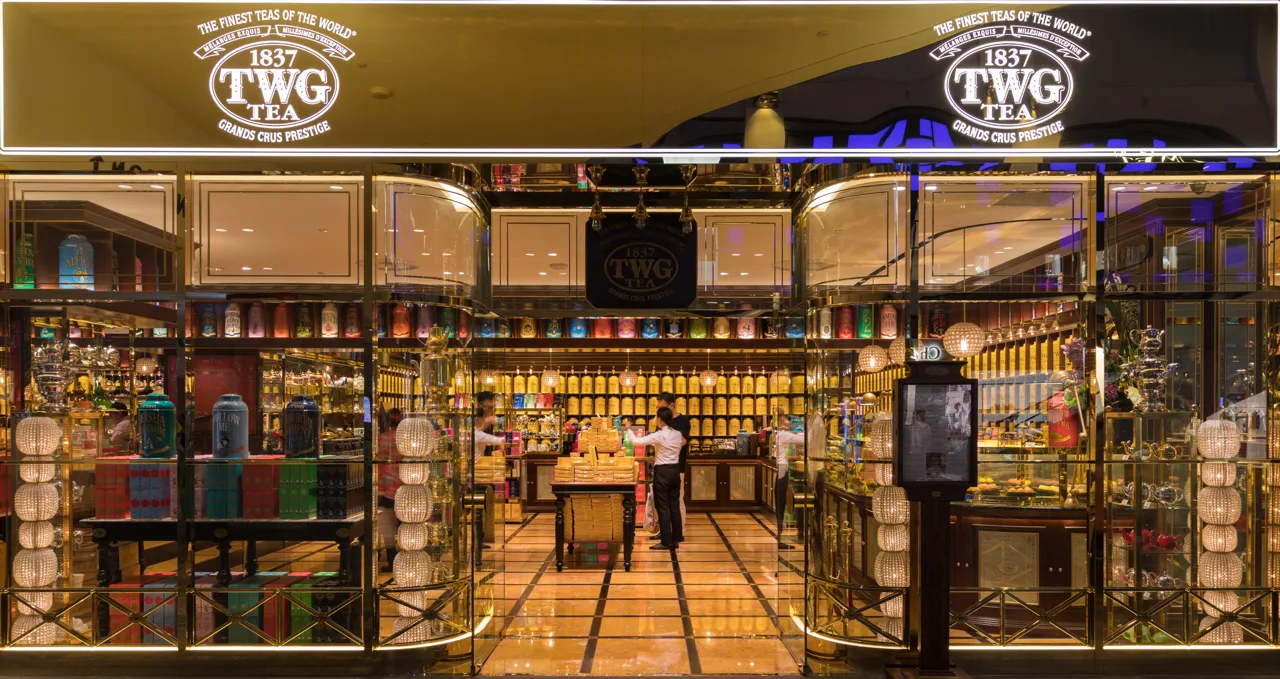
1. What to buy at S$3, S$10, S$30 and S$80
Most people looking for a Singapore souvenir have a number in their head before they have an item. So this section is arranged by the budgets that actually come up, and everything in it can leave the country with you.
Around S$3
Prima Taste laksa paste, S$2.35 for 80g at Cold Storage, or two for S$4.00 at FairPrice. It weighs nothing and it is the most Singaporean object on this entire page. Buy six without thinking about it.
A little above it, Tiger Balm classic white ointment is S$4.95 for a 19.4g jar at NTUC FairPrice. Only the laksa paste and a S$1.50 piece of lapis sagu come in cheaper anywhere in this article.
Around S$10
IRVINS salted egg fish skin, S$9.50 for the 95g bag. Ya Kun kaya jam at S$8.20 for 290g sits just under it, Bee Cheng HiangMap EZ mini crunch at S$8.26 for 60g just above, and the cereal version of the same crunch is cheaper again at S$6.42 for 45g. This is the bracket for handing something to one person each.
Around S$30
A box of TWGMap cotton teabags at S$27.52, or a Bacha coffee bag gift box at S$29.36. The Bacha box holds 12 bags of 12g, so it also happens to be the best value item in this article if you are buying for a group.
Around S$80
Bengawan Solo kueh lapis, S$80.00 for 1.2kg. That is one substantial gift for one household rather than something you split. The TWG Magic Tea Music Box at S$80.73 does the same job for a tea drinker.
The whole list, with prices
| Item | Price | Where to buy | Can it go home? |
|---|---|---|---|
| Bengawan Solo lapis sagu | S$1.50 | Bengawan Solo, 45 outlets | Yes |
| Prima Taste laksa paste 80g | S$2.35 | Cold Storage, FairPrice | Yes |
| Tiger Balm classic white ointment 19.4g | S$4.95 | NTUC FairPrice | Yes, and it goes in the cabin |
| Ya Kun kaya jam 290g | S$8.20 | Ya Kun outlets | Yes, in the checked bag |
| Cereal EZ mini crunch 45g | S$6.42 | Bee Cheng Hiang, iShopChangi | Yes |
| EZ mini crunch 60g | S$8.26 | Bee Cheng Hiang, iShopChangi | Yes |
| IRVINS salted egg fish skin 95g | S$9.50 | IRVINS Singapore online store | Yes |
| Golden floss roll 165g | S$13.58 | Bee Cheng Hiang, iShopChangi | No, it is meat floss |
| Puffed rice seaweed roll 70g | S$13.58 | Bee Cheng Hiang, iShopChangi | Yes |
| Duo choco mini crunch 240g | S$18.17 | Bee Cheng Hiang, iShopChangi | Yes |
| IRVINS salted egg fish skin 210g | S$19.00 | IRVINS Singapore online store | Yes |
| Fish floss 200g | S$19.27 | Bee Cheng Hiang, iShopChangi | Yes |
| Bengawan Solo pandan chiffon, regular | S$22.00 | Bengawan Solo, 45 outlets | Yes |
| Sliced pork bak kwa 300g | S$22.50 | Bee Cheng Hiang own store | No, it is processed meat |
| Pork floss 300g | S$23.85 | Bee Cheng Hiang, iShopChangi | No, it is processed meat |
| Prawn Roll King 350g | S$26.42 | Bee Cheng Hiang, iShopChangi | Yes |
| Sliced pork bak kwa 280g | S$26.60 | Bee Cheng Hiang, iShopChangi | No, it is processed meat |
| TWG cotton teabag box | S$27.52 | iShopChangi | Yes |
| Bengawan Solo pineapple tarts 330g | S$28.00 | Bengawan Solo, 45 outlets | Yes |
| Bacha coffee bag gift box, 12 x 12g | S$29.36 | ION Orchard, iShopChangi | Yes |
| TWG Haute Couture tin | S$44.04 | iShopChangi | Yes |
| Bacha Signature Nomad, ground 250g | S$45.87 | ION Orchard, iShopChangi | Yes |
| Bengawan Solo kueh lapis 1.2kg | S$80.00 | Bengawan Solo, 45 outlets | Yes, but it is heavy |
| TWG Magic Tea Music Box, 4 mini tins | S$80.73 | iShopChangi | Yes |
| EZ pork jerky 1kg | S$99.08 | Bee Cheng Hiang, iShopChangi | No, it is processed meat |
| Bacha Blue Mountain Wallenford | S$376.15 | iShopChangi | Yes |
| Charles & Keith shoes and bags | Not listed here | Takashimaya Ngee Ann City, Marina Bay Sands, 313 Somerset | Yes |
| RISIS gold-plated orchid | Not listed here | RISIS stores | Yes |
Every line that says no is meat, and they all come from the same shop. Everything else is a question of price, weight and which bag it travels in.
The same product name appears on more than one row, sliced pork at 300g and at 280g, and that is not a mistake. The brand’s own store and the airport shop do not charge the same, which is the subject of the next section.
The sections below take the items one at a time, with the size to buy, the number of people a pack covers and where to pick it up. The border rules are gathered near the end so you can read them in one go. The rest of the trip is covered in the Singapore travel guide.
2. Is the airport actually cheaper? Not automatically
Duty free sounds like a discount and most visitors treat it as one. It is a tax status, and a tax status is not the same thing as a lower price. On at least one item in this article, the airport is the more expensive place to buy.
The two price boards, side by side
Bee Cheng Hiang publishes prices on its own store, and iShopChangi publishes prices for the same brand. Here is what each of them asks for sliced pork.
| Where | Pack | Price | Works out at |
|---|---|---|---|
| Bee Cheng Hiang own store, in town | 300g | S$22.50 | S$75.00 per kg |
| Bee Cheng Hiang own store, in town | 1kg | S$75.00 | S$75.00 per kg |
| iShopChangi, at the airport | 280g | S$26.60 | About S$95 per kg |
| iShopChangi, at the airport | 480g | S$43.12 | About S$90 per kg |
Something has to be said plainly before you draw a conclusion from that table. The packs are 300g against 280g, so these are not being sold in identical units and this page is not claiming they are the same product.
What the two boards do show is that the airport figures land higher per kilogram than the town figures. Tax-free does not automatically mean cheaper, and on this item it does not mean cheaper at all. Check the number in front of you rather than trusting the label above the shop.
Tea and coffee: no comparison offered
For TWG and Bacha CoffeeMap, this page quotes the iShopChangi price only. Neither brand publishes a city retail price we could read from an official source, so there is no honest comparison to make and none is offered here.
| Brand | Lines listed on iShopChangi | Price range |
|---|---|---|
| TWG Tea | 104 | S$27.52 to S$88.00 |
| Bacha Coffee | 70 | S$29.36 to S$376.15 |
That is a wider selection than a mall counter has room to display, which matters if you have already decided on a specific blend and do not want to be steered towards whatever is stacked at the front of the shop.
The real advantage is not the price
It is that you do not carry any of it around town. A 1.2kg cake, four tins of tea and a box of coffee do not go into a hotel room, into a taxi and onto a train before they reach the airport. They are handed to you once, on the day you fly.
For a 3 or 4 day trip with a full itinerary, that is worth more than a few dollars either way. It also means the shopping decision gets made in the evening on a phone rather than in the middle of an afternoon you wanted to spend somewhere else.
The ordering window
Orders open 30 days before departure and close at least 12 hours before the flight. The late cutoff is the one people miss. For an afternoon flight, that means deciding the evening before at the latest, and for an early morning flight, two nights out.
Changi Rewards members get a further discount on top of the listed price, which is the one part of this that is straightforwardly in your favour.
Where you actually collect it
This is the detail that makes the whole thing worth doing. The collection centres are not landside. They sit inside the Departure Transit Lounge, past immigration and security, beside the GST refund counters, in all four terminals.
Terminal 1 has it on level 2 at the east end, Terminal 2 on level 2 south at the lockers, Terminal 3 on level 2 south, and Terminal 4 on level 2 south at the lockers. Collect at least 1 hour before departure. Orders placed for an arriving flight go to the baggage claim hall after immigration instead.
What it actually stocks
The site as a whole runs to about 500 brands and 14,000 lines, which is why people assume everything is on it. The part that matters here is narrower. Souvenir Food comes to 76 items.
| Souvenir Food category | Items |
|---|---|
| Gift sets | 27 |
| Salted egg snacks | 18 |
| Coffee and tea | 17 |
| Bak kwa | 10 |
| Bak kut teh spices | 3 |
| Durian snacks | 1 |
So this is the channel for the tea, the coffee, the salted egg snacks and the gift sets. Kaya jam and chilli crab sauce do not appear in that list at all, so do not plan an order around them. Those come from a supermarket in town.
Delivery inside Singapore
The site also delivers within Singapore, free above S$99.00, arriving 3 to 7 days after you order.
Read that window before you use it. The wait is 3 to 7 days, and a 3 or 4 day trip is shorter than that.
Ordering from the brand instead
Bee Cheng Hiang’s own store charges a flat S$8.00 for delivery and waives it on orders over S$50.00, and the site notes that the delivery charge can rise at peak times. If you are buying enough to clear S$50.00, that route puts you on the town price board rather than the airport one.
What ordering ahead does not fix
A tax status is not permission to cross a border. A vacuum-sealed, airport-collected box of bak kwa is still bak kwa, and it will still be taken off you at the other end. Read the border section before you put meat in any basket, airport or otherwise.
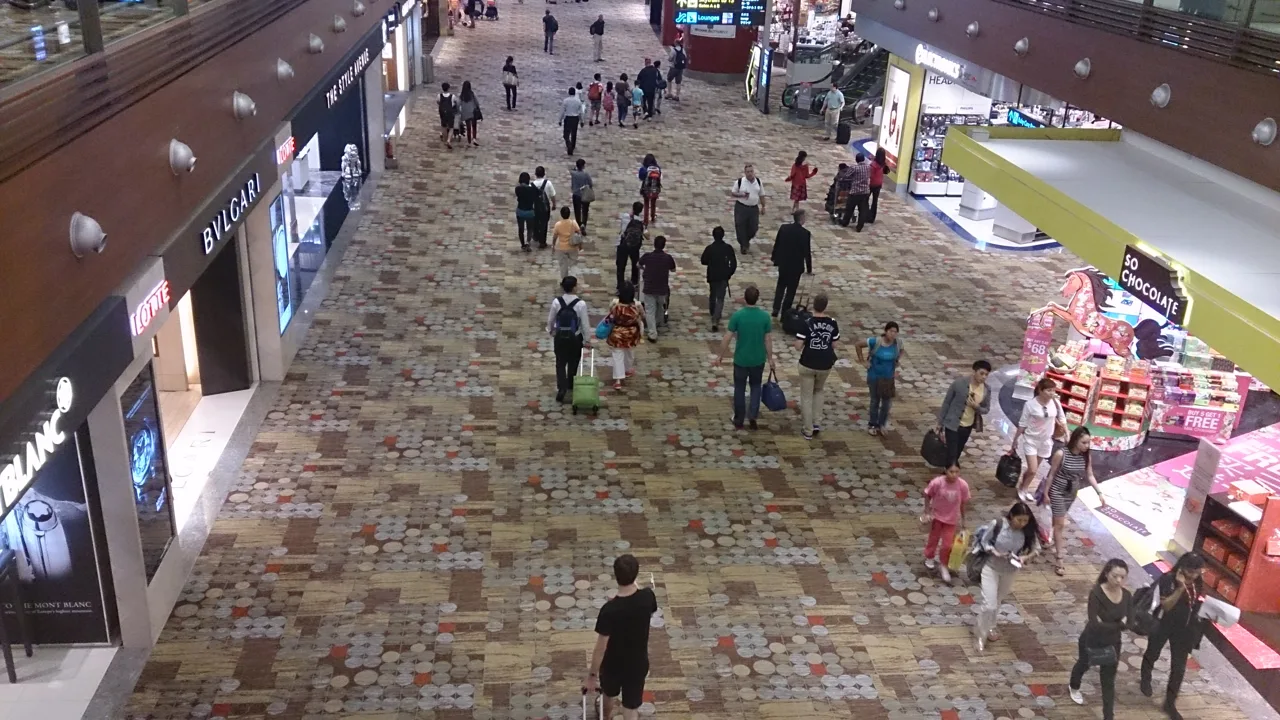
3. Tea: which TWG to pick, and teabags or a tin
TWG is the tea most visitors come home with, and there are really only two decisions to make: which blend, and which format.
The 1837 on the box
Briefly, because this comes up every time. The 1837 printed on every TWG box is not a founding year. The company was founded in Singapore in 2008, and the date on the logo refers to the year the chamber of commerce was established here, when the island had become a trading port for tea and spices. This is good news rather than bad: it means the tea is a genuine Singapore purchase and not a European brand you could have bought at home.
Which blend
Singapore Breakfast. It is the blend named for the city, which is the whole reason for buying tea here rather than at an airport somewhere else, and it does not cost more than the blends beside it.
It also appears at both price points, which is unusually convenient. You can have Singapore Breakfast in the S$27.52 cotton teabag range or in the S$44.04 Haute Couture tin, so the blend decision and the budget decision do not fight each other.
If the person you are buying for already has a favourite style, the teabag range also lists 1837 Black Tea, English Breakfast, French Earl Grey, Silver Moon, Moroccan Mint and Jasmine Queen. The tin range lists French Earl Grey and Golden Earl Grey alongside Singapore Breakfast.
Teabags or a tin
| Product | Price | Best for |
|---|---|---|
| Cotton teabags | S$27.52 | Someone who will drink it. Seven blends at one price |
| Haute Couture tin | S$44.04 | A gift that has to look like a gift. Three blends |
| Tea Taster Collection | S$55.05 | A tea drinker who wants to compare |
| Empire Tea Selection | S$55.05 | The same bracket, a different selection |
| Magic Tea Music Box, 4 mini tins | S$80.73 | Four separate small gifts in one purchase |
The gap between the two is S$16.52. This page will not tell you whether that buys more tea or better packaging, because neither product is listed with a weight. What it will tell you is that the same blend, Singapore Breakfast, sits at both prices, so the decision is about the object rather than about what is inside it.
The Magic Tea Music Box at S$80.73 is worth a second look if you have four people to buy for. Four mini tins in one purchase means four separate objects to hand over, at about S$20.18 each, which is a cleaner solution than buying four full-size boxes.
Where to buy it
iShopChangi lists 104 TWG lines, from S$27.52 up to S$88.00. Every price on this page is that one, because the brand does not publish a city retail price we could read against it, so treat these figures as the airport figures rather than as the cheapest available anywhere.
If you already know which blend you want, order there and collect at the airport. If you want to smell things first, do that wherever you come across the brand and place the order afterwards, as long as you are still more than 12 hours from your flight. This page lists no TWG shop addresses, because there is no source for them that we could check.
Getting it home
Tea is not meat and not dairy, so nothing in the border section of this article blocks it. Readers landing in Korea should note there is a ceiling on agricultural and fishery goods of 5kg per item and 40kg in total, which a serious stack of tins can approach faster than you would think.
4. Coffee: Bacha, and why the coffee bags travel best
Bacha Coffee looks Moroccan and belongs to a Singapore company. The original was a coffee room that opened in Marrakech in 1910, revived here, which is why one of the blends is called 1910 and another is called Singapore Morning. Buy the one named after the city you are actually in.
The item to buy is the gift box
The coffee bag gift box is S$29.36 and holds 12 bags of 12g. The blends listed in this range are Milano Morning, 1910, Tolteca Chocolate, Caramelo Morning and Singapore Morning. What the listing does not make clear is whether one box carries all five or whether you choose one, so if a particular blend is the point of the gift, ask at the counter before you pay.
Twelve individually packed bags in one purchase is the single most useful fact in this article for anyone with an office to buy for. It works out at about S$2.45 a head, and it splits without anybody having to cut, weigh or divide anything.
The format does the work for you. A 250g bag of ground coffee has to be measured out by whoever receives it. Twelve sealed 12g bags arrive already portioned.
The rest of the range
| Product | Price | Notes |
|---|---|---|
| Coffee bag gift box, 12 x 12g | S$29.36 | Blends in this range: Milano Morning, 1910, Tolteca Chocolate, Caramelo Morning, Singapore Morning |
| Decaffeinated range | S$29.36 to S$38.53 | Same entry price as the gift box |
| Signature Nomad, ground | S$45.87 | 250g. Needs a brewer at the other end |
| Single origin | S$45.87 to S$376.15 | Blue Mountain Wallenford is the top of the range |
Signature Nomad at S$45.87 for 250g is the answer for one serious coffee drinker rather than for a group. The single origin range starts at the same S$45.87 and climbs to S$376.15 for Blue Mountain Wallenford, which is the most expensive item mentioned anywhere on this page, more than four times a 1.2kg kueh lapis.
The decaffeinated range starts at S$29.36, the same as the gift box, and runs to S$38.53. Worth knowing if you are buying for someone who has told you they do not drink coffee after lunch.
Coffee rooms and takeaway counters
Not every Bacha location is the same kind of shop, and this catches people who set aside an hour to sit down and then find a retail counter.
ION Orchard is a coffee room with seating, at 2 Orchard Turn, #01-15/16, open 9:30 to 22:00 from Sunday to Friday and 10:00 to 22:00 on Saturday. Marina Bay SandsMap is the other coffee room.
Takashimaya and the Changi AirportMap location are built around takeaway and retail. If all you want is boxes to carry home, those are faster.
iShopChangi carries 70 Bacha lines, and every price quoted in this section is that listing. As with the tea, the brand does not publish a city retail price we could set against it, so no comparison is offered and none should be assumed.
Getting it home
Coffee is beans and ground coffee, not an animal product, so none of the border rules later in this article apply to it. The gift box is light and flat, so it is a cabin bag item rather than something that has to be checked.
5. Snacks: IRVINS salted egg, and which bag size to take
IRVINSMap salted egg fish skin is the snack that comes home in the most suitcases, and the size decision is made for you by the pricing.
The 95g bag is S$9.50. The 210g bag is S$19.00, exactly twice the price. Two small bags give you 190g for that same S$19.00, so the large bag hands you an extra 20g for nothing.
So which one
If the snack is for one household, buy the 210g bag. There is no argument for two small ones except that they fit into two smaller spaces.
If you are buying for several different people, buy several 95g bags. At S$9.50 each, a small bag is a complete gift on its own, and it is a better object to hand over than half of somebody else’s large bag. Five of them come to S$47.50 and cover five people.
Buying it
The brand’s own Singapore online store ships free on orders over S$25.00 and takes 3 to 5 business days. That threshold shapes the order more than you would expect. Two small bags come to S$19.00 and miss it. One large plus one small is S$28.50 and clears it. Two large bags at S$38.00 clear it comfortably.
The site does not state which places it delivers to, so treat it as a way of getting a box to your hotel rather than as shipping to your home address. A 3 to 5 day window also means ordering early in a longer trip, not the night before you fly.
Origin and the border
The packet carries a Made in Singapore mark, which is more than several better known names on this page can say. If the person receiving the gift cares where a thing was made, this is one of the clean answers in the article.
Fish skin is not pork, beef or poultry, so the meat bans in the border section do not catch it. This is the standard substitute for people who wanted bak kwa and found out they could not carry it.
The seasoning is salted egg, and Japan’s quarantine list does name eggs, including the shell, as a category. Nothing we have checked says a seasoned snack falls under that heading and nothing says it does not, so tick the food box on the arrival card and let the officer settle it in ten seconds.
Where S$9.50 sits
The small bag is in the cheap end of this article with a short list of company. Lapis sagu is S$1.50, Prima Taste laksa paste is S$2.35 for 80g, Tiger Balm classic white ointment is S$4.95 for 19.4g, cereal mini crunch is S$6.42 for 45g, Ya KunMap kaya jam is S$8.20 for 290g and EZ mini crunch is S$8.26 for 60g.
That is the whole under S$10.00 shelf, and between them those six cover a snack, a spread, a cake, a cooking paste and an ointment. All six bought together come to S$31.68, which is less than one Haute Couture tea tin at S$44.04 and covers six different people.
6. Cake and tarts: Bengawan Solo, and how kueh lapis travels
Bengawan SoloMap is a Singapore bakery founded in 1979, with 45 outlets across the island and a factory at 23 WoodlandsMap Link. Four items matter to a visitor, and they cover a very wide spread of money.
45 outlets is the practical part of that. You do not have to plan a trip around this one, which matters when the thing you are buying is a cake you would rather not carry for three days.
| Item | Price | What it is for |
|---|---|---|
| Lapis sagu | S$1.50 | A single piece. Try before you commit |
| Pandan chiffon, regular | S$22.00 | One cake for one household |
| Pineapple tarts 330g | S$28.00 | A box that divides among several people |
| Kueh lapis 1.2kg | S$80.00 | The serious gift |
The S$80.00 question
Kueh lapis at 1.2kg is the heaviest single item on this page, and at S$80.00 it is the second most expensive after the top Bacha coffee. A regular pandan chiffon from the same shop is S$22.00.
This page will not tell you why one is nearly four times the other, because a price board does not explain itself. What it will tell you is that there is a way to find out for S$1.50 before you commit.
Spend S$1.50 before you spend S$80.00
Lapis sagu at S$1.50 is the cheapest single item in this whole article. It is one piece rather than a box, which is why the number looks the way it does.
Use it as a test. Buy one, eat it, and decide on the spot whether you want to carry a 1.2kg version of the idea across a border. That is a better system than committing S$80.00 on the strength of a photograph in a display case.
How it travels
1.2kg is the number that decides this. If you are also carrying a kilogram of anything else, two items have taken a noticeable share of a standard checked allowance before a single piece of clothing goes in.
Buy the cake last, on the day or the day before you fly, and pack it first so everything softer goes around it. Weigh the bag at the hotel rather than discovering the problem at the check-in desk.
Pineapple tarts at S$28.00 for 330g are the easier option when several people are involved, because a box of tarts divides and a cake does not. Pandan chiffon at S$22.00 is the lighter option when only one household is involved.
At the border
Cake is not meat, so none of the meat bans apply. The narrower point is worth stating honestly: Japan’s quarantine list names eggs, including the shell, and dairy products as categories, and baked goods that contain them as ingredients are not named on that list one way or the other in what we have checked.
That is not a ban and it is not a licence. Declare baked goods on arrival. A cake waved through after one question reaches the table it was meant for. A cake found in a bag after you ticked no is taken off you.
7. Bak kwa: what it costs, by meat and by weight
Bak kwa is the grilled, sweetened slab of meat sold across Singapore’s shopping streets, and it is the souvenir people ask about before any other. Read this section for the prices, then read the next one before you buy, because the two belong together.
Bee Cheng Hiang publishes a full price list, and the range alone explains why the decision takes a while. Three meats, six lines, from a 280g slab at S$26.60 to a 1kg box at S$99.08.
Prices by type, as listed on iShopChangi
| Product | Weight | Price |
|---|---|---|
| Sliced pork bak kwa | 280g | S$26.60 |
| Sliced pork bak kwa | 480g | S$43.12 |
| Chilli pork bak kwa | 480g | S$44.95 |
| Sliced beef bak kwa | 280g | S$32.11 |
| Sliced beef bak kwa | 480g | S$47.71 |
| Sliced chicken bak kwa | 280g | S$26.60 |
| Sliced chicken bak kwa | 480g | S$43.12 |
| Mini EZ pork | 600g | S$48.44 |
| Mini EZ pork | 1kg | S$80.73 |
| EZ pork jerky | 1kg | S$99.08 |
Reading the table
Beef is the expensive meat. At 280g it is S$32.11 against S$26.60 for pork, and at 480g it is S$47.71 against S$43.12. That is S$5.51 more at the small size and S$4.59 more at the large one.
Chicken is priced identically to pork at both weights, S$26.60 and S$43.12. If somebody at the table does not eat pork, the swap costs nothing at all.
The larger slab is the better buy. 480g of sliced pork is S$43.12 against S$26.60 for 280g, so you pay less than twice as much for well over one and a half times the weight. The same holds for chicken at the same prices, and for beef at S$47.71 against S$32.11.
Chilli pork exists only at 480g, at S$44.95. That is S$1.83 above plain pork at the same weight.
At 1kg there are two products and S$18.35 between them: mini EZ pork at S$80.73 and EZ pork jerky at S$99.08. The 1kg jerky is the most expensive food item anywhere in this article.
Where it is bought, and the second price board
Every figure in the table above is the iShopChangi listing, which is the airport one. The brand’s own store sells sliced pork in different units at different prices: 300g for S$22.50 and 1kg for S$75.00.
| Where | Pack | Price | Works out at |
|---|---|---|---|
| Bee Cheng Hiang own store | 300g | S$22.50 | S$75.00 per kg |
| Bee Cheng Hiang own store | 1kg | S$75.00 | S$75.00 per kg |
| iShopChangi | 280g | S$26.60 | About S$95 per kg |
| iShopChangi | 480g | S$43.12 | About S$90 per kg |
The packs are 300g against 280g, so this page is not claiming the two boards are selling the identical item. What it will say is that the airport figures land higher per kilogram, and that buying at an airport because it says duty free is not a strategy.
Delivery from the brand’s own store is a flat S$8.00 and free on orders over S$50.00, and the site notes the charge can rise at peak times.
If the plan is to eat it here rather than carry it, buy the small pack on your first day and go back for more if it was worth it. If the plan is to carry it home, stop and read the next section first, because for most readers the plan does not survive it.
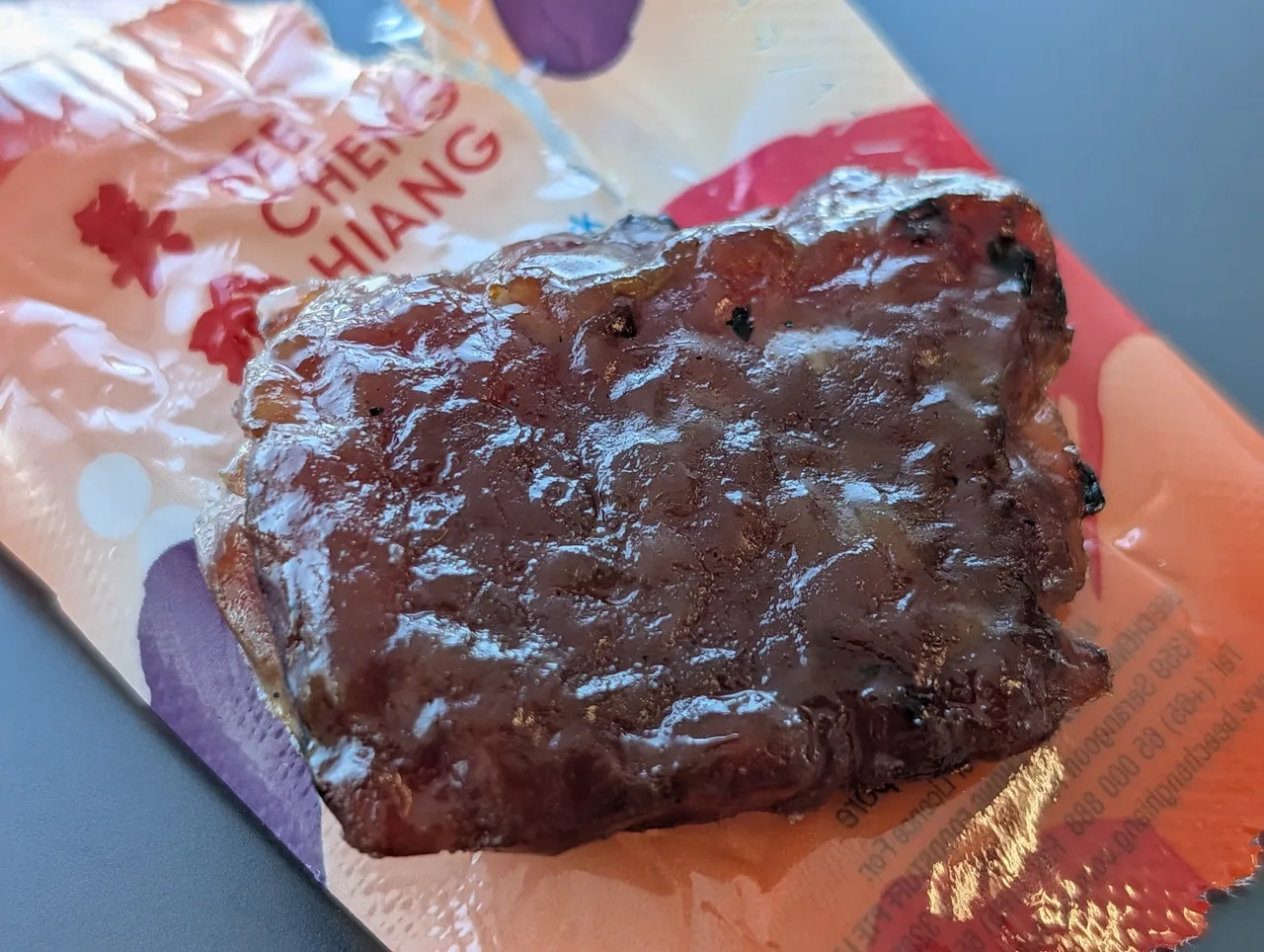
8. Bak kwa cannot go home, and neither can pork floss
Read this part before you pay for anything at that counter. Bak kwa is processed meat, and processed meat is stopped at the border in most of the countries readers of this article are flying home to. A small box bought as a gift is not an exception.
That covers every line in the price table above. Pork, beef and chicken alike. Sliced, mini or jerky. 280g or 1kg. The rules are written around the product, not around the animal or the size of the box.
Pork floss is the same problem
A good number of travellers work this out, feel pleased about it, and then buy pork floss instead, on the assumption that the restriction is about slabs of dried meat. It is not. Pork floss is pork.
Bee Cheng Hiang sells pork floss at S$23.85 for 300g and crispy pork floss at S$16.97 for 210g. Both are stopped by the same rules.
Rolls that look like snacks and are not
The same range holds a row of small rolls at similar prices, and two of them are meat.
The crispy chicken roll at S$13.58 for 165g and the golden floss roll at the same S$13.58 for 165g are both on the meat side. Both are stopped.
The puffed rice seaweed roll, also S$13.58 for 70g, is not. Neither is the duo choco mini crunch at S$18.17 for 240g. Three of those four carry exactly the same price, so the shelf gives you nothing to work from. Use the table below instead.
What to buy instead
The useful discovery is that the substitutes are on the same shelf, in the same shop, at similar prices.
Fish floss is S$19.27 for 200g and S$27.52 for 300g. It is the direct swap for pork floss, sold in the same format at the same weights. Compare like for like at 300g and it is S$27.52 against S$23.85, so the substitute that gets through is S$3.67 more.
Prawn Roll King is S$26.42 for 350g, which lands within pennies of a 280g slab of sliced pork bak kwa at S$26.60. That makes it the easiest mental swap in the shop: same money, same shelf, and it gets through.
EZ mini crunch is S$8.26 for 60g, the cheap one to add to a bag of other things, and the coconut version is the same 60g at the same S$8.26. The cereal version is smaller and cheaper again at S$6.42 for 45g. IRVINS salted egg fish skin at S$9.50 for 95g does the same job from a different shop.
Meat or not, at a glance
| Item | Price | What it is | Can it go home? |
|---|---|---|---|
| Sliced pork bak kwa 280g | S$26.60 | Pork | No |
| Sliced pork bak kwa 480g | S$43.12 | Pork | No |
| Chilli pork bak kwa 480g | S$44.95 | Pork | No |
| Sliced beef bak kwa 280g | S$32.11 | Beef | No |
| Sliced chicken bak kwa 280g | S$26.60 | Poultry | No |
| Mini EZ pork 1kg | S$80.73 | Pork | No |
| EZ pork jerky 1kg | S$99.08 | Pork | No |
| Pork floss 300g | S$23.85 | Pork | No |
| Crispy pork floss 210g | S$16.97 | Pork | No |
| Crispy chicken roll 165g | S$13.58 | Poultry | No |
| Golden floss roll 165g | S$13.58 | Meat floss | No |
| Fish floss 200g | S$19.27 | Not meat | Yes |
| Fish floss 300g | S$27.52 | Not meat | Yes |
| Prawn Roll King 350g | S$26.42 | Not meat | Yes |
| EZ mini crunch 60g | S$8.26 | Not meat | Yes |
| Coconut EZ mini crunch 60g | S$8.26 | Not meat | Yes |
| Cereal EZ mini crunch 45g | S$6.42 | Not meat | Yes |
| Puffed rice seaweed roll 70g | S$13.58 | Not meat | Yes |
| Duo choco mini crunch 240g | S$18.17 | Not meat | Yes |
| IRVINS salted egg fish skin 95g | S$9.50 | Not meat | Yes |
What the yes column does not mean
It does not mean the item is invisible. Seafood, eggs and plant products have their own rules in several countries, and every one of them expects food to be declared on arrival.
It also does not mean you should stop enjoying the bak kwa. It means you eat it here. Buy the 280g slab at S$26.60 on your first evening, finish it before you pack, and spend the money you would have spent on the 1kg box on something that arrives.
What the table does not cover
Mini EZ Golden Coin, EZ Cheese and Krispee Frostee sit in the same range and this page has not been able to establish what is in them. They are not on the meat side and they are not on the safe side, because we do not know. If one of those is what you want, ask in the shop before you decide whether it can fly.
And do not build yourself a shortcut out of the product names. Fish floss and golden floss roll both have the word floss in them and they fall on opposite sides of the line. Prawn Roll King, crispy chicken roll and puffed rice seaweed roll are all rolls and they do not agree either. The names tell you nothing. Only the list does.
9. The supermarket, where the best souvenir costs S$2.35
The most Singaporean thing you can take home is not a S$44.04 tin of tea. It is an 80g sachet of Prima Taste laksa paste, and it costs S$2.35 at Cold Storage. Prima Taste is a Singapore brand, launched in 1998.
FairPrice sells the same paste two for S$4.00, which is S$2.00 each. That is the lowest per-unit price attached to any named product on this page.
Set it against the tea tin. For the S$44.04 that one Haute Couture tin costs, you could carry home 22 sachets of laksa paste at the FairPrice price. One of those gifts gets admired. The other gets cooked, in a kitchen, by somebody who ate laksa at a hawker centre and wanted the dish again after they got home.
The other supermarket item
Ya Kun kaya jam is S$8.20 for 290g, bought in store. Ya Kun began as a coffee stall opened in 1944 and now runs more than 50 outlets across 14 countries, so the brand is easy to find here and the jam is the part of it you can take away.
It comes with one complication the paste does not. A 290g jar is over the 100ml cabin limit, so a jar bought here in town has to go in your checked bag. That makes kaya a purchase for a trip where you are checking one, and if you are flying with hand luggage only, the honest advice is to leave it out or to ask at the airport on the day whether anywhere past the screening point sells it.
Why the cheap answer is the right answer
What sits behind the laksa paste rarely sits behind anything else on this page.
It is cheap enough to buy six without doing arithmetic. It weighs 80g, so it disappears into a bag that is already full. It is a Singapore product rather than a brand that merely operates here. And it turns into a meal, which is more than a keyring does.
One honest caveat. Laksa paste is not a meat product, so the bans in the border section do not apply to it. Declare food on the arrival card anyway rather than assuming a supermarket sachet is beneath notice.
Covering a whole office for under S$30
If you want to bring something back for a whole office without spending real money, the supermarket and the cheap end of the brand shops do it between them.
Six sachets of laksa paste at the FairPrice price come to S$12.00. Add a jar of kaya at S$8.20 and a 60g mini crunch at S$8.26 and you are at S$28.46 for eight separate things. That is less than one 330g box of pineapple tarts at S$28.00 plus anything at all, and it reaches eight people instead of being passed around one table.
Supermarkets are also the least romantic and most reliable stop of the whole trip. The price on the shelf is the price you pay, and the same aisle holds the S$4.95 jar of Tiger Balm.
10. Ointment: Tiger Balm, and whether it can go in the cabin
A jar of Tiger Balm classic white ointment, 19.4g, is S$4.95 at NTUC FairPriceMap. That is among the cheapest things in this whole article, which is a large part of why it ends up in so many bags.
The questions worth asking are whether it is actually made here, and whether it can go in the cabin.
Is it made in Singapore
Not all of it. The ointment started at a factory on Neil Road in 1926, and today it is made at the Singapore plant and also at plants in Malaysia and in China, so a jar bought in a Singapore shop is not automatically a jar made in Singapore.
The fix takes five seconds at the shelf. Turn the box over and read the country of manufacture before you decide the item counts as a souvenir rather than as a product available anywhere. If origin is the whole point of the gift, the clean answers on this page are IRVINS fish skin, which carries a Made in Singapore mark, and RISIS jewellery, which is made here.
The Singapore history behind the brand is real, and it has a second address. The brothers who opened the ointment factory also built Haw Par Villa.
What it costs
S$4.95 for the 19.4g classic white jar at NTUC FairPrice. Against everything else on this page that is almost nothing: only a S$1.50 piece of lapis sagu and a S$2.35 sachet of laksa paste come in under it, and it is half the price of a 95g bag of IRVINS fish skin.
Which means quantity is not really a decision here. Ten jars is S$49.50, less than one 1.2kg cake, and every one of them is a separate thing to hand to a separate person.
This page does not claim to know which shop sells it for least. The ointment turns up in far more places than the brand-only items above, and the bak kwa comparison near the top of this article is the reason to check rather than assume: duty free is a tax status, not a discount.
Cabin or checked
Cabin. The 19.4g classic white jar is small enough that the 100ml liquid rule does not catch it, so it does not have to go in the hold and it does not matter where you buy it.
That is worth saying plainly, because ointment sounds like it ought to be a problem and is not. The only things on this whole page that are over the cabin limit are kaya jars and sauce bottles.
Buying ten of them as gifts changes nothing about the rule either. This is one of the few items here you can pick up on the way to the airport and still carry on board.
At the border
An ointment is not an animal or plant product, so none of the country rules further down block it. It counts against a value allowance like any other purchase, and at these prices it will never be the item that pushes you over one.
11. Fashion: is buying Charles & Keith here actually an advantage?
Charles & KeithMap is one of the few fashion labels a visitor can buy in Singapore and correctly describe as Singaporean. Two brothers, Charles and Keith Wong, opened their first store here in 1996, and the business now runs more than 600 stores across 37 countries.
That is all the history the buying decision needs. The useful question is whether standing in a store here gets you something you could not get at home.
The case for buying it here
The origin claim holds, and that is not nothing. If you want a wearable souvenir with a Singapore story attached, this brand has a real one, and the person receiving it can be told something true about it.
The tax refund also works in your favour in this category more than in any other. The minimum is S$100 spent at a single shop, and a bag or a pair of shoes can clear that in one transaction, where four food purchases at S$20.00 each would not. If you are going to claim a refund on anything during this trip, it is likely to be this.
The case against
More than 600 stores in 37 countries is the case against, and it is a strong one. Unlike a S$2.35 sachet of laksa paste, this is not something that only exists here, and there is a fair chance the same label already has a shop in the city you are flying back to.
That makes it a price and selection decision rather than a scarcity one. This page quotes no prices for the range, so check the number in front of you against the number at home before you decide the trip has saved you anything.
Where the stores are
TakashimayaMap Ngee AnnMap City holds the largest boutique in Singapore. There are also stores at The Shoppes at Marina Bay Sands and at 313 SomersetMap.
Takashimaya Ngee Ann City and 313 Somerset both sit on the Orchard route, which means this brand does not need a trip of its own. If you are already spending an afternoon on that road, you will pass it without going looking for it.
Getting it home
There is no quarantine question. Shoes and bags are manufactured goods, not animal or plant products, and nothing in the border section of this article blocks them.
What applies instead is the value allowance wherever you land, and this is one of the few categories on the page capable of reaching one. Japan allows 200,000 yen and leaves items priced at 10,000 yen or less out of the calculation entirely, so a small accessory does not count against the total. Australia allows AUD 900 if you are 18 or over, the United States and Korea both US$800, Taiwan NT$35,000, and Indonesia US$500 in general but up to US$1,500 for a group that includes bags.
12. A souvenir that looks like one: RISIS gold-plated orchids
RISIS has been making jewellery out of real orchids since 1976. An actual flower goes into the plating process and comes out finished in gold, so every piece starts as something that grew rather than as something that was cast.
The name is the detail that makes the gift easy to explain when you hand it over. RISIS is SISIR spelled backwards, after the standards and industrial research institute where the plating work began. A jewellery brand named after a standards body, in reverse, is a very Singaporean origin story.
The pieces are made in Singapore, which on this page is worth stating plainly. The tea brand’s date on the box is misleading, the ointment brand runs factories in three countries, and this one is exactly what it says it is.
Why it works when almost nothing else does
Set aside taste, which an article cannot decide for you, and the practical profile is better than anything else here.
It does not expire, so it does not matter how long the trip is or how long the bag sits in a hallway afterwards. It weighs very little, so it takes almost no room next to a 1.2kg cake. It is not a liquid, so the 100ml rule never comes up. And it is not an animal or plant product, so not one of the borders in this article has anything to say about it.
Compare that with the souvenir most people consider first. A 280g slab of bak kwa at S$26.60 has to be eaten within a reasonable time, weighs enough to notice, and is refused entry in most of the places readers are flying to. The orchid has none of those problems.
Prices and allowances
Prices depend entirely on the piece, so this page does not quote one. What is worth checking before you pay is the value allowance where you land, because jewellery is the one category here most capable of reaching one.
Australia sets AUD 900 for anyone 18 or over and AUD 450 for anyone younger. The United States and Korea both set US$800. Japan sets 200,000 yen, Taiwan NT$35,000, and Indonesia US$500 with a higher ceiling of US$1,500 for a list that includes pearls.
If one piece takes you past the number where you land, declare it. Nothing in the border section of this article penalises buying something. What it penalises is not saying so.
13. Things to hand out: what covers how many people, and for how much
Most people are not buying one gift. They are buying for a team, a family or a class, and the question is not what is nicest but what divides.
Only a small part of what is on this page arrives packaged as separate units inside a single purchase. Those do the work that everything else has to be bought in multiples to do.
What each pack covers
| Pack | Price | People it covers | Per person |
|---|---|---|---|
| Bacha coffee bag gift box, 12 x 12g | S$29.36 | 12 | About S$2.45 |
| Prima Taste laksa paste 80g, at FairPrice | S$4.00 for two | 2 | S$2.00 |
| Prima Taste laksa paste 80g, at Cold Storage | S$2.35 | 1 | S$2.35 |
| Bengawan Solo lapis sagu | S$1.50 | 1 | S$1.50 |
| Tiger Balm classic white ointment 19.4g | S$4.95 | 1 | S$4.95 |
| Cereal EZ mini crunch 45g | S$6.42 | 1 | S$6.42 |
| EZ mini crunch 60g | S$8.26 | 1 | S$8.26 |
| Coconut EZ mini crunch 60g | S$8.26 | 1 | S$8.26 |
| Ya Kun kaya jam 290g | S$8.20 | 1 household | S$8.20 |
| IRVINS salted egg fish skin 95g | S$9.50 | 1 | S$9.50 |
| Puffed rice seaweed roll 70g | S$13.58 | 1 | S$13.58 |
| Duo choco mini crunch 240g | S$18.17 | 1 household | S$18.17 |
| Bee Cheng Hiang fish floss 200g | S$19.27 | 1 household | S$19.27 |
| Cereal EZ mini crunch 400g | S$49.54 | 1 household, or a refill | S$49.54 |
| TWG Magic Tea Music Box, 4 mini tins | S$80.73 | 4 | About S$20.18 |
What to leave alone on that shelf
The crispy chicken roll and the golden floss roll are both S$13.58 for 165g, they sit beside the crunches, and they are both meat. They are fine to hand out to somebody who lives here and useless to anyone who is flying.
The puffed rice seaweed roll is the same S$13.58 and is not meat. One word in the name is the whole difference, so read it at the shelf rather than after you have landed.
Small bag or big bag
The cereal mini crunch comes at 45g for S$6.42 and at 400g for S$49.54. The large bag is close to nine times the weight for less than eight times the price, so per gram it is the better buy.
That only helps if the people you are buying for are in one house. For ten separate desks, ten small bags at S$6.42 come to S$64.20 and each person gets a sealed thing of their own, which is the point of the exercise. Buy the big bag for a family and the small bags for a team.
The office answer
A single Bacha coffee bag gift box at S$29.36 covers 12 people at about S$2.45 each. Twelve bags of 12g, each one individually packed. Nothing has to be cut, weighed or divided in a kitchen.
That is the cheapest per head of anything in this article that still looks like a gift when you hand it over, and it is a single purchase rather than twelve.
The cheaper answer
If 12 people is the number and S$29.36 is more than you want to spend, buy laksa paste at FairPrice. Twelve sachets at two for S$4.00 comes to S$24.00, and each person gets a complete thing rather than a share of something.
Ten people costs S$20.00. Eight costs S$16.00. That is the shape of the whole solution, and it scales without any awkward remainders.
The small number answer
For four people, the TWG Magic Tea Music Box at S$80.73 gives you four separate mini tins from one purchase, at about S$20.18 each. It is the expensive option on this list, but it is four real gifts rather than one box that somebody has to open in front of everyone.
For five people who all like snacks, five 95g bags of IRVINS at S$9.50 each is S$47.50 and everyone gets their own bag. For twelve people and no food at all, twelve jars of Tiger Balm at S$4.95 is S$59.40, and a jar of ointment is one of the few gifts nobody has to find room for in a kitchen.
The thing not to build a plan around
Bak kwa is the item most people imagine when they think of bringing something back for the office, and it is the one that does not arrive. A 480g slab at S$43.12 divided among a team is both the most obvious answer and the one most likely to be taken off you at the airport.
If you want a meat-adjacent hand-out, EZ mini crunch at S$8.26 for 60g and fish floss at S$19.27 for 200g come from the same shop and do get through. Buy the bak kwa for the hotel room instead.
14. Liquids at the scanner: what has to go in the checked bag
Kaya jars and sauce bottles are the liquids on this page as far as the security scanner is concerned. The Tiger Balm is not one of them, despite what people assume about ointment.
Changi sets the rule out plainly. Liquids, aerosols and gels go into the cabin only in containers of 100ml or less, and a container is judged on what it holds when full. A half-empty jar is refused exactly as a full one is, which is the part that surprises people.
Everything you do carry has to fit inside one transparent re-sealable bag of 1 litre or less. One bag per passenger, and it comes out of your hand luggage to be shown separately at screening.
The rule that decides everything
Anything you buy before the security check has to go into checked baggage. A mall, a supermarket, a brand shop and any airport shop that sits before the screening point all count as before.
Anything you buy after security, at a shop in the departure transit area, can be carried on board. That is the exception the rule writes in, and the next block is about how far it actually gets you.
One extra condition if you are flying to the European Union. The item has to reach your onward screening point in its sealed tamper-evident bag with the receipt inside, so do not open the bag on the plane to look at what you bought.
If you are flying with hand luggage only
Tea, coffee, snacks, tarts, cake, jewellery, shoes and the Tiger Balm all come with you whatever you decide. The kaya and the sauces are the question, and the answer is less convenient than most pages suggest.
A 290g jar of Ya Kun kaya at S$8.20 bought in a supermarket in town is over the limit and travels in the hold. That part is settled and there is no way around it.
The rule also allows liquids bought at shops past the screening point to be carried on board. What this page cannot tell you is whether anywhere past that point sells kaya, because we have not been able to confirm that one does.
The airport directory puts the local food shops people look for in the public area before security. Bengawan Solo at Terminal 3 is on Level 2 of the departure hall between check-in rows 5 and 6, and Ya Kun at Terminal 1 is on Level 3. Buying at either of those is buying before screening.
Ordering through iShopChangi does not solve it. The collection centre is past screening, which sounds promising. Kaya and sauces are not among what that site stocks.
So treat kaya and sauces as purchases for a traveller who is checking a bag. With hand luggage only, either leave them out or ask at the airport on the day whether anything past security sells them, and do not plan the trip around the answer.
Item by item
Ya Kun kaya jam at 290g and S$8.20 is comfortably over the limit. Bought in town, it goes in the checked bag.
Sauce bottles are the other one, and chilli crab sauce is the bottle travellers most often fail to think of as a liquid. Same answer as the kaya.
Tiger Balm classic white ointment is a small 19.4g jar at S$4.95, and the rule does not catch it. Buy it in a supermarket and carry it on board.
The tea, the coffee, the fish skin, the cake, the tarts, the shoes and the jewellery are not liquids, so none of this applies to them.
The opposite problem
Cakes and boxes of meat are weight rather than volume. A 1.2kg kueh lapis at S$80.00 and a 1kg box at S$99.08 count against a checked allowance rather than a cabin one.
If your suitcase was already near its limit on the way out, two heavy items and a tin of coffee is how people end up paying an excess fee that costs more than the souvenirs did. Weigh the bag at the hotel.
Before you leave for the airport
Put all the food in one place in the checked bag so it can be opened and shown quickly, and put the kaya and the sauce in that same bag. Keep the receipts together, because the refund claim needs them. Allow more than the 1 hour before departure that an iShopChangi collection needs. Then declare food on the arrival card at the other end.
15. Can it go home with you? A straight yes or no by country
Start with the rule that is the same everywhere. Processed meat is stopped. Bak kwa, pork floss, sausage and jerky are all processed meat, and buying a small quantity as a gift does not change the answer.
Then take the second rule, which decides how much the first one hurts. Declare a banned item and it is taken off you. Fail to declare it and it is taken off you and you are fined as well. Tick the food box on the arrival card every time.
Destination by destination
| Destination | Bak kwa and pork floss | Also worth knowing | Duty-free allowance |
|---|---|---|---|
| Australia | No | Pork jerky and biltong are not permitted even for personal use | AUD 900 if you are 18 or over, AUD 450 if you are younger. Families arriving together can pool |
| United States | Assume no | Admissibility depends on where the meat came from and where it was processed | US$800 if you have been away 48 hours or more and have not used it in the previous 30 days. US$1,600 from a US insular possession |
| Japan | No | Also stopped: ham, sausage, bacon, meat buns, offal, eggs including shells, and dairy | 200,000 yen, with items of 10,000 yen or less left out of the calculation |
| Korea | No | Livestock products must be declared. Farm and fishery goods capped at 5kg per item and 40kg in total | US$800 |
| Taiwan | No | The ban covers jerky, ham, sausage and anything containing meat | NT$35,000 |
| Indonesia | No | Animal products must be declared through the All Indonesia app | US$500, or up to US$1,500 for electronics, bags and pearls |
Australia
No. Pork jerky and biltong are not permitted, and personal use is not a defence.
On value, the allowance is AUD 900 if you are 18 or over and AUD 450 if you are younger, and a family arriving together can add their allowances together. Two adults and two children travelling as one group therefore land with AUD 2,700 between them, which is a good deal more room than the headline number suggests.
For a reader flying to Australia the meat decision should be made in the shop, not at the airport. Buy fish floss at S$19.27 for 200g, Prawn Roll King at S$26.42 for 350g or IRVINS fish skin at S$9.50 for 95g, and eat the bak kwa while you are still here.
United States
Assume no. The American answer is conditional rather than a flat list: whether a meat or pork product is admissible turns on the disease situation in the country the product came from and in the country where it was processed. Undeclared items are seized.
Conditional is not permission. If you cannot say with confidence what the current determination is for the item in your hand, the working assumption at the counter should be that it will not get through, and the arrival card should say you are carrying food either way.
On value, the personal exemption is US$800, and it carries two conditions people forget. You have to have been out of the country for at least 48 hours, and you must not have used the exemption in the previous 30 days. Arriving from a United States insular possession raises it to US$1,600.
Japan
No, and Japan publishes the longest list of the six. Alongside jerky it names ham, sausage, bacon and meat buns, and the list also covers offal, eggs including the shell, and dairy products.
The allowance side is generous. Japan gives 200,000 yen, and items priced at 10,000 yen or less are left out of the calculation entirely, which is useful for anybody buying several small things. Alcohol is 3 bottles counted at 760ml each, tobacco is 200 cigarettes, and perfume is 2 ounces.
Korea
No. Livestock products have to be declared, and undeclared ones are taken.
The allowance is US$800. Alcohol is capped at 2L and US$400 in value, and since 2025 there is no limit on the number of bottles within that. Tobacco is 200 cigarettes and perfume is 100ml. Agricultural and fishery products have their own ceiling of 5kg per item and 40kg in total, which is the limit a reader buying several tins of tea or several bags of snacks is most likely to meet.
Taiwan
No, and the ban is written broadly: raw, chilled and frozen meat, and also jerky, ham, sausage and any product containing meat. That last phrase is what catches pork floss and anything with a meat filling.
The duty-free allowance is NT$35,000. An older figure of NT$20,000 still circulates in travel writing and it is out of date.
Indonesia
No. Animal products have to be declared through the All Indonesia app, and this is not theoretical: pork products arriving from Singapore have been seized at Sultan Hasanuddin Airport over missing documentation.
The allowance is US$500 per person, with a higher ceiling of US$1,500 for electronics, bags, pearls and similar goods. Anything above the limit is taxed rather than refused.
The order to do this in
Decide where you land, then decide what to buy. Not the other way round. The items that are refused are refused whether they cost S$13.58 or S$99.08, and no amount of packaging changes it.
If you are buying for somebody in a country not listed above, fall back on the common rule at the top of this section. Processed meat does not travel. Fish floss, prawn roll and mini crunch are the substitutes the same shop sells for exactly that reason.
16. Where to buy: the Orchard, Mustafa and Changi circuit
Everything on this page is bought in one of four places, and the choice between them is about time and price rather than selection.
Orchard Road
Orchard is the mall stretch. Bacha Coffee has a coffee room at ION OrchardMap, 2 Orchard Turn, #01-15/16, open 9:30 to 22:00 from Sunday to Friday and 10:00 to 22:00 on Saturday, plus a takeaway and retail counter at Takashimaya. Charles & Keith has its largest Singapore boutique at Takashimaya Ngee Ann City and another store at 313 Somerset, both on the same road.
Which mall holds what, and how the whole stretch connects underground, is set out in our Orchard Road shopping guide. Worth reading before you go if you have one afternoon, because walking the wrong direction at the wrong end of that road costs more time than anything else on this list.
Mustafa Centre, in Little India
MustafaMap Centre is the other shopping destination visitors ask about, and it runs on completely different hours and a completely different logic to a mall. It has its own section in our Little India guide.
The supermarkets
Cold Storage and FairPrice are where the cheapest and best souvenir on this page lives. Prima Taste laksa paste is S$2.35 for 80g at Cold Storage and two for S$4.00 at FairPrice.
NTUC FairPrice also carries Tiger Balm classic white ointment at S$4.95 for 19.4g, so two of the three cheapest things in this article come out of the same supermarket.
This is the fifteen minutes that produces the most gifts per dollar of the entire trip, and it can be done on any evening on the way back to the hotel.
Changi Airport and iShopChangi
The airport is both a shop and a website. Ordering through iShopChangi between 30 days and 12 hours before your flight gets you tax-free or tax-absorbed pricing, a further discount for Changi Rewards members, and a catalogue running to 104 TWG lines and 70 Bacha lines.
Do not treat that as an automatic saving. On bak kwa the brand’s own store works out lower per kilogram than the airport listing, which is set out in full near the top of this article. The reliable gain from ordering ahead is that you carry nothing around town.
Collection is inside the Departure Transit Lounge, past immigration and security, beside the GST refund counters in all four terminals, and the order has to be picked up at least 1 hour before departure. What that catalogue covers is bak kwa, salted egg snacks, coffee and tea and gift sets, so anything else is bought in person. The airport shops are there at counter prices for whatever you did not order. Everything else about the terminals is in our Changi Airport guide.
The tax refund, in one paragraph
Spend at least S$100 at a single shop, keep the receipt, and claim at the airport before you check your bags in rather than after. Up to three receipts from the same shop can be combined to reach the threshold, and two agencies handle the process, Global Blue and Global Tax Free. The full procedure is set out in our Singapore money and tax refund guide. The one thing worth adding here is that a refund gives back tax you already paid in a city shop, while an iShopChangi price never had the tax in it, so the two are alternatives rather than a discount stacked on a discount.
Which route to take
With three days and a full itinerary, do the supermarket on any evening and order the tea and the coffee through iShopChangi. That covers the cheap end and the expensive end without spending an afternoon on either. Keep the kaya out of that order, because it is not in the catalogue, and buy it in the supermarket for the checked bag.
If you want to taste and smell before buying, spend an afternoon on Orchard, then place the iShopChangi order that night for anything you decided you wanted in quantity, as long as your flight is still more than 12 hours away.
Whichever route you take, make the meat decision first. The most expensive mistake on this page is not overpaying for a tin of coffee. It is spending S$99.08 on a kilogram of pork jerky and handing it to a quarantine officer at the other end.
🎡Things to Do53
🍜Food6
🏨Where to Stay10
🚇Getting Around4
🧭Travel Tips19
Frequently asked questions
Prima Taste laksa paste, S$2.35 for 80g at Cold Storage, or two for S$4.00 at FairPrice. It is a Singapore product, it weighs almost nothing, no border in this article has a problem with it, and it turns into an actual meal at the other end.
If that feels too small for the person you are buying for, the next steps up are IRVINS salted egg fish skin at S$9.50 for 95g, a box of TWG cotton teabags at S$27.52, and a Bacha coffee bag gift box at S$29.36.
It depends on the item, and tax-free does not automatically mean cheaper. Bee Cheng Hiang’s own store sells sliced pork at S$22.50 for 300g and S$75.00 for 1kg, while iShopChangi lists 280g at S$26.60 and 480g at S$43.12. The pack sizes are not identical, so they are not the same product. The airport numbers still work out higher per kilogram.
The real advantage of ordering through iShopChangi is not the price. It is that you collect everything at the airport and carry none of it around town, and the catalogue is deeper than a mall counter, at 104 TWG lines and 70 Bacha lines. Changi Rewards members get a further discount on top.
From 30 days before departure, and no later than 12 hours before the flight. The late cutoff is the one people miss, so put the order on the same list as checking in.
You collect inside the Departure Transit Lounge, past immigration and security, beside the GST refund counters in all four terminals, and you have to pick it up at least 1 hour before departure. Orders for an arriving flight go to the baggage claim hall instead.
In most cases, no. Bak kwa is processed meat, and processed meat is refused by most of the countries readers fly home to. A small box bought as a gift is not an exception.
Australia does not permit pork jerky or biltong even for personal use. Japan and Taiwan both stop jerky, ham and sausage at the border. The United States decides case by case on where the meat came from and where it was processed, which is not a yes. Eat it in Singapore and carry something else.
No. Chicken bak kwa is poultry, and it is still processed meat. Bee Cheng Hiang prices it at S$26.60 for 280g and S$43.12 for 480g, exactly the same as pork, and it sits on the same side of the border rules.
The quarantine lists are not written as pork lists. Japan names jerky, ham, sausage, bacon and meat buns as categories, and Taiwan stops jerky, ham, sausage and any product containing meat. Changing the animal does not change the answer.
No. Pork floss is pork, and it is stopped by the same rules. This is the most common mistake on the whole subject, because people assume the restriction is about slabs of jerky rather than about meat.
Bee Cheng Hiang sells pork floss at S$23.85 for 300g and crispy pork floss at S$16.97 for 210g. The crispy chicken roll at S$13.58 for 165g is poultry and belongs on the same side of the line.
Fish floss, prawn roll or mini crunch, all sold in the same shop. Fish floss is S$19.27 for 200g and S$27.52 for 300g, Prawn Roll King is S$26.42 for 350g, and EZ mini crunch is S$8.26 for 60g.
IRVINS salted egg fish skin is the other swap, at S$9.50 for 95g and S$19.00 for 210g. None of these are meat, so none of them are caught by the meat bans. Declare food on arrival anyway, because the form asks about food and not only about meat.
The 210g bag at S$19.00, if you are buying more than one bag. It costs exactly twice the 95g bag at S$9.50, but two small bags only give you 190g for the same money.
The small bag still has a job. At S$9.50 it is a single hand-out gift, and it fits into a bag that is already full. Buy several small ones for several people, or one large one for a household.
No. TWG Tea is a Singapore company founded in 2008, and the 1837 on the logo is not a founding year. That date refers to the year the chamber of commerce was established here, when the island had become a trading port for tea and spices.
This matters for one reason only: it means the tea is a genuine Singapore purchase rather than a European import you could have bought at home. Say that when you hand it over instead of repeating the date on the tin.
Singapore Breakfast at TWG and Singapore Morning at Bacha. Both are named for the city, which is the point of buying them here, and neither costs more than the other blends beside it.
Singapore Breakfast appears in the S$27.52 cotton teabag range and again in the S$44.04 Haute Couture tin, so you can pick it at either price. Singapore Morning is one of the blends listed in the S$29.36 Bacha coffee bag range, along with Milano Morning, 1910, Tolteca Chocolate and Caramelo Morning, so ask at the counter which of them a given box actually holds.
Not all of it. The ointment started at a factory on Neil Road in 1926, and today it is made at the Singapore plant and also at plants in Malaysia and in China, so a jar bought in a Singapore shop is not automatically a jar made in Singapore.
If origin is the reason you are buying it, turn the box over and read the country of manufacture before you pay. The classic white ointment is S$4.95 for 19.4g at NTUC FairPrice, and the 19.4g jar is small enough to carry on board, so this is one purchase with no complications at all. The other clean answers on this page are IRVINS fish skin, which carries a Made in Singapore mark, and RISIS jewellery, which is made here.
A jar bought in town goes in the checked bag, because a 290g Ya Kun jar at S$8.20 is over the 100ml limit. The rule does allow liquids bought at shops past the screening point to be carried on board, and this page cannot confirm that anywhere past that point sells kaya.
The airport directory puts the local food shops in the public area before security, with Bengawan Solo at Terminal 3 on Level 2 of the departure hall between check-in rows 5 and 6, and Ya Kun at Terminal 1 on Level 3. Ordering through iShopChangi does not help, because kaya and sauces are not among the things it stocks. Treat kaya as a purchase for a trip where you are checking a bag, and if you are flying with hand luggage only, ask at the airport on the day rather than counting on it.
It depends where you land: AUD 900 for Australia, US$800 for the United States and for Korea, 200,000 yen for Japan, NT$35,000 for Taiwan and US$500 for Indonesia. Japan leaves items priced at 10,000 yen or less out of the calculation entirely, which quietly raises what you can carry.
The conditions differ more than the numbers do. Australia gives AUD 450 to anyone under 18 and lets a family arriving together pool their allowances. The American US$800 applies only if you have been away at least 48 hours and have not used it in the previous 30 days, and it rises to US$1,600 arriving from a United States insular possession. Korea adds 2L of alcohol worth US$400 or less, 200 cigarettes, 100ml of perfume, and a cap of 5kg per item and 40kg in total on farm and fishery goods. Indonesia raises its ceiling to US$1,500 for electronics, bags and pearls.
Spend at least S$100 at one shop and claim at the airport before you check your bags in, not after. Up to three receipts from the same shop can be combined to reach the threshold, and two agencies handle the claims, Global Blue and Global Tax Free.
A refund and an airport duty free price are two different things. The refund gives back tax you already paid in a city shop, while an iShopChangi price never had the tax in it. Ordering ahead saves you the refund queue at the end of the trip, which is when you have the least time.