
Hainanese Chicken Rice in Singapore: Ten Places in the MICHELIN Guide, Prices and Closing Days
| What it is | Poached chicken with rice cooked in chicken fat and stock, carried here by Hainanese migrants and listed on Singapore’s national intangible cultural heritage inventory as entry ICH-064. |
|---|---|
| In the guide | Ten chicken rice establishments hold a MICHELIN distinction in Singapore, five of them Bib Gourmand and five MICHELIN Selected, and none of them holds a star. |
| Where they are | Only Maxwell Food Centre and People’s Park, both in Chinatown, sit on a route a visitor is likely to walk; the other eight are in residential areas including two in Jurong East. |
| What it costs | Every listed place sits in the lowest price band, and the statistics department counts the average plate as an item in the national consumer price basket. |
| Closing days | Tian Tian’s six outlets close on four different patterns, and hawker centres shut for cleaning for a few days each quarter starting on a Monday. |
| Late and last | Five Star on East Coast Road runs until 02:00, and the Jewel Changi Airport outlet has no closing day at all. |
1. Where to eat Hainanese chicken rice in Singapore
2. Why chicken rice is on the national heritage list
3. From a family dish to a hawker stall
4. How the chicken is actually cooked
5. The rice is half the dish
6. Poached and roasted: the two versions you will meet
7. The soya sauce version and where it comes from
8. The three sauces, the soup and what else to order
9. The ten chicken rice places in the MICHELIN Guide
10. Where those ten places actually stand
11. Two chicken rice stalls have held Bib Gourmand in every edition
12. The famous names that are not in the guide
13. What a plate costs, and why the official figure once fell
14. Tian Tian has six outlets and they close on different days
15. Maxwell Food Centre: two chicken rice stalls, not one
16. The Monday problem: when the whole building shuts
17. Eating chicken rice in a restaurant instead
18. Halal chicken rice: what is and is not established
19. How to order, and how much to order
20. Timing: the lunch crush, running out and the airport
1. Where to eat Hainanese chicken rice in Singapore
Ten chicken rice establishments hold a MICHELIN distinction in Singapore, and only two of them stand where a visitor is already walking: Tian Tian at Maxwell Food CentreMap and People’s Park Hainanese Chicken Rice, both in Chinatown. The other eight sit in residential estates, spread from Jurong EastMap in the west to Yishun in the north, and reaching any of them means a deliberate trip out and a trip back. That single fact decides most chicken rice plans in this city.
The prices are not the difficulty. Every one of the ten falls into the lowest band the guide uses, and the government publishes an average price for a plate of this dish because it counts as an item in the national consumer price basket. A plate of chicken rice is one of the cheapest sit-down meals a visitor will eat anywhere in Singapore, whether the stall is listed or not.
The difficulty is the calendar. Stalls take their own weekly closing day, the buildings they stand in shut for cleaning for a few days every quarter, and the two do not always coincide. Tian Tian alone runs six outlets on four different closing patterns, so the answer to “is it open” depends on which branch you have in mind and which day of the week you turn up.
The rest of this article works through all of that in order: what the dish is and how it is cooked, the ten listed places and where they actually stand, the famous names that are missing from the list, what a plate costs on the official measure, the closing days outlet by outlet, and how to order once you reach the front. How a hawker centre works as a building, and how to order a coffee in one, sit in the hawker centre guide instead.
What this article answers
Four questions come up more than any others in English: where the listed stalls are, what a plate costs, which days things close, and whether the famous name a reader arrived with is still on the list. Those four get the most space here. The neighbourhood walking, the opening hours of everything else around these addresses and the rest of the eating in each district are covered elsewhere on the site.
2. Why chicken rice is on the national heritage list
Hainanese chicken rice is listed on Singapore’s national inventory of intangible cultural heritage under food heritage, as entry ICH-064, and the inventory is maintained by the National Heritage Board. That is a formal listing by the state, not a ranking or an award, and it puts the dish in the same official record as the other practices the country has decided to document and keep.
The dish descends from Wenchang chicken, cooked on Hainan island off the south coast of China. Hainanese migrants brought the method to Singapore through the nineteenth century and the early twentieth, and it changed here. The bird available was different, the accompaniments were different, and the people cooking it were working in a different economy. What is sold at a hawker stall today is the local result of that, and it is far enough from the Hainan original that the two are now separate dishes.
The heritage entry matters to a visitor for one practical reason. It is a public record of what the dish is, which stalls and houses were early, and how the dish travelled outward from Singapore. Several of the facts in this article, including which establishments were trading before the Second World War and the existence of halal versions, come from that record rather than from a restaurant’s own account of itself.
Chicken rice is not the only Singapore dish that carries this weight of official attention, and it is the one a visitor is most likely to eat first. If you are working through the short list of dishes that people fly in already intending to order, the chilli crab guide covers the other end of that list, where the bill and the booking both work differently.
Wenchang chicken and what changed here
The Hainan version and the Singapore version share a cooking principle: the bird is poached gently rather than roasted hard, and the rice is cooked in what comes off the bird. Everything layered on top of that, from the sauces on the tray to the cucumber under the chicken, settled into place in Singapore. The dish also travelled on from here, and the heritage entry names a Singapore business as an example of that international spread.
3. From a family dish to a hawker stall
Until the 1940s this was a dish Hainanese families in Singapore cooked for special occasions, and it was not something sold on the street in any volume. A whole bird was an expense, the poaching and the rice took a working morning, and the result appeared at a family table on a day that warranted it.
The war changed that. After it ended in 1945, hardship pushed large numbers of people into street hawking, and chicken rice was a dish that suited the trade well. One bird fed a queue, the rice stretched it, the components held their quality through a long service, and the whole thing could be carried and sold from a small pitch. The dish spread across the island in the years that followed and stopped being an occasion dish at all.
A handful of establishments predate that spread. Yet Con, Chin Chin Eating House and Swee Kee are all recorded in the heritage record as chicken rice establishments of the 1930s and 1940s, which places them before the postwar wave rather than inside it. They are the names that appear when the dish is written about historically, and none of them appears in the current MICHELIN selection.
What survives from that period is the shape of the meal rather than any particular business. A plate, a bowl of soup, a few slices of cucumber and three sauces is a format built for a hawker who has to serve quickly and cheaply, and it has not changed since. The stalls in this article are selling the same arrangement that came out of the postwar street trade.
Why the dish suited street hawking
Poached chicken keeps well at room temperature for the length of a service, which roasted meat does not manage as easily. The rice absorbs the fat and the stock that the poaching produces, so nothing from the bird is wasted. A hawker could buy the birds in the morning, cook them once and sell steadily until they were gone. That last part still governs how the stalls work today, and it is the reason a late arrival can find the counter empty.
4. How the chicken is actually cooked
The bird is poached whole in boiling water until it is done, then lifted out and left to sit in room-temperature water for about thirty minutes. That second stage is the Hainanese method, and it finishes the cooking gently while the flesh settles. The chicken is then chopped and served at or near room temperature, which is why a plate of chicken rice does not arrive hot.
Cantonese kitchens in Singapore introduced a variation on the second stage: instead of room-temperature water, the bird goes into ice water. The shock tightens the skin and produces a smoother surface with a gelatinous layer directly underneath it. That layer is what people are describing when they talk about the texture of a good plate, and it is the clearest point of difference between two stalls using otherwise identical recipes.
Neither method is more correct than the other, and both are in use across the ten listed places. The inspectors’ notes on individual stalls tend to describe the result rather than the technique: velvety flesh and springy skin at Tian Tian, very little fat under the skin at Tiong Bahru Hainanese Boneless. Those are descriptions of what the cold stage produced.
The practical consequence for a visitor is a small one, and it catches people out anyway. Chicken rice is not served steaming. The rice is warm, the soup is hot, and the chicken sits somewhere below that. A plate that arrives cool is the dish working as intended, and sending it back is the one mistake a first-timer makes at the table.
Why the skin is cold
The cold plunge does two jobs at once. It halts the cooking at the point the cook chose, so the flesh nearest the bone stays tender instead of drying out on residual heat, and it firms the collagen in the skin into the layer described above. Stalls that use ice rather than tap water get a more pronounced version of both effects. A stall that gets it wrong produces chicken that is either dry at the breast or loose at the skin, and both faults show up on the plate immediately.
5. The rice is half the dish
The rice is fried in chicken fat first, then cooked in chicken stock with ginger, garlic and pandan leaves. It is not plain rice served alongside chicken. It is a separate preparation that takes the fat and the stock produced by poaching the birds, and it is the reason the dish is named after the rice as well as the chicken.
That construction is also why the rice varies more between stalls than the chicken does. The poaching method is close to standard across the trade, while the rice depends on how much fat goes in, how strong the stock is, what aromatics are used and how separate the grains are kept. Two stalls fifty metres apart in the same food centre will produce noticeably different rice from the same technique.
The inspectors’ notes on the ten listed places bear that out, because the rice is what they keep singling out. The rice at Tiong Bahru Hainanese Boneless carries a mild turmeric aroma. The rice at People’s Park is perfumed with garlic. Ji De Lai in Chong Pang is noted for grains that stay separate. Hup Hong in Jurong East cooks its rice in both the stock and the fat. Tian Tian’s rice is described as oily, which in this dish is a compliment.
For a visitor comparing two stalls, the rice is the more useful test. Chicken quality at the listed places is consistently high, so it rarely separates them. The rice separates them every time, and it is worth eating a spoonful on its own before the first piece of chicken to see what the kitchen has done with it.
Rice differs from stall to stall
The aromatics are the lever. Ginger and garlic are close to universal, pandan is common, and turmeric turns up at a minority of stalls and changes both the colour and the smell of the finished rice. The fat content is the other lever: a heavily oiled rice coats the mouth and stands up to the chilli sauce, while a drier rice keeps the grains distinct and lets the soup do more work. Neither is a fault, and knowing which one you prefer makes the ten listed places much easier to sort through.
6. Poached and roasted: the two versions you will meet
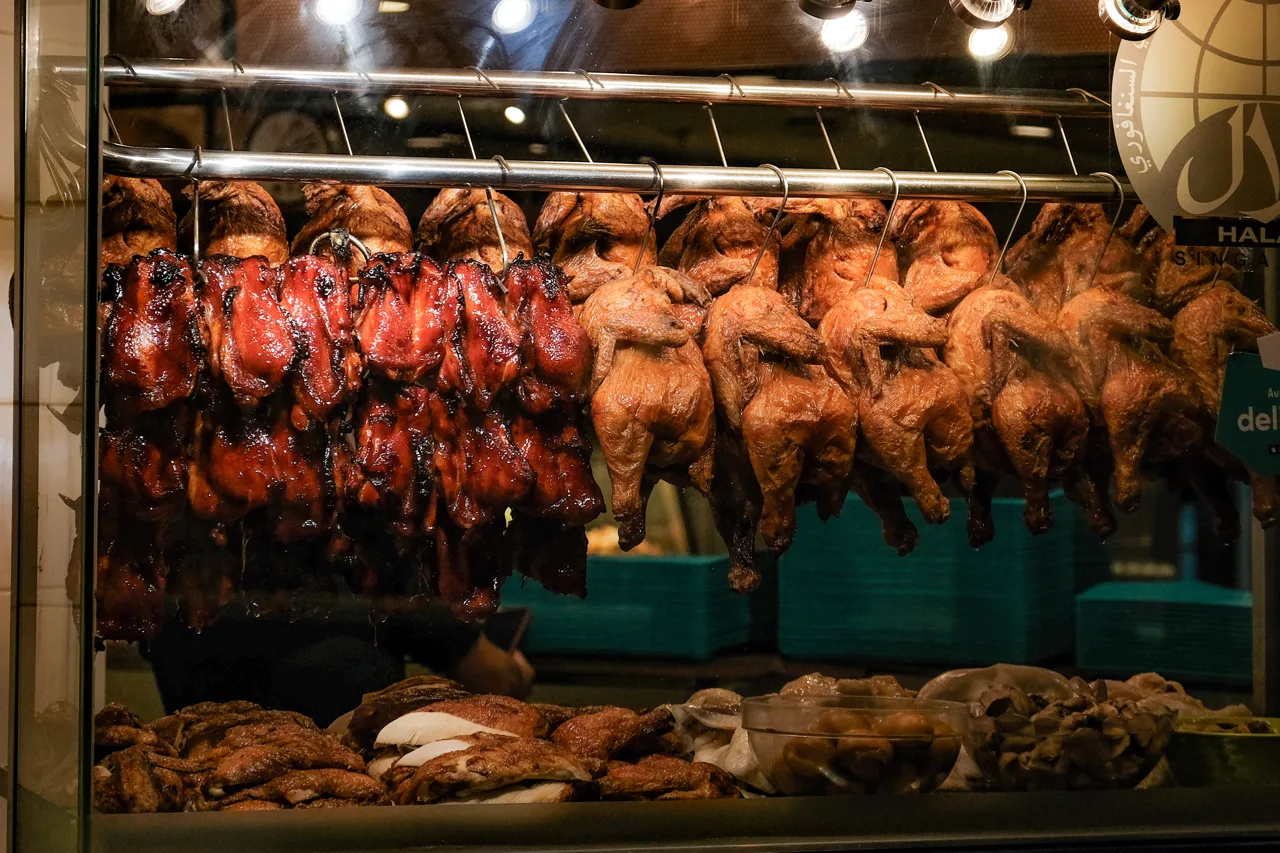
Poached white chicken is the version nearly every stall sells, and roasted chicken is the usual alternative, frequently sold half-and-half on the same plate. If you order without specifying, you will get the poached version. Asking for half roasted and half poached is a normal request and most kitchens will do it without comment.
The roasted version is prepared along a different line entirely. The bird is seasoned with black pepper and salt, dried, and then deep-fried whole, which produces a crisp skin and a darker, firmer result than the poaching method gives. It is a heavier plate, and it takes the chilli sauce differently because the skin is not soft.
| Version | How it is cooked | What you get |
|---|---|---|
| Poached (white) | Cooked through, then plunged into cold water | The common one: springy skin over tender flesh |
| Roasted | Seasoned with black pepper and salt, dried, then deep-fried whole | Crisp skin; often sold half-and-half with the poached |
| Soya sauce | Simmered in a dark spiced sauce sweetened with rock sugar | A Cantonese line: darker and sweeter than either of the above |
Several of the listed places lead with the roasted version rather than treating it as the second option. Heng Long BBQ Chicken Rice at Mei Ling MarketMap in Queenstown is a barbecue stall first, with honey char siew on the counter alongside the chicken, and it sells brine-poached chicken as well. Hup Hong in Jurong East offers roasted or boiled from the same counter. Ji De Lai at Chong Pang does roasted or steamed. Tiong Bahru Hainanese Boneless sells roast chicken beside the boneless poached plates it is known for.
Ordering the split plate is the sensible move on a first visit, and it costs little more than a single plate at a hawker stall. It also settles the question for the rest of the trip, because the two versions are different enough that most people form a clear preference on one plate.
Where the roasted version is the point
At a barbecue-led stall the chicken shares the counter with char siew and other roasted meats, and the rice underneath is doing the same job for all of them. That is a different meal from a dedicated chicken rice stall, and it is worth knowing which you are walking into. The listed barbecue stalls sit in Queenstown and Jurong East, well away from the Chinatown addresses, so this is a choice you make before you set out rather than at the counter.
7. The soya sauce version and where it comes from
Soya sauce chicken is simmered in a dark spiced sauce sweetened with rock sugar, and it comes down a Cantonese line rather than the Hainanese one. The bird ends up dark brown and glossy, and the flesh carries the sweetness of the braise all the way through instead of taking it from a sauce on the side.
It is a sweeter and heavier plate than either the poached or the roasted version, and the rice underneath it is doing less work, because the meat has already been seasoned in the pot. Some counters serve it over noodles instead of rice, which changes the meal again.
The Cantonese influence on chicken rice in Singapore shows up in two places, and this is the more visible of them. The other is the ice-water plunge described earlier, which Cantonese kitchens brought to the poached version and which is now used widely by stalls that have nothing else Cantonese about them. The two traditions have been mixing in this city for a long time.
Worth noting for anyone planning around the guide: the inspectors’ notes on the ten listed places describe poached, steamed, roasted and barbecued chicken, and none of the ten is described as a soya sauce house. People’s Park Hainanese Chicken Rice comes closest, in that it sells Cantonese barbecue alongside its chicken rice and serves double-boiled soups, which is a Cantonese habit rather than a Hainanese one. If the dark sweet version is what you came for, you will be looking outside the listed ten to find it.
How it reads against the poached plate
Order the two on the same day and the difference is obvious before the first mouthful. The poached plate is pale, the sauces sit in separate dishes and the seasoning happens at the table. The soya sauce plate arrives already dark and already seasoned, and the chilli on the side has less to do. People who find the poached version too plain on a first try usually get on better with this one.
8. The three sauces, the soup and what else to order
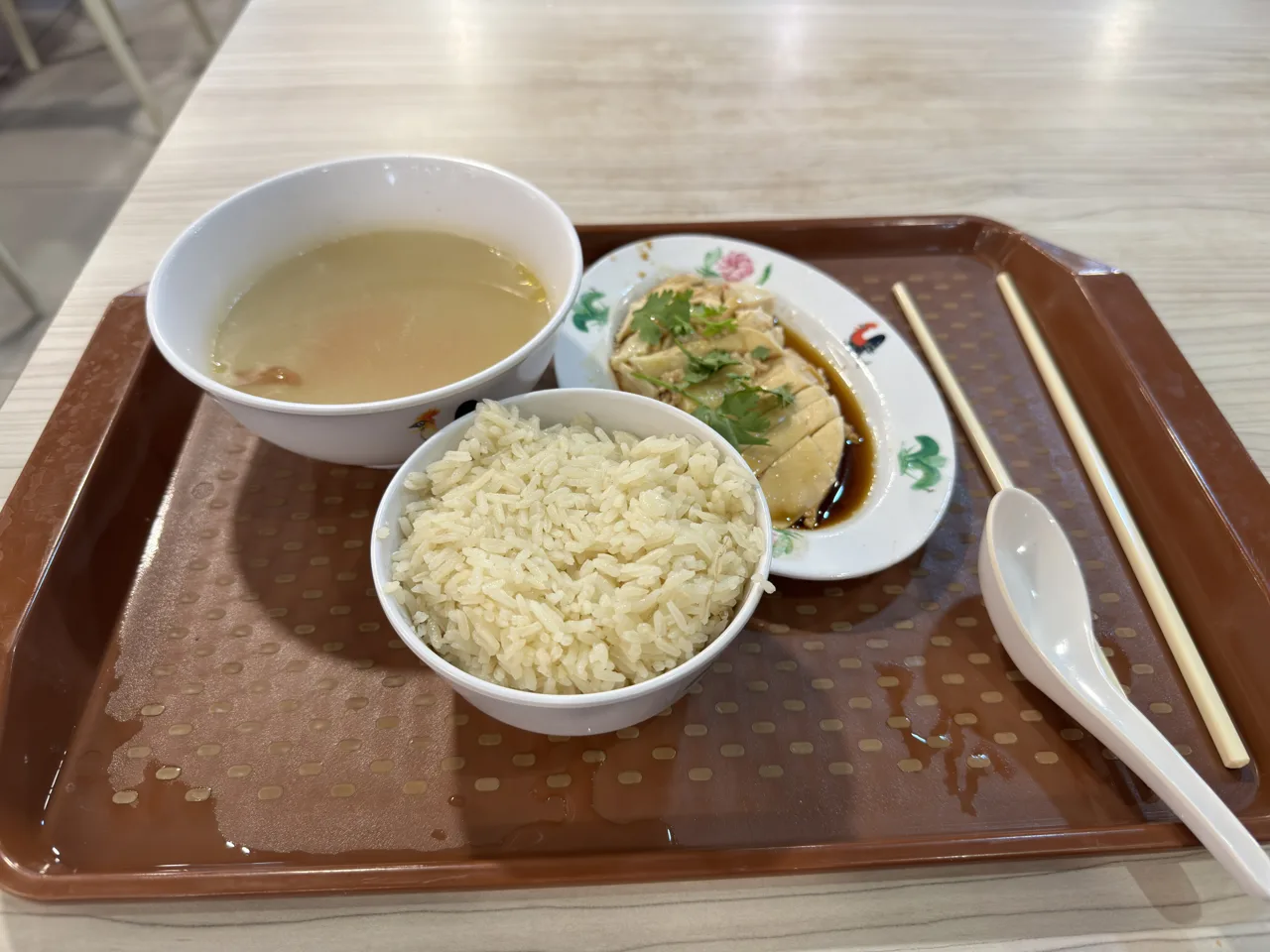
Three dips arrive with the plate: chilli, ginger and dark soy. They come in small separate dishes, and they are part of the standard order rather than an extra. A bowl of soup and a few slices of cucumber come with the plate as well, so the basic order is a complete meal without anything added to it.
The three sauces are meant to be used together and in whatever proportion suits you. The chilli carries the heat and usually some acidity, the ginger is sharper and cleaner, and the dark soy is there for depth and to wet the rice. Some stalls are known specifically for one of the three: Margaret Drive Sin Kee is noted for a ground ginger sauce, and the sauce at Tian Tian is described by the inspectors as briny-sweet.
The soup is the poaching liquid, thinned and seasoned, and it is the reason nothing from the bird goes to waste. It arrives hot while the chicken does not, and drinking it between mouthfuls is how the meal is usually eaten. The cucumber is there to cut the fat in the rice.
Beyond the standard plate, most stalls keep a short list of additions on the board: a braised egg, beancurd, beansprouts, kailan and achar. A braised egg and a plate of kailan turn a single plate into a fuller meal for very little extra, and the achar, a pickled vegetable side, works against the richness in the same way the cucumber does. None of these is required, and ordering them is normal rather than unusual.
What a full order looks like
For one person: a plate, which already includes the soup and cucumber, plus a braised egg if you want it. For two: half a bird, two bowls of rice, a vegetable and the sauces. For a group of three or more: a whole bird, rice per person, beansprouts and kailan, and the soup will usually arrive in a larger bowl to share. The sauces are refilled on request at every stall, and asking for more chilli is expected.
9. The ten chicken rice places in the MICHELIN Guide
Every one of the 307 establishments in the current MICHELIN Guide Singapore selection, the tenth edition of the guide in this country, was checked against this dish, and ten of them serve chicken rice. Five hold a Bib Gourmand and five are MICHELIN Selected. None of the ten holds a star.
That is the whole field. Any list longer than ten is a list of somebody’s favourites rather than a list of distinctions, and there is nothing wrong with that, but it is a different kind of list. The table below is the complete set, with the unit number where the establishment is a stall inside a hawker centre, because in a building of two hundred stalls the unit number is the only reliable way to find the right counter.
| Establishment | Distinction | Where | Unit | Price band | What the inspectors noted |
|---|---|---|---|---|---|
| Tian Tian Hainanese Chicken RiceMap | Bib Gourmand | Maxwell Food Centre, Chinatown | 01-10/11 | Low | Long queue; velvety chicken with springy skin; oily rice and a briny-sweet sauce; order half a chicken to share |
| Tiong Bahru Hainanese Boneless Chicken RiceMap | Bib Gourmand | Tiong Bahru MarketMap, upper floor | 02-82 | Low | Rice carries a mild turmeric aroma; little fat under the skin; roast chicken sold as well |
| Margaret Drive Sin Kee Chicken Rice | Bib Gourmand | Holland DriveMap | 01-39 | Low | Method unchanged since it opened; ground ginger sauce |
| Ji De Lai Hainanese Chicken Rice | Bib Gourmand | Chong Pang MarketMap, Yishun | 01-152 | Low | Roasted or steamed; separated grains; sets available |
| Boon Tong KeeMap | Bib Gourmand | Balestier Road, a restaurant | — | Low | Neon sign; the group has grown, and this is the original |
| People’s Park Hainanese Chicken Rice | MICHELIN Selected | People’s Park, Chinatown | 01-1098 | Low | Cantonese barbecue too; garlic-perfumed rice; double-boiled soups |
| Heng Long BBQ Chicken Rice | MICHELIN Selected | Mei Ling Market, Queenstown | 02-42 | Low | Barbecued chicken rice is the draw; honey char siew; brine-poached chicken as well |
| Hup Hong Chicken Rice | MICHELIN Selected | Yuhua VillageMap, Jurong East | 01-51 | Low | Roasted or boiled; rice cooked in stock and fat |
| Xing Yun Hainanese Boneless Chicken Rice | MICHELIN Selected | Yuhua MarketMap, Jurong East | 01-202 | Low | Garnished with pineapple, tomato and cucumber |
| Zi Jing Cheng Hainanese Boneless Chicken Rice | MICHELIN Selected | Alexandra VillageMap Food Centre | 01-15 | Low | One item on the menu; sets for one to three people |
The price band is the same for all ten, which is the first thing to take from the table. Chicken rice does not have an expensive end in this selection. The Bib Gourmand entries and the MICHELIN Selected entries cost the same to eat at, and the distinction between them is a matter of how the inspectors graded them rather than what you will pay.
The second thing to take from it is the geography, which is dealt with in the next section, and which matters far more to a visitor than the distinction does. If the difference between the two distinctions is new to you, the guide to the MICHELIN listings in Singapore sets out what each one means across all the dishes, not only this one.
Reading the unit numbers
Seven of the ten are stalls inside hawker centres and markets, and each has a unit number that is posted above the stall. The first two digits are the floor: 01 for the ground floor, 02 for the level above it. Tiong Bahru Hainanese Boneless at 02-82 is upstairs, and so is Heng Long at 02-42 in Mei Ling Market. Everything else on the list with a unit number is on the ground floor. Walking in with the number written down saves a lap of the building.
10. Where those ten places actually stand
Only two of the ten sit on a route a visitor is likely to walk anyway, and both are in Chinatown: Tian Tian at Maxwell Food Centre and People’s Park Hainanese Chicken Rice at People’s Park. The other eight are in residential estates that a visitor has no other reason to be in.
Two of the eight are in Jurong East, in the far west, and they are in two different buildings with confusingly similar names. Hup Hong is in Yuhua Village Market and Food Centre. Xing Yun is in Yuhua Market and Hawker Centre. Those are separate addresses, and turning up at one with the other in mind is an easy mistake to make. Check which of the two names you have before you set out, because the walk between them is not a short one.
Of the remaining six, Ji De Lai is in Chong Pang Market in Yishun, at the north end of the island. Heng Long is in Mei Ling Market and Zi Jing Cheng is in Alexandra Village Food Centre, both in the Queenstown direction and reasonably close to each other. Margaret Drive Sin Kee is on Holland Drive. Tiong Bahru Hainanese Boneless is in Tiong Bahru Market, which is the only one of these estates that already appears on most visitors’ lists for other reasons, and the Tiong Bahru guide covers what else is in walking distance of the market. Boon Tong Kee is a restaurant on Balestier Road.
One address deserves a warning of its own. Margaret Drive Sin Kee is named after Margaret Drive and does not stand on Margaret Drive. It is on Holland Drive, at unit 01-39. The name is a legacy of where the business used to be, and a map search for the business name will take you to the right place while a search for the street in the name will not.
Three of the ten serve it off the bone
Tiong Bahru Hainanese Boneless, Xing Yun Hainanese Boneless and Zi Jing Cheng Hainanese Boneless all debone the bird, and all three say so in the name. At a hawker table with limited elbow room and a shared surface, that is a practical difference rather than a culinary one. It also makes these three the easier choice for anyone eating with small children.
If you are deciding how far out of your way to go, weigh the trip against what else is in the area. Chinatown holds two of the ten and a great deal else, which is why it is the default answer here; the Chinatown guide lays out the rest of that district. For the estates further out, the neighbourhood guides are the place to check whether a stall is worth building an afternoon around or whether it is a single-purpose trip.
11. Two chicken rice stalls have held Bib Gourmand in every edition
Tian Tian and Tiong Bahru Hainanese Boneless have both held a Bib Gourmand in every edition of the guide since it came to Singapore, and they are the only two chicken rice entries on that list of seventeen. The current selection carries 97 Bib Gourmand entries in total, and 17 of those have carried the distinction from the first edition to this one without a gap.
The interesting part is what the other fifteen are. Every other dish represented on that list of long-serving holders appears exactly once. Chicken rice is the only dish with two establishments that have never dropped off, which makes it the most consistently recognised hawker dish in the country by this particular measure.
For a visitor that fact has a use. Consistency across every edition is a stronger signal than a listing in one edition, because it means the inspectors have found the same standard year after year through changes of cook, changes of supplier and changes in the surrounding trade. If you are only going to eat chicken rice once in Singapore, these are the two addresses that the record points at hardest.
They also happen to sit at opposite ends of the convenience scale. Tian Tian at Maxwell is in Chinatown and has the queue to match. Tiong Bahru Hainanese Boneless is upstairs in a market building in a residential estate, and it is a quieter proposition entirely. Between them they cover both ways of eating this dish. What a Bib Gourmand means in practice, and how it differs from the Selected listing, is set out in the Bib Gourmand guide.
What the distinction does and does not tell you
A Bib Gourmand is a judgement about good cooking at a moderate price, and the entries that hold it here are all in the lowest price band anyway. It is not a ranking, so nothing in the guide says that the two long-serving chicken rice entries are better than the eight others on the list. What it does say is that they have been assessed repeatedly over the whole life of the guide in Singapore and have met the standard each time. The same edition lists 6 bak kut teh shops and no stars among them. Those 6 and the broths they cook are in our bak kut teh guide.
12. The famous names that are not in the guide
Hawker ChanMap, Wee Nam Kee, Loy KeeMap and Five StarMap are all absent from the current selection, and so are the three establishments the heritage record dates to the 1930s and 1940s. Most of the chicken rice names a visitor arrives knowing are not on the list, and most of the names on the list are ones they have never heard.
| Name | Where it stands with the guide |
|---|---|
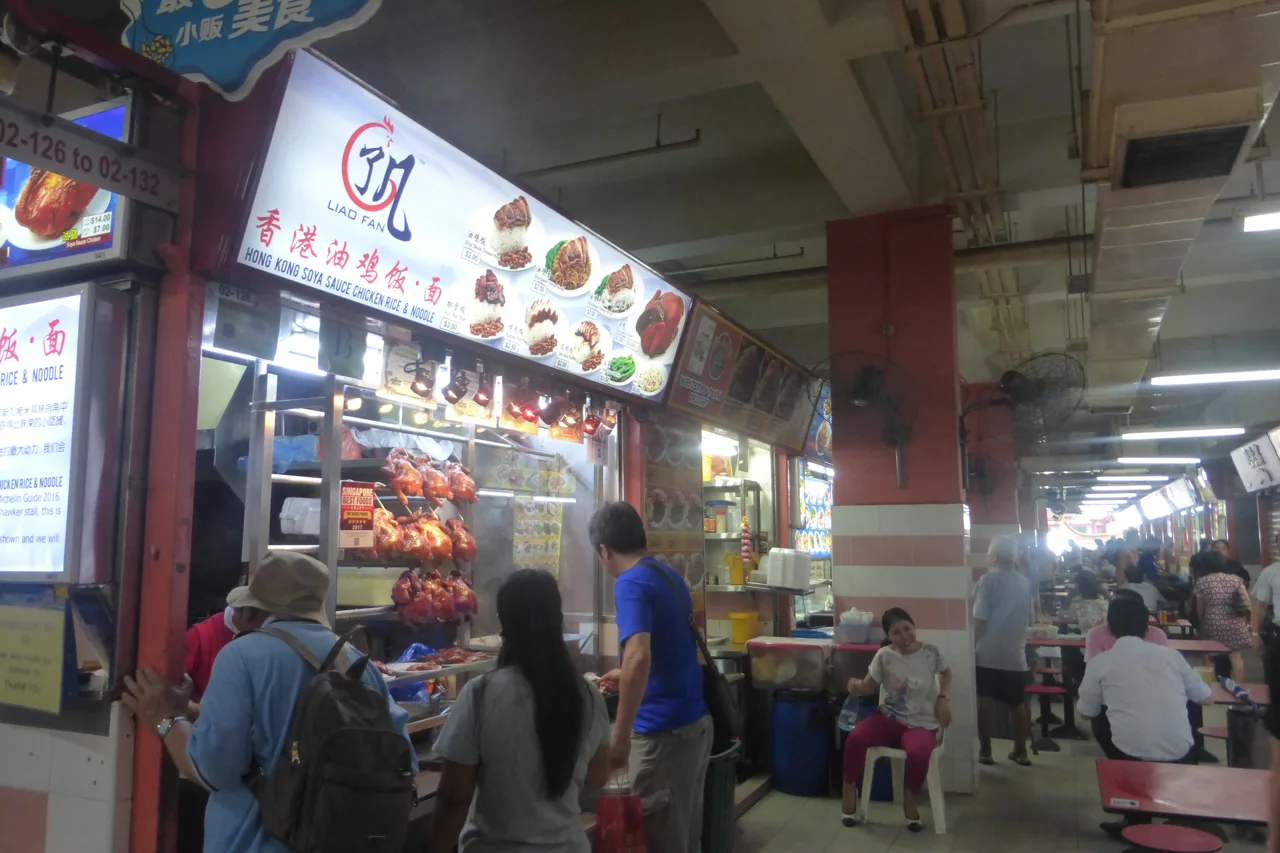
| Hawker Chan (Liao Fan) | The Chinatown ComplexMap stall held one star and was widely described as the cheapest MICHELIN-starred meal available anywhere, at S$2.50 a plate. It later lost the star, and neither the stall nor the Smith Street shop appears anywhere in the current selection of 307 |
| Wee Nam Kee | Not listed. The national heritage entry names it as an example of the dish going international |
| Loy Kee | Not listed |
| Five Star | Not listed |
| Yet Con, Chin Chin Eating House, Swee Kee | Not listed. These are the 1930s and 1940s establishments named in the heritage record |
The Hawker Chan story is the one that brings the most readers to this dish, and the facts of it are simple enough. A hawker stall in Chinatown Complex was awarded a star, the price of a plate made it famous well beyond Singapore, the business expanded into a shop on Smith Street and then into other countries, and the star is no longer held. Presence and absence in a guide is all that record establishes.
Wee Nam Kee is worth singling out for a different reason. It is absent from the selection and present in the national heritage entry, where it is cited as an example of Singapore chicken rice travelling abroad. Two different official records, two different kinds of recognition, and no overlap between them.
What all of this means in practice is that a visitor has two separate lists to work from. One is the list of ten verified addresses in this article. The other is the list of famous names, which includes businesses with long histories, large followings and, in a couple of cases, their own entries in the state’s heritage record. Both are worth eating from, and neither list is a shortened version of the other.
Where the famous names are
Three of the absent names appear elsewhere in this article with their hours, because they are practical answers to practical questions. Loy Kee is on Balestier Road and runs through the middle of the day without a break. Five Star is on East Coast Road and is the only late-night option covered here. Both are dealt with in the restaurants section below.
13. What a plate costs, and why the official figure once fell
Singapore’s statistics department tracks the average price of a plate of chicken rice as an item in the national consumer price basket, which means there is an official published figure for this dish. Very few countries measure a single hawker dish this way, and it exists because chicken rice is a staple purchase rather than an occasional one.
| Annual average | 2015 | 2021 | 2023 | 2025 |
|---|---|---|---|---|
| Chicken rice, per plate | S$3.21 | S$3.54 | S$4.15 | S$4.14 |
| Coffee with condensed milk, per cup | S$1.09 | S$1.19 | S$1.34 | S$1.39 |
There is a point in that series where the chicken rice figure appears to go down, and it is not a price cut. The department rebased the basket, which changed the outlets and the varieties being surveyed. The department’s own footnote states that the figures on either side of the rebasing are not a pure price comparison, so the apparent dip should be read as a change in what was measured. No stall lowered its price.
The earlier part of the series does sit inside a single basket, and the rise across those years is a real one. Read the table as one long climb with a measurement change part way through, and the shape of what has happened to hawker prices over the past decade is clear enough.
For planning purposes, a hawker plate sits around the published average and an air-conditioned restaurant charges more for the same dish. That is the whole of it. Where a business does not publish a price, this article gives the band in words rather than a figure, because an invented number is worse than none. For a wider view of what eating cheaply in Singapore actually costs across a day, the budget eating guide puts this dish beside the rest.
Why the price barely moves
Chicken rice is competitive in a way few dishes are. Hundreds of stalls sell it, the ingredients are cheap and standard, and customers buy it weekly rather than occasionally, so a stall that raises its price noticeably above its neighbours loses trade immediately. The result is a dish whose price has tracked slowly upward for a decade without any sudden jumps, and whose listed and unlisted versions cost close to the same.
14. Tian Tian has six outlets and they close on different days
Tian Tian runs six outlets, and no two of them share the same combination of hours and closing day. This catches out more visitors than anything else in this article, because people check the hours of the branch they have heard of and then turn up at a different one.
| Outlet | Hours | Closed |
|---|---|---|
| Jewel ChangiMap AirportMap (flagship) | 10:00–22:00, dine-in last order 21:30 | Never |
| Maxwell Food Centre (the original) | 10:00–20:00, last order 19:30 | Monday |
| Simpang Bedok (air-conditioned) | 10:00–20:00 | Monday |
| Clementi | 10:00–20:00 | Monday |
| Lucky Plaza level 6, Orchard | 09:30–19:30 | Sunday |
| Bishan | 10:00–19:00 | Sunday and Monday |
The original is the Maxwell stall, which opened in 1986 under Madam Foo Kui Lian and has held a Bib Gourmand since the first edition of the guide in Singapore. It also beat Gordon Ramsay in a hawker cook-off in 2013, which is the event that pushed the name into the international press and built the queue that the inspectors still remark on.
Two of the six are worth flagging for particular readers. Anyone staying on Orchard Road is closest to the Lucky Plaza outlet on level 6, and that is the branch that closes on Sunday rather than Monday, which is the reverse of what a visitor would assume from reading about the original. Anyone arriving at or leaving from Changi has the airport outlet, which runs later than every other branch and has no closing day at all.
The Bishan branch closes on two days a week and keeps the earliest finish of the six. Simpang Bedok is the air-conditioned option, which is a real consideration in the middle of the afternoon and the reason some people choose it over the original despite the distance from the centre.
Which branch to choose
For the experience of the original stall, Maxwell, on any day except Monday. For a plate at any hour without checking anything, the airport. For a seat in the cool with no queue, Simpang Bedok. For a short walk from an Orchard Road hotel, Lucky Plaza on any day except Sunday. The recipe is the company’s across all six, and the difference between them is entirely a matter of comfort, timing and how far you want to travel.
15. Maxwell Food Centre: two chicken rice stalls, not one
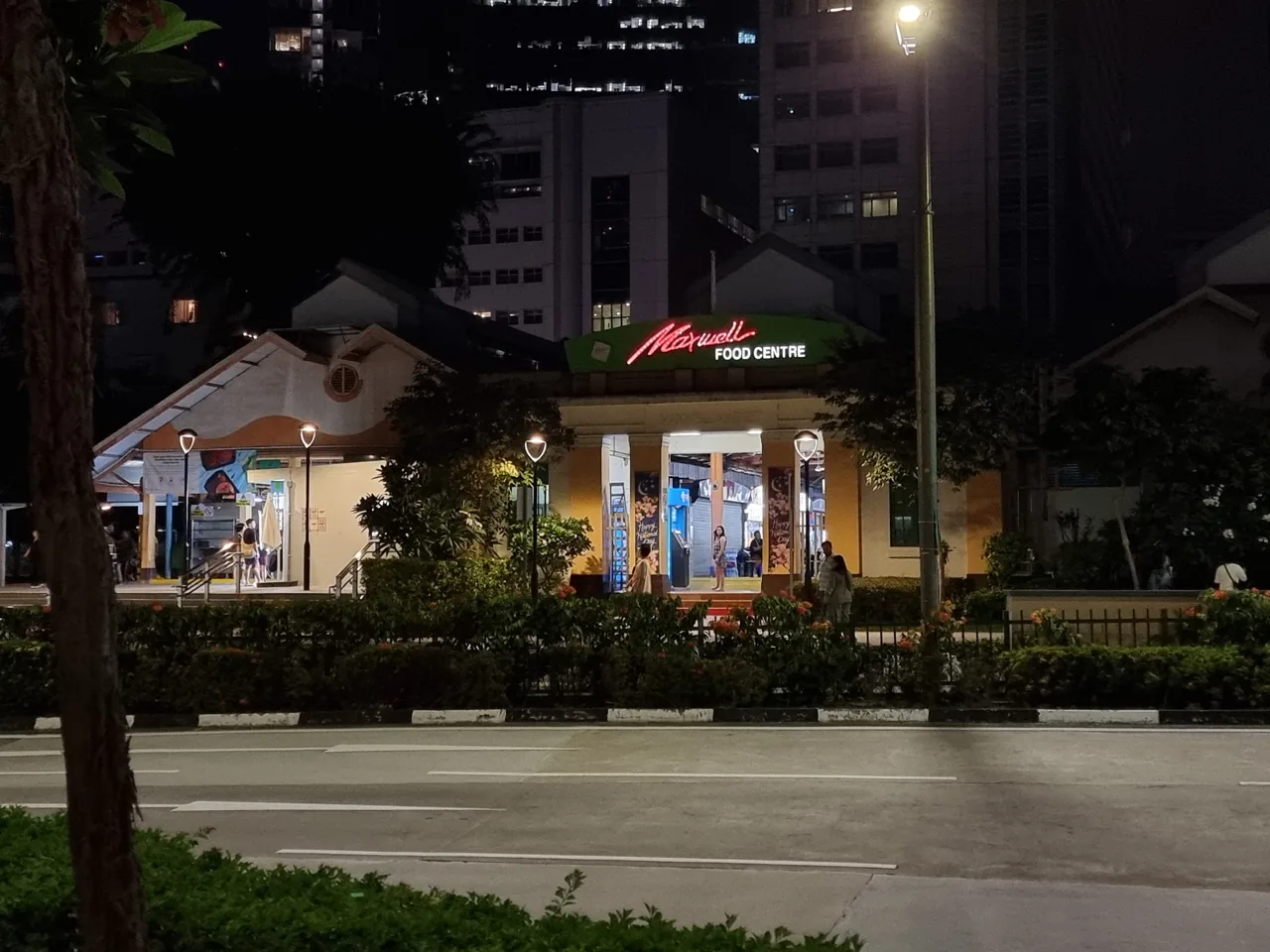
Maxwell Food Centre holds two chicken rice stalls worth knowing about: Tian Tian at unit 01-10/11 and Ah TaiMap at unit 01-07. They stand a few metres apart in the same building, and a visitor who arrives knowing only the first name will walk straight past the second.
Ah Tai was opened by a cook who worked at Tian Tian for years before setting up on his own. The two stalls are consequently working from closely related methods, which is why the comparison between them gets made so often and why the queue at one is not a reason to skip the food centre altogether.
The two stalls take different weekly closing days. Tian Tian shuts on Monday and Ah Tai shuts on Tuesday, opening at 11:00 the rest of the week, so on an ordinary day one of the two is trading even when the other is not. That only holds while the building itself is open, which is the part that catches people out.
Tian Tian’s stall is the one the inspectors describe, and the description is specific: a long queue, velvety chicken with springy skin, oily rice, a briny-sweet sauce, and a recommendation to order half a chicken to share rather than separate plates. The queue is real and it is longest through lunch. It moves steadily, because the kitchen is doing one thing and has been doing it since 1986.
What else to know about the building
Maxwell is a large centre of cooked food stalls with no wet market attached, so everything inside it is something to eat now. Seating is shared and fills through the middle of the day. Both chicken rice stalls are on the ground floor, which is the only floor. Arriving before the lunch peak or after it makes the difference between a five-minute wait and a much longer one.
16. The Monday problem: when the whole building shuts
Hawker centres close completely for cleaning for a few days each quarter, and across the country those closures almost always begin on a Monday. This is the building closing rather than the stall, so every counter inside it is shut regardless of what its own hours say. All nine of the hawker centres named in this article follow that pattern and begin their closures on a Monday.
The lengths differ from building to building, and from quarter to quarter within the same building. The shortest is a single day and the longest runs to five. The table below gives the usual length for each of the centres in this article, with the longer quarters noted where they occur.
| Hawker centre | Usual quarterly closure |
|---|---|
| Maxwell | One day, rising to three in one quarter |
| Tiong Bahru Market | One to two days |
| People’s Park | Two days |
| Holland Drive | Two days, rising to four in one quarter |
| Chong Pang | Two days, rising to four in one quarter |
| Yuhua Village | Two days, rising to five in one quarter |
| Yuhua Market | Two days, rising to four in one quarter |
| Alexandra Village | One day |
The exact days are published by the National Environment Agency for every centre in the country, and they are set well in advance. That is the source to check before a trip out to any of the estate addresses, because a wasted journey to Jurong East or Yishun costs an afternoon. The pattern above tells you what to expect; the agency’s own list tells you the days.
Maxwell deserves the sharpest warning of the nine. Tian Tian’s original stall takes Monday as its weekly closing day, and Maxwell itself begins its quarterly cleaning closures on Mondays. The two overlap, and they also apply separately, so Monday is the wrong day to plan a Maxwell trip under any circumstances.
How to plan around it
Pick any day other than Monday for a chicken rice trip and most of the risk disappears. If Monday is the only day available, the restaurants have the advantage, because Boon Tong Kee, Loy Kee and Five Star are not inside hawker centres and are not subject to the cleaning closures at all. The airport outlet is the other Monday answer, since it has no closing day.
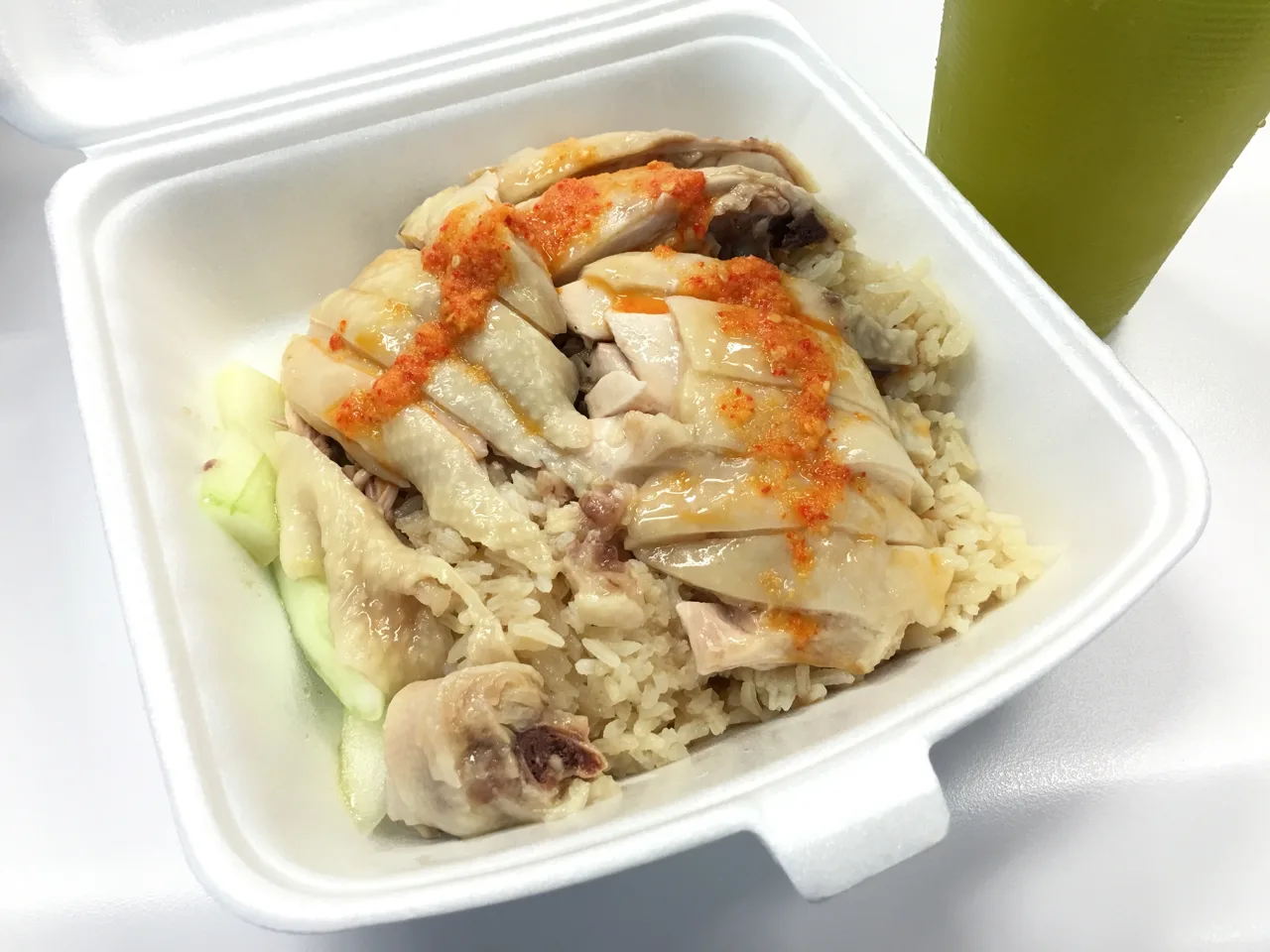
17. Eating chicken rice in a restaurant instead
Boon Tong Kee on Balestier Road, Loy Kee a short way along the same road, and Five Star on East Coast Road are sit-down restaurants, and they keep longer and more predictable hours than any hawker stall. They cost more than a hawker plate, they have air-conditioning and proper tables, and they do not shut for quarterly building cleaning.
Boon Tong Kee is the one of the three that holds a distinction. The Balestier Road branch is the original, marked by a neon sign, and the group has grown to four outlets from it. The awkward detail is the lunch break: it ends at a different time at each outlet, at 15:00 at the Balestier original, 14:45 at Whampoa West and 14:30 at Bukit Timah. The original also runs straight through without breaking at all on Saturdays and public holidays. If you are arriving in the early afternoon, the branch you choose decides whether you eat.
Loy Kee on Balestier Road runs from 09:30 to 21:30 with no break in the middle, which makes it the most forgiving option of the three for an awkward arrival time. The business says that a couple from Hainan started it in 1953 and that the family is now in its third generation, and it describes itself as the oldest Hainanese chicken rice in Singapore. That claim is the company’s own and the basis for it is not established here, so treat it as the business’s account rather than a settled fact.
Five Star on East Coast Road runs from 10:00 until 02:00 and is the only genuinely late-night option covered in this article. The company says it uses free-range kampung chicken. East Coast Road is out towards the east of the island in the Katong direction, so this is a trip rather than a walk from most hotels, and the Katong and Joo Chiat guide covers what else is open around it at that hour.
When a restaurant beats a stall
Three situations, mainly. A Monday, when the hawker centres may be shut and Tian Tian’s original is closed anyway. The middle of the afternoon, when hawker stalls have sold out and the restaurants are still serving, subject to the lunch breaks above. And late at night, when Five Star is the answer and nothing else here is. Ordering works the same way in all three restaurants as it does at a stall, with the same sauces and the same option of a half or whole bird for a table.
18. Halal chicken rice: what is and is not established
Halal versions of chicken rice exist and are recorded in the national heritage entry for the dish, and the certification status of the ten MICHELIN-listed establishments is not established. This article will not assert that any of the ten is certified, and it will not assert that any of them is not.
That distinction matters because the reasoning people apply here is often wrong in both directions. Chicken being the only meat in the dish says nothing about certification, which covers the sourcing of the bird, the handling in the kitchen and everything else served from the same counter. A stall that sells only chicken rice is not certified by default, and a business with a Chinese name is not disqualified by default either.
The practical approach is the same one Muslim residents use. Look for the certification displayed at the stall or the restaurant itself, and treat that as the only answer. Where nothing is displayed, ask, and where the answer is unclear, go elsewhere rather than assume.
Singapore makes this easier than most cities, because certified options are numerous and spread across every part of the island rather than clustered in one district. The halal eating guide covers where they are and how the certification works, and it is the better starting point for anyone who needs the certification to be settled before choosing an address.
The heritage record on this
The national entry notes the existence of halal versions of the dish as part of its description, which places them inside the recognised tradition rather than outside it. That is a statement about the dish as it is practised in Singapore, and it is separate from the question of which individual businesses hold certification at any given time.
19. How to order, and how much to order
A single plate is the default order and it is the right one for a person eating alone, while two or more people are better off ordering half a bird or a whole bird with a bowl of rice each. The inspectors make exactly that recommendation at Tian Tian, and the same arithmetic holds at most stalls on the list.
A plate is a fixed portion: chopped chicken over rice, with the soup and the cucumber included. A half or whole bird arrives as a platter for the table with rice ordered separately per person, which gives more meat for the money and lets everyone take what they want. The break-even point is usually two people, and it is clearly better from three upwards.
Most kitchens will split a half or whole bird between roasted and poached if you ask when you order. That is a normal request rather than a special one, and it is the quickest way to settle which version you prefer. A few of the listed places sell fixed sets instead: Ji De Lai in Chong Pang has sets on the board, and Zi Jing Cheng at Alexandra Village sells sets sized for one to three people. Zi Jing Cheng is the simplest counter of all ten, with one item on the menu, so the set is the order. The short English used to order, and the Malay and Hokkien left on the menu, are covered in what language they speak in Singapore.
Two small details from the listings are worth carrying with you. Xing Yun in Jurong East garnishes its plates with pineapple, tomato and cucumber rather than cucumber alone, so the plate arrives looking different from what you will have seen elsewhere. And three of the ten serve the chicken off the bone, which is easier to manage at a crowded table. If you are eating on your own and working through several dishes in a day, the guide to eating alone in Singapore covers how to handle the portions across a whole trip.
At the counter
Say the version, say the size, and say whether you want rice with it. That is the whole transaction at a hawker stall: “poached, one plate” or “half chicken, two rice, half roast half white” covers it. Additions such as a braised egg or a plate of kailan are ordered at the same time. How seating and table-claiming work inside a hawker centre is covered in the hawker centre guide, and the rules are the same here as anywhere else.
20. Timing: the lunch crush, running out and the airport
Lunch is the crush at every stall on the list, and stalls close early when the chicken runs out. Those two facts govern the whole timetable of eating this dish, and the second one is the one visitors rarely account for. The posted closing time is the latest a stall will trade, not a guarantee that it will still be trading then.
A stall buys a fixed number of birds for the day, cooks them and sells until they are gone. On a busy day at a well-known counter, that can happen well before the posted hours end. Turning up in the late evening at a hawker centre and finding the chicken rice stall dark with the shutter down is a normal outcome rather than bad luck.
The practical windows are these. Arrive before the lunch peak or a good while after it, and the queue at the famous stalls is manageable. Mid-afternoon is quiet, and it is also when the risk of selling out starts. Evening works at some stalls and not others. For anything later than that, Five Star on East Coast Road is the only stall or restaurant in this article still cooking. If you are an early riser working out what is open before the city fills up, the early morning guide covers the hours when the hawker centres are just starting.
The airport is the other answer to any timing problem. Tian Tian’s flagship is on basement two of Jewel Changi Airport, it trades from mid-morning until late at night, and it has no closing day at all. That makes it the one address in this article that is always available, and it is reachable before check-in as well as on arrival, since Jewel sits outside the departure gates. The Jewel Changi Airport guide covers the rest of the building and how long to allow for it.
A plate after you leave
The dish is also served on some Singapore Airlines routes, which means a last plate is possible after the terminal as well as inside it. It is not on every route and it is not something to plan a meal around, and it is a reasonable fallback for anyone who ran out of time on the ground. For everyone else, the sequence that works is simple: pick a day that is not Monday, pick one of the two Chinatown addresses or commit to a trip out to an estate, arrive outside the lunch peak, and order half a bird if there are two of you.
🎡Things to Do53
🍜Food5
🏨Where to Stay10
🚇Getting Around4
🧭Travel Tips20
Questions travellers ask about chicken rice in Singapore
No. Ten chicken rice establishments hold a distinction in the current selection, five at Bib Gourmand and five at MICHELIN Selected, and none of them holds a star.
The Chinatown Complex stall trading as Hawker Chan did hold one star, and it was widely described as the cheapest MICHELIN-starred meal available anywhere. The star has since gone, and neither that stall nor the Smith Street shop appears anywhere in the current selection.
Tian Tian at Maxwell Food Centre and People’s Park Hainanese Chicken Rice, both in Chinatown, are the only two listed places on a normal visitor route.
Everything else on the list sits in a residential estate: two stalls in Jurong East, one in Yishun, two towards Queenstown, one in Holland, one in Tiong Bahru and a restaurant on Balestier Road. Reaching any of them means a deliberate trip out and back.
A hawker plate sits around the national average that the statistics department publishes for this dish, and all ten listed places fall in the lowest price band.
Air-conditioned restaurants charge more than a stall for the same dish, and the gap widens when you order a half or whole bird with side dishes rather than a single plate. Most stalls do not publish a price list online, so treat the band as the guide and read the board at the stall.
Hawker centres close completely for cleaning for a few days each quarter, and those closures almost always begin on a Monday.
The building shuts, so every stall inside it shuts with it. Tian Tian’s original at Maxwell also takes Monday as its weekly closing day, which means the single most visited chicken rice address in Singapore can be dark for two separate reasons on the same day.
The inspectors describe a long queue at the Maxwell stall and note velvety chicken with springy skin, oily rice and a briny-sweet sauce.
If the queue is the problem rather than the stall, the same company runs five other outlets, including an air-conditioned one at Simpang Bedok and a flagship at the airport. Ah Tai stands in the same food centre and was opened by a cook who worked at Tian Tian for years.
Five Star on East Coast Road runs from 10:00 until 02:00, and it is the only late-night option among the places covered here.
Hawker stalls finish early and often finish earlier than their posted hours, because they stop when the chicken runs out. If you are landing late or leaving a bar, the East Coast Road kitchen is the one still working.
Tian Tian’s flagship is on basement two of Jewel Changi Airport, open from 10:00 to 22:00 with no closing day.
It is the only outlet in the group that never shuts, and dine-in orders stop half an hour before closing. The dish also appears on some Singapore Airlines routes, so a plate is possible after the terminal as well as inside it.
Halal versions of the dish exist and are recorded in the national heritage entry, and the certification status of the ten listed establishments is not established.
Do not assume either way from the name on the sign or from the fact that chicken is the only meat involved. Certification is a separate matter from the ingredients, and it has to be checked stall by stall.
Poached chicken is cooked and then plunged into cold water, roasted chicken is seasoned, dried and deep-fried whole, and soya sauce chicken is simmered in a dark spiced sauce sweetened with rock sugar.
Poached is the common one and gives springy skin over tender flesh. Roasted gives a crisp skin and is often sold half-and-half alongside the poached. The soya sauce version comes down a Cantonese line and tastes darker and sweeter than either.
Order half a bird with a bowl of rice each rather than two single plates.
The inspectors suggest exactly that at Tian Tian, and the arithmetic works the same way at most stalls. Many kitchens will split the half between roasted and poached if you ask, and a few places sell fixed sets for one to three people.
Tiong Bahru Hainanese Boneless, Xing Yun Hainanese Boneless and Zi Jing Cheng Hainanese Boneless all debone the bird.
Three of the ten listed places do this, and all three say so in the name. If you would rather not work around bones at a shared hawker table, those are the three addresses to aim for.
Mostly they are not. Hawker Chan, Wee Nam Kee, Loy Kee and Five Star are all absent from the current selection.
So are Yet Con, Chin Chin Eating House and Swee Kee, the establishments that the heritage record dates to the 1930s and 1940s. Fame and the guide have come apart in this dish, and most of the ten listed places are names a visitor will never have heard.
Read the full Singapore travel guide for everything around the chicken rice.