
Singapore in February: Chinese New Year Dates, River Hongbao and What Stays Open
| Weather | February is the driest and sunniest month of the Singapore year, with short heavy showers and a steady wind off the water. |
|---|---|
| Public holiday | The first and second day of Chinese New Year are public holidays, and a Monday is added when those two days fall on a Saturday and Sunday. |
| River Hongbao | A free ten-day fair at Gardens by the Bay with fireworks on four of its nights. |
| Chinatown | Lights over New Bridge Road and the streets around it come on at 7pm and burn until midnight for about two months. |
| Chingay | A ticketed night parade at the F1 Pit Building on a Friday and a Saturday, with free street performances outside beforehand. |
| What stays open | Malls, hotel restaurants, attractions and theme parks work through the holiday while small shops, Chinese-run stalls and wet markets shut. |
1. Is February a good month to visit Singapore?
2. What Chinese New Year does to the city in February
3. Why the date of Chinese New Year moves every year
4. The new year season from start to finish
5. River Hongbao: the free fair at Gardens by the Bay
6. Getting to River Hongbao and getting through the gate
7. Chinatown while the lights are up
8. The street bazaar and the lion dance nights
9. Chingay Parade and how to see it
10. What closes on the two holiday days
11. Where to eat when the small places are shut
12. Yusheng, lo hei and the reunion dinner
13. Bak kwa and the queue before the new year
14. Red packets, mandarin oranges and what to say
15. Ramadan now begins inside February
16. The siren at 6.20pm on 15 February
17. Taxis, trains and buses over the holiday
18. Valentine’s Day, the airshow and the golf
19. Rooms, prices and what to book before you fly
20. What to pack for a February trip
21. Building your days around where the new year falls
1. Is February a good month to visit Singapore?
February is the driest and sunniest month of the Singapore year, so the weather is on your side. The whole month sits inside the dry half of the northeast monsoon. Mornings usually open clear, the sun is out on most days, and a plan built around an afternoon outdoors rarely gets washed away.
Rain has not stopped altogether. It arrives hard and short, soaks a street in minutes and then finishes. Shelter beats an umbrella here, and shelter is everywhere: MRT stations, covered walkways, malls, hawker centres, the five-foot ways under the shophouses. Step under a roof, order a drink, and the pavement will be drying by the time you finish it.
February is also the windiest month of the year in Singapore. You feel it on the waterfront, on rooftop bars and on the high walkways, and it is welcome in a city this warm. Thunder and lightning reach their lowest point of the year in these weeks, which matters more than it sounds. Outdoor events in Singapore stop when lightning is close by, so a February concert, parade or firework display is less likely to be cut short than the same event in other months. Haze does not belong to this part of the year either, so the views from the towers and the cable car stay clear.
What the weather actually looks like
| What | February in Singapore |
|---|---|
| Temperature | 31.5°C by day, 24.6°C at night |
| Rain | The driest month of the year, in short heavy bursts |
| Sunshine | The most of any month |
| Wind | The windiest month, obvious along the water |
| Thunderstorms | At their lowest, so outdoor events rarely stop |
| Haze | Not a problem in these weeks |
Humidity drops a little below the rest of the year and still runs high, so you will sweat walking and you will dry slowly. The air indoors works the other way. Air-conditioning in malls, cinemas, buses and taxis is set cold, and a thin long sleeve in your day bag is worth the space. If you are weighing February against other dates, the month-by-month guide to visiting Singapore puts it beside the rest of the year.
One more thing shapes the month, and it has nothing to do with rain. Chinese New Year falls in these weeks almost every year, and it changes what is open, what costs more and where the crowds go. The rest of this guide works through that.
2. What Chinese New Year does to the city in February
Plan your February days around how close you land to the first day of Chinese New Year, because that is what changes the city. The weather barely moves across the month. The calendar does all the work.
In the weeks before the new year, Chinatown is strung with lights, a street bazaar takes over the pavements, queues form outside the pork slice shops and restaurants fill their books for one particular night. On the two holiday days themselves, the shutters come down on the small places while the malls and the big attractions run at full tilt. After the holiday, the lights stay up, a parade takes over the F1 Pit BuildingMap, and the city slides back to normal over the following fortnight.
That is why a February trip is best planned by the day of the new year rather than by the date on the calendar. The same week of February can be the busiest week of the year or an ordinary one, depending on where the new year sits.
The short answer to “will everything be closed”
Most of what a visitor uses stays open. Malls, hotel restaurants, attractions and theme parks work through both holiday days. Taxis and public transport run their normal hours. Government offices and banks close. Small shops, Chinese-run stalls and wet markets shut on the first two days, and some stay shut for longer than that. Little India and Kampong GlamMap carry on exactly as they always do, because the holiday belongs to another community.
| Where you land | What the city is doing |
|---|---|
| The month before the new year | Chinatown lit and crowded, bazaar running, long queues for pork slices, restaurants booking up |
| The last few days before | River Hongbao opens, reunion dinners fill every Chinese restaurant, shopping reaches its peak |
| The two holiday days | Small shops shut, malls and attractions open, fireworks at Gardens by the BayMap, families visiting each other |
| The fortnight after | Chingay parade, lights still on, shutters back up, rooms easier to find |
If your trip starts at the tail end of the previous month, the January guide to Singapore covers the run-up, including the years when the new year itself lands in January and only the rest of the season reaches February.
3. Why the date of Chinese New Year moves every year
Chinese New Year follows the lunar calendar, so its first day can land anywhere between 21 January and 20 February. A lunar month starts at the new moon and runs a little short of a solar month, and the gap is why the festival slides by weeks from one year to the next.
For a visitor this has one practical result. You cannot learn a date once and reuse it. Before you book flights, look up the first day for your year, then count outwards from it. Everything in this guide is written that way, as days before and after the new year rather than dates in February.
The public holiday covers the first and second day of the new year. When those two days fall on a Saturday and a Sunday, the following Monday becomes a public holiday for people whose rest day is the Sunday, which turns the weekend into a long one and fills the attractions with local families.
February always catches part of the season
The festival does not end on the second day. It runs for fifteen days, from the new year to the LanternMap Festival, and Chinatown stays lit for roughly that long and beyond. Even in the years when the first day falls back into January, some part of those fifteen days still reaches into February. Checked back across nearly two centuries, there is no year where February misses the season completely.
So a February visit will always overlap something. What changes is which part you get. Land early in the month in a year with a late new year and you get the bazaar and the shopping. Land late in the month in a year with an early new year and you get the lantern-lit end of it, with the shutters long since back up.
4. The new year season from start to finish
The season stretches across about two months, and each piece of it has a fixed place relative to the first day of the new year. Work out that first day, then read the timeline below as days before and after it.
It opens quietly about a month ahead, when the lights go up over Chinatown and the street bazaar sets up. The official light-up ceremony at Kreta Ayer SquareMap follows, at 6pm, around two and a half weeks before the new year. The lion dance competition comes next, over two nights about ten days out. Then the pace quickens: River Hongbao opens at Gardens by the Bay two days before, the reunion dinners happen on the eve, and the holiday itself takes over for two days.
The timeline, counted from the first day
| When | What happens |
|---|---|
| About a month before | Chinatown light-up and the festive street bazaar begin |
| About 18 days before | Official light-up ceremony at Kreta Ayer Square, 6pm |
| About 10 days before, two nights | International Lion Dance competition at Kreta Ayer People’s TheatreMap, 6pm |
| Two days before | River Hongbao opens at Gardens by the Bay, 6.30pm to 10.30pm, fireworks at 8pm |
| New year’s eve | Reunion dinners. River Hongbao 6.30pm to 00.15am, fireworks at midnight. Last trains run later |
| First and second day | Public holidays. River Hongbao 2.30pm to 10.30pm, fireworks at 9pm. Chinatown lights stay on until 6am on the first night |
| Seventh day | Renri, the day yusheng was originally eaten |
| Eighth day | River Hongbao closes after ten days |
| Within about two weeks | Chingay Parade, on a Friday and a Saturday |
| Fifteenth day | Lantern Festival |
| About a month after | Chinatown lights and bazaar end |
Two entries on that list need care. Chingay does not sit a fixed number of days after the new year, and the gap changes from year to year, so check the official parade page once your dates are set. River Hongbao runs ten days, and its opening and closing hours differ by day, which the next section sets out.
The rest of the timeline holds up well enough to book around. If you want the loudest version of the season, aim for the stretch from two days before to two days after. If you want the season without the crush, take the week that starts around the fifth day, when the lights are still up and the queues have gone.
5. River Hongbao: the free fair at Gardens by the Bay
River Hongbao is a free ten-day new year fair at Gardens by the Bay, with no tickets and no registration. You walk in, and the only thing you pay for is food and the fairground rides.
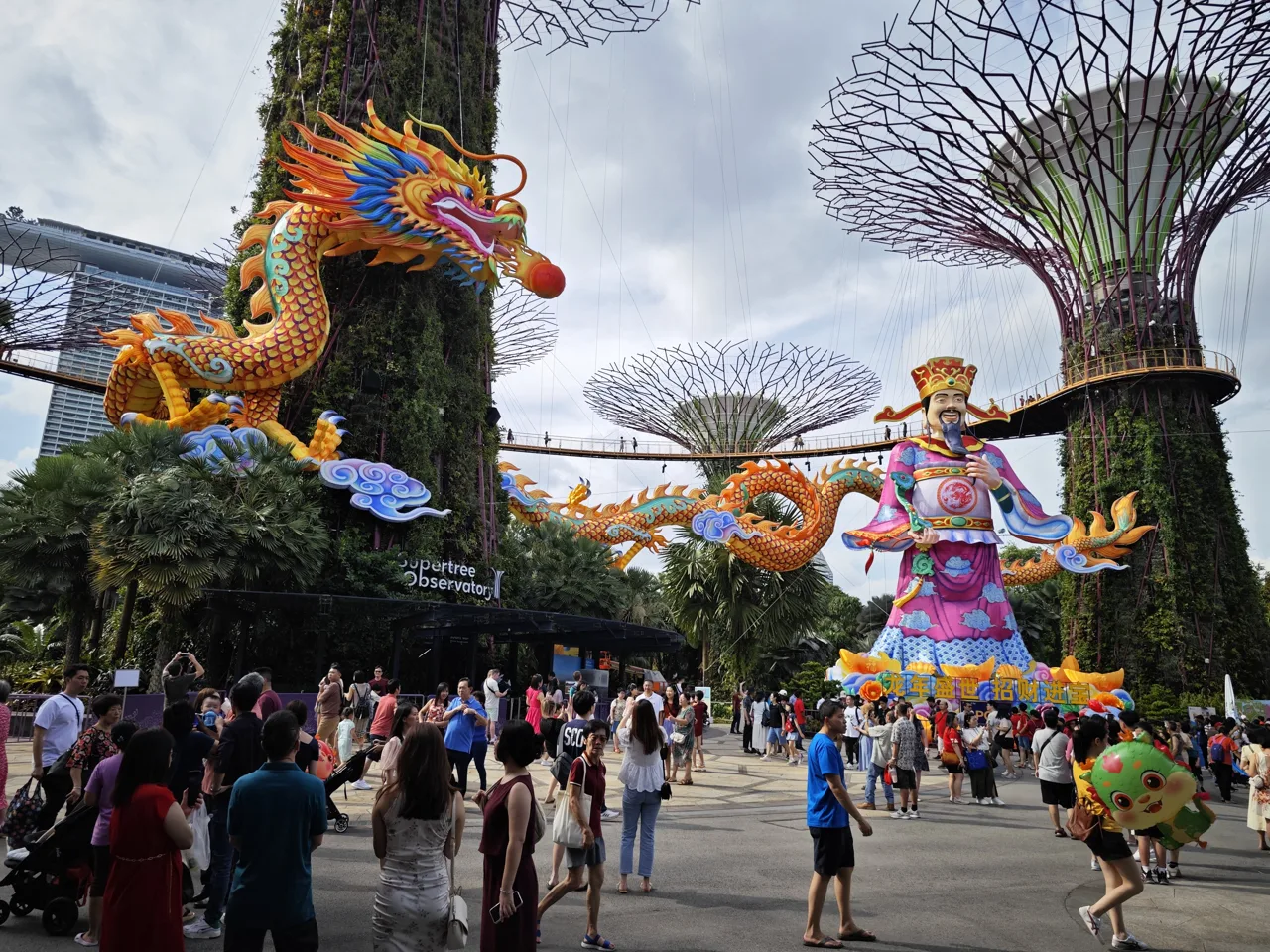
The ground under and around the Supertrees fills with giant illuminated figures, a God of Fortune that towers over the crowd, stage performances and a food street. It opens two days before the new year and closes on the eighth day. Families come in the afternoon, and the crowd thickens after dark on the four nights with fireworks.
Opening hours and firework times
| Night | Hours | Fireworks |
|---|---|---|
| Opening night, two days before the new year | 6.30pm to 10.30pm | 8pm |
| New year’s eve | 6.30pm to 00.15am | Midnight |
| First and second day | 2.30pm to 10.30pm | 9pm |
| Third day to eighth day | 2.30pm to 10.30pm | None |
The Meadow is the place to watch from. It is the open field beside the Supertrees, and the display is aimed at people standing there. Once it reaches capacity, staff redirect arrivals to other parts of the gardens where the view is partial, so the difference between arriving early and arriving at the last minute is the difference between the whole sky and half of it. On the fireworks nights, be on the field well before the hour.
Grandstand seats in front of the stage are first come, first served, with no booking. The fairground rides run on a prepaid card you buy at the entrance, and credit you do not spend is neither refunded nor exchanged, so top it up in small amounts. The food street takes cash, NETS and cards, which makes it one of the easier places to eat during the holiday.
Weather can move or cancel a firework display. February is the least stormy month of the year, so the odds are good, and the fallback if it does get called off is the fair itself, which stays open and lit. For what the site is like outside the festival, see the Gardens by the Bay guide.
6. Getting to River Hongbao and getting through the gate
Bayfront MRT, Exit B, is the easiest way in, with a sheltered walkway most of the distance. Bayfront sits on both the Circle line and the Downtown line, which puts it within one change of almost anywhere a visitor stays.
Gardens by the Bay has its own station on the Thomson-East Coast line, and Exit 1 there drops you closer to the eastern side of the gardens. From Tanjong Pagar on the East-West line, leave by Exit C and take bus 400 from Anson Road. Taxis and ride-hailing cars drop off at the main gate, at Bayfront Plaza and at The Meadow, with one exception: The Meadow drop-off is closed on opening night.
Entrances at a glance
| How you come | Where to get off |
|---|---|
| Circle or Downtown line | Bayfront, Exit B, then the sheltered walkway |
| Thomson-East Coast line | Gardens by the Bay, Exit 1 |
| East-West line | Tanjong Pagar, Exit C, then bus 400 from Anson Road |
| Taxi | Main gate, Bayfront Plaza or The Meadow, with The Meadow closed on opening night |
Supertree GroveMap and The Meadow are gated for the festival, and every entrance runs a bag check. Queues build at the gates before the firework times, so give yourself longer than the walk suggests. Travel light and the check takes seconds.
Priority entry lanes are open to wheelchair users, elderly visitors, pregnant visitors, families with prams, invited guests and anyone holding a Skyway or grandstand ticket. Two companions may come through with each of them. If someone in your group qualifies, use the lane rather than the main queue.
What you cannot bring in
- Bicycles, kick scooters and personal mobility devices
- Pets, with guide dogs the exception
- Drones
- Blades
- Your own fireworks
Getting home is the part people underestimate. Trains keep running to their usual last departure on most of the ten nights, and later than usual on new year’s eve. Taxi apps surge hard when a display ends. Walking fifteen minutes towards Marina Bay SandsMap or Tanjong Pagar before you order a car often beats standing in the queue at the gate. The guide to getting around Singapore explains the fare cards and the lines.
7. Chinatown while the lights are up
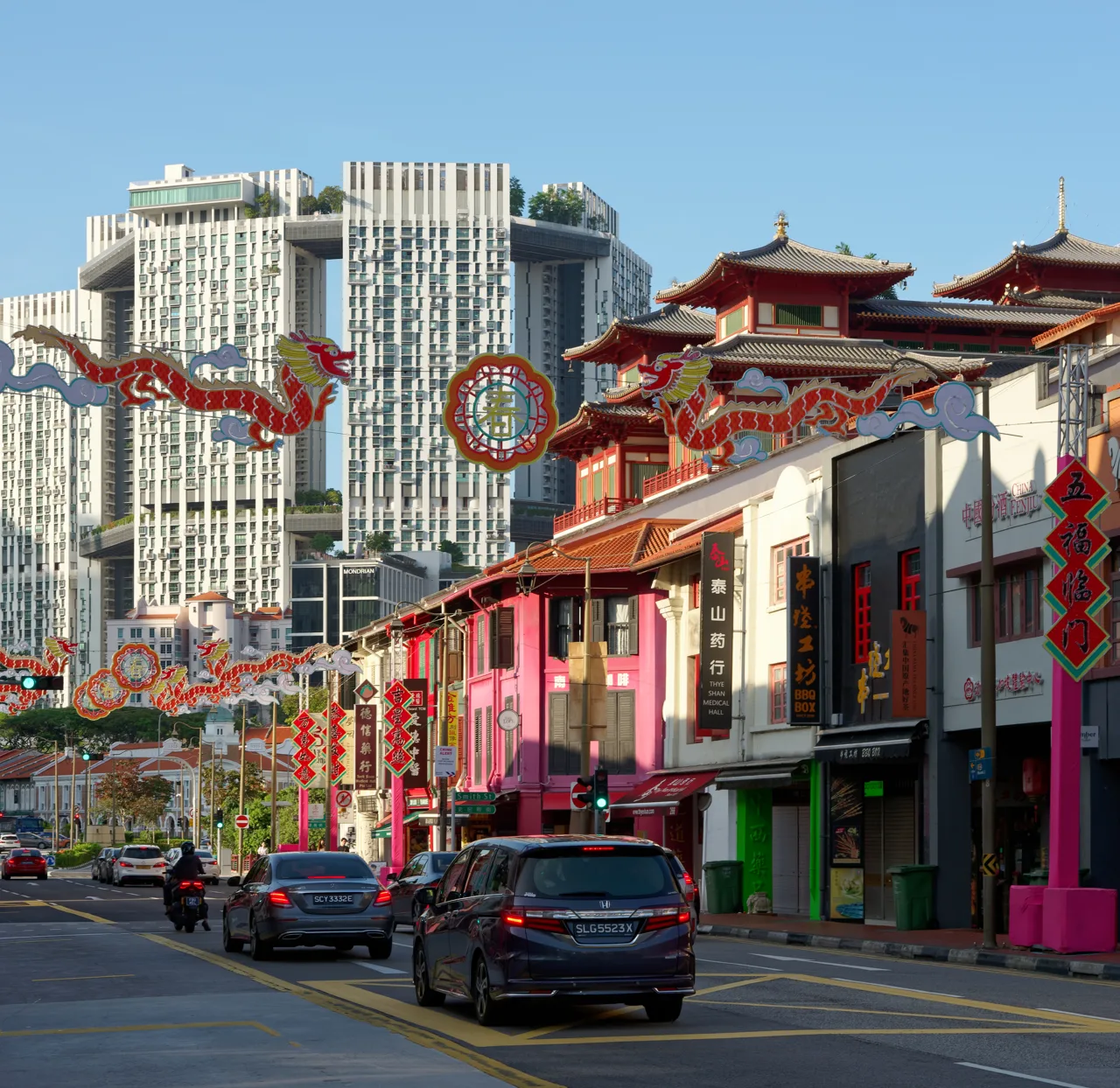
Chinatown lights New Bridge Road, Eu Tong Sen Street, South Bridge Road and Upper Cross Street from 7pm to midnight for roughly two months. The display goes up about a month before the new year and comes down about a month after it, which means most February visitors will catch it.
The decorations run above the road on wires, so the effect is best from the middle of the street or from the pedestrian crossings. The centrepiece is a large figure of the animal whose year it is, and the design is chosen by public vote, so locals turn up partly to see which version won. Around it, the shophouse fronts are hung with lanterns and the side lanes get their own smaller displays.
The one night the lights stay on until dawn
On the first day of the new year, and only that night, the lights stay on until 6am instead of going off at midnight. People come out after their family dinners, temples nearby are busy through the small hours, and the streets have a slow, late feel that they never have otherwise. If you are in Singapore that night and you are not fighting jet lag, go and walk it.
The official light-up ceremony happens at Kreta Ayer Square at 6pm, about two and a half weeks before the new year. It is short and very crowded, with speeches, a countdown and a performance. Turn up an hour early for a view of the stage, or skip the ceremony and come the following evening, when the same lights are on with a fraction of the people.
Chinatown is worth a daytime walk in this season too. The decorations read differently in sunlight, the shophouse colours come out, and the temples and the markets are doing their ordinary business. The Chinatown guide covers what is there outside the festival.
8. The street bazaar and the lion dance nights
A festive street bazaar takes over the Chinatown pavements for the same two months the lights are up. It sells snacks, sweets, decorations and clothes, and it is the part of the season that costs nothing to look at.
The stalls are packed close, the aisles are narrow and everything is sold loudly. Sweets come in tins and by weight, dried fruit and nuts sit in open trays, and the decoration stalls sell lanterns, couplets on red paper and folded ornaments. Later in the run the clothing stalls take over more of the space, because new clothes for the new year are part of the custom. Prices fall in the last days before the holiday, when stallholders would rather sell than pack up.
The International Lion Dance competition
The competition runs over two nights at Kreta Ayer People’s Theatre, starting at 6pm, about ten days before the new year. Teams come from several countries and perform on the high poles, which is the version where the lion jumps between platforms well above the stage. It is the best chance in the year to see lion dance done at competition standard rather than as a short display outside a shop.
The weekend before the new year is the most crowded night of the year in Chinatown. The bazaar, the shoppers finishing their buying and the sightseers all arrive at once, and the streets move at a shuffle. A pram is hard work in that crowd, and small children get lost in it easily. Families who want the same streets without the crush should come on a weekday evening earlier in the run. The Singapore with kids guide has more on which parts of the city handle young children well.
9. Chingay Parade and how to see it
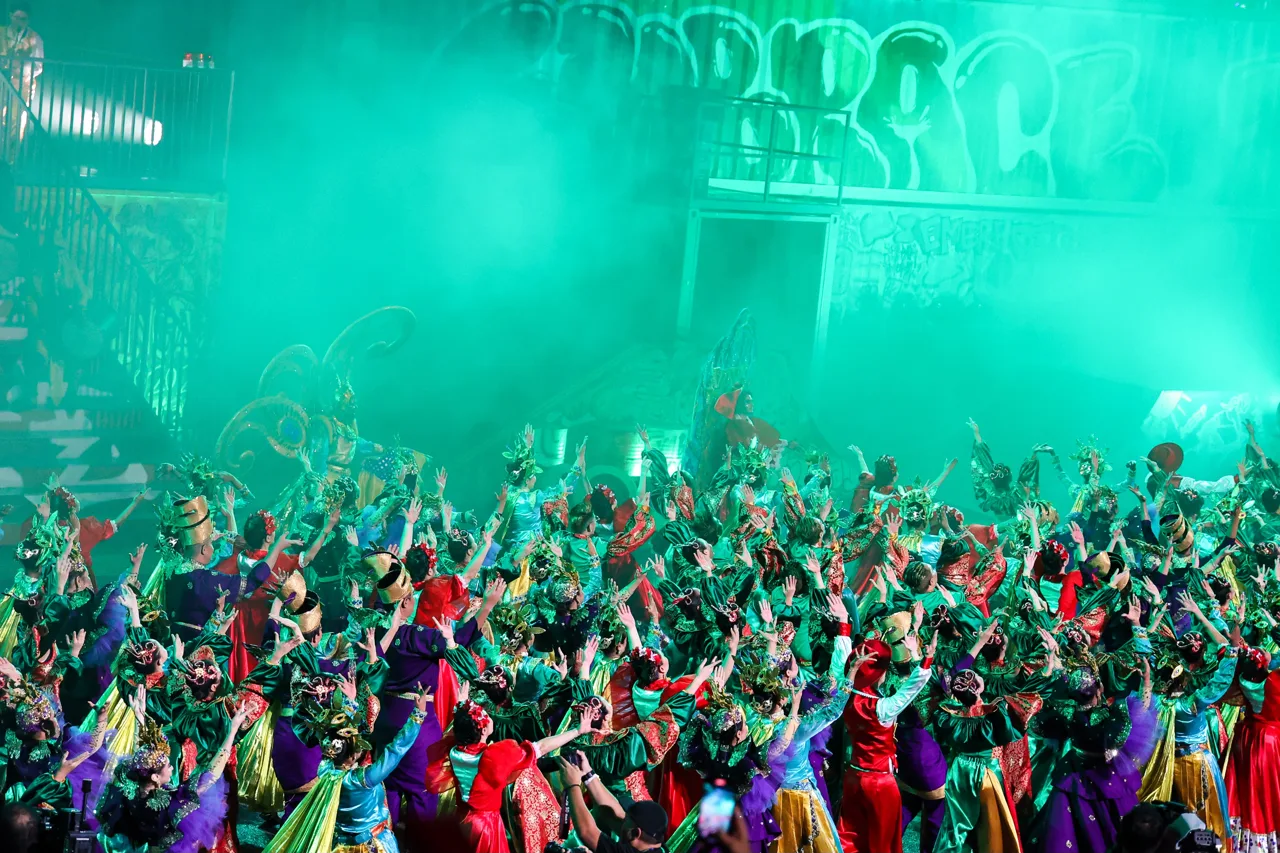
Chingay is a ticketed night parade at the F1 Pit Building, running from 8pm to 9.30pm on a Friday and a Saturday within about two weeks of the new year. It is the largest street parade of the Singapore year, with floats, thousands of performers and long set pieces built around a different theme each time.
Seats sell through SISTIC. The last edition priced them from S$20 to S$60 and sold out, with sales opening about two months ahead. Put a reminder in your calendar for the day tickets go live, because waiting until the week of the parade leaves you with nothing. PAssion card members get an early-bird discount. For a wheelchair seat, call SISTIC instead of booking online.
The part that costs nothing
A free programme runs outside the venue before the parade, from 5.30pm to 7.30pm, with street installations and performances, plus workshops and an exhibition alongside. You can spend the early evening in that, watch the crowds arrive and go for dinner nearby without ever buying a ticket. It is a reasonable plan for a night when the seats sold out months before you booked your flights.
| Part | Time | Ticket |
|---|---|---|
| Street installations and performances outside | 5.30pm to 7.30pm | Free |
| Workshops and exhibition | Alongside the street programme | Free |
| The parade itself | 8pm to 9.30pm | S$20 to S$60 through SISTIC |
The gap between the new year and Chingay is not the same every year, so check the official parade page once you know your dates. Both nights run the same programme, and the Friday is usually the easier of the two to get a seat for.
Dress for a warm evening that cools down. The venue is open to the air, the wind off the bay picks up after dark in February, and you will be sitting still for an hour and a half.
10. What closes on the two holiday days
Government offices, banks, small shops, Chinese-run stalls and wet markets close for the first two days of the new year. Some of the small businesses stay shut for longer, and no single rule tells you which ones.
Everything built for visitors keeps working. Malls open, hotel restaurants serve all day, attractions and theme parks run their usual hours, and public transport follows its normal timetable. Little India and Kampong Glam go about their week untouched, which is why they end up full of both tourists and locals looking for lunch on those two days.
Which hawker stalls close
This catches people out. A hawker centre is a building, and the building does not close for the new year. What closes is the stall, one by one, as Chinese-run businesses take their days off. Walk into a large centre on the first day and you will find some shutters down and others up, with the queues concentrated at whatever is open. The whole-building closures for quarterly cleaning are a different thing, and they cluster in March rather than February. The hawker centre guide explains how the centres work and which ones are worth the trip.
For any single shop you care about, the reliable answer is a phone call or the notice taped to the shutter a few days beforehand. Shops post their reopening day themselves, and that handwritten sign is more accurate than any listing online.
| Closed on the first two days | Open as usual |
|---|---|
| Government offices and banks | Malls and department stores |
| Small shops and Chinese-run stalls | Hotel restaurants |
| Wet markets | Attractions and theme parks |
| Many hawker stalls, though not the centres | Buses, trains and taxis |
Plan the two holiday days around the places that are certain, and leave the small independent shop you read about for a different day of the trip. The Little India guide is a good starting point for a holiday afternoon, since the shops and eating houses there keep their normal hours.
11. Where to eat when the small places are shut
Hotel restaurants, mall restaurants, Little India and Kampong Glam stay dependable on the two holiday days. Between them they cover every budget from a plate of rice to a long dinner.
Mall food courts and restaurant floors run their ordinary hours through the holiday, and in the bigger malls that means a hundred choices under one roof with the air-conditioning on. Hotel restaurants do the same and often run a new year menu alongside the usual one. Neither will be quiet, because local families eat out on those days too, so book a table for dinner rather than turning up.
Where the holiday is not kept
Little India works normally, from the banana leaf restaurants to the small eating houses that open early and shut late. Kampong Glam does the same, with its cafes, Malay food and Middle Eastern restaurants along and around Arab Street. Both are a short ride from the centre, both are interesting to walk before you eat, and both solve the holiday lunch problem entirely. The Kampong Glam guide covers the streets and what is on them.
Halal food is easy to find in Singapore throughout February, including inside the new year season and through Ramadan, when halal restaurants keep their normal opening hours even with fewer customers during daylight. Travellers who need certified halal food should read the halal eating guide for the certification system and the areas with the most choice.
One more approach works well on the first day: eat at the fair. River Hongbao runs a food street at Gardens by the Bay for its ten days, it takes cash, NETS and cards, and it is open in the afternoon and the evening while much of the neighbourhood cooking has stopped.
12. Yusheng, lo hei and the reunion dinner
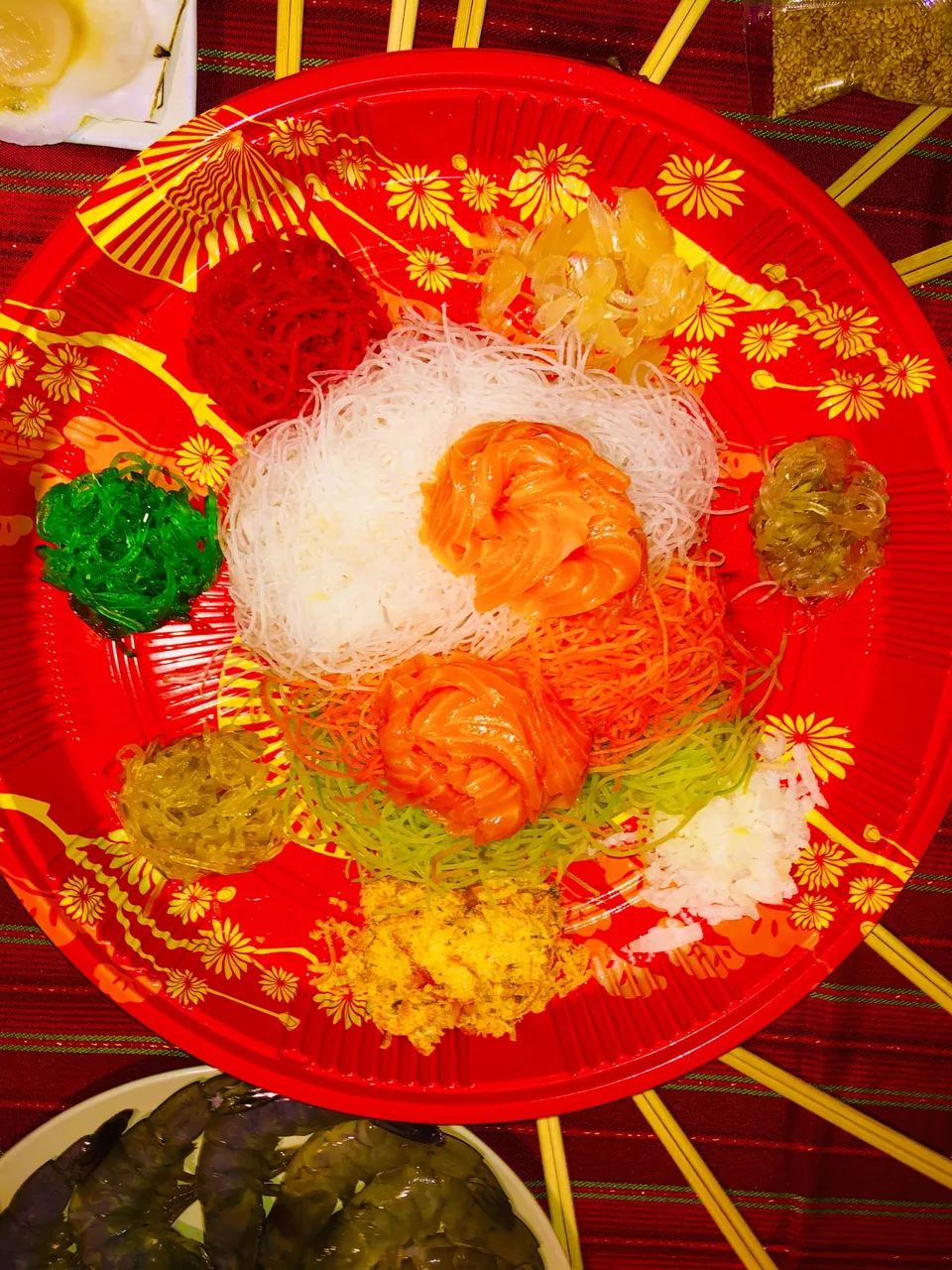
Yusheng is a platter of raw fish and shredded vegetables that everyone at the table lifts and tosses together with chopsticks. The tossing is called lo hei, it is noisy, and the higher you throw the better, so people say.
The platter arrives with the ingredients laid out in separate blocks of colour: raw salmon, shredded carrot, white radish, green radish, pickled ginger, crushed peanuts, crackers, and a sweet plum dressing poured over the top. Each ingredient is added in turn, with a phrase said over it, and then the whole table stands, reaches in with chopsticks and lifts. Half of it ends up on the tablecloth. That is the point.
It is only on the menu for a few weeks
Yusheng appears on menus during the new year period and vanishes afterwards, so a February trip is the one chance most visitors get. The dish began as a Cantonese one eaten on Renri, the seventh day of the new year, and the version served in Singapore now was put together by four local chefs several decades ago. You will find it in Chinese restaurants, in hotel restaurants and in some food courts, in portions sized for two people up to a large table.
The reunion dinner is the meal on new year’s eve, when families eat together before the year turns. It is the single hardest restaurant booking of the Singapore year. Tables for that night go first, and some Chinese restaurants are fully booked a month ahead. If you want to eat that particular dinner in a restaurant, book it as soon as your flights are confirmed.
If you miss the booking window, the eve is still a good night to eat out, just not in a Chinese restaurant. Hotel dining rooms, mall restaurants and the neighbourhoods that do not keep the holiday all have space, and you can go and watch the midnight fireworks afterwards.
13. Bak kwa and the queue before the new year
Bak kwa is sweet grilled pork sold in thin square slices, and in the days before the new year the queue for it in Chinatown runs to a few hours. It is a gift as much as a snack, which is why demand concentrates into one week of the year.
The slices are marinated, dried and then grilled over charcoal until the edges catch. They are sold by weight, warm, in paper bags that go straight into a gift box. The smell reaches down the street from the grills, which is part of why the queue forms where it does.
The queue, and the ways around it
Lim Chee GuanMap at 203 New Bridge Road, open 9am to 9pm, has the longest queue in the city. People join it in the morning and are still in it after lunch. Bee Cheng HiangMap sits on the same street and moves faster. Outside the fortnight before the new year, both sell without any wait at all.
- Order online instead of queueing, and collect or have it delivered
- Use a branch outside Chinatown, where the same product has no queue
- Buy it after the holiday rather than before, when the rush has finished
- Go early in the morning if you want the Chinatown shop itself
Take note if you are flying onward. Meat products face import rules in many countries, and a vacuum pack in a suitcase can be confiscated at the other end. Check what your destination allows before you buy a box to carry home.
The pork slice shops are one thread of a wider new year shopping season in Chinatown. Sweets, waxed meats, dried scallops, mandarin oranges and new clothes all sell hard in the same weeks, and the street keeps going until late every night in the run-up.
14. Red packets, mandarin oranges and what to say
Red packets are given by married people to children and to unmarried adults, and a visitor is rarely expected to give any. If nobody hands you one, nothing has gone wrong, and if somebody does, take it with both hands and thank them.
The packet holds money, and the amount matters less than the gesture. Avoid sums containing the number four, which sounds like the word for death in several Chinese languages, and never use a white envelope, which belongs to funerals. Notes inside are usually new, which is why the banks run out of crisp ones in the week before the holiday.
Visiting a home
Bring two mandarin oranges if you are invited to someone’s house over the holiday. Hand them over with both hands when you arrive, and expect your host to give you two back before you leave. The exchange is the custom, and the oranges themselves are sold in boxes everywhere in the weeks beforehand. Two is the number that matters, since pairs are lucky and single items are not.
For the greeting, Cantonese speakers say gong hei fat choy and Mandarin speakers say gong xi fa cai. Both wish the listener prosperity. A plain “Happy Chinese New Year” in English is understood everywhere in Singapore and nobody will think less of you for using it. Shopkeepers and taxi drivers will often say it first.
Beyond that, the holiday asks very little of a visitor. Take your shoes off if the household does, accept food when it is offered, and do not be surprised when the television is on loudly in the background for the whole visit.
15. Ramadan now begins inside February
Ramadan has moved into February, because it starts about 11 days earlier each year. Hari Raya, the festival that ends it, now falls in March, so February catches the beginning of the fasting month rather than the celebration.
The visible part for a visitor is the bazaar at GeylangMap Serai, around Wisma Geylang SeraiMap. It opens a few days before Ramadan begins and runs all the way to Hari Raya. Rows of stalls sell food, clothes, textiles, carpets, decorations and household goods, and the whole area is lit at night. Hours run roughly from 10am to around midnight, with later closing on the eve of Hari Raya.
Nobody can tell you the exact start date
The start of Ramadan is confirmed by the sighting of the moon, announced by MUIS, the Islamic religious council. That announcement comes only a day or two ahead. Any date you see printed in advance is an estimate, so treat the bazaar as something to check on when you arrive rather than something to build a day around months in advance.
During daylight hours in Ramadan, Muslim customers are fasting, so halal restaurants have fewer people in them. They stay open all the same, and you can eat in them as usual. The bazaar comes alive after sunset, when the fast breaks and the crowd arrives at once. Evening is the time to go.
There is a happy accident in this. Chinatown and Geylang Serai are both lit up in the same month now, which does not happen often, and the two are a short train ride apart. Seeing both in one evening is one of the things that makes a February trip worth the airfare on its own.
16. The siren at 6.20pm on 15 February
A siren sounds across the whole country at 6.20pm on 15 February, and it is a drill. Nobody is being evacuated and nothing is wrong.
The date is Total Defence Day, which marks the fall of Singapore during the war. It is not a public holiday, so offices, shops and schools work through it as normal. The observance is small and deliberate: the nationwide Public Warning System plays the “Important Message” signal for about a minute, and then the city carries on with its evening.
Your phone may join in
Phones with the SGSecure app installed, and not on silent, sound the alert at the same time. It stops after 20 seconds, or immediately if you acknowledge it. Most visitors will not have the app, so the sound will come from the outdoor sirens only, and indoors in a mall you may not hear it at all.
The same drill runs twice a year, on 15 February and again on 15 September. The signal used on those days is the one that means an important message is coming, rather than the different tones used for other kinds of alert.
If you are on a walking tour, on a boat or up a tower at that moment, expect a minute of loud noise across the skyline and then quiet. Locals barely look up. It is worth knowing about in advance, because an unexplained air raid siren in a foreign city is an alarming sound.
17. Taxis, trains and buses over the holiday
Trains and buses run their normal hours through the new year, and on new year’s eve the last trains run later than usual. Nothing about the holiday makes the city hard to move around, once you know what changes on new year’s eve.
On new year’s eve, last trains run 90 minutes to two hours later than they normally would, so the crowd leaving the midnight fireworks can get home. Northbound and southbound services out of City Hall run past 2am, and the Circle and Thomson-East Coast lines finish between 1.15am and 1.42am. Buses run out of five interchanges until somewhere between 2.50am and 3.20am. The official notice comes out fresh each year, so check it for your exact line.
The airport line is left out of the extension
The Changi AirportMap branch line and the Bukit Panjang LRT do not get the extended hours. That single fact catches out travellers with a late departure on new year’s eve. If your flight leaves in the small hours of the first day, plan on a taxi or a night bus to the airport and budget the time for it, because the roads around Marina Bay are slow while the crowds disperse.
Taxi fares work normally on the holiday with one change: the surcharge windows are wider than usual. A quarter is added to the metered fare from 10am until 2pm and again from 5pm until midnight, and half is added between midnight and 6am. Some pick-up points add a flat amount on top. Trips starting at Changi Airport add S$6 to S$8. Trips starting at Gardens by the Bay or Resorts World SentosaMap add S$3 to S$5, which is worth knowing on a fireworks night. The Sentosa guide covers the island’s own transport.
| Situation | What to do |
|---|---|
| Leaving the midnight fireworks | Take the extended trains, or walk clear of the gate before ordering a car |
| Late flight on new year’s eve | Taxi or bus, since the airport branch line closes at its normal time |
| Moving around on the holiday days | Trains and buses as usual, taxis with wider surcharge windows |
Ride-hailing prices climb steeply when a display ends, and the wait at the pick-up point climbs with them. Trains are the quickest way out of Marina Bay on those nights by a wide margin.
18. Valentine’s Day, the airshow and the golf
February also carries Valentine’s Day, the airshow and a professional golf tournament, and none of them depends on the lunar calendar. Only one of the three comes round every year.
Valentine’s Day on 14 February fills Singapore’s restaurants for one night. Set menus go up, the better rooms book out and a table that would be easy on any other Tuesday becomes hard work. If your trip includes that date and you care about where you eat, book it. If you do not care, eat at a hawker centre and enjoy the quiet.
The Singapore Airshow runs every other year
The airshow takes place at the Changi Exhibition Centre in February, in even-numbered years only. The first days are trade days, closed to the public, and the later days are open to everyone with a ticket. In the years it runs, hotels in the east of the island fill with industry visitors and the traffic towards Changi changes for the week. In odd-numbered years it does not happen at all, so check before you build a trip around it.
At the end of the month, the women’s professional golf tour plays at Sentosa Golf Club on the Tanjong course. It brings the top players in the world to an island you can reach by monorail, and Sentosa itself gets busier for those days.
| Event | When | How often |
|---|---|---|
| Valentine’s Day | 14 February | Every year |
| Singapore Airshow, Changi Exhibition Centre | February, trade days first and public days after | Even-numbered years only |
| Women’s golf at Sentosa Golf Club, Tanjong course | End of the month | Every year |
Singapore schools have no holiday in February. The local family crowds you meet are the ones out on the two new year days, and the school break itself falls in the middle of March. Outside the holiday, the attractions run at ordinary weekday levels.
19. Rooms, prices and what to book before you fly
February is not a cheap month for a hotel room, and the highest rates sit around the new year itself. Rates run above the previous month across the board, then climb further in the days either side of the holiday.
The reason the month gets a reputation for being quiet is arithmetic. February is the shortest month, so the headline visitor totals come out lower than the months around it. Day for day the city is busy, and a room on the eve of the new year is priced accordingly.
Move a week and the price moves with you
Stepping about a week away from the new year, before it or after it, makes rooms noticeably easier to find without leaving February. The weather is identical, the Chinatown lights are still up, and the difference in what you pay for the same room can cover a few good dinners. If your dates are flexible, this is the single most useful adjustment you can make. The guide to where to stay in Singapore sets out what each area is like to sleep in.
Some things will not wait until you arrive. Book them in this order as soon as your flights are confirmed.
| What | How far ahead |
|---|---|
| A restaurant table for new year’s eve | A month ahead, and more for a well-known Chinese restaurant |
| Chingay tickets | The day sales open, about two months ahead |
| A room for the nights around the holiday | As early as you can |
| Timed-entry attraction tickets | Before you arrive, for the holiday days especially |
River Hongbao needs no booking at all, since it is free and open to anyone who walks in. The Chinatown lights, the bazaar and the free part of the Chingay programme cost nothing either, which balances the room rate a little.
20. What to pack for a February trip
Pack light clothes for the heat, one layer for the air-conditioning, and shoes that dry quickly. February asks for very little beyond that.
Thin cotton and linen work best outdoors, because you will sweat and the humidity is high enough that heavy fabric never dries. Indoors is the opposite problem. Malls, cinemas, taxis and buses are cooled hard, and an hour inside one in a damp t-shirt is genuinely cold. A light long-sleeved shirt or a thin scarf in your day bag solves it.
Rain, wind and sun
Showers in February come down hard and finish quickly, and the wind that makes the month pleasant also makes an umbrella awkward to hold. A packable rain jacket is more use, and stepping under a roof for ten minutes is more use still. Shoes that shrug off a puddle and dry overnight will serve you better than anything canvas.
This is the sunniest month of the year, so sunscreen matters even on the walks between buildings, and a hat that will not blow off is worth choosing carefully for the waterfront. Sunglasses earn their place here in a way they do not in the wetter months.
- A small bag, since every River Hongbao entrance runs a bag check
- Some cash, for bazaar stalls and for the smaller hawker stalls
- Comfortable shoes for standing through a firework display
- A power bank, because map and photo use drains a phone fast on festival nights
- Clothes you can eat yusheng in without worrying about the sauce
Nothing about the new year requires special dress from a visitor. Red is worn widely and you are welcome to join in, and ordinary travel clothes are fine everywhere you are likely to go. If you plan to visit temples, bring something that covers your shoulders and knees.
21. Building your days around where the new year falls
Find the first day of the new year for your year, work out how many days away your arrival is, and plan from there. The same trip looks different depending on which side of that day you land.
Land in the run-up and you get the city at its most active. Chinatown is lit and packed, the bazaar is running, the pork slice queues are at their longest and every Chinese restaurant is taking bookings for the eve. That is the week to do your shopping, your eating and your walking, and to get the reunion dinner booked long before you fly.
Land on the eve or the first two days and you get the loud version. Midnight fireworks at Gardens by the Bay, Chinatown lit until 6am, malls and attractions open and busy with local families, small shops shut and taxi surcharges wider. Fill those two days with things that are certain to be open and leave the independent shops and the neighbourhood cooking for later in the trip.
Arriving after the holiday
Land in the fortnight after and you get the calm version of the same season. The lights burn on to the Lantern Festival on the fifteenth day, Chingay takes over a Friday and a Saturday, the shutters go back up across the city and rooms are easier to find. Very little is lost, and the crush is gone.
| When you arrive | What to put in the plan |
|---|---|
| A week or more before | Chinatown bazaar, lion dance nights, pork slice shopping, book the eve dinner |
| Two days before to the second day | River Hongbao and the fireworks, Chinatown after dark, malls and attractions, Little India for lunch |
| The fortnight after | Chingay, the lights on quieter streets, the Lantern Festival, normal opening hours |
| Any February week | Geylang Serai bazaar after sunset if Ramadan has started, the everyday city in its best weather |
Whichever window you land in, keep one flexible afternoon for a downpour and one evening with nothing booked. February gives you good weather and a festival at the same time, and the trips that go well are the ones with room in them. The Singapore itinerary guide has route suggestions you can drop into whichever days you end up with.
🎡Things to Do53
🍜Food6
🏨Where to Stay10
🚇Getting Around4
🧭Travel Tips19
Questions travellers ask about February
The first day lands somewhere between 21 January and 20 February, and it moves every year.
The date follows the lunar calendar, so it slides by weeks from one year to the next. Even in the years when the first day falls back into January, part of the fifteen days that run from the new year to the Lantern Festival always reaches into February. Whatever week of February you arrive, some part of the season will be going on around you.
Some will be shut and most of what a visitor uses will be open.
Government offices and banks close for the two holidays. Small shops, Chinese-run stalls and wet markets close on the first two days, and a few stay shut longer than that. Malls, hotel restaurants, attractions and theme parks carry on. Little India and Kampong Glam work as normal, because the holiday is not theirs. For any single shop, the answer is the notice taped to the shutter or a phone call.
It is one of the best months of the year for weather.
February sits inside the dry half of the northeast monsoon. It is the driest month of the year and the one with the most sunshine, thunderstorms are at their lowest, and haze does not belong to this part of the year. The weather is the easy part of a February trip. The part that needs planning is the new year season.
Less than in any other month, and what falls tends to fall hard and finish fast.
A February shower can soak a street in minutes and then stop. An umbrella struggles in the wind, and the city is built for the alternative. Covered walkways, MRT stations, malls and hawker centres are everywhere, so the usual move is to step under a roof, order a drink and wait it out.
No. River Hongbao is free, with no tickets and no registration.
You walk in through a gated entrance and your bag is checked. Grandstand seats for the stage shows go on a first come, first served basis. The fairground rides are the one part that costs money, and they run on a prepaid card you buy at the entrance. Credit left on that card is neither refunded nor exchanged, so load it in small amounts.
Fireworks go up on four nights: 8pm on opening night, midnight on new year’s eve, and 9pm on each of the two holidays.
Opening night is two days before the new year. The fair runs for ten days in all, and the nights in between the four firework nights have stage shows, lanterns and a food street instead. Weather can move or cancel a display, so treat the times as the plan rather than a promise.
Bayfront MRT, Exit B, then the sheltered walkway.
Bayfront sits on the Circle and Downtown lines and its Exit B keeps you under cover most of the way. Gardens by the Bay station on the Thomson-East Coast line, Exit 1, is the other rail option. From Tanjong Pagar on the East-West line, leave by Exit C and take bus 400 from Anson Road. Taxis drop off at the main gate, at Bayfront Plaza and at The Meadow, though The Meadow drop-off is closed on opening night.
Seats are sold through SISTIC and the street programme outside the venue is free.
Seated tickets for the last edition ran from S$20 to S$60 and sold out. Sales opened about two months ahead, so buy on the day they go live rather than in the week of the parade. PAssion card members get an early-bird price. Outside the F1 Pit Building there are street installations and performances from 5.30pm to 7.30pm, plus workshops and an exhibition, none of which need a ticket. For a wheelchair seat, call SISTIC rather than booking online.
Yes, last trains run 90 minutes to two hours later than usual that night.
Northbound and southbound services out of City Hall run past 2am, and the Circle and Thomson-East Coast lines finish between 1.15am and 1.42am. The Changi Airport branch line and the Bukit Panjang LRT are left out of the extension. A late flight that night means a taxi or a bus to the airport. Buses run out of five interchanges until roughly 3am.
It is the Total Defence Day drill, and nothing is wrong.
At 6.20pm the nationwide Public Warning System plays the “Important Message” signal for about a minute. Phones with the SGSecure app installed and not on silent join in, and that alert stops after 20 seconds or when you acknowledge it. The same drill runs on 15 February and on 15 September every year. Total Defence Day is not a public holiday, so the city works through it.
Rarely. Red packets come from married people, and a visitor is not counted in.
They go to children and to unmarried adults, usually within a family or between colleagues. If you are invited to someone’s home, bring two mandarin oranges instead and hand them over with both hands. Your host will give you two back. Keep white envelopes and amounts containing the number four out of it.
It is not a cheap one, and rooms cost the most around the new year itself.
Rates sit above January and climb as the holiday approaches. The month is short, so the headline visitor totals look modest, and day for day the city is busy. Moving your dates a week away from the new year, in either direction, makes rooms easier to find and cheaper without leaving February.
Read the full Singapore travel guide for everything outside February.