
Singapore Entry Requirements: Visa Rules, SG Arrival Card and Customs Explained
Whether you need a visa depends entirely on which passport you hold, and how long you get is decided by the officer on arrival, not by a website. This guide sorts the passport rules, the free SG Arrival Card, the e-Pass that replaced the entry stamp, customs allowances, banned items and the land and sea crossings, so nothing about your arrival is a surprise.
| Do I need a visa? | Depends on your passport. Most Western, East Asian and ASEAN passports do not |
|---|---|
| Passport validity | At least 6 months, for everyone except Singapore passport holders |
| SG Arrival Card | Compulsory for almost every traveller, free, submitted within 3 days of arrival |
| Official channels | ICA e-Service and the MyICA app only. Paid sites are not official |
| Entry stamp | None since 11 March 2022. You get an e-Pass by email instead |
| Days granted | Decided by the officer on arrival and printed on your e-Pass |
| Duty-free | Alcohol allowance only under conditions, no tobacco concession at all |
| Never pack | Vapes and vape parts, chewing gum, shisha, smokeless tobacco, drugs |
1. The three things you need, whatever passport you hold
2. Does your passport need a visa?
3. How long you can stay, and who really decides
4. What the SG Arrival Card is, and who has to submit one
5. How to fill in the SG Arrival Card, step by step
6. What people actually get wrong on the arrival card
7. What immigration officers actually check
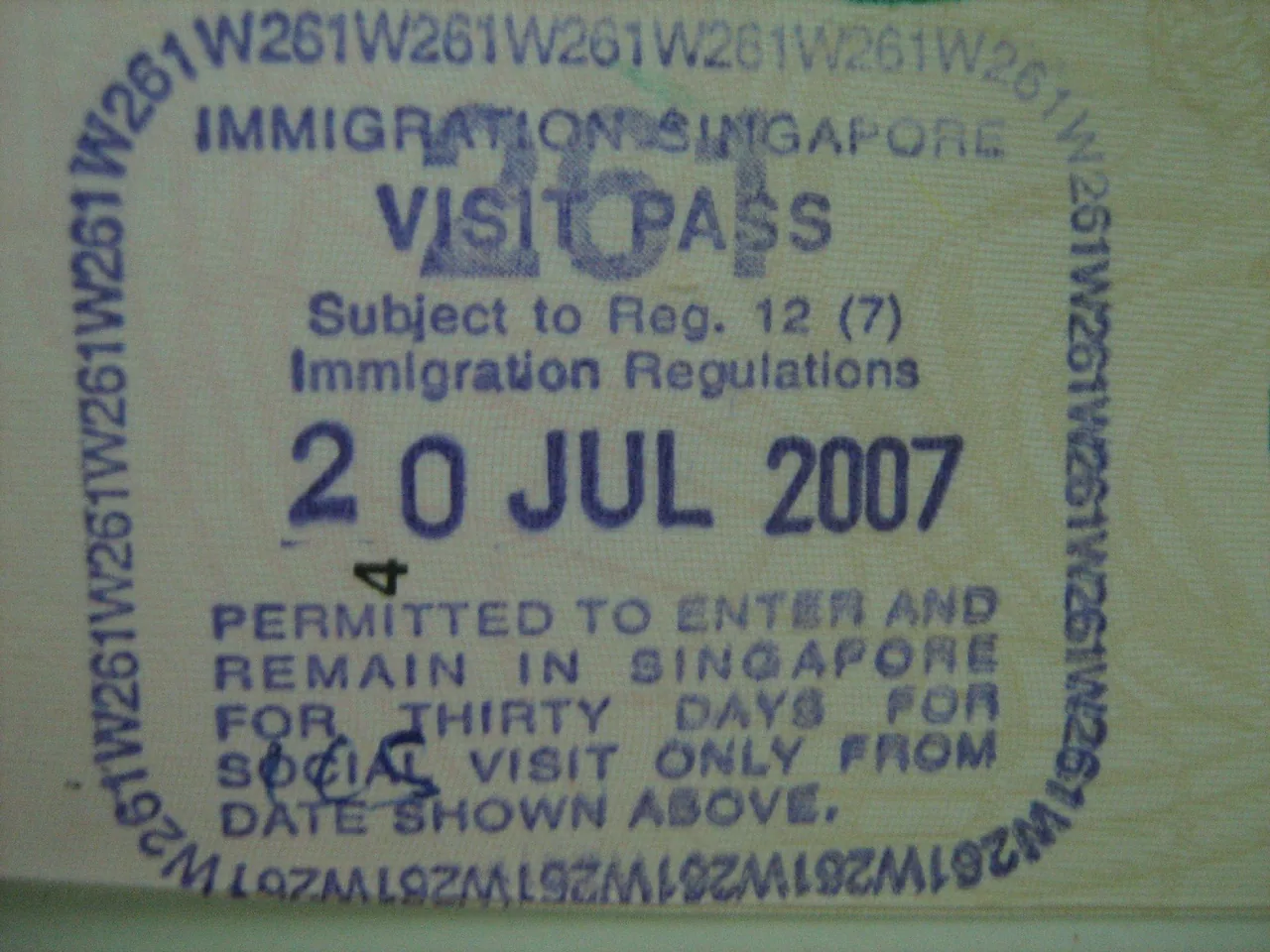
8. Arriving at Changi: automated gates, no stamp, e-Pass by email
9. Customs: how much alcohol, and why tobacco is different
10. What you must never pack for Singapore
11. Bringing medication into Singapore
12. Declaring cash above S$20,000
13. Who needs a yellow fever certificate
14. Arriving by land or sea instead of by air
15. If you are only transiting, not entering
16. Extending your stay, and what overstaying costs
17. Your first 30 minutes after clearing immigration
18. Pre-flight checklist, and what to read next
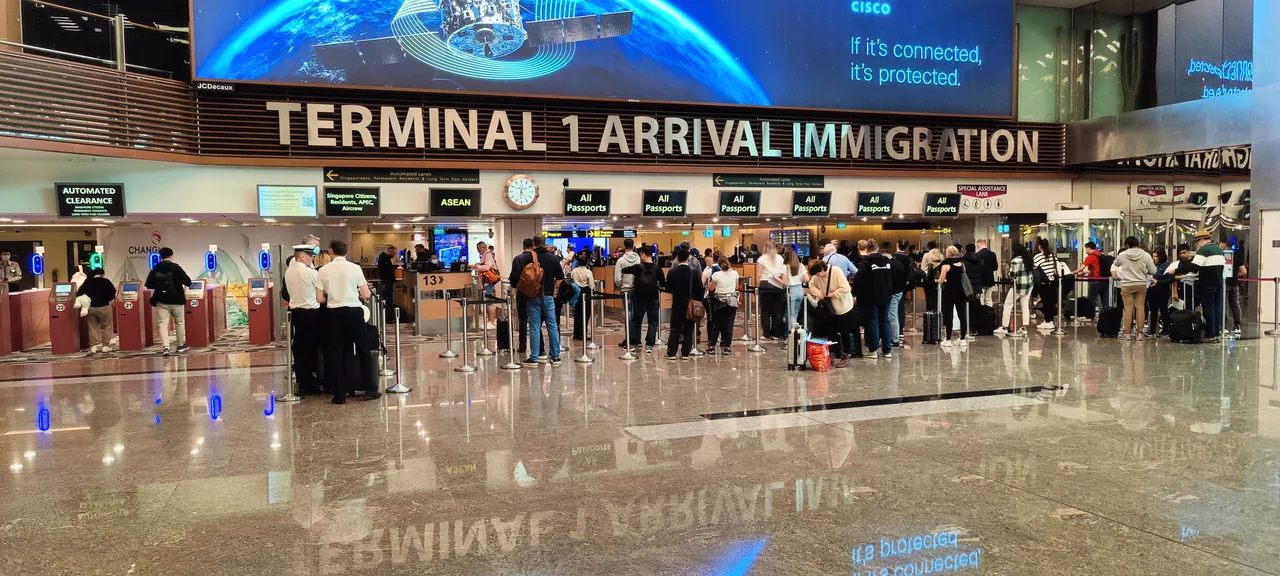
Three things decide whether Singapore lets you in: a passport with at least six months left, an SG Arrival Card submitted within three days of arrival, and proof that you are leaving again. Everything else depends on which passport you hold, so find your own country in the tables below rather than trusting a friend who breezed through last year on a different one. Immigration rules move, and the only source that counts is the ICA (Immigration & Checkpoints Authority), so check their site once before you fly. If you are still shaping the trip itself, start with our Singapore travel guide.
1. The three things you need, whatever passport you hold
Every traveller needs the same three things: a passport valid for at least six months, an SG Arrival Card submitted within three days of arrival, and evidence that you are leaving again and can support yourself while you are here. Everything after that depends on your nationality.
Singapore is an easy country to enter and a strict one to enter badly. The immigration process itself is fast and heavily automated, but it assumes you have done the paperwork, and the paperwork is not optional just because your passport is a strong one. Visa-free entry means you may ask to be admitted without applying for a visa in advance. It does not mean the arrival card is waived, and it does not mean the officer has to say yes.
The six-month passport rule is the one that catches people out most often, because it is checked at the airline desk before you ever reach Singapore. ICA states it in plain terms: all travellers, except Singapore passport holders, must ensure their passport has a minimum validity of six months. If your passport expires in five months you can be stopped at check-in in your own country, which is a much worse place to discover the problem.
| What you need | Detail | When it is checked |
|---|---|---|
| Passport | Valid at least 6 months (Singapore passport holders excepted) | Airline check-in and immigration |
| Visa | Only for the visa-required nationalities and travel documents | Before you fly, applied for through ICA |
| SG Arrival Card | Free, online, within 3 days of arrival, everyone except pure transit | On arrival |
| Onward ticket | Flight, ferry or bus out of Singapore, or on to a third country | Can be asked for at the counter |
| Accommodation | Hotel name and address, also required on the arrival card | Card submission and the counter |
| Funds | Cash or credit card sufficient for the stay | Can be asked for at the counter |
| e-Pass | Emailed to you, states your permitted days and last day of stay | Read it the day you arrive |
Work through that table once and the rest of this guide is detail. Get one of the first three wrong and the trip can stop before it starts.
2. Does your passport need a visa?
Most travellers reading this do not need a visa. United States and South Korean passport holders are normally admitted for up to 90 days, while British, EU, Australian, Canadian, New Zealand, Japanese, mainland Chinese, Taiwanese and Indonesian passport holders are normally admitted for up to 30 days. Around 40 countries and territories are on the visa-required list.
This is the section where generic advice does the most damage. There is no single answer to whether foreigners need a visa for Singapore, because the answer is written per passport, and travelling companions from different countries can genuinely have different rules on the same flight. Find your own row below rather than the row belonging to the person who booked the tickets.
| Passport | Visa | Usual visa-free stay |
|---|---|---|
| United States | Not required | Up to 90 days |
| South Korea | Not required | Up to 90 days |
| United Kingdom, EU, Australia, Canada, New Zealand | Not required | Up to 30 days |
| Japan | Not required | Up to 30 days |
| Mainland China (ordinary passport) | Not required | Up to 30 days |
| Taiwan (Republic of China passport) | Not required | Up to 30 days |
| Indonesia | Not required | Up to 30 days |
| Roughly 40 listed countries and territories | Required | Apply to ICA before travelling |
| Certain travel documents (see below) | Required | Apply to ICA before travelling |
The visa-required list includes Afghanistan, Algeria, Armenia, Azerbaijan, Bangladesh, Belarus, North Korea, Egypt, Georgia, India, Iran, Iraq, Jordan, Kazakhstan, Kosovo, Kyrgyzstan, Lebanon, Libya, Mali, Moldova, Morocco, Nigeria, Pakistan, Russia, Somalia, South Sudan, Sudan, Syria, Tajikistan, Tunisia, Turkmenistan, Ukraine, Uzbekistan and Yemen, among others. The full and current list lives on the ICA website, and that is the version that counts.
Separately, the type of document matters as much as the country. Holders of refugee travel documents, alien passports, Palestinian passports, temporary UAE passports, the Hong Kong Document of Identity, the Macao Travel Permit and the PRC Travel Document need a visa, whatever nationality is written inside. If you travel on anything other than a standard national passport, assume you need to apply and confirm it with ICA before you book flights.
The Chinese entry rules are recent enough to be worth spelling out: the mutual visa exemption agreement between China and Singapore was signed on 25 January 2024 and took effect on 9 February 2024. It covers ordinary passport holders for stays of up to 30 days. Longer stays, work and journalism still require a visa arranged in advance.
3. How long you can stay, and who really decides
The published figures, 90 days or 30 days depending on your passport, are the usual maximum, not a promise. The number that actually governs your stay is the one the officer grants on arrival and prints on your e-Pass.
This distinction sounds pedantic until it costs someone a fine. Travellers plan a 45-day stay because their nationality is listed at 90 days, land, glance at nothing, and never discover that a shorter period was granted. Others assume 30 days means a full month regardless of the calendar. The e-Pass carries the exact last date you may remain in Singapore, and immigration law measures your stay against that date alone.
| Passport | Usual visa-free stay | Notes |
|---|---|---|
| United States, South Korea | Up to 90 days | Tourism, business, visiting family and similar short visits |
| United Kingdom, EU, Australia, Canada, New Zealand | Up to 30 days | Extension possible online, not automatic |
| Japan | Up to 30 days | Japanese government guidance notes 14 to 30 days granted on arrival |
| Mainland China | Up to 30 days | Under the bilateral exemption in force since 9 February 2024 |
| Taiwan | Up to 30 days | Passport valid 6 months or more plus an onward ticket |
| Indonesia | Up to 30 days | As an ASEAN member state |
If the email has not arrived, you are not stuck. ICA runs a visit pass validity checker, and the arrival card e-Service contains an e-Pass enquiry portal where you can look up the pass using your Disembarkation/Embarkation number and passport details. Do that on the first day rather than the last, when there is still time to sort out a problem.
One more habit worth building: rules on permitted stays are policy, and policy changes. Before each trip, spend two minutes on the ICA site confirming that your nationality is still treated the way it was the last time you visited. It is the cheapest insurance in travel.
4. What the SG Arrival Card is, and who has to submit one
The SG Arrival Card is a free electronic form combining your arrival declaration with an electronic health declaration. Almost every traveller must submit one within three days of arrival, and only two groups are exempt.
Its full name is the SG Arrival Card with Electronic Health Declaration, and it is administered by the Immigration & Checkpoints Authority. It replaces the paper card that used to be handed out on inbound flights. Being visa-free does not exempt you: a visa waiver and a declaration requirement are two different things, and confusing them is one of the more common ways people arrive unprepared.
The card asks for passport details, your inbound and outbound flight numbers or the equivalent for land and sea arrivals, the address where you will stay in Singapore, an email address, recent travel history and a health declaration. Groups travelling together can be submitted in one go, which saves time for families but concentrates the risk of a typo, so check each traveller’s passport number individually.
| Point | Detail |
|---|---|
| Who submits | All travellers, with two exceptions below |
| Exception 1 | People transiting without clearing immigration |
| Exception 2 | Singapore citizens, PRs and long-term pass holders entering by land checkpoint |
| Cost | Free. ICA states that SGAC submission is free of charge |
| When | Within 3 days of arrival, counting arrival day |
| Where | ICA e-Service, or the MyICA app for iOS and Android |
| Confirmation | An email to the address you entered on the form |
| If you skip it | You can be refused entry |
The health declaration is not a formality either. Making a false health declaration is an offence under the Infectious Diseases Act. If your situation changes between submitting the card and flying, use the Update SGAC function to amend it rather than leaving an inaccurate declaration on file.
5. How to fill in the SG Arrival Card, step by step
Gather your documents, open one of the two official channels, enter passport and flight details, complete the health declaration, submit, then confirm that the acknowledgement email has actually arrived. It takes about ten minutes.
The form itself is straightforward. What makes it go wrong is doing it in a rush at the departure gate with no hotel booking confirmed and a keyboard you cannot see properly. Do it the evening before you fly, sitting down, with the passport in front of you and the hotel confirmation open in another window.
- Get your documents together. Passport, inbound and outbound flight numbers or ferry and bus details, the full address of your first night’s accommodation, and an email address you can actually open while travelling.
- Check the timing. Submission opens three days before arrival, counting arrival day. ICA’s own example: for a 30 June arrival, you can submit from 28 June. Earlier than that and the system will not take you.
- Open an official channel. Either the SG Arrival Card page on the ICA e-Service, or the MyICA mobile app. Type or bookmark the address rather than following a search result.
- Enter passport and travel details. Copy the passport number character by character from the passport itself, not from memory. Add the flight or vessel details for arrival and departure, and the Singapore address.
- Add everyone in your group if needed. Multiple travellers can be submitted together. Verify each person’s details separately before moving on.
- Complete the health declaration. Answer the health and recent travel history questions honestly. A false declaration is an offence under the Infectious Diseases Act.
- Submit and check your inbox. A confirmation email goes to the address on the form. If nothing arrives, the address is probably mistyped, and that same address is where your e-Pass will be sent after arrival.
- Amend if anything changes. Use the Update SGAC function to change the health declaration rather than filing a duplicate card.
Save or screenshot the confirmation before you fly. Airport wifi is fine but roaming is not always instant, and having the acknowledgement on your phone offline means one less thing to hunt for while a queue builds behind you.
6. What people actually get wrong on the arrival card
Four mistakes account for most arrival card problems: paying a commercial site for a free service, mistyping the email address, trying to submit too early, and assuming somebody else in the group filed one for you.
The paid-site problem is the biggest, because it is engineered to look official. Search for the arrival card and the results are full of smart-looking pages with government-style layouts and a payment step. ICA has addressed this directly, stating that it does not support or endorse services offered by commercial entities assisting to submit the SG Arrival Card at a fee, and that such entities are not affiliated with ICA. There are exactly two official routes and both are free.
| Mistake | What happens | The fix |
|---|---|---|
| Using a paid third-party site | You pay for a free service and expose your passport data | Use the ICA e-Service or the MyICA app only |
| Mistyped email address | No confirmation, and no e-Pass after you land | Re-read the field before submitting; check the inbox |
| Submitting too early | Rejected. The window opens 3 days before arrival | Set a reminder for the day before departure |
| Assuming a group filing covered you | One traveller without a card at the counter | Confirm each person appears in the submission |
| Guessing the hotel address | An inaccurate declaration on file | Copy it from the booking confirmation |
| Rushing the health declaration | A false declaration is an offence under the Infectious Diseases Act | Answer carefully; amend later via Update SGAC |
The email typo deserves its own warning because the consequence is delayed. Nothing goes wrong at the airport. You clear immigration normally, and then a week later you cannot prove how many days you were granted, because the e-Pass went to an address that does not exist. If you notice no confirmation email arrived, treat it as a problem to fix before departure, not after.
Finally, remember that everything in this section describes the process as it stands now. Digital immigration systems are updated frequently, so open the ICA site once before you travel and confirm that the submission window and the channels are still what you expect.
7. What immigration officers actually check
Four things decide the counter: a passport with six months validity, a ticket out of the country, a place to stay, and enough money for the visit. Being visa-free lets you ask for entry. It does not oblige anyone to grant it.
Most arrivals are unremarkable. The queue moves, the pass is granted, nobody asks anything beyond the purpose of the visit. But entry can be refused, and the reasons are consistent and worth stating honestly rather than pretending the risk does not exist. Guidance issued to visa-free travellers is blunt about it: if you cannot answer the officer’s questions clearly, or cannot show an onward ticket, accommodation, funds or a credible purpose of visit, you may be refused entry.
| Checked | What satisfies it | What causes trouble |
|---|---|---|
| Passport validity | 6 months or more remaining | Expiring within months; often stopped at check-in first |
| Onward travel | Confirmed ticket out of Singapore or on to a third country | One-way arrival with no plan on paper |
| Accommodation | Booking confirmation with a full address | No booking, or an address you cannot produce |
| Funds | Cash or a credit card adequate for the stay | Nothing to show for a long intended stay |
| Purpose of visit | A clear, consistent answer | Vague or contradictory answers |
| Travel pattern | A normal visit with a defined end | Long stay, brief exit, immediate return |
That last row is the one experienced travellers underestimate. Staying for more than 30 days, slipping across to a neighbouring country for a day and coming straight back is a recognisable pattern, and it can be read as an attempt to extend a stay unlawfully. If you need longer in Singapore, apply for an extension properly rather than engineering it at the border.
Practical preparation is simple: keep the return ticket and the hotel confirmation reachable on your phone without wifi, and know the name and district of your first night’s accommodation without having to look it up. Answer what is asked, briefly and consistently. Nothing about this process rewards improvisation.
Since a confirmed booking is one of the documents you may be asked to show, it is worth having the accommodation locked in before you fly. Current availability and prices for Singapore stays are shown below.
8. Arriving at Changi: automated gates, no stamp, e-Pass by email
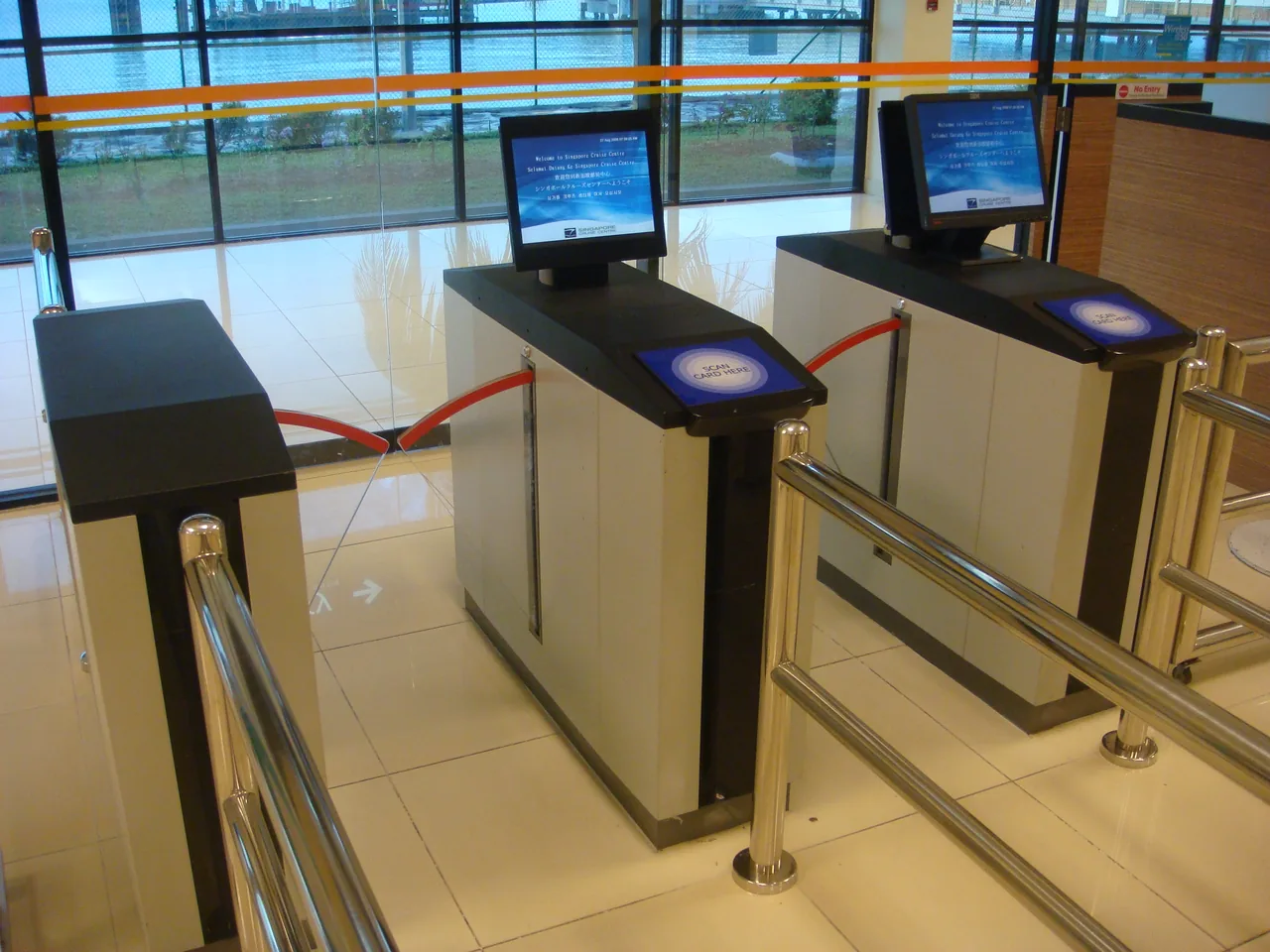
Changi clears arrivals through automated biometric gates. Foreign visitors still present a passport on the way in, biometrics are captured at that point, and you leave with no stamp and an e-Pass emailed to you instead.
The system behind this is ICA’s New Clearance Concept, built on a multi-modal biometric system that reads iris, face and fingerprint. Since 30 September 2024 passport-free clearance has been in force across all four Changi terminals, and average clearance time has fallen from about 25 seconds to roughly 10 seconds, a reduction of around 60 percent. In 2025 alone about 127 million travellers were cleared without presenting a passport, up 270.2 percent on the previous year.
What that means for a first-time visitor is narrower than the headlines suggest. As a foreign visitor you do present your passport when you arrive. The benefit comes on the way out: once your biometrics are enrolled at arrival, departure can be completed at the automated gates without producing the passport at all. So expect a normal document check inbound and a notably quick exit outbound.
| Step | What happens |
|---|---|
| Off the aircraft | Follow signs to immigration; no paper form is handed out |
| Immigration | Foreign visitors present the passport; biometrics captured |
| Stamp | None. No ink in the passport since 11 March 2022 |
| e-Pass | Emailed to the address on your arrival card, with permitted days and last date |
| Baggage | Collect bags, then choose the customs channel |
| Customs | Green if you have nothing to declare, red if you do |
| Departure later | Automated gates, usually without presenting the passport |
Once you are through, the airport itself is worth a few minutes rather than a sprint to the taxi rank. Our Changi Airport guide covers terminals, facilities and where things are, and the Singapore transport guide explains the MRT, buses and fare cards you will use from here on.
If you would rather not work out trains with luggage after a long flight, private transfers and airport pickups are an easy option. Current services and prices for the airport run are shown below.
9. Customs: how much alcohol, and why tobacco is different
Alcohol has a duty-free allowance, but only if you meet every condition, and you choose one option out of five. Tobacco has no allowance whatsoever: every cigarette must be declared and taxed.
The alcohol concession works as a menu, not a total. You pick a single option and that is your allowance for the arrival.
| Option | Allowance |
|---|---|
| A | 1 litre spirits + 1 litre wine |
| B | 1 litre spirits + 1 litre beer |
| C | 1 litre wine + 1 litre beer |
| D | 2 litres wine |
| E | 2 litres beer |
Every one of these conditions must be met at the same time: you are 18 or over, you spent at least 48 hours outside Singapore immediately before arriving, you are not arriving from Malaysia, the alcohol is for your own consumption, and it is not a prohibited type. The Malaysia exclusion surprises people who make a weekend trip north and buy duty-free on the way back. Coming from Malaysia, there is no alcohol concession at all.
Tobacco is a different category entirely, and the wording used by Singapore Customs leaves no room for interpretation: there is no duty-free concession or GST import relief for cigarettes and tobacco products. Not a small allowance, none. All cigarettes, cigars and pipe tobacco you carry must be declared and the tax paid, which means the red channel. Travellers who assume one carton is universally tolerated are the ones who get penalised.
New goods other than alcohol and tobacco have a separate GST relief that depends on how long you were away.
| Time spent outside Singapore | GST relief on new goods |
|---|---|
| 48 hours or more | Up to S$500 |
| Less than 48 hours | Up to S$100 |
Anything above the threshold is declared and GST is paid on the excess. The relief covers personal goods only, not items brought in for commercial purposes, so a suitcase of identical products is not a shopping trip in the eyes of customs.
10. What you must never pack for Singapore
Vapes, chewing gum, shisha and smokeless tobacco are prohibited, and narcotics are treated with a severity few countries match. The vape ban is absolute: possessing, using, buying, importing or selling is illegal, including for visitors and people in transit.
The vape rules are the ones travellers break by accident, usually because the device lives permanently in a jacket pocket. Singapore does not treat e-cigarettes as a lesser category of tobacco product. Possession, use or purchase of prohibited tobacco products, e-cigarettes included, carries a fine of up to S$10,000 under rules in force since 1 February 2018. Supplying them can bring up to six years in prison and a fine of up to S$200,000, and importing them up to nine years and a fine of up to S$300,000.
| Item | Status | Note |
|---|---|---|
| Vapes, pods, components, e-liquids | Prohibited | Possess, use, buy, import, sell. Applies in transit too |
| Chewing gum | Prohibited | Exception: dental and medicinal gum approved by the HSA |
| Shisha | Prohibited | Waterpipe tobacco |
| Chewing tobacco, snuff | Prohibited | Smokeless tobacco products generally |
| Narcotics and psychotropic substances | Absolutely prohibited | Singapore’s drug laws are among the strictest anywhere |
| Endangered species and products made from them | Prohibited | Includes worked ivory and similar souvenirs |
| Firecrackers | Prohibited | |
| Obscene material | Prohibited |
The chewing gum rule is the one people joke about, but the exception is real and narrow: gum approved by the Health Sciences Authority for dental or medicinal use is permitted, ordinary gum is not. Nicotine gum falls under pharmacy rules rather than the corner shop, so do not plan on buying a familiar brand at a convenience store.
On narcotics, the only sensible advice is that there is no grey area, no personal-use tolerance, and no product that is legal at home and quietly acceptable here. That includes cannabis extracts sold openly elsewhere. Check the ICA and customs pages before you fly if you are carrying anything you are unsure about, because the time to resolve a doubt is at home.
11. Bringing medication into Singapore
Ordinary medicines can be brought in for personal use, up to roughly three months’ supply, without prior approval. Medicines containing controlled substances need clearance from the Health Sciences Authority, applied for at least two weeks before you arrive.
The distinction is not about whether a drug is prescription-only at home. It is about whether it contains a controlled substance under Singapore law, and several everyday medicines do. Codeine-based painkillers and cough preparations, morphine, sleeping tablets such as diazepam and anabolic steroids all fall into the controlled group, which means the paperwork must be done before you fly, not explained at the counter.
| Ordinary medicine | Controlled substance | |
|---|---|---|
| Prior approval | Not required | Required from the HSA |
| Quantity | Up to about 3 months’ personal supply | As approved |
| When to apply | n/a | At least 2 weeks before arrival |
| Documents | Prescription or doctor’s letter recommended | Prescription plus pharmacy label images with the application |
| Packaging | Original packaging, pharmacy label intact | Original packaging, pharmacy label intact |
| Examples | Most everyday prescriptions and over-the-counter drugs | Codeine, morphine, diazepam and other sleeping tablets, anabolic steroids |
Whichever category applies, packaging matters. Keep medicines in their original boxes with the pharmacy label showing the patient’s name, the drug name and the quantity, and carry the prescription or a letter from your doctor. Repackaging a fortnight of tablets into an unlabelled pill organiser is convenient at home and unhelpful at a customs desk.
One practical point that sits alongside medication: if you take regular prescriptions or have an existing condition, make sure your cover actually extends to it before you fly, since replacing a controlled medicine abroad is neither quick nor cheap. Travel insurance options are shown below.
12. Declaring cash above S$20,000
If you carry more than S$20,000 in total, or the foreign currency equivalent, in cash or bearer negotiable instruments, you must declare it both when entering and when leaving Singapore. The declaration is electronic and can be filed up to 72 hours before you travel.
The threshold applies to the total value you are carrying, not to any single note or instrument, and it counts more than banknotes. Bearer negotiable instruments include coins and notes, bills of exchange, cheques made out to cash or to bearer, promissory notes, bearer bonds and postal orders. Families travelling together should think about the combined total rather than what each person happens to be holding.
| Question | Answer |
|---|---|
| Threshold | More than S$20,000 in total, or the equivalent in foreign currency |
| When | On entering and on leaving Singapore |
| How | Electronically, through the MyICA app or the ICA website |
| How early | From 72 hours, up to 3 days, before the journey |
| What counts | Cash plus bearer instruments: cheques to cash or bearer, promissory notes, bearer bonds, bills of exchange, postal orders |
| Penalty | Fine up to S$50,000 or imprisonment up to 3 years or both, plus seizure and possible forfeiture |
The penalties sit under the Corruption, Drug Trafficking and Other Serious Crimes (Confiscation of Benefits) Act 1992, which explains their weight. Failing to declare or making a false declaration can bring a fine of up to S$50,000 or up to three years in prison or both, and the money itself can be seized and forfeited.
The declaration itself is administrative, not an accusation, and filing it costs nothing but a few minutes. If you are anywhere near the threshold, especially with a mixture of currencies where exchange rates could push the total over, declare and move on. Most travellers will never approach S$20,000, but wedding money, business travel and property transactions all bring people into range without them thinking about it.
13. Who needs a yellow fever certificate
Anyone who has been in a yellow fever risk country within the six days immediately before arriving must show a valid vaccination certificate, and that includes Singapore residents and anyone who spent more than 12 hours transiting an airport in such a country.
The trigger is your recent route rather than your nationality, which is why this catches travellers who did not consider themselves to have visited anywhere at all. A long connection in an affected country counts once it exceeds 12 hours, so a routing chosen purely on price can create a certificate requirement that a direct flight would not.
| Point | Detail |
|---|---|
| Who | All travellers, residents included, who were in a risk country within the 6 days before arrival |
| Transit | More than 12 hours at an airport in a risk country counts the same way |
| Certificate validity | Valid from 10 days after vaccination, then for life |
| Without a certificate | 6 days of quarantine |
| Refusing quarantine | A non-resident can be refused entry |
| Country list | Published by the authorities on the official ICA page |
The ten-day rule is the part that needs planning, because a vaccination given the day before departure does not produce a valid certificate in time. If your itinerary passes through Africa or South America, or includes a long connection there, look at the official risk list well before booking and arrange vaccination early enough for the certificate to be valid on arrival.
Once vaccinated you are set for good, since the certificate no longer expires. Keep it with your passport rather than in checked baggage, because the point at which it is needed is the immigration counter, not the hotel.
14. Arriving by land or sea instead of by air
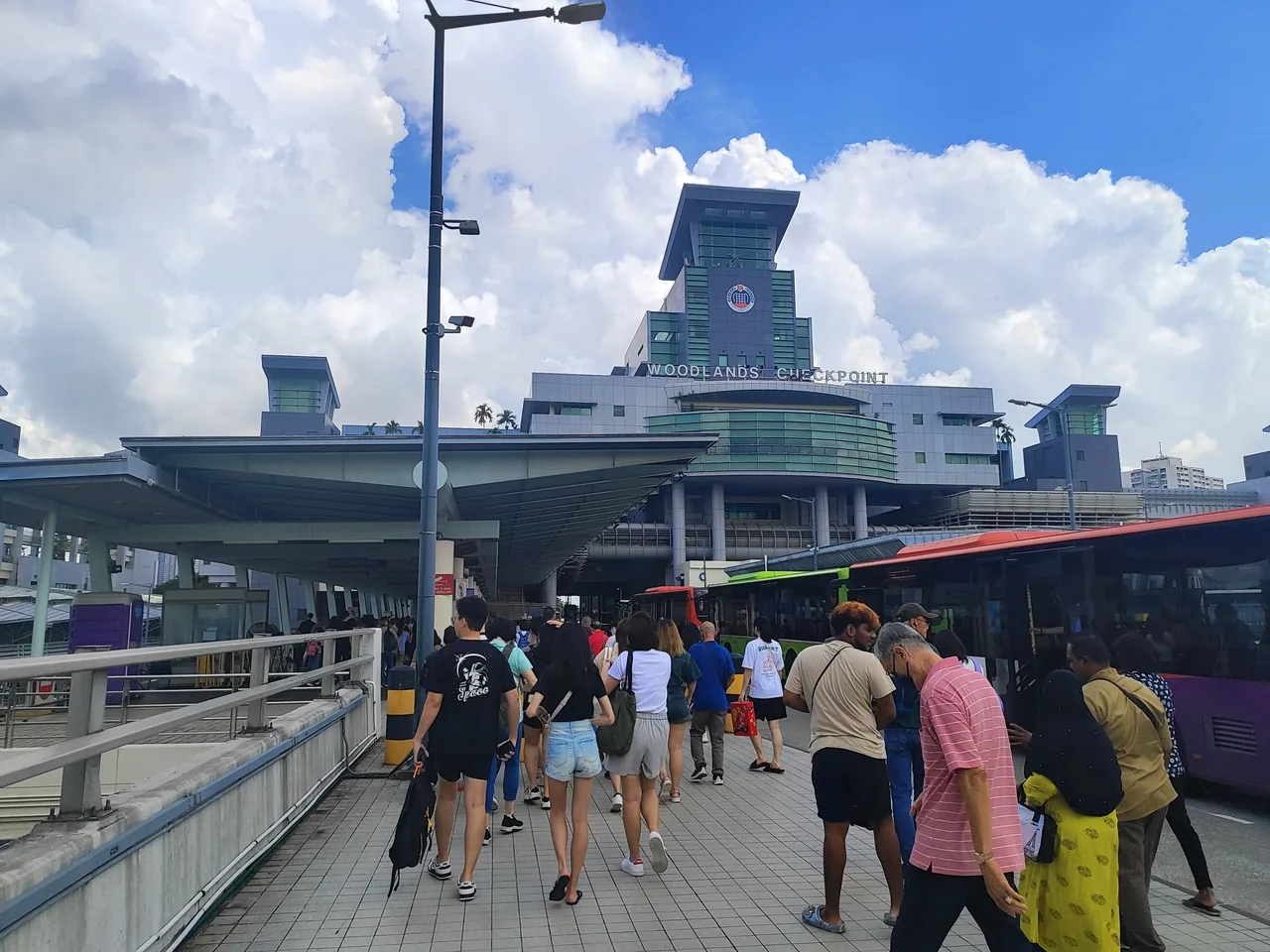
Singapore has two land checkpoints, Woodlands and Tuas, both facing Johor Bahru in Malaysia, plus ferry terminals serving Batam, Bintan and other Indonesian islands. Foreign visitors must submit the arrival card for these crossings too, and arriving from Malaysia removes the alcohol concession entirely.
The common misconception is that the arrival card is an airport formality. It is not. Only Singapore citizens, permanent residents and long-term pass holders are exempt when entering through a land checkpoint. As a visitor crossing the Causeway or the Second Link, or stepping off a ferry, you submit exactly the same card within the same three-day window, using the bus, coach or vessel details in place of a flight number.
| Route | Crossing | Arrival card | Alcohol concession |
|---|---|---|---|
| Air | Changi and Seletar | Required for visitors | Applies if all conditions are met |
| Land from Johor Bahru | Woodlands Checkpoint | Required for visitors | None. Arriving from Malaysia is excluded |
| Land from Johor Bahru | Tuas Checkpoint | Required for visitors | None. Arriving from Malaysia is excluded |
| Sea from Batam, Bintan and nearby | Ferry terminals | Required for visitors | Applies if all conditions are met, including 48 hours away |
The alcohol point is worth repeating because it is counterintuitive. One of the standing conditions for the duty-free allowance is that you are not arriving from Malaysia, so the bottle bought on a day trip north comes back as a declarable item, not as duty-free. The 48-hour condition also quietly rules out most short hops in either direction.
If a Malaysian side trip is on your list, the Johor Bahru day trip guide covers the crossing itself and how long to allow at the checkpoints. For the Indonesian islands, the Batam and Bintan ferry guide explains the terminals and routes. In both cases, treat the return leg as a fresh entry to Singapore, with a fresh arrival card, rather than as coming home.
15. If you are only transiting, not entering
Travellers who transit without clearing immigration do not submit an arrival card. The moment you pass through immigration, for a hotel, a meal or a look at the city, you are entering the country and the full requirements apply.
That line is the whole section. Staying airside between two flights means the arrival card exemption applies to you, along with one of the two exemptions ICA lists. Deciding at the gate that six hours is enough for a quick trip into town changes your status, and the card has to be submitted before you reach the counter.
| Situation | Arrival card | What applies |
|---|---|---|
| Transit airside, no immigration clearance | Not required | Prohibited-item rules still apply in the transit area |
| Leaving the transit area to enter Singapore | Required | Full entry requirements, including passport validity and onward ticket |
| Visa-required nationality, transiting only | Not required if you stay airside | The Visa-Free Transit Facility may apply, see below |
There is also a Visa-Free Transit Facility for certain travellers who would otherwise need a visa. It covers nationals of the Commonwealth of Independent States, Georgia, India, Turkmenistan and Ukraine, along with some Chinese nationals. The conditions are specific and are published by ICA, so if this is your route, confirm the current terms on the official site rather than relying on a forum post, as facilities of this kind are periodically revised.
One rule that does not pause for transit: the ban on vapes applies inside the transit area exactly as it does in the city. A device carried through on a connection is still a device in Singapore. Beyond that, a long connection here is genuinely pleasant, and our Singapore layover guide covers what fits into the time you have, the Changi lounge guide covers where to sit it out, and the transit hotel guide covers sleeping without leaving the terminal.
16. Extending your stay, and what overstaying costs
Short-term visit pass holders can apply to extend online only, typically for one further month or up to 89 days from the date of entry. Extensions are approved, not granted automatically, and overstaying is treated as an offence with a re-entry ban attached.
The application runs through the official e-Service. There is no walk-in counter for this, so plans that depend on turning up in person do not work. Apply before your current pass expires, allowing time for a decision, and continue on the basis of the pass you hold until you are told otherwise, because an application is not permission.
| Point | Detail |
|---|---|
| Who can apply | Short-term visit pass holders |
| How | Online e-Service only. No in-person applications |
| Typical extension | One additional month, 30 days |
| Overall ceiling | Generally up to 89 days from the date of entry |
| Certainty | Subject to approval. Not automatic |
| Overstaying | Composition fine or prosecution, depending on the number of days |
| Maximum penalty | Up to 6 months’ imprisonment and/or a fine, plus a bar on re-entry |
Overstaying is one of the few travel mistakes with a long tail. Depending on how many days are involved it is handled either by a fine or by prosecution in court, and the law allows for up to six months in prison and a fine. The part that outlasts the penalty is the re-entry bar, which can shut off a country you may want to return to for work or family reasons years later.
Prevention is trivially easy. On the day you arrive, open the e-Pass email, note the last permitted date, and put it in your phone calendar with a reminder a week out. If your plans change mid-trip, apply for the extension while you still have days left rather than after the pass has lapsed.
17. Your first 30 minutes after clearing immigration
Get connected, sort out payment and transport, confirm the e-Pass email arrived, then head into the city. Doing it in that order means you are never standing in an arrivals hall trying to solve two problems at once.
Changi is efficient enough that the queue behind immigration is rarely the bottleneck. What slows people down is arriving with no working data connection, then trying to open a booking confirmation, call a ride and check a train map through airport wifi with a dying battery. Sequence it and the whole thing takes half an hour.
- Turn on data. An eSIM activated before you left is live the moment you land, which makes everything after this step easier. A local SIM or a roaming plan works too, but decide before you are in the hall.
- Check the e-Pass email. Open it, read the number of days granted and the last date you may stay, and screenshot it. This is the only record of how long you have.
- Collect bags and choose a customs channel. Green if you genuinely have nothing to declare, red if you are carrying tobacco, excess alcohol, goods above the GST relief or anything you are unsure about.
- Sort out money. Contactless cards work widely, so most travellers do not need a large cash exchange at the airport. Take a modest amount for hawker stalls and small vendors.
- Set up transport payment. A contactless bank card or a stored-value transport card both work on the MRT and buses. Set it up once and stop thinking about tickets.
- Confirm your hotel address. Have the exact address and district on screen before you get in a taxi or on a train, in the same form as on your arrival card.
- Go. MRT, bus, taxi or a booked transfer, depending on your luggage, the hour and how tired you are.
How much this all costs adds up faster than people expect on day one, and our Singapore on a budget guide has realistic numbers for a first day. The Singapore transport guide covers which card to use and how the MRT actually works from the airport.
If you would rather land with data already working, an eSIM sorted before departure is the simplest route. Current plans and prices are shown below.
18. Pre-flight checklist, and what to read next
Run this list the week before you fly. If every row is ticked, there is nothing about Singapore immigration left to worry about.
Nothing here is difficult, but the items are spread across different weeks, which is why they get missed. The passport check belongs to the month before, the arrival card to the three days before, and the e-Pass to arrival day itself.
| When | Task | Done when |
|---|---|---|
| A month out | Check passport validity: 6 months or more remaining | Expiry date confirmed against the return date |
| A month out | Confirm on the ICA site whether your passport needs a visa | Your nationality checked on the official page |
| 2 weeks out | Apply to the HSA if you carry controlled medicines | Application submitted with prescription and label |
| 2 weeks out | Yellow fever vaccination, if your route requires it | Done at least 10 days before arrival |
| Before booking closes | Onward ticket and accommodation confirmed | Both reachable offline on your phone |
| 3 days out | Submit the SG Arrival Card, free, official channels only | Confirmation email received |
| Packing | No vapes, no gum, no shisha, no smokeless tobacco | Bag and jacket pockets both checked |
| Packing | Medicines in original packaging with pharmacy labels | Prescription or doctor’s letter packed |
| Before travel | Declare cash if the total exceeds S$20,000 | Filed via MyICA or the ICA website |
| Arrival day | Read the e-Pass: days granted and last permitted date | Screenshot saved, calendar reminder set |
Two habits are worth carrying into every future trip. First, check the ICA site yourself shortly before departure, because visa lists, transit facilities and declaration rules are revised from time to time and this guide describes the position as it stands in July 2026. Second, never pay anyone to submit the arrival card, and never count days from a published figure instead of from your own e-Pass.
With the entry side settled, the trip itself is the interesting part. Our Singapore itinerary guide turns the days you have into a plan, the where to stay guide covers the neighbourhoods and what each one suits, and the best time to visit guide explains the weather, the crowds and the events worth timing a trip around.
🎡Things to Do52
🍜Food4
🏨Where to Stay10
🚇Getting Around4
🧭Travel Tips15
Frequently asked questions
Plan the rest of the trip: the full Singapore travel guide →