
Singapore in January: Weather, Pongal, Thaipusam and Art Week by Date
The first week of January and the last week are two different trips. Early January still has the year-end lights up. From the middle of the month, Little India and Chinatown take over. Here is what opens and what closes, day by day.
| Daytime heat | 30.6C average high, the second coolest month after December |
|---|---|
| Rain | 221.6mm over 13 rain days, about two thirds of December |
| Public holiday | Only 1 January. Lunar New Year usually falls in February |
| Local school term | Starts in the first week, so family crowds thin out after it |
| Festivals | Pongal mid month, then Art Week and Thaipusam in the last ten days |
| Picking dates | The last ten days carry the most, with lights and festivals overlapping |
1. Pick the days before you pick the month
2. January weather in one section
3. The first three days, and what December leaves behind
4. Schools go back in the first week
5. Pongal, four days in Little India
6. Thaipusam, four kilometres across the city
7. Art Week, eleven days at the end of the month
8. Chinatown starts getting ready for Lunar New Year
9. Where to go when the rain settles in
10. What January is good for
11. What to book and when
12. Three days in January
13. Packing and getting around
1. Pick the days before you pick the month
Almost nothing that is on in the first week of January is still on in the last week. The early days close out the December season. From the middle of the month, the Indian festivals, the arts programme and the Lunar New Year build-up arrive one after another.
Treat January as a single block and you lose out either way. People come for the lights and find them taken down, or come for the festivals and arrive before anything has started. Split into segments, the month looks like this.
Five segments inside one month
| Segment | Only then | Not yet or no longer |
|---|---|---|
| 1 to 3 January | New Year holiday, year-end lights, the last days of the Gardens by the BayMap season programme | Pongal, Thaipusam, Art Week, Lunar New Year decorations |
| Rest of week one | Local school term begins and family crowds thin out | No major events |
| Mid month | Pongal, four days in Little India | Art Week, Thaipusam |
| Mid to late | When the new year falls in early February, the Chinatown bazaar and light-up start | Year-end lights are already down |
| Last ten days | Art Week, Thaipusam and the Chinatown decorations overlap | Anything Christmas related |
Decide by what you came for
If the year-end look is the point, you need to land between the first and the third. After that the displays come down one by one. If you want the city at its quietest, the stretch from the end of week one to mid month is the calmest part of January. If you came for festivals, the answer is the final ten days.
Trying to get all three in one trip does not work. Nearly three weeks separate the early lights from the late festivals.
2. January weather in one section
On temperature alone, January is among the mildest months of the year here. Highs average 30.6C, lows 24.3C, and rainfall totals 221.6mm. Those are thirty-year averages.
What matters more is the difference against the months either side. Rain falls by a third from December to January, then halves again from January to February. Those are the two largest month-to-month drops in the whole year.
December, January, February
| Measure | December | January | February |
|---|---|---|---|
| Average high | 30.5C | 30.6C | 31.5C |
| Average low | 24.3C | 24.3C | 24.6C |
| Rainfall | 331.9mm | 221.6mm | 105.1mm |
| Rain days | 19 | 13 | 9 |
| Humidity | 85.5% | 83.5% | 81.2% |
Fewer rain days, third highest total
The 221.6mm figure is third highest of the twelve months, but 13 rain days ranks only eighth. Divide one by the other and a January rain day brings 17.0mm against a yearly average of 12.4mm.
In practice you will open an umbrella on about ten days, and on those days the rain runs long and covers a wide area. That is a different pattern from the twenty-minute afternoon shower most months deliver.
The rain changes character within the month
The national weather service splits the Northeast Monsoon into a wet phase and a dry phase. The wet phase covers December into early January, and the dry phase runs from late January into early March. January is the only month with that boundary inside it.
| Part of the month | How the rain behaves | Planning around it |
|---|---|---|
| Early | Widespread moderate to heavy rain that continues for long stretches, at times with winds of 25 to 35 km/h | Give every outdoor plan an indoor alternative |
| Late | Windier and relatively dry | Full days outdoors become workable again |
Haze is not a January concern. The smoke that drifts in from the region belongs to the August to October window.
3. The first three days, and what December leaves behind
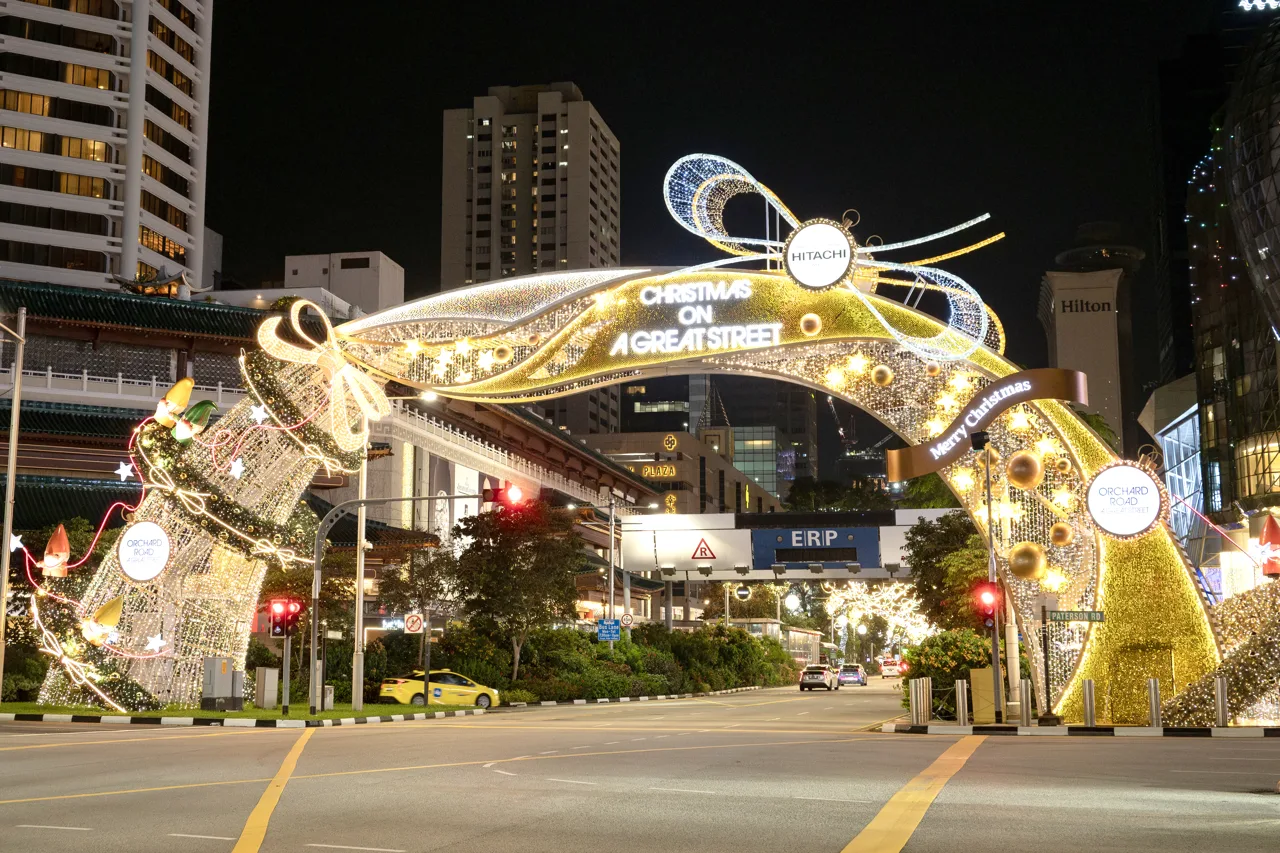
Year-end displays do not switch off the moment the year turns. The Orchard Road light-up stays on into the first part of January, and the Gardens by the Bay season programme usually runs to the first weekend.
Those three days do sit inside the New Year holiday. The first is a public holiday, local schools are still on their long break, and the city is coming down off the Marina Bay countdown from the night before.
What is still running
| What | Where | How long |
|---|---|---|
| Year-end light-up | Orchard Road | Stays lit into the first part of January |
| Gardens season programme | Gardens by the Bay | Usually closes around the first weekend |
| Countdown aftermath | Marina Bay | Cleared during the early hours of 1 January |
| Oceanarium special exhibition | SentosaMap | Some editions finish in the first days of January |
What actually closes on 1 January
Very little. Shops and attractions run as normal, and the MRT runs to its usual timetable. Government offices and some bank counters shut, and that is about the extent of it.
Public holidays here draw people out rather than shut things down. The thing to plan around is the crowd, not the opening hours.
Using the holiday days well
The first hour after opening and the last two hours before closing are the calmest windows at almost every attraction. Indoor venues fill up between midday and three in the afternoon, so pushing those to the edges of the day changes how the visit feels.
Outdoor lights only work after dark anyway, which makes the natural order simple. Fill the daylight hours indoors and walk Orchard Road in the evening. The lit stretch is long enough that starting at one end spreads the crowd out.
The full year-end picture is in the December guide, and the conservatory pricing is in the Gardens by the Bay guide.
4. Schools go back in the first week
The long school break here is December, not the middle of the year. The new academic year opens in the first week of January, and the make-up of the crowd at every attraction shifts from that day. The youngest year groups start first and the rest follow a day later.
For a visitor there is one consequence worth planning around. The local families who filled the attractions all through December disappear from weekday daytimes.
Before and after the term starts
| What | December and the first days of January | After term starts |
|---|---|---|
| Weekday attractions | Local families and visitors overlap | Mostly visitors, and noticeably fewer |
| Water parks and indoor play | Long queues | Comfortable on weekdays |
| Weekends | Busy | Still busy |
| Rush hour MRT | Lighter, because of the break | Crowded morning and evening |
The weekday and weekend gap widens
Once term is running, local families only come out at weekends, so the gap between a Tuesday and a Saturday grows. If you are travelling with children, a weekday visit to the zoo or a water park is far easier for the same ticket price.
The trade is rush hour. Trains towards the centre fill up around eight in the morning and six in the evening, so avoid those windows on days when you are moving with luggage. Fares and lines are set out in the MRT guide.
The exact date shifts a little
It is usually around the first Monday of January, staggered by year group across that week. The education ministry publishes the calendar the previous year. Knowing that the changeover happens in the first week explains why the second week feels so different.
5. Pongal, four days in Little India
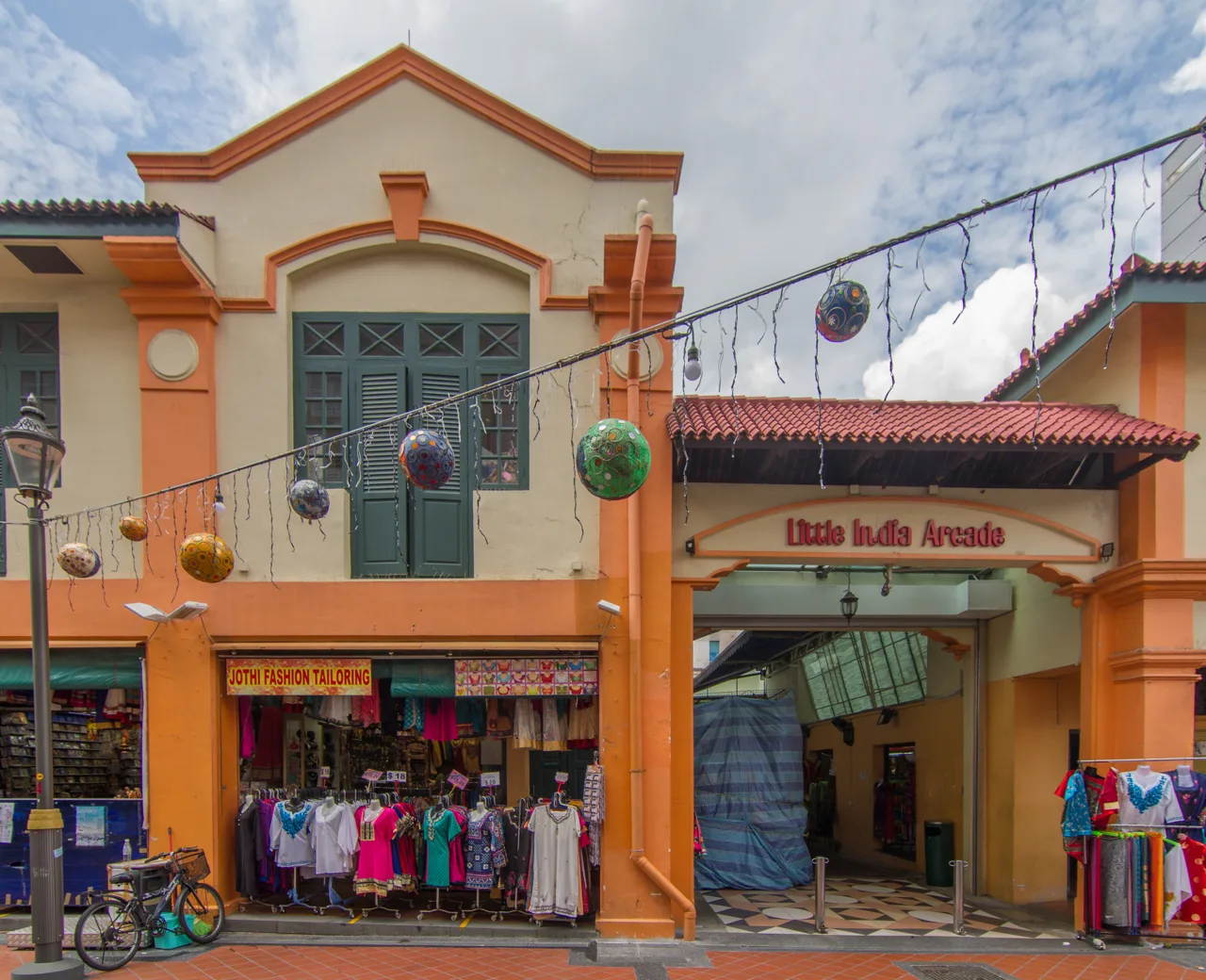
A South Indian harvest festival takes over Little India for four days around the middle of the month. It gives thanks to Surya, the sun god, for the year’s crop, and in Singapore the neighbourhood itself is the venue.
The festival shares its name with a dish. Newly harvested rice is boiled with lentils, and making it is the centre of the observance rather than a side note.
What you can see across the four days
| What | Where | Detail |
|---|---|---|
| Street light-up | Serangoon Road | Colour displays and decorations along the length of the road |
| Cattle | Clive StreetMap | Decorated with beads, garlands and bells, close enough to see properly |
| Rice boiling | Around Campbell LaneMap | Rice and milk boiled over a traditional stove in front of visitors |
| Performances | Around Campbell Lane | South Indian dance and music with explanations of the traditions |
| Market stalls | Across Little India | Festival decorations and ingredients on temporary stalls |
Why the cattle are there
Cattle are honoured because of the part they play in working the fields. On the third day they are washed, their horns are painted, and garlands and bells go round their necks. In Singapore they are brought to Clive Street so visitors can see them.
Meeting cattle in the middle of a city of high-rises is a memorable few days if you have children along. It gets crowded at peak times, so go early if you want a proper look.
The boil-over is the moment
When the pot on the stove boils over, people call out. The overflow stands for abundance, which is why it is the point of the demonstration rather than an accident. Demonstrations run at set times, so check the programme for the year if you want to catch one.
When to go across the four days
Most of the programming lands on the first two days. Evening is better for photographs once the lights are on, but the cattle and the cooking demonstrations tend to be daytime. Splitting it into one daytime visit and one evening visit covers both.
If this is your first time in Little India, the neighbourhood is worth a visit outside festival season too. What is there the rest of the year is in the Little India guide.
6. Thaipusam, four kilometres across the city
This Hindu festival falls in late January or early February. A procession walks roughly four kilometres from Sri Srinivasa Perumal TempleMap in Little India to Sri Thendayuthapani TempleMap on Tank Road, and it continues all day. Lanes between the two temples close for the duration.
Thaipusam is not a public holiday in Singapore. Some Malaysian states treat it as one, but here it is an ordinary working day, and the roads still open up for the procession.
How the procession works
| Item | Detail |
|---|---|
| Start | Sri Srinivasa Perumal Temple, Serangoon Road |
| Finish | Sri Thendayuthapani Temple, Tank Road |
| Distance | About four kilometres |
| Start time | The first participants set off the night before the festival day |
| End | The last arrive at the destination temple late in the evening |
| On foot | Participants walk the whole way barefoot |
What a kavadi is
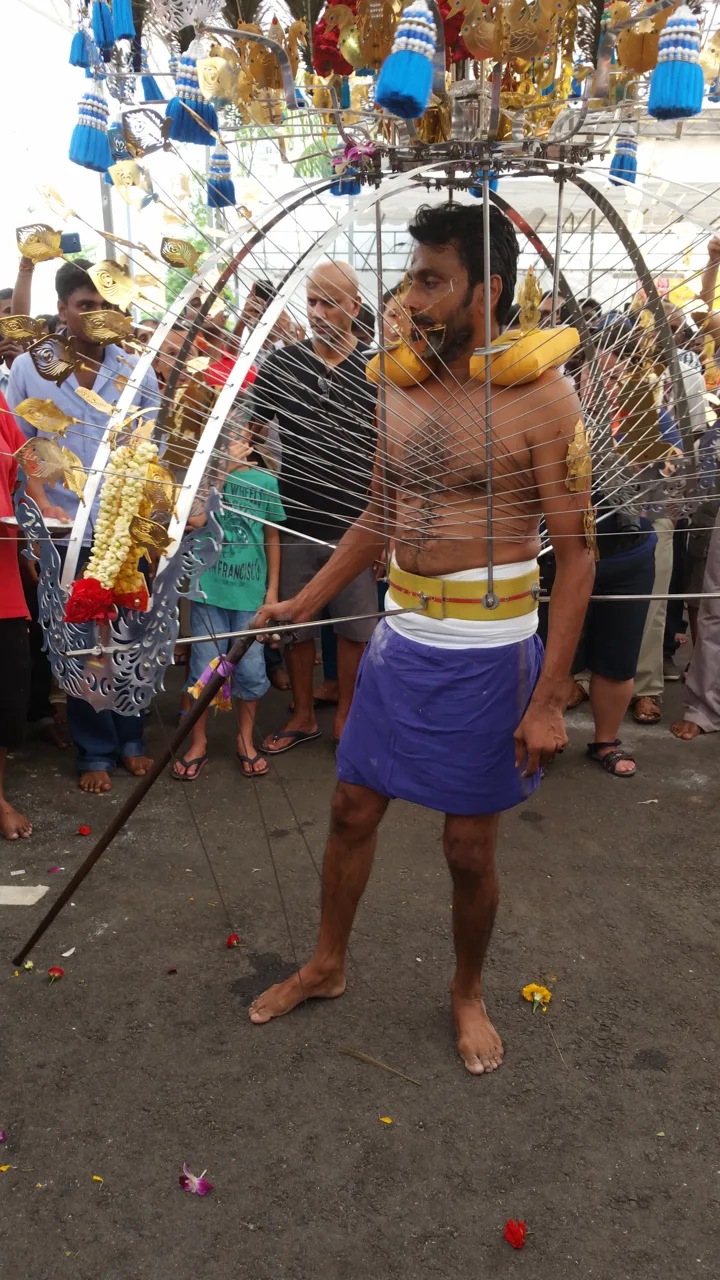
It is the arched structure carried on the shoulders. The word means sacrifice at every step in Tamil, and the frames are decorated with peacock feathers and metal ornaments. The largest weigh up to 40 kilograms and stand up to four metres tall.
Kavadis are held in place with metal skewers through the skin, and hooks are also used. Some participants carry pots of milk instead. Live traditional music travels with the procession the whole way.
When to go and where to stand
Turn up on the morning of the festival day and it has been running for hours already. At the last edition the first participants left the starting temple at 11.30pm the night before. To see the first group, go to the starting temple early in the morning. To see it at its busiest, take a midpoint during the day.
The destination temple is dedicated to Murugan. Its roof carries 48 glass panels angled to catch the rising and setting sun, so the light inside changes noticeably through the day.
How to behave
This is a religious observance, not a performance. Do not block the route or cut across in front of participants, and keep the camera at a respectful distance. Inside any temple, shoes come off and shoulders and knees stay covered.
If you need to travel towards Little India that day, use the MRT. Buses divert and taxis take longer routes. Sri MariammanMap Temple in Chinatown, the oldest Hindu temple in the country, is not part of this procession but sits well within a same-day walk. It is covered in the Chinatown guide.
7. Art Week, eleven days at the end of the month
An arts programme runs across the island for eleven days in the last part of January. The organisers list more than a hundred free and ticketed programmes inside that window. Museums and galleries carry part of it, and outdoor spaces and commercial venues carry the rest.
What makes it useful to a visitor is access rather than scale. A large share costs nothing, and much of it sits within walking distance inside the Civic District.
What changes during the week
| Aspect | Usually | During Art Week |
|---|---|---|
| National Gallery area | Indoor exhibitions | Facade projections and outdoor installations are added |
| Evenings | Museums close early evening | Some programmes run late |
| Cost | Permanent exhibitions are ticketed | Much of the outdoor programme is free |
| Footprint | Inside museum buildings | Across the Civic District and beyond |
The visual arts strand carries it
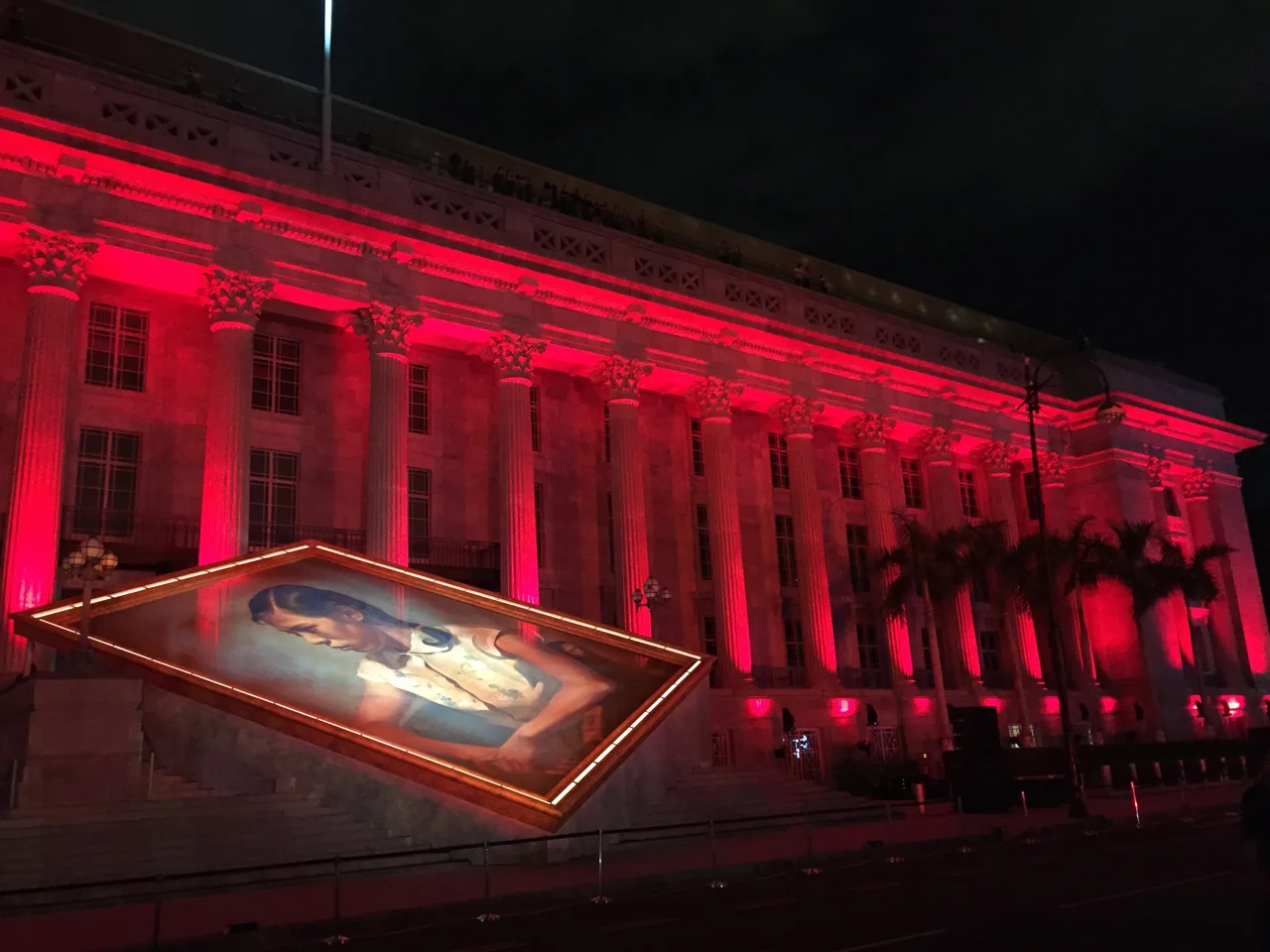
The most visible part happens at the National Gallery and in the streets around it. Projections onto building facades and installations in the open squares mean a good share is visible without a ticket.
The gallery occupies the former Supreme Court and City Hall buildings, so the architecture is worth the visit by itself. Seeing it in daylight and again after the lights come on gives two quite different impressions.
Putting a route together
Start at the National Gallery and the walk carries on across the river to the ArtScience MuseumMap. The Marina Bay waterfront sits in between, which makes it a natural evening route. Permanent exhibitions at both museums are ticketed separately, so sorting that out in advance saves queueing.
Pricing and opening hours are in the National Gallery guide and the ArtScience Museum guide.
The programme is published late
The full listing of venues and events tends to appear close to the start. The dates themselves are announced well ahead, so you can plan a trip around the week, but decide what to see once you are there.
8. Chinatown starts getting ready for Lunar New Year
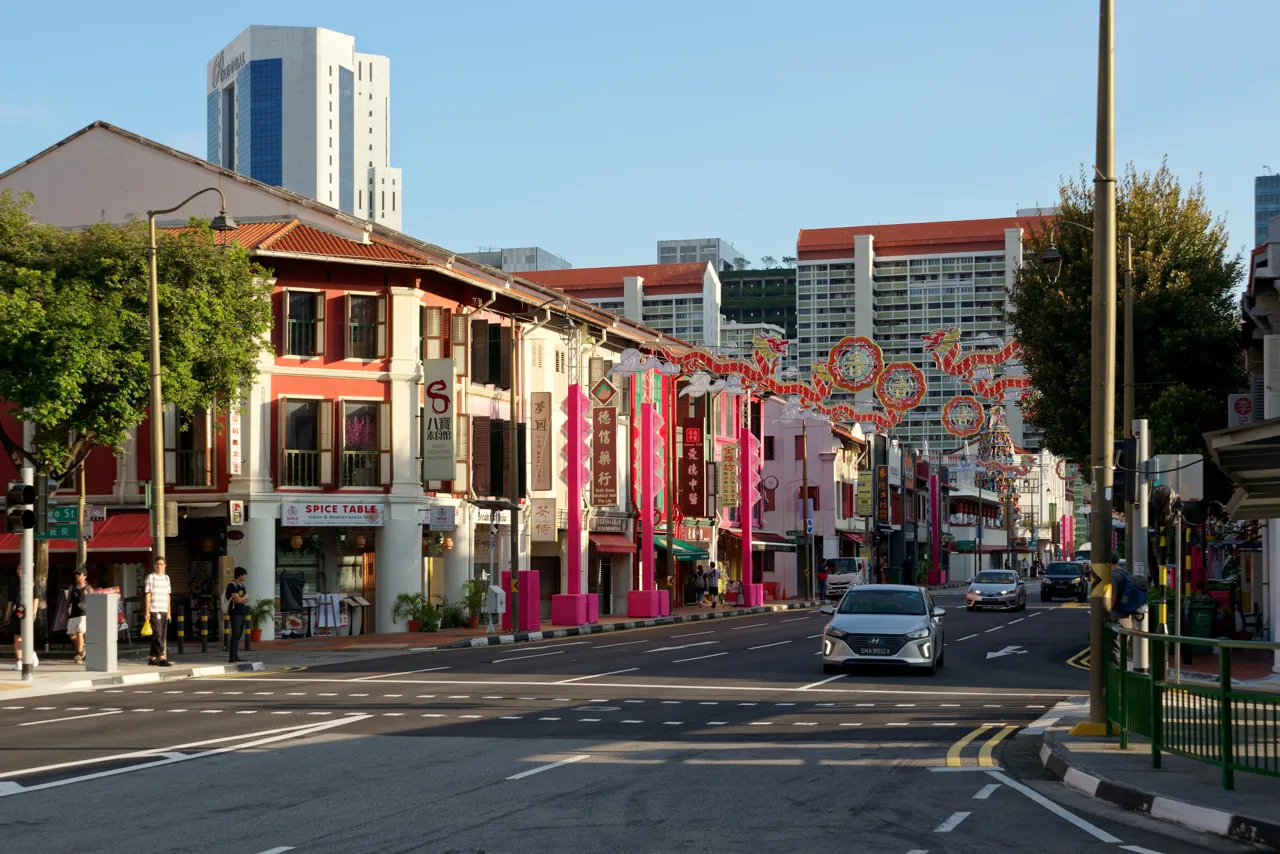
Lunar New Year follows the lunar calendar, so it moves between late January and the middle of February. When it falls in early February, the Chinatown preparations begin inside January. The bazaar opens first and the street light-up follows.
The two weeks before are better viewing than the day itself. Everything is open and the streets are at their fullest during that build-up.
Spacing from the last edition
| What | Days before the new year | Hours |
|---|---|---|
| Street light-up switched on | 18 days | 7pm to midnight, and through to the following morning on new year’s eve |
| Bazaar opened | 21 days | To 10.30pm Monday to Thursday and 11.30pm Friday to Sunday |
| Whole programme | From 30 days before | Continues for about a month after the new year |
On the same spacing, a new year in early February means the setup begins between the middle and the end of January. Switch-on dates are announced separately each year, so treat this table as an estimate and confirm before you travel.
Which streets the bazaar fills
Stalls run along Sago Street, Smith Street, Temple Street, Trengganu Street and Pagoda Street. They sell decorations, snacks, dried meats and gift boxes. Evenings are the busiest and weekends run close to midnight.
These are already shopping streets, so the stalls narrow the walkways considerably. Evenings are difficult with a pushchair.
If your dates run over the day itself
Shops and restaurants close in large numbers on the day and the one after, and many hawker stalls take several days off. A late January trip that finishes before the new year gets the full build-up. Dates that straddle it need checking in advance.
Large malls and hotel restaurants generally stay open, so meals are covered. The layout of the area and the temples in it are in the Chinatown guide.
9. Where to go when the rain settles in
Early January brings days where the rain runs for hours. What helps is not a list of indoor attractions but a cluster you can work through without going outside much.
Singapore makes those clusters easy. The indoor attractions in the centre sit close enough that your exposure comes down to the short walk between a station and a door.
Three clusters with almost no travel
| Cluster | What is in it | Getting between them |
|---|---|---|
| South Marina Bay | Both Gardens by the Bay conservatories, the ArtScience Museum, mall dining | Much of it linked by indoor and underground walkways |
| Civic District | The National Gallery and the museums and cafes around it | Within one MRT stop |
| The airport | The indoor gardens and shopping at Jewel | Direct MRT from the city |
The conservatories work for heat too
Both Gardens by the Bay conservatories are cooled, so they run well below the outside temperature. They are a rain plan, but they also make a good hour out of the middle of a hot day when it is not raining.
The two are sold as a pair. The outdoor walkway between the Supertrees is priced separately and can close in bad weather, so on a wet day the conservatories alone are the sensible booking.
Using the airport as part of the trip
If rain is forecast on your departure day, going out early is the better move. Jewel sits before immigration, you can leave bags and walk in, and the indoor gardens and shops fill two or three hours comfortably. The layout is in the Jewel Changi guide.
The full set of wet weather options is in the rainy day guide.
10. What January is good for
Outside the festival dates, the month works much like any other. A few things do favour January, and most of them come back to temperature. The average high of 30.6C sits almost two degrees below April.
Two degrees sounds like nothing until you spend a full day walking in high humidity, at which point it is very noticeable.
Better in January
| What | Why January helps |
|---|---|
| Zoo and night safari | Cooler daytime means you can stay in the day parks longer |
| Walking neighbourhoods | Same reason, and mornings in particular are manageable |
| Viewing decks and the cable car | Visibility improves as the month moves into the drier phase |
| Temples and places of worship | Festival season means more is happening than usual |
Put outdoor plans in the morning
Early in the month, rain that starts in the afternoon can carry on. Anything heavily outdoors, such as a zoo day or an island trip, belongs in the morning with the afternoon left flexible.
Late in the month this matters less. As the dry phase takes over, full days outdoors become workable again.
What January does not change
Indoor attractions, shopping and eating run the same all year. Hawker centres keep normal hours except around Lunar New Year. What to eat is in the hawker guide and the full attraction list is in the things to do guide.
Sentosa and the Mandai parks are unaffected by the month. Those are covered in the Sentosa guide and the Mandai guide.
11. What to book and when
January is not a difficult month to book. The first three days and the run-up to Lunar New Year behave differently from the rest, so start by checking whether your dates touch either.
Everything in between is usually available close to arrival. A few things are still worth locking in early.
Difficulty by segment
| Segment | Accommodation | Attraction tickets |
|---|---|---|
| 1 to 3 January | The tail of the year-end peak. Book ahead | Buy in advance to skip queues |
| Rest of week one to mid month | The easiest stretch of the month | Walking up is fine |
| Last ten days | Generally available despite the events | Some museum evening programmes need booking |
| Run-up to Lunar New Year | Climbs once the new year week is close | Restaurant tables near Chinatown get hard to find |
Whether a multi-attraction pass pays
Bundled passes start to make sense at three paid attractions in three days. January visitors often spend their time on festivals, which are free, and end up visiting fewer paid sites. In that case buying individually is cheaper.
If you are travelling with children and doing the zoo, the aquarium and the cable car, the pass side wins. The combinations that break even are worked through in the attraction pass guide.
Southern hemisphere school holidays overlap
January is the middle of the long summer break in Australia and New Zealand, two of the larger visitor markets here. That pushes flight demand up even while local school holidays are ending.
The practical effect is that flights and hotels move on different clocks this month. Rooms stay findable late, while flights price as holiday season. Book the flight first.
Choosing where to stay
For a late January trip built around the festivals, somewhere between Little India and Chinatown works well. Both festival sites are there and they are three or four MRT stops apart.
For an early January trip built around the lights, Orchard Road is the better base, since you can walk the lit stretch and skip a late-night journey. Areas are compared in the where to stay guide, and nightly rates are in the budget guide.
12. Three days in January
This assumes a late January arrival. It puts two festivals and the indoor attractions together, with an alternative attached to each afternoon in case the rain settles in.
Notes for an early January trip follow at the end.
Day one, the city centre and the Civic District
| When | What | If it rains |
|---|---|---|
| Morning | National Gallery. The building was the Supreme Court and City Hall, so the interior carries the visit | No change |
| Lunch | Restaurants around the gallery or a nearby hawker centre | No change |
| Afternoon | Marina Bay waterfront, ArtScience Museum | Stay longer in the museums |
| Evening | Art Week outdoor programme and facade projections | Swap to the indoor exhibitions |
Day two, Little India and Chinatown
| When | What | If it rains |
|---|---|---|
| Early morning | On a Thaipusam day, the starting temple. Otherwise the Little India morning markets | The procession runs in the rain |
| Morning | Little India shops and temples | Move into the arcades |
| Afternoon | Cross to Chinatown for the temples and the shophouse streets | Indoor complexes and museums instead |
| Evening | Chinatown bazaar and light-up | Much of the bazaar is uncovered. Move to indoor dining |
Day three, Mandai or Sentosa
| When | What | If it rains |
|---|---|---|
| Morning | Zoo or island. The cooler month makes the morning workable outdoors | Switch to a park with more indoor space |
| Afternoon | Carry on there or head back into town | Move to the two conservatories |
| Evening | Night safari, or the Marina Bay skyline | The night safari runs in wet weather |
Coming in early January instead
The festival slot on day two opens up, and the lights fill it. Spend the day indoors and walk the Orchard Road stretch after dark. If the Gardens by the Bay season programme is still running that year, that is the stronger evening.
Longer trips and other combinations are laid out in the three day itinerary.
13. Packing and getting around
The packing list barely changes from any other month. The one January-specific item is something to wear into a temple, because the festivals are centred on temples.
What to bring
| Item | Why |
|---|---|
| Folding umbrella | Thirteen rain days, and the rain runs long when it comes |
| Fast-drying shoes | At 83.5 per cent humidity, wet shoes stay wet |
| A light layer | Air conditioning indoors and on the MRT is strong |
| Shoulders and knees covered | Required to enter temples. One thin item is enough |
| Socks | Shoes come off inside temples and the floor can be hot |
From the airport
The MRT is the cheapest option, and a car makes more sense with luggage or late at night. In busy windows such as the early hours of 1 January, arrange the car ahead rather than at the kerb.
Fares and lines are in the MRT guide, connectivity is in the SIM and eSIM guide, and entry formalities including the arrival card are in the entry requirements guide.
Getting around on festival days
On the Thaipusam date, buses divert around the stretch between Serangoon Road and Tank Road. Plan to use the MRT if you are heading that way.
On bazaar evenings the roads around Chinatown back up. Walking in from the station beats trying to be dropped off.
🎡Things to Do52
🍜Food4
🏨Where to Stay10
🚇Getting Around4
🧭Travel Tips15
Frequently asked questions
Yes. Rain drops by a third from December, and the festivals cluster after the middle of the month.
The thirty-year average falls from 331.9mm in December to 221.6mm in January, and rain days go from 19 to 13. Daytime highs of 30.6C make it the second coolest month of the year, which matters if you plan to walk. The one caveat is the first three days, which sit inside the New Year holiday and draw crowds. If you want space, start after the first week.
Highs of 30.6C, lows of 24.3C, and 221.6mm of rain across the month.
Thirteen rain days puts January eighth out of twelve, yet the monthly total is third highest. Divide one by the other and you get 17.0mm on a rain day against a yearly average of 12.4mm. Early in the month, the rain arrives as long spells over a wide area rather than the short afternoon burst you get for most of the year.
December for the lights and the year-end atmosphere, January for less rain and more festivals.
Anything Christmas related is gone by the first week of January. In exchange you get Pongal, Thaipusam and Art Week in sequence, and Chinatown dressing up for Lunar New Year at the end of the month. The December side is set out in the December guide.
No. Arrival figures put January at or above the yearly average.
Index the national monthly arrival series against each year’s own average and January sits around 100. In years when Lunar New Year falls in late January the figure climbs to 116, which puts it near the top of the year. When the new year moves into February, January is the easier month of the two.
Four days in Little India, starting around the middle of January.
It is a South Indian harvest festival that thanks Surya, the sun god, for the year’s crop. Serangoon Road gets a street light-up, and decorated cattle wearing beads, garlands and bells appear on Clive Street. There are cooking demonstrations on traditional stoves and South Indian dance performances alongside. The dates shift a little each year, so check the official listing before you book.
It sets off the night before the festival day and runs through until the following evening.
At the last edition the first participants left the starting temple at 11.30pm and the doors of the destination temple opened just after midnight. Arrive on the morning of the day itself and it has already been going for hours. If you want to see the first kavadi leave, go to the starting temple early.
Lanes close for the day along the four kilometres between the temple on Serangoon Road and the temple on Tank Road.
That stretch links Little India to the city centre, so buses divert and taxis take longer routes. If you have plans in that direction on the day, use the MRT. It is a religious observance, so do not block the route or crowd the participants.
It is a mix, and a large share of the programme is free.
The organisers list more than a hundred programmes across the island over eleven days. The visual arts strand centres on the National Gallery and the surrounding Civic District, built around outdoor installations and projections onto building facades. Some indoor exhibitions are ticketed, so the pricing in the National Gallery guide is worth reading first.
Yes, in years when the new year falls in early February.
At the last edition the street light-up switched on 18 days before the new year and the bazaar opened 21 days before. On the same spacing, a new year in early February means the setup begins somewhere between the middle and the end of January. Switch-on dates are announced separately each year, so confirm close to your trip.
Summer clothes, a folding umbrella, shoes that dry fast, and a light layer for air conditioning.
Overnight lows of 24.3C mean nothing warm is needed. Humidity averages 83.5 per cent, third highest of the year, so sweat does not dry quickly. If temples are on your list, pack one thin item that covers shoulders and knees so you are not turned away at the door.
The air-conditioned indoor attractions sit close together in the city centre, so you can fill half a day without moving far.
The two conservatories at Gardens by the Bay, the ArtScience Museum and the National Gallery are within two or three MRT stops of each other. On a day with long rain, running those three together works well. Other options are collected in the rainy day guide.
Shops and restaurants close in large numbers on the day itself and the day after.
Chinatown is busiest in the days before, and quiet on the day. A late January trip that ends before the new year gets the decorations and the bazaar at full strength. If your dates run over it, check opening hours in advance, because many hawker stalls take several days off.