
Singapore Fines and Rules for Tourists: What’s Actually Enforced, and What’s Myth
Singapore has a reputation for fining people for everything. The reality is narrower and much easier to live with: a short list of offences visitors genuinely get caught for, a long list of rumours with invented numbers attached, and a few things where the consequences really are serious. Here is the accurate version, with the figures we can stand behind and honest gaps where the published amounts disagree.
| Eating or drinking on the MRT | Up to S$500, from the moment you pass the fare gates |
|---|---|
| Chewing gum | Legal to chew. Import, sale and manufacture are what is banned |
| Vaping | Possession or use, fine up to S$10,000. Far tougher rules from 1 May 2026 |
| Drinking in public | Banned 10.30pm to 7am nationwide. First offence up to S$1,000 |
| Littering | First offence up to S$2,000, plus a possible Corrective Work Order |
| Smoking | Banned across a very wide list of places. Orchard Road is a No Smoking Zone |
| Vandalism | Jail and caning, and it has genuinely been imposed on foreign nationals |
| Tipping | Not expected. Most restaurants add 10% service charge and 9% GST |
1. The short version: what visitors actually get fined for
2. Smoking: where you can, and the much longer list of where you cannot
3. Vaping: illegal the moment you take it out
4. Alcohol: the 10.30pm line in public places
5. MRT and buses: not even a sip of water
6. Litter and spitting: the fine, and the fluorescent vest
7. Chewing gum: the myth, corrected
8. Public toilets and hygiene rules: where we will not quote a number
9. Crossing the road: jaywalking is a fine, not an arrest
10. Vandalism and graffiti: caning is real, and it has been imposed on foreigners
11. Do not feed the wildlife, and yes, that includes pigeons
12. Hawker centres: returning your tray is a rule, chope is a custom
13. No tipping: service charge and GST instead
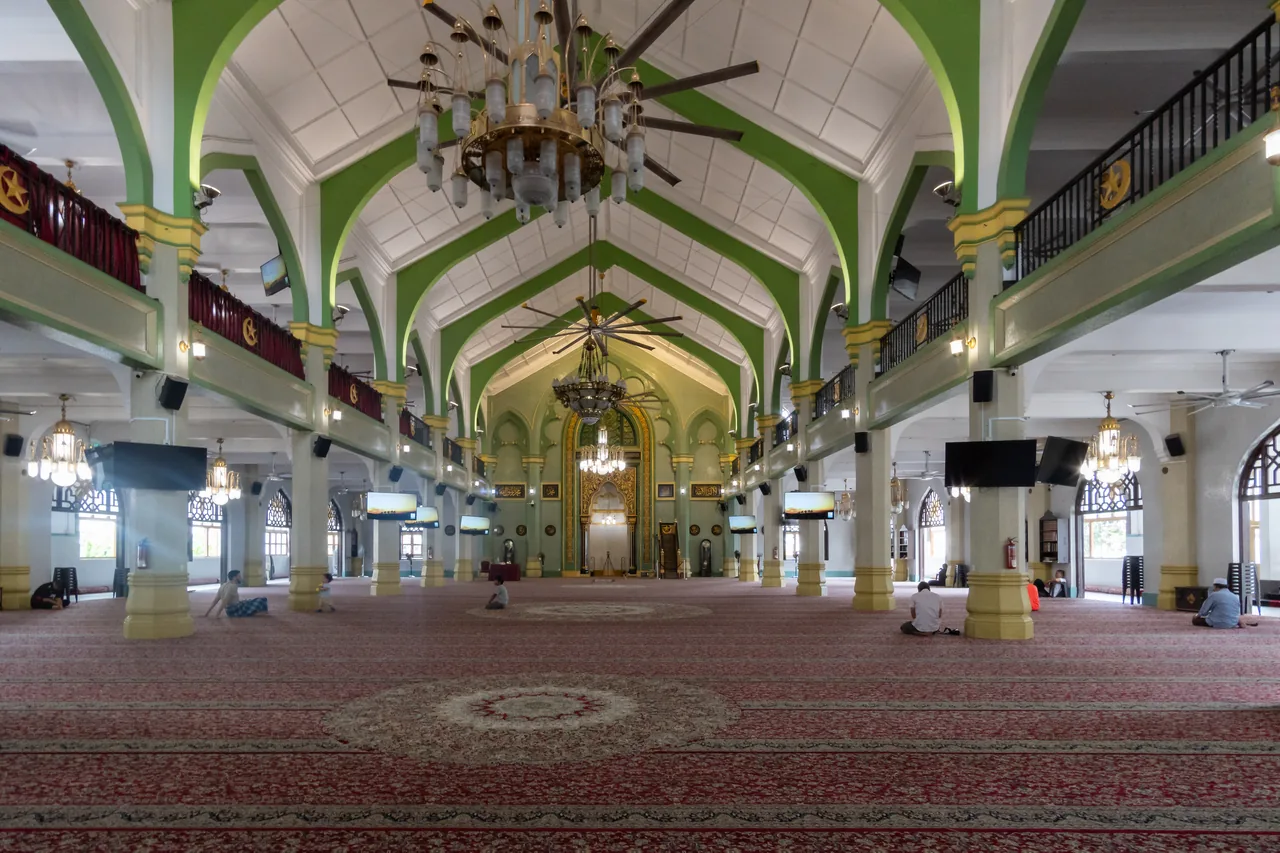
14. Temples and mosques: what to wear and how to behave
15. Photography: where the line sits
16. Myth versus reality: the claims that keep circulating
17. How enforcement actually works
18. The quick version, and what to read next
Most of what you have read about Singapore fines is either exaggerated or simply made up, and the numbers attached to the scary stories are usually invented. In practice, visitors get caught for a short list of things: smoking somewhere they shouldn’t, eating or drinking past the MRT fare gates, dropping litter, drinking in public after 10.30pm, and anything involving a vape. This guide separates the rules that are genuinely enforced from the rumours, gives the amounts we can actually stand behind, and says plainly where the published figures disagree. For everything else about planning the trip, start with our complete Singapore travel guide.
1. The short version: what visitors actually get fined for
Nearly everything a visitor gets caught for falls into five categories: smoking outside a permitted spot, eating or drinking past the MRT fare gates, littering, drinking in public after 10.30pm, and anything involving a vape. Behave the way you would in any well-run city and you will go home without a fine.
It is worth saying this at the top, because the internet has decided otherwise. Search for Singapore fines and you will find lists of forty things you can supposedly be penalised for, most of them carrying confident dollar amounts that nobody has checked. Some of those rules do exist but are almost never enforced. Some of the amounts are invented outright. And a couple of the genuinely serious ones, the ones where the consequences are heavier than anything you are used to at home, tend to be buried under the jokes about chewing gum.
So here is the realistic picture, ordered by how likely you are to run into it rather than by how dramatic it sounds. The right-hand column gives the figures we can stand behind, with ranges where published sources disagree.
| What it is | How likely you are to hit it | What is at stake |
|---|---|---|
| Smoking in a prohibited place | High. The banned list is far wider than most visitors expect | Composition sums cited from around S$200 to S$500, up to S$1,000 in court |
| Eating or drinking past the fare gates | High. Water counts | Up to S$500 |
| Littering | Moderate. Cigarette butts and receipts count | First offence up to S$2,000, plus a possible Corrective Work Order |
| Drinking in public between 10.30pm and 7am | Moderate on a night out | First offence up to S$1,000, and 1.5 times that in Liquor Control Zones |
| Using or carrying a vape | Certain, if you brought one | Up to S$10,000, and far heavier under rules in force from 1 May 2026 |
| Feeding wildlife, pigeons included | Low, but easy to do without thinking | First offence up to S$5,000, repeat up to S$10,000 |
| Graffiti or vandalism | Very low, but in a completely different league | Jail and caning, imposed on foreign nationals in real cases |
One structural point before the detail. Almost all of these are handled by composition, a fixed sum you pay to close the matter without going to court, and the usual sequence is a warning first. An officer telling you to put a bottle back in your bag is the normal outcome, not the exception. The heavy penalties quoted throughout this guide are statutory maximums, which is a different thing from what an ordinary visitor encounters, and we flag the difference each time it matters. For the wider trip, our Singapore travel guide covers the planning side.
2. Smoking: where you can, and the much longer list of where you cannot
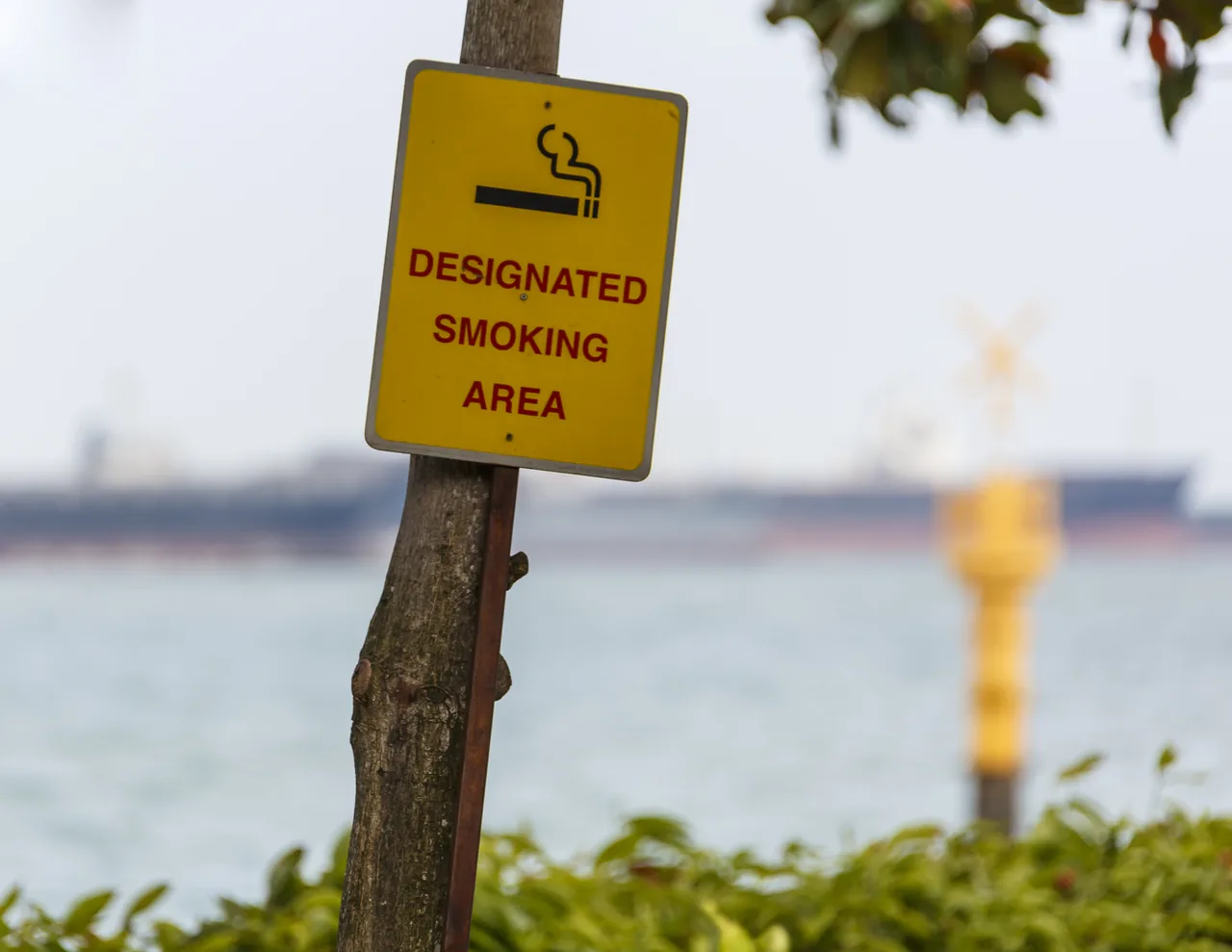
Assume smoking is prohibited unless you are standing in a marked spot. Indoor public places, parks, gardens, beaches, bus stops and shelters, school boundaries, the area around ventilation ducts and exterior windows, and all passenger vehicles are covered, and the whole of Orchard Road is a No Smoking Zone where you may only smoke inside a yellow-marked Designated Smoking Area.
This is the rule that catches visitors most often, and not because anyone is being reckless. In much of Europe and North America, stepping outside is the answer to a smoking restriction. Here, outside is often the restricted part. Beaches and parks are prohibited. Bus stops are prohibited, and so is the space within five metres of them. Stand outside a building to smoke and you may be within five metres of a ventilation duct or an exterior window, which is also prohibited. The practical effect is that a habit which feels automatic at home requires you to actively look for permission.
| Where | Position |
|---|---|
| Indoor public places, generally | Prohibited |
| Parks, gardens and beaches | Prohibited. A composition sum of S$200 is cited for these locations |
| Bus stops and shelters, and within 5m of them | Prohibited |
| School grounds, and within 5m of the boundary | Prohibited |
| Within 5m of ventilation ducts or exterior windows | Prohibited |
| Taxis, buses, private hire cars, other passenger vehicles | Prohibited |
| MRT stations and trains | Prohibited |
| Orchard Road | No Smoking Zone. Permitted only inside Designated Smoking Areas |
Orchard Road deserves its own note, because it is where most visitors spend an afternoon shopping and where the density of enforcement is highest. The entire stretch is a No Smoking Zone, and the exceptions are Designated Smoking Areas, marked as yellow boxes painted on the ground. Step outside the yellow line while holding a lit cigarette and you are outside the exception. The locations of these areas are published by the environment agency, so if you smoke and you are planning a day on Orchard Road, it is worth pulling up the current map before you go. Our Singapore neighbourhoods guide covers the area itself.
On amounts, this is one of the places where published figures genuinely differ, so we will give you the range rather than a false precision. Composition sums cited for smoking in prohibited places run from around S$200 at parks, gardens and beaches up to S$500 for prohibited places more generally, and the maximum rises to S$1,000 where a case is taken to court. Because both the designated areas and the penalty schedule are updated from time to time, check the relevant agency’s official guidance for the current rule rather than relying on a figure quoted in a travel article, including this one.
3. Vaping: illegal the moment you take it out
Vapes are prohibited outright. Possession, use and purchase carry a fine of up to S$10,000, a figure that has applied since 1 February 2018, and it applies to visitors and transit passengers exactly as it applies to residents. From 1 May 2026, devices containing specified psychoactive substances are treated far more severely again.
There is no soft version of this rule and no tourist allowance. Unlike smoking, which is a question of where, vaping is a question of whether, and the answer is no anywhere in the country. The device itself is the problem, so possession alone is enough. Visitors sometimes assume that a vape bought legally at home occupies some grey area in transit, or that discretion in a hotel room solves it. Neither is true, and there is no threshold below which a personal-use device becomes acceptable.
Possession, use or purchase of a prohibited tobacco product: fine of up to S$10,000, applicable since 1 February 2018.
Supplying: up to 6 years’ jail and a fine of up to S$200,000.
Importing: up to 9 years’ jail and a fine of up to S$300,000.
From 1 May 2026, for specified psychoactive substances such as etomidate: possession or use alone brings a fine of up to S$20,000 or up to 10 years’ jail, or both. Supply brings 2 to 10 years’ jail with 2 to 5 strokes of the cane. Import brings 3 to 20 years’ jail with 5 to 15 strokes.
| Act | Maximum penalty |
|---|---|
| Possession, use or purchase | Fine up to S$10,000 |
| Supplying | Up to 6 years’ jail and up to S$200,000 |
| Importing | Up to 9 years’ jail and up to S$300,000 |
| Possession or use of a specified psychoactive substance, from 1 May 2026 | Up to S$20,000 or up to 10 years’ jail, or both |
| Supplying such a substance, from 1 May 2026 | 2 to 10 years’ jail and 2 to 5 strokes of the cane |
| Importing such a substance, from 1 May 2026 | 3 to 20 years’ jail and 5 to 15 strokes of the cane |
The 1 May 2026 change is the part worth understanding properly, because it moves certain vapes out of the tobacco-control world and into a much harsher category. Etomidate and similar substances have turned up in devices sold as ordinary vapes, and the new regime attaches jail terms and caning to conduct that a user might not even know they were engaged in. A related measure from 1 September 2025 made rehabilitation programmes mandatory for etomidate offenders and repeat users. Since you cannot verify what is inside a device you did not manufacture, the only safe position is not to carry one.
Bringing a vape into the country is a customs question rather than a behaviour question, and it belongs to a different article: our Singapore entry and arrival guide covers what you may and may not carry in. This section is about the other end of that journey, the moment the device comes out of the bag. If you vape at home, plan for the trip as you would a long flight, and if you are worried about nicotine withdrawal, note that nicotine gum sits under a medical exemption discussed later in this guide.
4. Alcohol: the 10.30pm line in public places
Drinking in public places is prohibited nationwide from 10.30pm until 7am the next morning, and shops may not sell alcohol during those same hours. A first offence can reach S$1,000, and penalties are one and a half times higher in the two Liquor Control Zones, Little India and Geylang Serai. Bars and restaurants are unaffected, because the rule is about public space, not about the licensed trade.
Western visitors trip over this one more than any other, because the two habits it interrupts are so ordinary: a beer on a bench by the water at midnight, and a late run to a convenience store for something to take back to the hotel. Both stop at 10.30pm. The sale side is enforced at the till, and shops will typically close off or lock the alcohol chiller rather than argue about it, so a late arrival can find the beer section physically inaccessible even though the shop is open all night.
| Time | Drinking in public places | Buying from a shop |
|---|---|---|
| 7am to 10.30pm | Permitted | Permitted |
| 10.30pm to 7am | Prohibited nationwide | Retail sale prohibited |
| Licensed bars, clubs and restaurants | Not affected, they serve under their own licences | Not applicable |
| Little India and Geylang Serai | Liquor Control Zones. Penalties 1.5 times the general level | Same restricted hours apply |
The Liquor Control Zones are worth knowing about specifically if your evening takes you into Little India, which is a genuinely good place to eat late and a place where a lot of visitors linger. The zone designation does not make the neighbourhood unwelcoming or unsafe, and it does not stop restaurants serving. It means that the same act of drinking on the street after hours attracts a heavier penalty there than it would elsewhere, so the sensible approach is to keep the drinking inside the venue.
None of this puts a dent in a night out. The legal drinking age is 18, licensed venues run their normal hours, and Singapore’s bar scene is one of the strongest in Asia. What the rule genuinely prevents is the informal, outdoor, after-hours version of drinking, which in some cities is the default and here is not an option. If you want the last drink of the night outdoors, take it on a licensed rooftop or terrace rather than on a public bench. Our Singapore nightlife guide covers where to go and how late things run.
5. MRT and buses: not even a sip of water
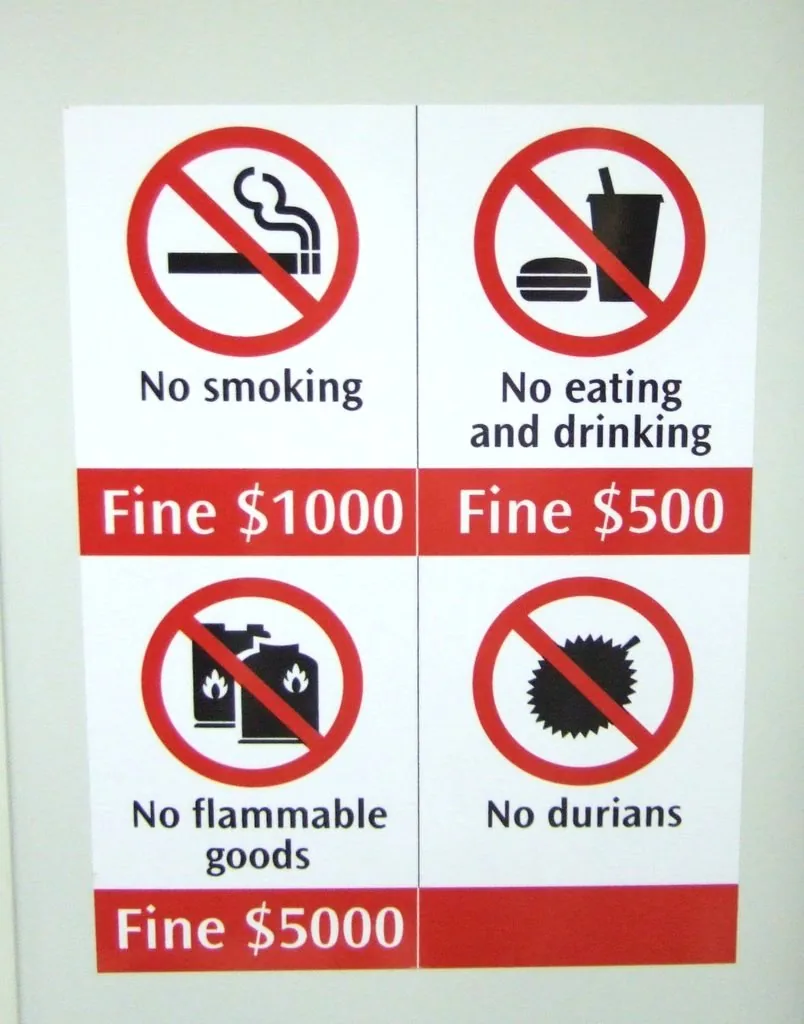
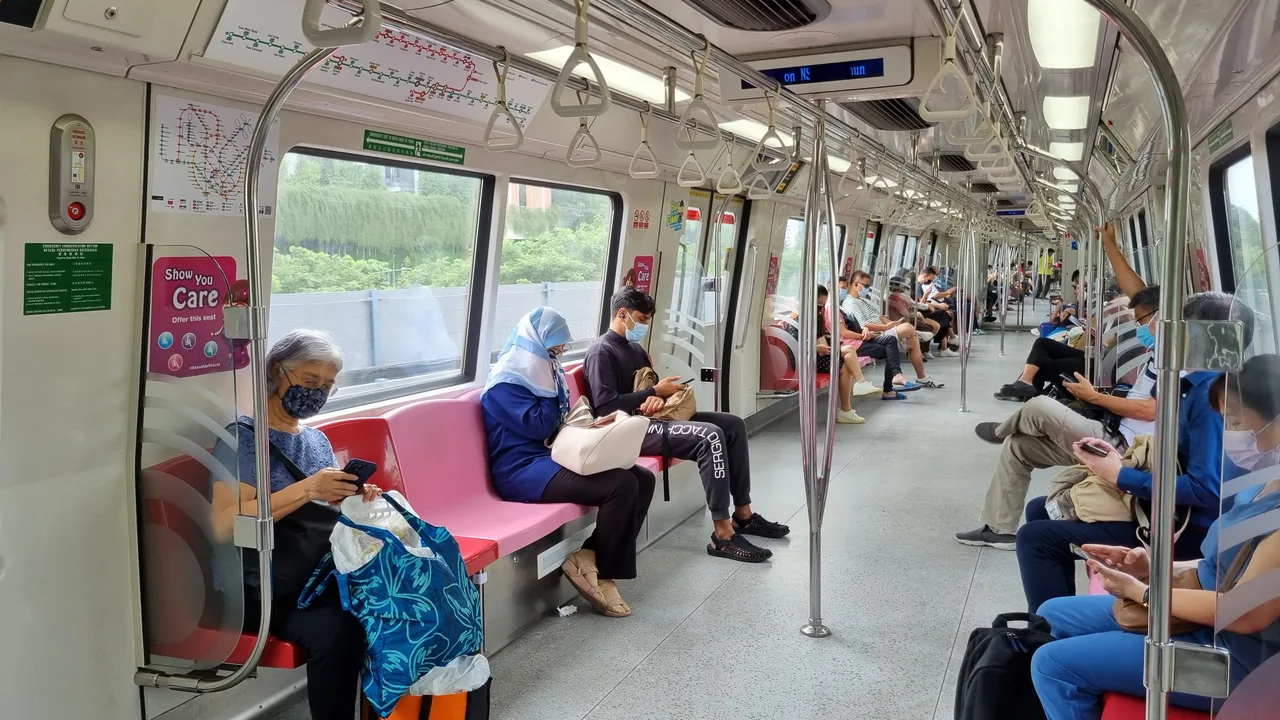
Eating and drinking are prohibited from the moment you pass the fare gates, water included, with a maximum of S$500. Durians are a prohibited item and cannot be carried on board at all. Flammable goods carry the heaviest figure on the signage, up to S$5,000.
The detail that catches people is the starting point. The restriction is not on the train, it is on the paid area, so it begins when you tap in and continues on the platform, the escalators and the interchange walkways. In a city this humid, where every guide tells you to carry water, tapping through with an open bottle in your hand feels like nothing at all. Close it and put it away before the gates. Sweets and lozenges count as eating, and so does finishing a coffee while you wait.
| Rule | Where it applies | What the penalty is |
|---|---|---|
| No eating or drinking, water included | Everywhere past the fare gates | Up to S$500 |
| No durians | Stations and trains | A prohibited item. Prohibited-item breaches carry up to S$500 |
| No flammable goods | Stations and trains | Up to S$5,000 according to station signage |
| No smoking | Stations and trains | Covered by the general smoking rules |
The durian panel is the one people photograph, and there is a reason it looks different from the others. On most signs the durian symbol carries no figure at all, while the panels above it list amounts, which is why you will see the ban described in a dozen contradictory ways online. The restriction has been in place since 1988, and the rationale is practical rather than moral: the smell of a cut durian lingers in an enclosed, air-conditioned carriage long after the fruit has gone. Nobody is inspecting bags for it, but a whole durian is not a subtle object, and if you buy one, take a taxi.
In practice, enforcement is proportionate. Station staff will usually tell you to put a drink away rather than reach for a notebook, and there is no expectation that a visitor who takes a mouthful of water while feeling faint is going to be penalised for it. The maximum figures exist for people who ignore repeated instructions. Treat the fare gate as the line, and none of this will ever come up. For fares, passes and how the network actually works, see our Singapore public transport guide.
6. Litter and spitting: the fine, and the fluorescent vest
A first littering offence can reach S$2,000, and cigarette butts, receipts, tissues and chewed gum all count. Spitting, or blowing your nose onto the ground, carries up to S$1,000 for a first offence. Courts can add a Corrective Work Order, up to twelve hours of cleaning public places in a high-visibility vest printed with the words CORRECTIVE WORK ORDER.
The Corrective Work Order is the part that makes this rule work, and it is a deliberately public punishment. It can be imposed on anyone aged 16 or over who is convicted, for up to twelve hours, and it can be handed down alongside a fine rather than instead of one. The vest is not incidental, it is the point. Cleaning a public walkway in a marked vest while people walk past is designed to be a more effective deterrent than a payment nobody sees, and it is applied to repeat offenders rather than to first-time slips.
- An officer sees it. Enforcement officers are not always in uniform, and public cleanliness is one of the areas where they actively patrol.
- Composition. Most first cases are settled with a fixed sum rather than a court appearance.
- Court, for repeat or serious cases. This is where the higher maximums and the Corrective Work Order come in.
- The vest. Up to twelve hours cleaning a public area, wearing a high-visibility vest marked CORRECTIVE WORK ORDER, potentially on top of a fine.
| Offence | First offence | Notes |
|---|---|---|
| Littering | Up to S$2,000 | Cigarette butts, receipts, tissues and gum all count |
| Spitting, or blowing the nose onto the ground | Up to S$1,000 | Streets, public transport vehicles, public floors |
| Repeat offending | Court | Published cases include a thirteenth littering conviction, and a S$3,600 fine combined with twelve hours of corrective work |
Spitting is treated as its own offence rather than as a form of littering, and it covers streets, public transport vehicles and public floors generally, including clearing your nose onto the ground. This is worth flagging because in several countries it is an unremarkable habit rather than a penalised one, and it is the sort of thing people do without thinking while walking or waiting. The same applies to emptying the last of a drink into a planter or a drain.
For an ordinary visitor this is easy to stay clear of, with one caveat that comes up constantly: bins are less common on some streets than you might expect, because the cleaning system is built around a small number of well-serviced points rather than a bin on every corner. If you are carrying a coffee cup and cannot see anywhere to put it, keep hold of it until you reach an MRT station entrance, a hawker centre or a mall, where bins are reliable. Smokers should note that flicking a butt is littering in exactly the same way as dropping a bag of rubbish, and it is one of the most commonly enforced versions of the offence.
7. Chewing gum: the myth, corrected
Chewing gum is not illegal in Singapore and never has been. There is no fine for chewing. What has been restricted since 1992 is the commercial side, the import, sale and manufacture of gum, and since 2004 therapeutic, dental and nicotine gum have been exempt and available through a doctor or registered pharmacist.
This is the single most durable piece of misinformation about the country, and it is worth being precise about it because the correction matters in both directions. Nobody is going to stop you in the street for chewing. Nobody will search your mouth at immigration. The rule was never aimed at the chewer, it was aimed at the supply chain, and the enforcement weight sits on importers rather than individuals. At the same time, this does not mean you should pack a few packets, because gum appears on the customs list of items not to bring in.
| Action | Actual position |
|---|---|
| Chewing gum | Not an offence. No fine exists for it |
| Importing gum | Restricted since 1992. A first offence is set at up to S$100,000 |
| Selling or manufacturing gum | Restricted |
| Therapeutic, dental and nicotine gum | Exempt since 2004, through a doctor or registered pharmacist |
| Carrying gum in your luggage | On the customs prohibited list, so leave it at home |
| Spitting chewed gum onto the ground | Littering, first offence up to S$2,000 |
The background is more mundane than the legend. The restriction is usually traced to the cost and disruption of removing gum stuck to public infrastructure: train door sensors that failed to close properly, lock cylinders, lift buttons. Whatever you make of the policy, it was an infrastructure decision rather than a moral one, and the 2004 carve-out for therapeutic, dental and nicotine gum shows the line being drawn around the commercial product rather than around the act of chewing.
Two practical takeaways. First, you will not find gum in shops, so if chewing is a habit for you on long flights or on the MRT, expect to go without. Second, the one way to convert this non-offence into a real one is to spit gum onto the pavement, at which point you are being penalised for littering, not for gum. What you may bring into the country in the first place is a customs matter and is covered in our Singapore entry and arrival guide.
8. Public toilets and hygiene rules: where we will not quote a number
Failing to flush a public toilet after use is a breach of environmental public health regulations. It is a genuine rule. What we will not do is quote you an amount, because published figures differ wildly and documented enforcement cases are rare.
This one deserves a section mainly as a demonstration of how the myths get built. Search for it and you will find articles quoting S$150, others quoting S$500, and others quoting figures in between, all stated with total confidence and none of them citing a current official schedule. When numbers scatter like that across sources, the honest response is to describe the rule and decline the figure rather than pick whichever number sounds most quotable. That is what we are doing here, and we would rather be useful than dramatic.
| Question | Our answer |
|---|---|
| Does the rule exist? | Yes. It sits under environmental public health regulations |
| What is the fine? | We will not state one. Figures from around S$150 to S$500 circulate across different sources |
| Is it actively enforced? | Documented cases are rare |
| What should a visitor do? | Flush, as you would anywhere. That is the entire compliance burden |
The reason this rule travels so far overseas is that it is funny, not that it is significant. It has become shorthand for the idea that Singapore legislates every corner of daily life, and it gets repeated in listicles because it needs no explanation to land. In reality it belongs to a broader body of public hygiene regulation, most of which exists to give cleaners and building managers something to point at, and almost none of which produces a case involving a tourist.
The wider point is worth carrying into the rest of this guide. The gap between a rule existing and a rule being enforced is enormous, and travel writing tends to flatten the two together because a rule on the books makes a better story than a rule that nobody applies. Where a rule is genuinely enforced, we say so plainly, as with smoking, transport and littering. Where it is not, we say that too. If you need the exact current position on anything in this section, check the relevant agency’s official guidance for the current rule, since penalty schedules are revised periodically and no travel article is an authority on them.
9. Crossing the road: jaywalking is a fine, not an arrest
Crossing the road within 50 metres of a designated crossing, other than by using that crossing, is an offence. A first offence can reach S$500 and repeat offending can reach S$2,000 or up to six months’ jail, though reported on-the-spot composition sums have been far lower, around S$50. Nobody is arrested for it.
The 50-metre element is the part visitors miss. The rule is not a blanket ban on crossing anywhere without a crossing, it is a requirement to use the crossing when one is close by, which makes it more like the rules in many European cities than the free-for-all some travellers assume. If there is a signalised crossing, a zebra or an overhead bridge within 50 metres, that is the way across. Beyond that distance, ordinary care applies.
| Situation | Position |
|---|---|
| A crossing within 50 metres | Use it. Crossing elsewhere within that distance is an offence |
| First offence | Up to S$500 |
| Repeat offending | Up to S$2,000, or up to six months’ jail |
| Reported on-the-spot sums | Press reports have cited figures around S$50, well below the statutory maximum |
The spread between S$50 in practice and S$2,000 on paper is exactly the kind of gap that produces contradictory articles, and it is worth understanding rather than memorising. Statutory maximums describe the worst case a court could impose on a persistent offender. Composition sums describe what actually happens to an ordinary person on an ordinary day. Both numbers are real, they answer different questions, and quoting the higher one as though it were the going rate is how the scare stories get written.
Beyond the legal question there is a practical one. Singapore’s main roads are wide, multi-lane and fast, traffic drives on the left, which trips up visitors from right-hand-drive countries at the moment they step off a kerb, and crossings are frequent and well signalled. Pedestrian signals often run on short cycles, and there are overhead bridges at many of the busiest junctions. Walking an extra twenty metres to a crossing costs you almost nothing and removes the question entirely, which is the same conclusion the rule is trying to reach.
10. Vandalism and graffiti: caning is real, and it has been imposed on foreigners
Vandalism carries a fine of up to S$2,000 or up to three years’ jail, together with caning of between three and eight strokes. This is not a dormant provision. It has been imposed on foreign nationals in real, documented cases, and holding a foreign passport does not change the outcome.
Of all the assumptions visitors carry into Singapore, the most dangerous is that the serious penalties are theatre, or that they apply to residents and not to tourists. They are not, and they do. Two cases make the point better than any general statement. A Swiss national who spray-painted an MRT train was sentenced to five months’ jail and three strokes of the cane. Two German nationals in a comparable case received nine months’ jail and three strokes each. In each case the sentence included both custody and corporal punishment.
| Case | Sentence |
|---|---|
| Swiss national, spray-painted an MRT train | 5 months’ jail and 3 strokes of the cane |
| Two German nationals, comparable offence | 9 months’ jail and 3 strokes each |
| Statutory range under the Vandalism Act | Fine up to S$2,000 or up to 3 years’ jail, and 3 to 8 strokes |
Now the reassuring half, because this section is not here to frighten you. Vandalism is a deliberate act. Nobody wanders into it, and nothing in normal travel behaviour comes close: not leaning on a wall, not putting a sticker on your own luggage, not a photograph. The offence is defacing property that is not yours, and the people who end up in these cases went out at night with spray cans and did it on purpose. If that is not you, this provision will never touch your trip.
The reason we include it in full is that it corrects a specific and widely held belief, namely that corporal punishment is a historical curiosity that no longer reaches foreigners. It does. That single fact is a better guide to how Singapore treats the top of its penalty scale than any number of stories about chewing gum, and it explains why the rest of the system can afford to be as light-touch as it is at the bottom.
11. Do not feed the wildlife, and yes, that includes pigeons
Feeding wildlife carries a maximum of S$5,000 for a first offence and S$10,000 for a repeat offence. Pigeons are covered, because the authorities treat rock pigeons as a non-native invasive species rather than as ordinary city birds, and the monkeys around the nature reserves are the other place visitors get into trouble.
This is the rule most likely to catch a kind person doing something they think is harmless. Sharing the last of a pastry with the birds in a plaza is an unremarkable act in most of the world and a reportable one here. The reasoning behind the pigeon rule is a public health and pest management argument rather than an animal welfare one: feeding sustains populations well above what the environment would otherwise support, which brings the usual problems of droppings, disease risk and nuisance in dense residential areas.
| Situation | Position |
|---|---|
| Feeding wildlife, first offence | Up to S$5,000 |
| Feeding wildlife, repeat offence | Up to S$10,000 |
| Pigeons | Included. Rock pigeons are treated as a non-native, invasive species |
| Monkeys near the nature reserves | The highest-risk location for visitors, and the one where feeding causes the most harm |
The monkeys deserve a specific warning, because the harm is immediate rather than abstract. Long-tailed macaques live around the nature reserves and reservoir parks, they are habituated to people, and they associate plastic bags and rustling packaging with food. A monkey that has been fed by a visitor learns to approach the next one, and approaching turns into grabbing. That is how people get scratched or bitten, and how animals end up being removed. Feeding is both an offence and the thing that causes the problem.
- Keep food out of sight in areas where monkeys are present, including in transparent or rustling bags.
- Do not hold anything out, and do not offer food for a photograph. This is the moment the trouble starts.
- Do not make eye contact or bare your teeth, both of which read as a challenge rather than as a greeting.
- If a monkey approaches, keep walking calmly and let go of an item rather than tugging it back.
The same principle applies in gentler settings. Feeding fish in a reservoir, leaving food out for stray cats in a park, or tipping crumbs off a table for the birds all fall on the wrong side of the line. If you want to be around animals, the reserves and the parks are excellent for watching them, and watching is the entire permitted activity.
12. Hawker centres: returning your tray is a rule, chope is a custom
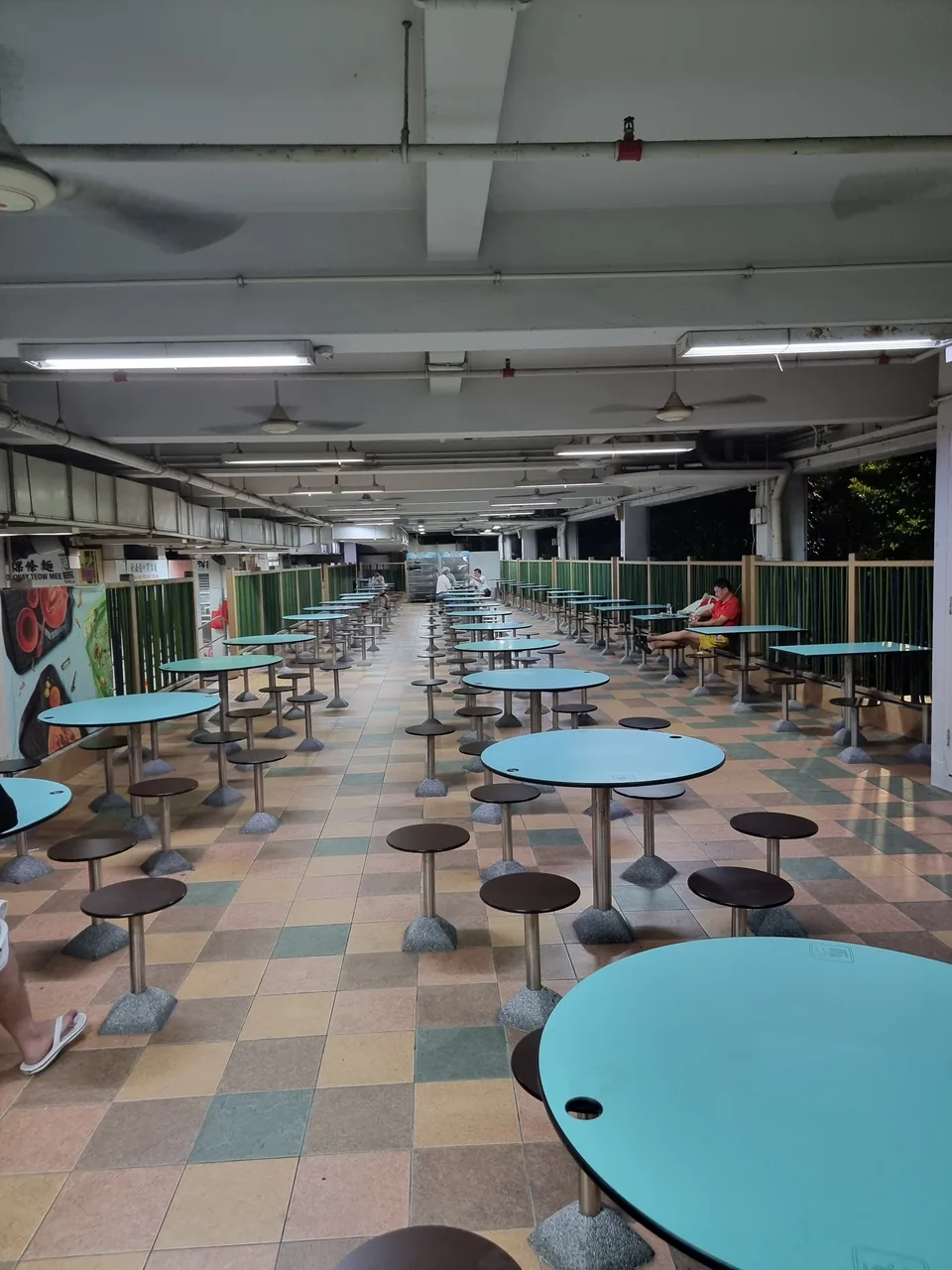
Returning your tray and crockery and clearing your table is a legal requirement, in force at hawker centres since 1 September 2021 and extended to coffee shops and food courts in January 2022. Enforcement escalates from a written warning to a composition sum of S$300 and then to court. Reserving a seat with a packet of tissues, on the other hand, is pure custom and carries no legal weight at all.
The tray rule is the one visitors most often break by accident, because in many countries leaving a tray on the table is the correct behaviour and clearing it yourself would be taking work away from staff. Here the expectation is reversed. When you finish, you take the tray, the crockery, the cutlery and any rubbish to a return point, which is usually a rack near an entrance or along the edge of the centre, split between halal and non-halal so that utensils are washed separately. What you are not expected to do is wipe the table, and the authorities have said as much explicitly. Cleaners still handle the wiping and sanitising.
- First instance: a written warning.
- Second instance: a composition sum of S$300.
- After that: the matter can proceed to court.
| Point | Detail |
|---|---|
| In force since | 1 September 2021 at hawker centres, January 2022 at coffee shops and food courts |
| What is required | Return the tray and crockery, and clear your table of rubbish |
| What is not required | Wiping the table down. Authorities have confirmed this is not expected |
| Not the target of enforcement | Elderly diners, persons with disabilities, children under 12 |
| Choping a seat with tissues | Custom, not law. Widely understood and genuinely respected |
Choping is the other half of hawker centre etiquette, and it works in the opposite direction: no statute, complete social force. A packet of tissues placed on a table means the table is taken, and it will be honoured by everyone who walks past. Visitors tend to distrust it, hovering with a tray while an apparently empty table sits under a tissue packet. Trust the system, and use it yourself, because in a busy centre at lunchtime the correct order of operations is to secure a seat first and queue second. An umbrella, a card or a water bottle does the same job.
A few smaller conventions round it out. Queues form in a single line at each stall, ordering is fast and it helps to know what you want, many stalls prefer cash even where payment apps are accepted, and drinks stalls run separately from food stalls, so someone will come to take a drinks order at your table. Our Singapore hawker food guide covers what to actually order. If you would rather have someone walk you through a centre and order for you the first time, guided hawker food tours are shown below.
13. No tipping: service charge and GST instead
Singapore has no tipping culture, and leaving nothing is completely normal. What appears instead is a service charge of 10% and GST of 9% added to bills at most restaurants and hotels, which pushes the total close to a fifth above the printed menu price. Hawker centres and street stalls add neither.
For visitors from tipping countries this takes some unlearning, and the mistake goes in an expensive direction. Adding 15 or 20% on top of a bill that already carries a service charge and GST is not generous, it is a misunderstanding, and nobody expects it. Staff are not paid on the assumption of tips, service does not degrade if you leave nothing, and no one will follow you out of the restaurant. Rounding up a taxi fare or leaving small change is understood as a friendly gesture, but that is where it ends.
| Where | Service charge | GST | Tip expected |
|---|---|---|---|
| Most restaurants and hotels | 10% | 9% | No |
| Hawker centres and street stalls | None | Price as displayed | No |
| Bars and cafes with table service | Commonly 10% | 9% | No |
The practical skill is reading a menu correctly. Prices at sit-down restaurants are frequently shown with two plus signs after them, which is local shorthand for “before service charge and GST”. A dish listed at 28++ will not cost S$28 when the bill arrives, and across a table of several dishes and drinks the gap is enough to notice. Some places quote inclusive prices instead, and those tend to say so. When you are budgeting a meal, assume the printed number is the starting point unless the menu tells you otherwise.
This is one of the reasons hawker food represents such good value beyond the low headline prices. A hawker plate has nothing added to it at all, so the sign price is what leaves your wallet, while a comparable restaurant dish quietly gains about a fifth on the way to the bill. If you are watching what the trip costs, that difference compounds fast across a week of meals. Our Singapore on a budget guide works through the numbers in more detail.
14. Temples and mosques: what to wear and how to behave
Cover your shoulders and knees, be ready to take your shoes off, and follow whatever the signs and attendants at the door tell you. Some places of worship keep robes at the entrance for visitors who arrive uncovered, and photography should be set aside during prayers.
Singapore’s religious sites are working places of worship rather than monuments, and most of them welcome visitors with genuine warmth as long as the basics are respected. The basics are consistent across traditions: modest dress, shoes off where indicated, quiet voices, and deference to whatever is happening in the prayer space at the time you arrive. If you are not sure whether to enter a particular area, the answer is to wait and watch what everyone else does, or ask an attendant, who will usually be pleased that you did.
| Site | Area | What to expect |
|---|---|---|
| Buddha Tooth Relic Temple | Chinatown | Shoulders and knees covered. Follow signage on which floors visitors may enter |
| Sri Mariamman Temple | Chinatown | Shoes removed at the entrance. Modest dress |
| Sultan Mosque | Kampong Glam | Robes available at the entrance. Visiting hours pause around prayer times |
A few practical notes make the visits easier. Wear shoes you can slip off without sitting down, since you will be doing it repeatedly, and carry a light scarf if you are travelling in hot-weather clothing, because it solves the shoulders question in a second. Mosques generally close to visitors during the five daily prayers and are busiest on Friday afternoons, so plan around that rather than turning up and being turned away. In Hindu temples, walking clockwise around the inner shrine is the convention. Donations are welcome everywhere and nowhere compulsory.
None of this is enforced by fines, and that is worth stating clearly in an article about penalties. It is etiquette, held up by social expectation and by the people who use these buildings every day. The reward for getting it right is access to three of the most interesting buildings in the city, in two of its best neighbourhoods for wandering: our Chinatown guide and Kampong Glam guide cover what surrounds them. Guided culture and heritage walking tours, which handle the etiquette for you and explain what you are looking at, are listed below.
15. Photography: where the line sits
Ordinary street and skyline photography is completely unremarkable here, and nobody will stop you. The lines worth respecting are people, prayers and signs: do not photograph during worship, ask before photographing individuals, and treat a no-photography sign as binding rather than as a suggestion.
Singapore is one of the most photographed cities in Asia and one of the easiest to shoot in. Marina Bay, the shophouse streets, the hawker centres and the parks are all fair game, and locals are used to cameras. Because this article is about rules and penalties, it is worth being clear about what we are not claiming: we are not going to attach a dollar figure to casual photography, because there is no reliable published one and the situations that matter here are governed by courtesy and by posted signage rather than by a number a traveller needs to memorise.
| Situation | What is expected |
|---|---|
| Streets, skyline, architecture, food | Shoot freely. This is normal and unremarkable |
| Inside a temple or mosque during prayers | Put the camera away. Resume afterwards if photography is permitted at all |
| Individual people, especially close up | Ask first. A gesture toward the camera and a nod is enough |
| Hawker stallholders and shopkeepers | Ask, and buy something. Almost everyone says yes |
| Anywhere displaying a no-photography sign | Do not photograph. Treat the sign as the rule |
| Security-sensitive sites and personnel | Do not photograph, and do not test it |
Prayer spaces are the situation most likely to come up, because visitors walk into an active temple or mosque without registering that a service has started. The instinct to raise a phone at a moment of ritual is exactly the instinct to suppress. If a prayer is in progress, stand at the back, keep quiet, and wait. Attendants will often tell you when photography is fine again, and in most places it is, outside of the service itself.
The other category is signage. A number of sites, including certain government, port, military and transport-related facilities, display notices asking that you do not photograph. Whatever the underlying basis in each case, the practical advice is identical: if a sign says no photography, that is the answer, and arguing about the precise legal footing of a sign while standing in front of a security officer is a poor use of a holiday. Everywhere else, shoot as much as you like.
16. Myth versus reality: the claims that keep circulating
Five claims account for most of the misinformation about Singapore, and four of them overstate the danger while one seriously understates it. Here they are side by side, with what is actually true.
The pattern behind most of the exaggeration is simple. A real rule exists, someone attaches a plausible-sounding number to it, the number gets copied, and within a few years the invented figure is repeated more often than the real position. The corrective is not to dismiss every rule as a myth, because some of the most serious ones are entirely real, but to check what is actually being restricted and who is actually being penalised.
| The claim | The reality |
|---|---|
| “You get fined for chewing gum” | False. Chewing is not an offence. Import, sale and manufacture are what is restricted, since 1992, with a therapeutic and nicotine gum exemption since 2004 |
| “There is a set fine for not flushing a public toilet” | The regulation exists, but published amounts differ from source to source and documented enforcement is rare. We decline to quote a figure |
| “You get arrested for jaywalking” | False. It is a fine. First offence up to S$500, with reported on-the-spot sums far lower |
| “Tourists are never caned” | False, and this is the dangerous one. Caning has been imposed on foreign nationals for vandalism, alongside jail terms |
| “Everything is a fine, you can barely breathe” | False. What visitors realistically get caught for is a short list: smoking locations, eating and drinking on public transport, and littering |
The fourth line is the one to sit with, because it is the only one where the popular belief points in the more comfortable direction. People readily accept that Singapore fines heavily for small things, and simultaneously assume that the severe end of the scale is symbolic or reserved for residents. The documented vandalism cases involving Swiss and German nationals show the opposite. If you take only one correction away from this guide, make it that one rather than the gum.
The fifth line is the one that shapes an actual trip. The reputation for total regulation is not supported by what enforcement looks like on the ground, where the realistic risk set is small and easily avoided. Millions of visitors a year come through without any of this touching them. Knowing which five things to watch for is more useful than carrying a vague sense that the whole country is a tripwire, and it leaves you free to enjoy a city that is genuinely relaxed to move around.
17. How enforcement actually works
Most offences are handled by composition, a fixed sum you pay to close the matter without going to court. The usual sequence is a warning first, then a composition sum, then court for repeat or serious cases. Court is where the high statutory maximums and Corrective Work Orders come in, and foreigners go through the same process as everyone else.
Understanding this structure is what makes the rest of the guide readable, because it explains why the numbers you see quoted are so much larger than what anyone actually experiences. Nearly every figure in this article is a statutory maximum, meaning the ceiling a court could impose in the worst version of the offence. The composition sum, the amount an officer actually offers, is typically a fraction of it, and a first-time visitor who cooperates is more likely to receive a verbal correction than either.
- Warning. The most common outcome by a wide margin. An officer tells you to stop, move, or put something away.
- Composition. A fixed sum is offered. Paying it closes the matter without a court appearance or a conviction.
- Court. For repeat offenders and more serious cases. This is where the maximums quoted throughout this guide become relevant, and where a Corrective Work Order can be added on top of a fine.
- Immigration consequences. Depending on the seriousness of the case, removal from the country or a bar on re-entry is possible for a foreign national.
| Stage | What it means for a visitor |
|---|---|
| Warning | No payment, no record. Comply and it ends there |
| Composition | A fixed sum, no court appearance |
| Court | Higher maximums, and a possible Corrective Work Order of up to 12 hours |
| Foreign nationals | Same process as residents. Serious cases can carry immigration consequences |
If an officer does approach you, the useful behaviour is boring: stop what you are doing, be polite, and do not argue the principle. Enforcement officers here are not looking for a confrontation and are generally reasonable with visitors who make an honest mistake, which most visitors do. Arguing that the rule is unfair, or that you did not know, converts a thirty-second interaction into a much longer one and helps nobody. If you are offered a composition sum, ask how and where to pay it.
One last caveat that applies to this entire guide. Penalty schedules, designated areas and the rules themselves are revised over time, sometimes significantly, as the 1 May 2026 changes to psychoactive substance offences show. Everything here reflects what was verified at the time of writing, and no travel article is a legal authority. Before you rely on a specific figure for anything that matters, check the relevant agency’s official guidance for the current rule.
18. The quick version, and what to read next
If you remember five things, remember these: do not smoke outside a marked area, do not eat or drink past the MRT fare gates, do not litter, do not drink in public after 10.30pm, and do not bring a vape. Everything else on the internet’s long list of Singapore fines is either rare, exaggerated or invented.
What is genuinely different about Singapore is not the volume of rules, which is comparable to plenty of other countries, but the consistency with which the ordinary ones are applied and the severity of the exceptional ones. That combination is unfamiliar, and it is what produces the reputation. Once you know where the lines sit, the city is one of the easiest and most relaxed places in Asia to travel around, and the rules recede into the background where they belong.
| Situation | The call |
|---|---|
| You want a cigarette | Look for a marked area. Assume parks, beaches, bus stops and Orchard Road are off limits |
| You are thirsty at the fare gates | Drink now, then tap in. Not after |
| It is 11pm and you want a beer outdoors | Go to a licensed bar or terrace. Public drinking is out until 7am |
| You cannot find a bin | Carry it to an MRT entrance, hawker centre or mall |
| You have a vape in your bag | Leave it at home. There is no version of this that works |
| A monkey or a pigeon is looking at your snack | Put it away. Feeding is an offence from S$5,000 upward |
| You finished eating at a hawker centre | Return the tray and clear the table. Wiping it is not required |
| The bill arrives at a restaurant | Do not tip. The 10% and 9% are already on it |
Print that table, screenshot it, or just read it once and forget it, because in practice these decisions become automatic within a day or two of arriving. The visitors who run into trouble are almost never the ones who did something outrageous, they are the ones who carried a habit across a border without noticing, usually an open bottle or a cigarette. Being aware of the five is enough.
Where to go from here. Our complete Singapore travel guide is the hub for everything else, our Singapore itinerary guide turns the practicalities into an actual plan for your days, and if you are still deciding where to base yourself, our where to stay guide compares the neighbourhoods. Accommodation options for each of those areas are shown below.
🎡Things to Do52
🍜Food4
🏨Where to Stay10
🚇Getting Around4
🧭Travel Tips15
Frequently asked questions
Plan the rest of the trip: our complete Singapore travel guide →