
Singapore With Your Parents: The Best of It Happens After Dark
The three sights this city is best known for all run between 7.45pm and 10pm, and all three are free. The middle of the day tops 32°C, which is when you go indoors, and indoors here means the conservatories and museums people fly in to see.
| Three free evening sights | Garden Rhapsody 7.45pm and 8.45pm, Spectra 8pm and 9pm, Jewel from 7.30pm. No ticket for any of them |
|---|---|
| Midday heat | Monthly average highs run 30.5°C to 32.4°C, and afternoons above 32°C are common |
| Inside the conservatories | Both the Flower DomeMap and Cloud ForestMap are held between 23°C and 25°C |
| Orchid Garden entry | S$3 for anyone aged 60 and over. Visitors get the same rate as residents do |
| Gardens shuttle | S$3 for two rides, from Bayfront MRT to the Flower Dome door |
| Night SafariMap | Opens 6pm, trams start at 7pm. It is the one park that only exists in the evening |
1. Why this city is easy to travel with parents
2. Split the day in two and everything gets easier
3. Three free sights, starting at 7.45pm
4. The conservatories sit at 23°C inside
5. S$3 removes the longest walk at Gardens by the Bay
6. The Night Safari only exists after dark
7. Mandai in daylight: the Zoo and River Wonders
8. The National Orchid Garden charges S$3 at sixty
9. The Botanic Gardens around it are free
10. The cable car, and getting round Sentosa sitting down
11. Seeing Marina Bay without walking the loop
12. The river boats give you forty minutes off your feet
13. Downtown runs indoors from one building to the next
14. Changi and Jewel are worth building into the plan
15. The sights at a glance
16. Eating: start with where you will sit
17. Getting around: trains, and a car when it helps
18. Where to stay
19. Four days, laid out
20. When to come
21. What to bring, and what a day costs
22. In short
1. Why this city is easy to travel with parents
Everything worth seeing sits close together, and the ways of moving between those things are attractions in their own right. Cut the walking here and you do not cut what you see.
The whole island is about seven hundred square kilometres, and the part a visitor actually uses is a good deal smaller than that. Marina Bay, the colonial centre, Chinatown, Little India and Orchard Road all sit inside a few kilometres of each other, linked by a rail network that crosses the lot in under half an hour. You do not need to stack three sights into one day to make the day feel full.
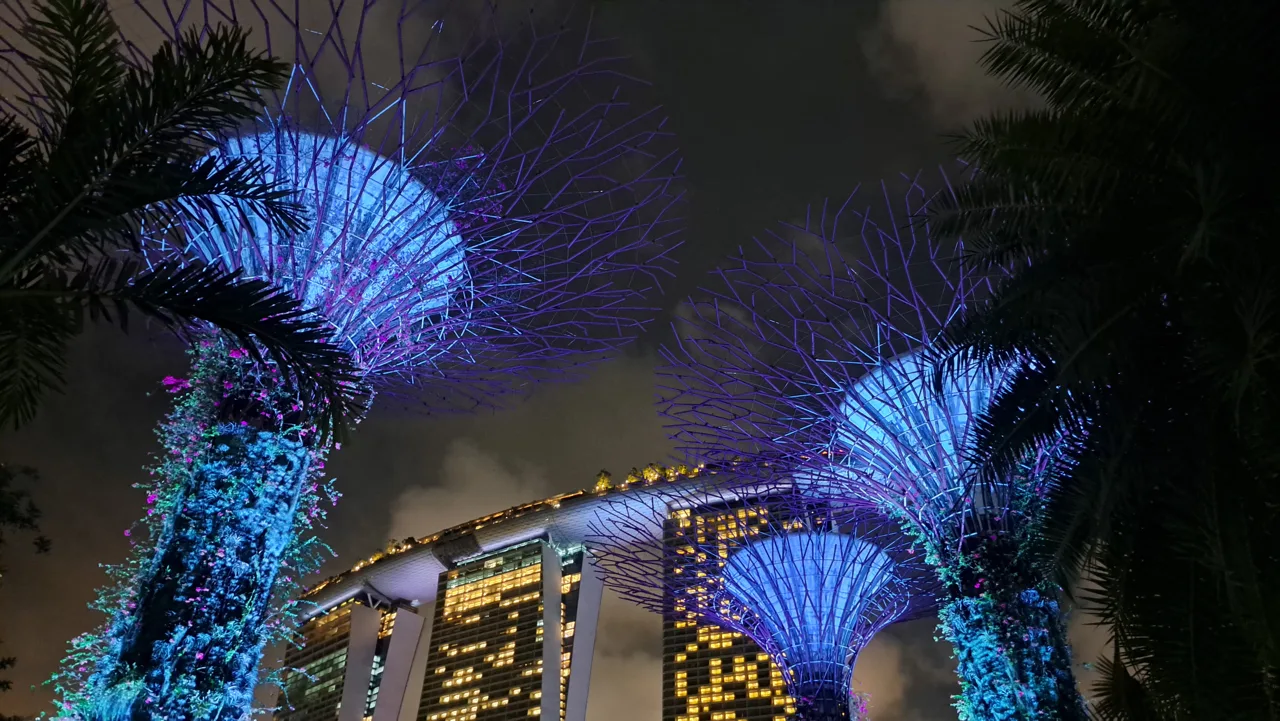
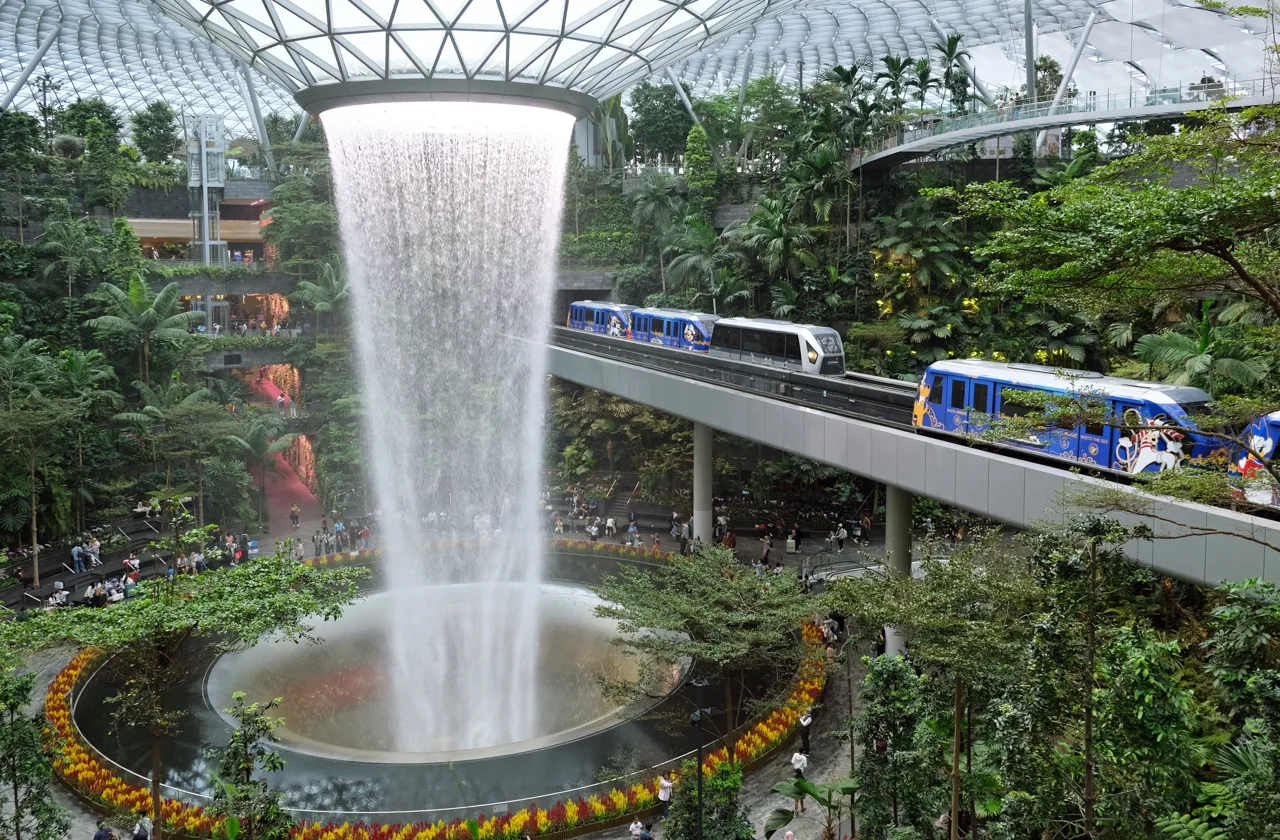
Then the evenings arrive. The three images that show up on every postcard of this city all appear after sunset, and none of them charges admission: the Supertrees lighting up at Gardens by the BayMap, the water show in front of Marina Bay SandsMap, and the indoor waterfall at Jewel. Between 7.30pm and 10pm you can see all three across two evenings without buying a ticket.
The daytime is the part that pushes back. Average monthly highs run from 30.5°C in December to 32.4°C in April, and the national weather service states plainly that afternoons above 32°C are common. That would be a problem in most cities. Here, the places you go to escape it are the ones people fly in for: two cooled conservatories, a national art museum built out of two colonial buildings, an airport with a seven storey waterfall in the middle of it.
The distances are the reason this works
It helps to have a number for it. From Orchard Road to Marina Bay is four stops on the train. From City Hall to Chinatown is two. Even Mandai, which feels like a trip out of town, is about forty minutes by car from the centre. Almost nothing in this city is an expedition, which is why an itinerary here can afford a gap in the middle of it.
What the evening actually gives you
Beyond the temperature, the evening is when this city looks like the pictures. The towers light up, the water reflects them, and the crowds along the bayfront are relaxed rather than rushed. None of that is available at two in the afternoon, when the same promenade is empty because everyone with a choice is indoors.
Put those two facts together and the shape of a day writes itself. One outdoor thing in the morning, indoors through the worst of the heat, back outdoors after six. And because nothing is far from anything, going back to the hotel in between is a real option rather than a wasted hour.
2. Split the day in two and everything gets easier
Use the morning and the evening outside, and give the middle of the day to somewhere with air conditioning. Going back to the hotel in between is not lost time here.
| Hours | What it is like outside | What fits |
|---|---|---|
| 8am to 11am | Still climbing, shade still holds | Botanic Gardens, Orchid Garden, the Zoo, walking a neighbourhood |
| 11am to 4pm | The hottest stretch of the day | Conservatories, museums, Jewel, a long lunch, a rest |
| 4pm to 7pm | Sun dropping, shadows returning | Cable car, the river, back to the hotel |
| 7pm to 10pm | Coolest hours, and the busiest for sights | Garden Rhapsody, Spectra, Night Safari |
The return to the hotel is worth defending. From Marina Bay to a room near City Hall or Orchard is about ten minutes on the train, so the round trip including the walk at each end costs well under an hour. Spend that hour and you get three or four comfortable evening hours back, which is a trade that only works in a city this compact.
What a rest actually buys
Two hours in an air conditioned room in the early afternoon is the difference between finishing the day at nine and finishing it at seven. That is the whole argument for the split day, and it is worth making explicitly because most itineraries treat going back as a failure rather than a tactic.
It also happens that the evening is genuinely the best part of the day here rather than a consolation. Temperatures fall back to around 24°C or 25°C, the waterfront fills up, and the free shows are timed for exactly that window. If your parents prefer an early night, take the first showings at 7.45pm and 8pm and you are back at the hotel before nine with both seen.
3. Three free sights, starting at 7.45pm
Garden Rhapsody, Spectra and the Rain VortexMap show cost nothing and need no booking. All you need is the timings.
| Show | Where | Times | Price |
|---|---|---|---|
| Garden Rhapsody | Supertree GroveMap, Gardens by the Bay | Daily 7.45pm and 8.45pm | Free |
| Spectra | Event Plaza, Marina Bay Sands | Sun to Thu 8pm, 9pm / Fri and Sat 8pm, 9pm, 10pm | Free |
| Rain Vortex light and music | Jewel, Changi AirportMap | Mon to Thu 7.30pm, 8pm, 9pm / Fri to Sun and public holidays add 10pm | Free |
- 6pm conservatoriesCloud Forest then Flower Dome. The hottest hours pass indoors
- 7.30pm Supertree GroveYou come out of the domes facing it. Find a spot on the lawn
- 7.45pm Garden RhapsodyStand or sit, the view works from anywhere in the grove
- 8pm SpectraFifteen minutes across the Helix BridgeMap, or leave it for another night
Garden Rhapsody plays over the Supertree Grove and you watch it from the lawn beneath. There is no need to arrive early for a good spot, because the trees are tall enough that the view works from anywhere in the grove. The 8.45pm showing is the quieter of the two.
Spectra is projected onto water at the Event Plaza and runs fifteen minutes. The steps down to the promenade double as seating, so nobody has to stand through it. It is possible to watch Garden Rhapsody at 7.45pm and cross the Helix Bridge in time for the 8pm Spectra, but that is a brisk fifteen minute walk. If that sounds like too much, take them on separate evenings and lose nothing.
Which order to take them in
If you only have one free evening, take Garden Rhapsody. It is the one that people remember, it needs no queuing, and the grove around it is pleasant to sit in beforehand. Spectra is the better second choice because it is short and has seating, and Jewel fits naturally on a travel day rather than competing with either.
Jewel is inside the airport, which makes it the odd one out and also the easiest to fit in. The waterfall drops forty metres through seven storeys of the building and the evening version adds light and music to it. Jewel is open daily from 10am to 10pm, so it works on an arrival day or a departure day. There is more on where to stand in the Marina Bay at night guide.
4. The conservatories sit at 23°C inside
The Flower Dome and the Cloud Forest are both held between 23°C and 25°C. Walking in from a 32°C afternoon is close to a ten degree drop.
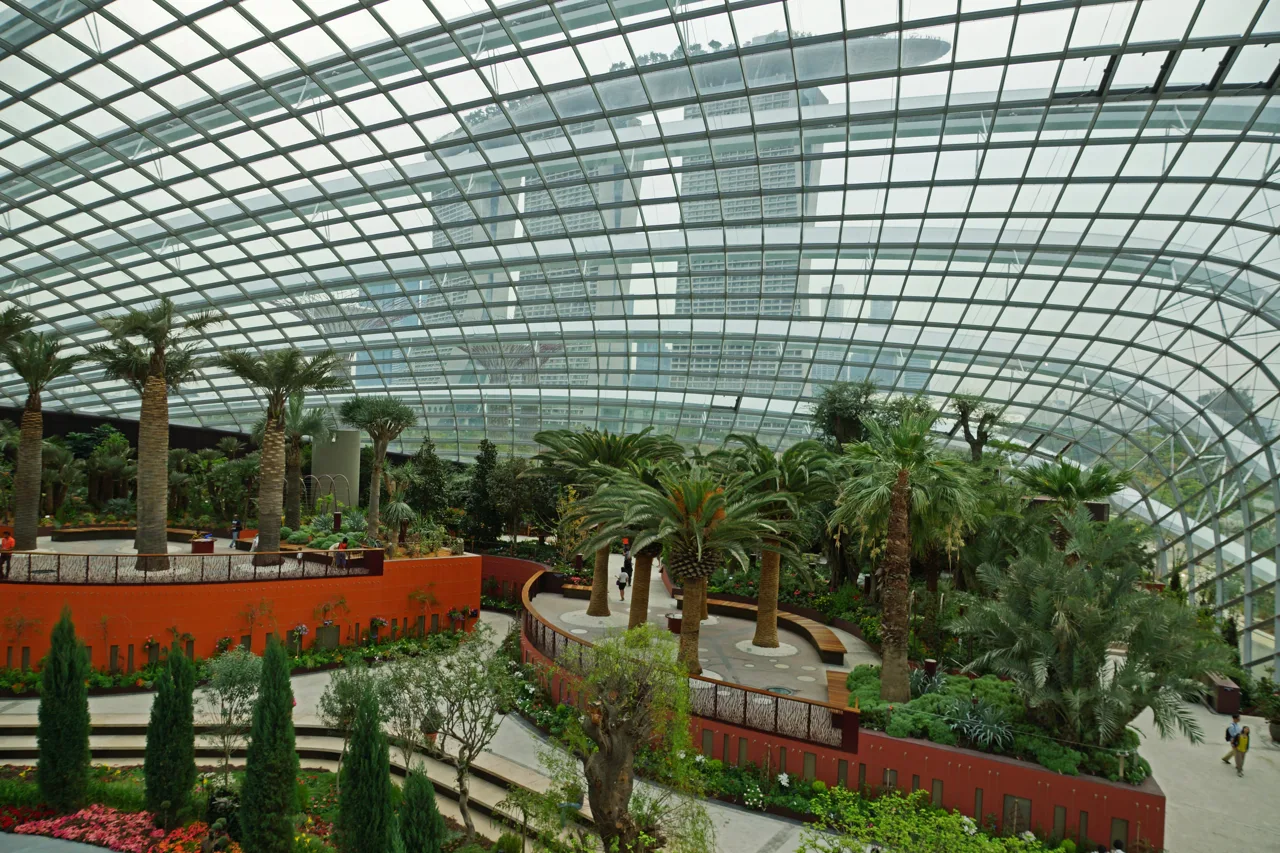
The Flower Dome holds the Guinness record for the largest glass greenhouse and is built from 3,332 glass panels. Inside it is broad and mostly level, arranged as a shallow bowl of planted terraces with seating scattered through them, and the Gardens themselves suggest an hour is enough. It is the easier of the two to walk.
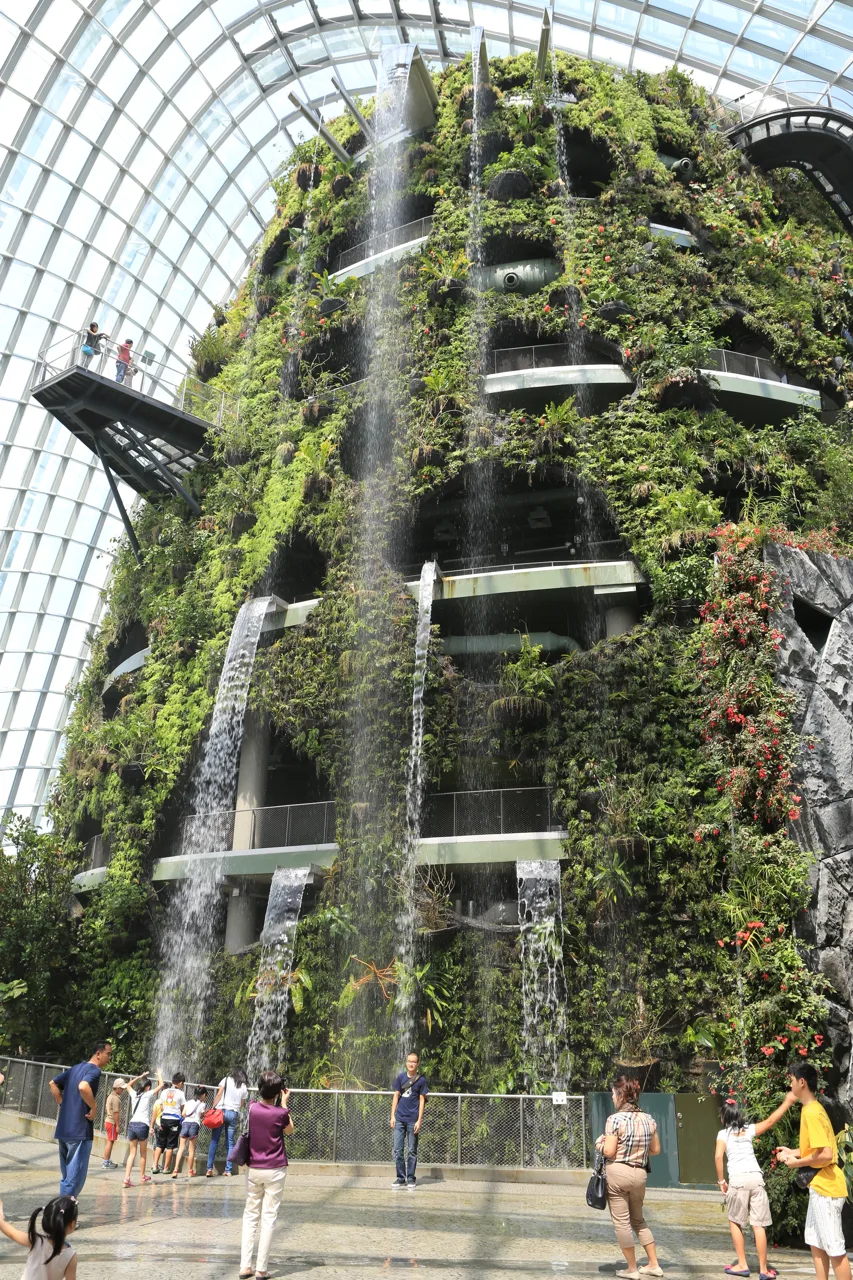
The Cloud Forest is the one with the thirty-five metre indoor waterfall. Humidity is deliberately held between eighty and ninety per cent, so the air feels heavier than in the Flower Dome even though the temperature reads the same. The route is designed to be walked downhill: a lift takes you to the top of the planted mountain and the walkways spiral down from there. Misting runs at 10am, noon, 2pm, 4pm, 6pm and 8pm.
| Ticket | Adult | Child (3 to 12) | Suggested time |
|---|---|---|---|
| Flower Dome and Cloud Forest | S$46 | S$32 | 2 hours |
| Both plus Floral FantasyMap and the shuttle | S$73 | S$51 | 3 hours |
Which of the two to do first
Start with the Cloud Forest if you are doing both. The lift takes you up before you have spent any energy, and the walk down is easier on the legs than a climb would be. The Flower Dome afterwards is flat, so you finish on the gentler of the two rather than starting there and then facing a mountain.
What the humidity actually feels like
The two domes read the same on a thermometer but do not feel the same. Eighty to ninety per cent humidity in the Cloud Forest means glasses fog on the way in and the air sits heavier in the chest. It passes within a minute or two, and there are benches near the entrance for exactly that.
Both open at 9am and close at 9pm, with last admission at 8.30pm for the Flower Dome and 8pm for the Cloud Forest. That late closing is useful: go in around 6pm, see both, and walk straight out to the Supertrees for Garden Rhapsody without a second journey. The full visit order is in the Gardens by the Bay guide.
5. S$3 removes the longest walk at Gardens by the Bay
The stretch from Bayfront MRT to the conservatory doors is the most exposed walking in Marina Bay, and a shuttle covers it for S$3.
The route runs Bayfront MRT to Active Garden to the Flower Dome, roughly every twenty minutes, from 9am with the last departure at 8.45pm. Tickets are S$3 for two rides at the same price for adults and children, bought online or through the Gardens app.
Walked, the same stretch takes over ten minutes across open paving with very little shade, and in the afternoon those ten minutes feel considerably longer than they are. On a day out with parents it is a straightforward three dollars well spent. If a parent uses a wheelchair the shuttle carries them free, although a companion still needs a ticket, and only foldable manual or lightweight foldable electric chairs fit on board.
Where the shuttle stops
Three stops: Bayfront MRT, Active Garden, and the Flower Dome. The last of those puts you at the conservatory doors rather than at the edge of the site, which is the part that matters. Coming back out, the same vehicle returns you to the station, and the second of the two rides on the ticket covers exactly that.
The Gardens are well set up for a long visit in other small ways.
Wheelchairs rent for S$2 a day from the Arrival Gift Shop, the Canopy ticket counter and the Floral Fantasy counter, returnable by 8.30pm. There are bottle filling stations, nursing rooms including one inside the Cloud Forest, free wifi in both domes and at the Supertree Grove, and ticket counters open from 9am to 9pm.
6. The Night Safari only exists after dark
It opens at 6pm and closes at midnight, and the trams and walking trails start at 7pm. There is no daytime version of this park, which is why it takes an evening slot.
More than nine hundred nocturnal animals live here, across an area you cross mainly by tram, with recorded commentary in English. Taking the tram alone is a complete visit: it loops the park with almost no walking involved, which makes it one of the gentler large attractions in Singapore.
The shows
There are fixed animal presentations in an amphitheatre near the entrance, with tiered seating. Arriving ten minutes early is enough to get a seat. A tram ride plus one show makes a complete and undemanding evening on its own.
Four walking trails run separately from the tram route and cover animals the tram does not pass closely. They are worth doing if everyone is up for it and entirely skippable if not. If your parents would rather not walk unlit paths in the dark, ride the tram and spend the rest of the visit at the entrance plaza, where there is seating and a show area.
Last entry is at 11.15pm but arriving that late leaves too little time. Somewhere between 7pm and 8pm is the sensible target, which also means you can eat before you go rather than inside the park. Details are in the Night Safari guide.
7. Mandai in daylight: the Zoo and River Wonders
The Mandai parks divide cleanly into daytime and evening, and trying to do both in one outing is what makes the day hard.
| Park | Hours | Last entry |
|---|---|---|
| Singapore ZooMap | Daily 8.30am to 6pm | 5pm |
| River WondersMap | Daily 9am to 6pm | 5pm |
| Night Safari | Daily 6pm to midnight | 11.15pm |
Singapore Zoo uses moats and planting rather than bars to separate animals from visitors, so sightlines are open and photographs come out without a fence in them. A tram runs inside the park for anyone who would rather not walk the full circuit, and the free ranging orangutans crossing overhead are the thing most people remember.
River Wonders holds the giant pandas and has a high proportion of indoor, air conditioned display halls, which makes it a good fit for the middle of the day. It adjoins the Zoo, so the two can be walked between. Seeing them across a morning and early afternoon, resting at the hotel, and returning in the evening is the version that works.
Getting there and back
Mandai sits in the north of the island, about forty minutes by car from the centre and rather longer by train and bus. That distance is the reason the split-day plan matters: two separate journeys out there in one day is roughly three hours of travelling, which is more than either park itself takes.
Mandai now runs six attractions rather than the four that older guides describe. The one-day pass is S$118 for an adult and S$90 for a child, which starts making sense at three parks. For two parks, separate tickets are cheaper. The Mandai guide and the pass arithmetic both go further.
8. The National Orchid Garden charges S$3 at sixty
Anyone aged sixty or over pays S$3 where an adult pays S$15, and visitors get that rate as well as residents.
| Category | Living in Singapore | Standard |
|---|---|---|
| Seniors, 60 and over | S$1 | S$3 |
| Adults | S$5 | S$15 |
| Students | S$1 | S$3 |
| Children under 12 | Free | Free |
Tickets are sold at the counter at the garden entrance rather than online, and a passport is all that is needed to show age. Two parents therefore come to S$6 between them, which is less than a single adult ticket, and a grandchild under twelve walks in free.
What that buys is one of the largest orchid collections anywhere: over a thousand species and two thousand hybrids, first opened in 1995 and extended in 2021 with a tropical highland section. Inside that extension the Sembcorp Cool House is kept cool enough for montane species, which makes it another cooled room to duck into on a hot morning.
How long it takes
An unhurried circuit is about an hour. The garden is laid out in four sections themed on the seasons, so the colour changes as you go rather than saving everything for one corner. There is no long stretch without something to look at, which is what makes a slow pace comfortable here rather than boring.
The garden opens daily from 8.30am, with last tickets and last entry at 6pm and closing at 7pm. The paths are paved and the operator states the garden is wheelchair accessible. If you are arriving by car or taxi, the Tyersall entrance is the closest drop-off point to the orchid gates.
9. The Botanic Gardens around it are free
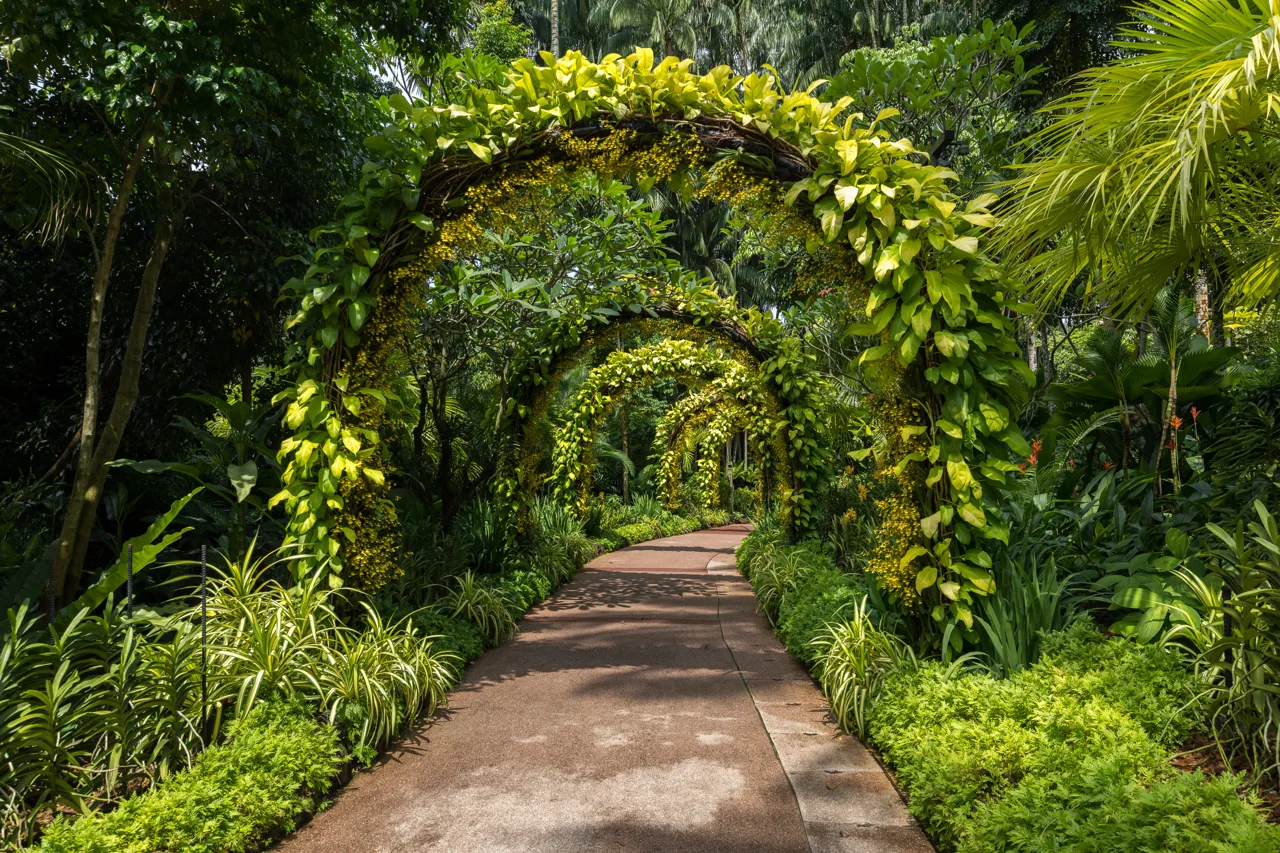
Only the orchid enclosure charges. The Singapore Botanic GardensMap themselves have no admission fee.
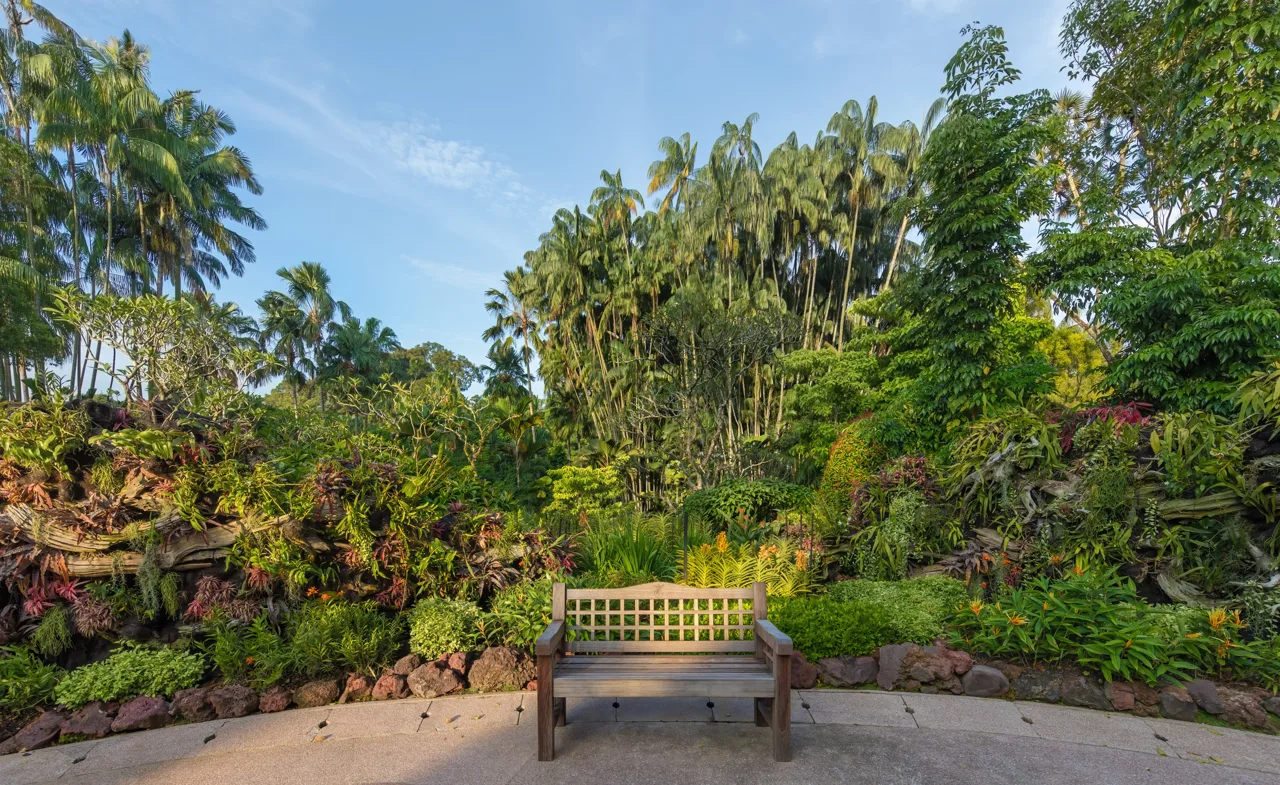
This is a UNESCO World Heritage site sitting inside the city, reachable by train, and it is the reason a morning here works so well. Paths are paved, gradients are gentle, and mature trees shade a large share of the route, which makes the first hours of the day genuinely pleasant rather than something to endure.
Staff are on the information desks daily from 8am to 5.30pm and lend wheelchairs from them. The desks are spread across the site, at the Botany Centre and Tanglin GateMap, at the Gallop visitor centre and elsewhere, and they also handle first aid and lost property. Practically, that means you are never far from somewhere to ask.
There is a lake with an outdoor bandstand where free performances are held on some weekends, and enough benches through the gardens to make a slow circuit realistic. A visit that never buys an orchid ticket at all is a perfectly good morning. More is in the Singapore Botanic Gardens guide.
10. The cable car, and getting round Sentosa sitting down
Cable car cabins load at platform level, so this is a sight you reach without climbing into anything. It is transport and viewpoint at once.
| Ticket | Adult | Child | Hours |
|---|---|---|---|
| Mount Faber Line, round trip | S$33 (from S$31 online) | S$22 | 8.45am to 10pm, last boarding 9.30pm |
| SkyPass, both lines, round trip | S$35 | S$25 | As above |
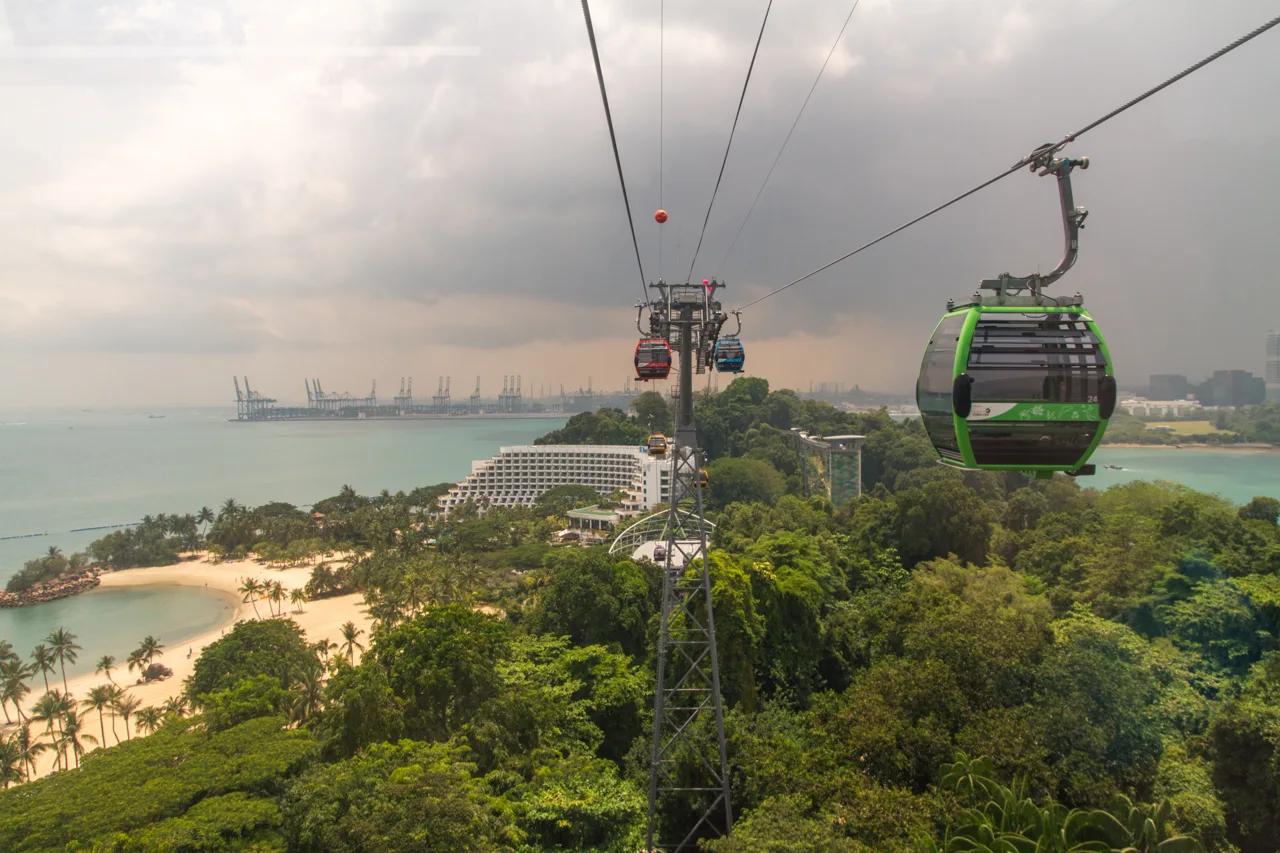
The Mount Faber Line runs from Mount Faber Station through HarbourFrontMap to SentosaMap Station, crossing above the working container port on one side and the beaches on the other. The Sentosa Line, included in the SkyPass, then links Siloso Point, Imbiah Lookout and Sensoryscape within the island.
Once on Sentosa, moving around costs nothing. The Sentosa Express, the island buses and the beach shuttle are all free, and the only fare is the leg in from VivoCityMap at S$4 and up. Arrive by cable car and even that disappears. Driving in is charged instead by time of day, between S$2 and S$6.
Inside the cabin
Cabins hold eight and everyone faces each other, so a family group usually gets one to themselves. One direction on the Mount Faber Line takes about fifteen minutes, all of it seated. Staff meter the boarding queue rather than letting it back up, so long waits on your feet are unusual even at busy times.
Both cable car lines shut for several days of scheduled maintenance once a year, on dates that move, so check the operator before building a day around it. What else is on the island is covered in the Sentosa guide, and the dinner service in the cabins in cable car sky dining.
11. Seeing Marina Bay without walking the loop
The full circuit of this bay is a long walk in the heat, and there are several ways to see it from a seat instead.
The observation deck at Marina Bay Sands sits on level 56 of Hotel Tower 3. Off-peak hours, 9.30am to 4.30pm with last entry at 4pm, cost S$35 for an adult. Peak hours, 5pm to 10pm with last entry at 9.30pm, cost S$39. The lift does the climbing and the deck itself is level.
The free options are better than they sound. The Event Plaza steps face Spectra directly and fill up perhaps half an hour before each showing. Across the water, the railing at Merlion ParkMap looks back at the same skyline, and the promenade between them is flat with benches at intervals. On a clear evening the two viewpoints are close to interchangeable.
Leaving after the show
Everyone stands up at once when Spectra finishes, so staying seated on the steps for a few minutes is easier than joining the wave. There is an hour until the next showing, so there is nothing to hurry for.
If someone in the party wants the classic photograph, the Helix Bridge gives it without any admission at all. It is worth knowing that the whole bayfront is at its most comfortable after seven, when the paving has stopped radiating heat and the breeze comes off the water.
12. The river boats give you forty minutes off your feet
A boat runs through the middle of the old city, and it turns the longest walk downtown into the view itself.
The route works between Clarke QuayMap and Marina Bay, passing the restored godowns along the banks and out under the bridges to where the Merlion and Marina Bay Sands come into sight together. The city’s history is laid out in order along that short stretch, from the trading river to the towers at the mouth of it.
How long it runs
One way is around forty minutes and you stay aboard throughout. Tickets are sold at the jetties as well as online, and departures are frequent enough that waiting is rarely long.
The boats are roofed, so the sun does not fall on you directly, and everyone has a seat. That makes it viable in the middle of the day as well as at dusk, and a late afternoon run coincides with the lights coming on downtown. Jetties at Clarke Quay, Boat QuayMap, Merlion Park and Marina Bay Sands mean you can join or leave it wherever suits.
For a trip with parents this boat does real work. Walking from Clarke Quay to the Merlion is well over half an hour along the riverbank, and the boat converts that same distance into the sightseeing itself. Boarding involves a small step and a little movement underfoot, so wait for the crew to offer a hand rather than hurrying. What is around each end is in the Clarke Quay guide and the Merlion Park guide.
13. Downtown runs indoors from one building to the next
Around City Hall and Marina Bay you can cross large parts of the centre without stepping outside. That makes the weather much less of a factor than it looks on a forecast.
From City Hall station the National Gallery connects under cover. The museum is two colonial buildings, the former City Hall and the former Supreme Court, joined into one, with a roofed atrium between them. Its largest permanent galleries are closed for a long renovation at present, so check what is open in the National Gallery guide before you build an afternoon around it.
The Marina Bay side runs further. From Bayfront station you can walk through the shops beneath Marina Bay Sands to the ArtScience MuseumMap without going outdoors, passing restaurants and washrooms on the way. The ArtScience Museum leans on light and projection rather than long wall texts, which makes it easy to enjoy without reading much.
Orchard Road is the third of these runs, a chain of malls linked below ground so you can cross a kilometre of the city through basements. Seating, lifts and washrooms exist on every floor, so a slow half day there costs nothing in effort. It is also the reliable fallback when a storm arrives earlier than expected.
What these connected stretches really give you is a plan that does not need rewriting. Keep one indoor sight in each day and an afternoon downpour becomes an inconvenience rather than a lost afternoon. More options are in the rainy day guide.
14. Changi and Jewel are worth building into the plan
The waterfall at Jewel drops forty metres through seven storeys, it is free, and it is open daily from 10am to 10pm.
Because it sits inside the airport, you can see it on the way in or the way out. With parents the departure day usually works better: arrive well before check-in, sit by the waterfall in the cool, and go through when you are ready rather than filling time at a gate.
The evening adds light and music to the falling water, at 7.30pm, 8pm and 9pm from Monday to Thursday, with a 10pm showing added from Friday to Sunday and on public holidays. Terraced seating rings the waterfall on several levels, so there is no standing and waiting involved.
The rest of Changi supports a long stay comfortably. It is air conditioned throughout, lifts connect every level, and there are gardens, seating and food across all four terminals. If a flight leaves late at night, this is a far better place to spend the last afternoon than a hotel lobby. See the Changi Airport guide and the transit guide.
15. The sights at a glance
Grouped by the time of day they suit and how much walking they involve.
| Sight | Best time | Indoors? | Price |
|---|---|---|---|
| Garden Rhapsody | 7.45pm, 8.45pm | Outdoors | Free |
| Spectra | From 8pm | Outdoors, seating on the steps | Free |
| Jewel Rain Vortex | Day or evening | Indoors | Free |
| Flower Dome and Cloud Forest | Middle of the day | Indoors, 23 to 25°C | S$46 adult |
| National Orchid GardenMap | Morning | Outdoors with cooled houses | S$3 at 60 and over |
| Singapore Botanic Gardens | Morning | Outdoors | Free |
| Cable car | Late afternoon | In the cabin | From S$33 adult |
| River boat | Any time | Roofed, seated | Ticketed |
| Singapore Zoo | Morning | Outdoors, tram available | Single ticket or pass |
| Night Safari | After 7pm | Outdoors, tram available | Single ticket or pass |
| Marina Bay Sands deck | Day or evening | Lift to an open deck | From S$35 adult |
If you are putting two of these into one day, make one of them an indoor one. That way an afternoon storm changes the order of the day rather than the content of it.
16. Eating: start with where you will sit
Hawker centres do not take bookings, so the practical question is which one has comfortable seating. Choose an indoor centre and midday stops being a problem.
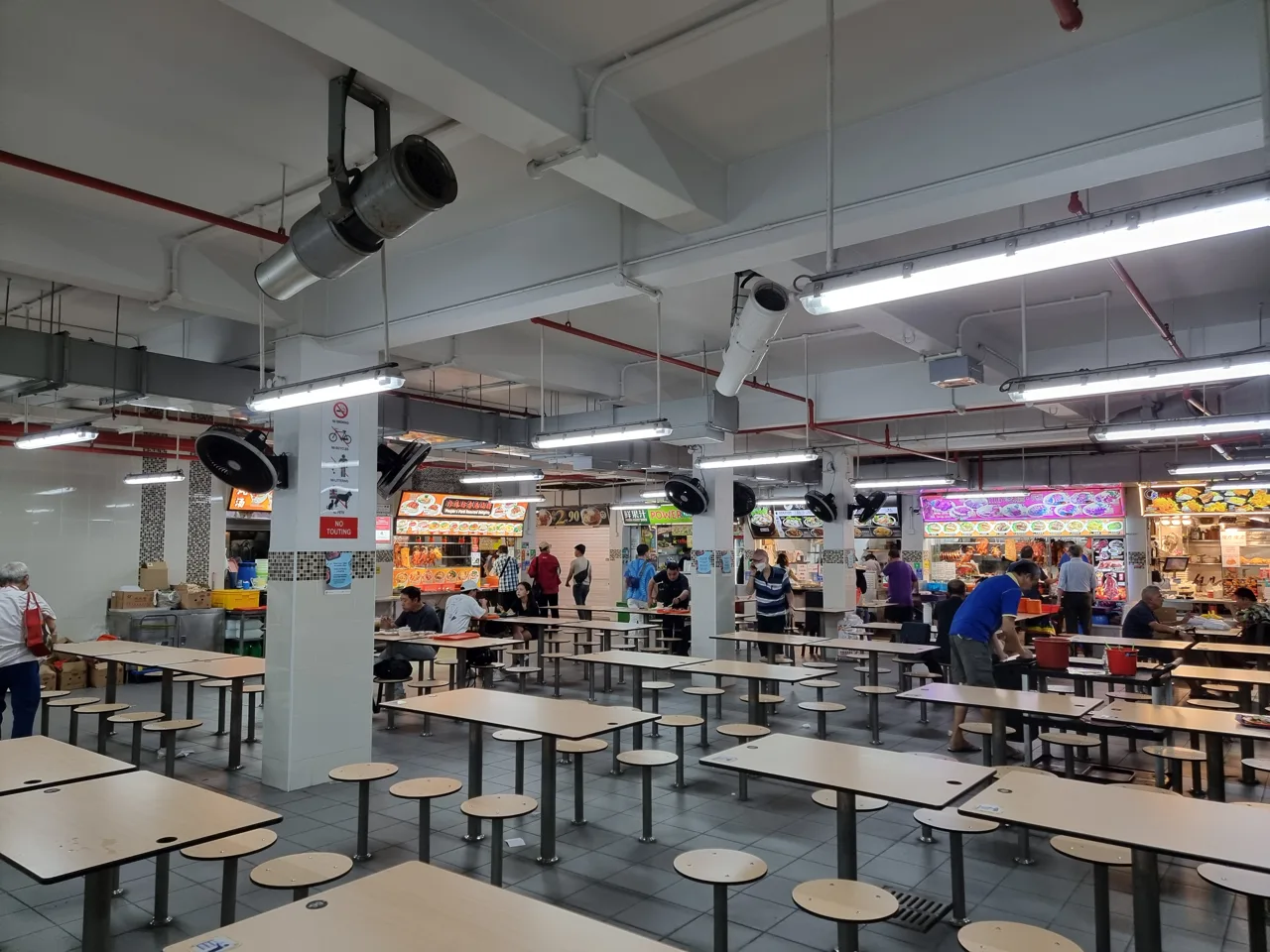
Centres built inside a building, such as People’s Park in Chinatown, have roofs, ceiling fans and shelter from the sun. Open-sided ones are far better in the evening. Seating is usually a fixed stool bolted to the floor, so if a parent prefers a chair with a back, a mall food court gives you the same food in a different room.
Most dishes cost between S$5 and S$8. A great deal of it is rice and soup based, which travels well for anyone eating unfamiliar food, and stallholders are used to being asked to leave out the chilli.
| Dish | What it is | Good when |
|---|---|---|
| Hainanese chicken rice | Poached chicken with rice cooked in the stock. Not spicy | A safe first meal |
| Bak kut teh | Pork ribs simmered in a clear peppery garlic broth | Someone wants soup |
| Wonton noodles | Thin noodles with dumplings, in soup or dry | A smaller appetite |
| Dim sum | Steamed dumplings served by the basket | Sharing several small things |
| Chilli crab | Crab in a sweet and mildly hot sauce, eaten with your hands | One proper sit-down dinner |
When to go
Hawker centres have two rush hours, roughly noon to half past one and six to eight in the evening. Arriving either side of those makes the difference between circling for a table and walking straight to one. The stalls themselves are open far longer than the rush, so nothing is lost by going late.
Paying
Each stall settles separately and a few of the older ones still take cash only, so it is worth carrying small notes. Change comes largely in coins, which is worth remembering before the flight home.
The local method is to claim a table before you queue, and a packet of tissues left on it is understood by everyone as a reservation. Each stall is paid separately, and most now take cards as well as cash. What to eat where is in the hawker centre guide and the chilli crab and seafood guide.
17. Getting around: trains, and a car when it helps
The MRT reaches nearly everything and its stations have lifts. Use a car for luggage and late nights.
Fares are by distance and most journeys within the centre come in around S$2. There is no need to buy a ticket at all: contactless bank cards work straight through the gates, which removes a queue at a machine on the first morning. Priority seats sit by the doors of every carriage and announcements are in English.
Fares and cards
A contactless card tapped in and out is charged the same as a local travel card, and the daily total is capped well below what a taxi would cost for the same journeys. There is no tourist pass that beats it for a normal day of sightseeing.
Ride-hailing apps are the normal way to get a car. A trip within the centre is usually somewhere between S$10 and S$20, and further out to Mandai naturally costs more. With four people travelling together, a car is often the better value once you count the walking at each end of a train journey.
Stations themselves are built for a slow crossing. Every one has lift access between street, concourse and platform, platform gaps are small because the trains run against screen doors, and the larger interchanges have long moving walkways rather than stairs between lines. Signage is in English first, and staff at the passenger service centre in every station will point you the right way.
One habit worth adopting is checking which exit you want before you leave the platform. City Hall, Orchard and Bugis all have a dozen exits spread over a wide area, and coming up the wrong one can add five minutes of street walking in the heat that a look at the map would have avoided.
The one journey worth settling in advance is the airport to the hotel. Arriving with luggage and making a line change is the least comfortable part of the trip, and it happens when everyone is most tired. Routes and fares are in the Singapore transport guide.
18. Where to stay
Book near an interchange station and every day gets shorter. City Hall, Bugis and Orchard all sit where lines meet.
| Area | Suits you if |
|---|---|
| Marina Bay | You want two of the free evening shows within walking distance. Rates are the highest here |
| City Hall and Bugis | You want the fewest changes on the days you travel out to Mandai or Sentosa |
| Orchard | You want covered malls at the door for wet afternoons |
| Chinatown | You want food downstairs and a moderate room rate |
Check for a lift before booking anything in a converted shophouse. These are among the most characterful places to stay in the city and some of them have stairs only, which is worth knowing rather than discovering.
Room sizes
Rooms in the centre run small by international standards. Two single beds plus luggage fills a standard room, so if space matters, looking one station beyond Orchard or Marina Bay buys noticeably more for the same rate.
If the plan involves going back to the hotel in the afternoon, being close to a station matters more than being close to a sight. The walk to and from the train is what actually sets how tired everyone is by evening. Areas are compared in the where to stay guide.
19. Four days, laid out
One large sight a day, evenings kept free. The short distances mean this is a full trip rather than a thin one.
| Day | Morning | Middle of the day | Evening |
|---|---|---|---|
| One | Arrive, settle in | Jewel, or rest at the hotel | Spectra |
| Two | Botanic Gardens and the Orchid Garden | The two conservatories | Garden Rhapsody |
| Three | Singapore Zoo | Back to the hotel | Night Safari |
| Four | Cable car and Sentosa | Lunch downtown | Fly out |
- Morning, Botanic GardensEnter at Tanglin Gate and walk the shaded paths
- 10.30am National Orchid GardenInside the same gardens. S$3 at 60 and over
- After lunch, Marina BayOne train ride away
- Afternoon conservatoriesThe hottest hours spent at 23°C
- 7.45pm Garden RhapsodyYou walk out of the domes and it is in front of you
Day two is the one that flows best. The Botanic Gardens and the Orchid Garden sit together, and after lunch the conservatories are one train ride away. When you come out of the Flower Dome in the evening the Supertrees are already in front of you, so the whole day contains a single real journey.
Day three is the demanding one, because it involves going out to Mandai twice. If that sounds like too much, drop the Zoo and see only River Wonders, or keep the Night Safari and spend the day downtown instead.
Five days lets you add Johor Bahru or the southern islands. Three days works by cutting day three and staying in the centre. Other shapes are in the Singapore itinerary guide.
20. When to come
The temperature barely moves across the year. What changes is how many days it rains.
| Jan | Apr | Jul | Oct | Dec | |
|---|---|---|---|---|---|
| Average high (°C) | 30.6 | 32.4 | 31.4 | 31.8 | 30.5 |
| Average low (°C) | 24.3 | 25.3 | 25.4 | 25.0 | 24.3 |
| Rain days | 13 | 15 | 14 | 15 | 19 |
December and January are the coolest months at a 24-hour mean of 26.8°C, and May the warmest at 28.6°C. That is a spread of under two degrees across the whole year, so you pack the same things whenever you come.
Rainfall is where the months genuinely differ. November and December average nineteen rain days each, February only nine. Even then the rain arrives as passing storms rather than all-day drizzle, so a wet month does not mean a wet holiday.
Crowds rather than weather
The thing worth planning around is not the rain but the calendar. School holidays and the days around Lunar New Year fill hotels and attractions at once. If your dates are flexible, avoiding those two stretches does more for the trip than picking a drier month.
The time of day the rain comes also shifts through the year. From March to May and October to November it builds in the afternoon and early evening; from June to September the squalls tend to come between pre-dawn and morning. In the first of those patterns, the second showing of an evening light show is the safer one to aim for. Month by month detail is in the best time to visit guide.
21. What to bring, and what a day costs
Pack a light layer for the indoors rather than the outdoors. The street is above 32°C and the trains, malls and conservatories sit around 23°C.
You will cross that ten degree gap several times a day, so a cardigan or thin jacket in a bag earns its place. Shoes with some grip are worth having, because paving stays wet for a while after a storm passes through.
Rain gear
A small folding umbrella is enough. Storms arrive hard but the covered and underground stretches are long, so the distance you actually walk in rain is usually short.
Water is easy: bottle filling stations are common and the tap water is drinkable. Bring the medicines anyone takes regularly, and know that pharmacies are widespread in the centre for anything ordinary you run out of.
| Item | Per person per day |
|---|---|
| Three meals | S$20 to S$30 at hawker centres |
| Transport | S$5 to S$8 by train, S$20 to S$40 mixing in cars |
| Admissions | S$0 on a free day, S$35 to S$50 with a conservatory or a deck |
Because the evening highlights cost nothing, admissions take up a smaller share of the budget here than the city’s reputation suggests. Excluding the room, a day runs at around S$40 without paid sights and about S$80 with two of them. Ways to keep it down are in the Singapore on a budget guide.
22. In short
Keep the evenings free, put the middle of the day indoors, and keep the distances short. Those three decisions carry the whole trip.
Start from the evenings. Garden Rhapsody at 7.45pm, Spectra at 8pm, Jewel from 7.30pm: none of them needs a ticket or a booking, so you can decide on the day based on how everyone feels.
The middle of the day has better answers here than in most hot cities, because the cooled conservatories and the museums are the attractions rather than the refuge from them. And going back to the hotel to rest costs so little time that it should be the default rather than a defeat.
Walking is the one thing worth spending money on. The S$3 Gardens shuttle, the cable car, the trams at the Zoo and Night Safari, the free transport within Sentosa and the river boat all buy back distance without taking anything off the itinerary. Add the Orchid Garden at S$3 for over-sixties and this turns out to be a city where the gentler version of a trip is also close to the cheapest.
Travelling with grandchildren as well is covered separately in Singapore with kids. If you are weighing up combined tickets, the attraction pass comparison works through them.
🎡Things to Do51
🍜Food4
🏨Where to Stay10
🚇Getting Around4
🧭Travel Tips16
Frequently asked questions
Four days is comfortable: one large sight per day, with the evenings left open. Three days works if you stay in the centre.
The size of the island is what makes this possible. Almost everywhere a visitor goes sits within about five kilometres of everywhere else, and the MRT crosses that in twenty minutes. That means going back to the hotel in the afternoon takes under an hour, which is the single biggest difference between a relaxed trip here and a tiring one. Five days lets you add Sentosa or a day across to Johor Bahru.
The National Orchid Garden charges S$3 for anyone aged 60 and over, against S$15 for an adult. That rate is in the standard column, so it applies to visitors and not only to residents.
You buy at the ticket counter at the entrance and a passport is enough to show age. Children under twelve are free, so two parents and a grandchild come to S$6 between them. The surrounding Singapore Botanic Gardens has no admission charge at all, which means the fee only applies to the orchid enclosure itself.
Garden Rhapsody at Gardens by the Bay, Spectra at Marina Bay Sands, and the Rain Vortex light show at Jewel ChangiMap Airport.
Garden Rhapsody runs at Supertree Grove daily at 7.45pm and 8.45pm. Spectra lasts fifteen minutes over the water at the Event Plaza, at 8pm and 9pm from Sunday to Thursday, with a 10pm showing added on Friday and Saturday. Jewel runs at 7.30pm, 8pm and 9pm from Monday to Thursday, and adds a 10pm showing from Friday to Sunday and on public holidays.
Go indoors, and note that indoors here is where the headline attractions are.
The Flower Dome and the Cloud Forest are both held between 23°C and 25°C, so on a 32°C afternoon you are stepping into close to a ten degree drop. The Gardens suggest an hour for each, which means the pair covers the hottest stretch after lunch. The National Gallery, the ArtScience Museum and Jewel do the same job, and all three connect to a train station or a mall without going outside.
At Gardens by the Bay the shuttle costs S$3 for two rides and removes the longest exposed stretch in Marina Bay.
It runs from Bayfront MRT through Active Garden to the Flower Dome, every twenty minutes or so, from 9am with the last ride at 8.45pm. Walking that same stretch takes over ten minutes with very little shade. If a parent uses a wheelchair the shuttle is free for them, though a companion still buys a ticket, and wheelchairs themselves rent for S$2 a day at the Arrival Gift Shop, the Canopy ticket counter and the Floral Fantasy counter.
The cabins load at platform level, so there is no climb into them. A Mount Faber Line round trip is S$33 for an adult, or from S$31 booked online.
The line runs Mount Faber Station to HarbourFront to Sentosa Station. The SkyPass, which adds the Sentosa Line on the island itself, is S$35. Service runs from 8.45am to 10pm with last boarding at 9.30pm, so an evening ride is possible. Both lines close for a few days of scheduled maintenance once a year, so it is worth checking the operator before you go.
Once you are on the island it is free. The Sentosa Express, the island buses and the beach shuttle carry no fare.
The only charge is the leg into the island from VivoCity, which starts at S$4. The Express runs from 7am to midnight and stops at VivoCity, Resorts World, Imbiah and Beach. Arrive by cable car instead and that fare does not apply either.
Split them: the Zoo in the morning, Night Safari in the evening. Doing both in one trip out leaves a dead afternoon in between.
Singapore Zoo runs 8.30am to 6pm with last entry at 5pm. River Wonders, which holds the giant pandas, runs 9am to 6pm on the same last entry. Night Safari opens at 6pm and closes at midnight, but its four walking trails and the tram only start at 7pm. The comfortable version is Zoo in the morning, back to the hotel through the heat, then out again for the Night Safari.
Only from three parks upward. The one-day pass is S$118 for an adult and S$90 for a child aged three to twelve.
Mandai now has six attractions rather than the four most guides still list. Fitting all six into a day is a stretch at any age, and if you are realistically seeing two, separate tickets cost less. The full arithmetic is in is the Mandai pass worth it.
The rain here arrives at a predictable time of day, which is what makes it easy to plan around.
From March to May and again from October to November, storms build in the afternoon and early evening. From June to September the squalls tend to come between pre-dawn and morning instead. Rain days peak at nineteen a month in November and December and bottom out at nine in February. Keep one indoor sight in each day and a shower changes nothing.
Next to an interchange station. City Hall, Bugis and Orchard all cut the number of changes you make.
Marina Bay puts two of the three free evening shows within walking distance, at a higher room rate. City Hall sits where the North South and East West lines cross, which matters on the days you go out to Mandai or Sentosa, and it makes the afternoon trip back to the hotel short. Check whether an older converted building has a lift before booking. The area comparison is in the where to stay guide.
Take a car for the first trip with luggage, and leave time for the airport itself.
The MRT reaches Changi but requires a change to get downtown, and that change with bags is the least pleasant part of an arrival day. Jewel sits inside the airport, so the easy version is to see it on the way out rather than the way in: arrive early, sit by the waterfall, and time it against the light show if your flight is late enough. More detail is in the Changi Airport guide.