
Katong & Joo ChiatMap: Peranakan Houses, Laksa and the Colourful East
Singapore’s most colourful heritage neighbourhood — rainbow Peranakan shophouses, the city’s best laksa, old-school bakeries and a slow, seaside-east mood. Here’s exactly what to see, eat and photograph in a relaxed half-day.
- Katong and Joo Chiat are twin neighbourhoods in Singapore’s east and the colourful heart of Peranakan (Straits Chinese) culture — think rainbow-painted shophouses, rich Nyonya food, old-school kopitiams and a relaxed, residential mood.
- The two must-dos are easy: photograph the famous rainbow shophouses of Koon SengMap Road, and eat a bowl of Katong laksa (a coconut-rich curry laksa you eat with a spoon) on East Coast Road.
- While you’re there, soak up the Peranakan heritage — a private museum or two, beadwork and kebaya shops, Nyonya kueh and the legendary Chin Mee ChinMap kaya-toast kopitiam — and hunt down the colourful street-art murals.
- It’s free to wander, beautifully photogenic and a lovely change of pace from downtown — most people spend a half-day here, and it pairs perfectly with nearby East Coast Park.
- Use it with our complete Singapore neighbourhoods guide — it sits out east, a short ride from the centre and the airport.
| Where | Out east, inland from East Coast Park; about 20 min from downtown |
|---|---|
| Getting there | Marine Parade MRT (Thomson-East Coast line), or Eunos/Dakota + a short walk |
| Cost | Free to wander; laksa ~S$6–8; meals ~S$8–15 |
| Time needed | Half a day (a full day with East Coast Park) |
| Don’t miss | Koon Seng Road shophouses, Katong laksa, Chin Mee Chin, the murals |
| Best time | Weekday or early weekend morning (before the Koon Seng crowds by 10am) |
| Vibe | Colourful, heritage, foodie, residential — bring your camera and an appetite |
1. First things first: how to ‘do’ Katong & Joo Chiat
2. The story: Singapore’s Peranakan heart
3. Koon Seng Road & the rainbow shophouses
4. Peranakan culture: museums & shops
5. Katong laksa: the dish you came for
6. More to eat: kopitiams, Nyonya kueh & cafés
7. Street art & murals
8. Temples, Joo Chiat Road & the wider area
9. Shopping & i12 Katong
10. Getting there, timing & tips
11. Where to stay in the east
12. Plan it: routes & what to pair it with
If you want colour, culture and seriously good food away from the skyscrapers, head east to Katong and Joo Chiat. These twin neighbourhoods are the beating heart of Peranakan Singapore — the culture of the Straits Chinese, descendants of early Chinese settlers and local Malay communities, with their own language, dress, crafts and gloriously rich cuisine. It shows up everywhere here: in the rows of pastel shophouses dripping with ceramic flowers and tiles, in the bowls of coconut-laden Katong laksa, in the kaya toast at a beautifully restored old kopitiam, and in the little museums and shops keeping the heritage alive. Once a seaside resort area for wealthy families (the sea has since been pushed back by land reclamation), Katong-Joo Chiat is now Singapore’s first designated ‘Heritage Town’, and it remains wonderfully lived-in and low-key — a place to wander slowly, eat well and take a lot of photos. This friendly guide walks you through all of it: the story of the area, the famous Koon Seng Road shophouses, the Peranakan culture and where to experience it, the food (laksa and beyond), the murals, the temples and shopping, and the practical bits — how to get there, when to go and how long to stay. Use it with our complete Singapore neighbourhoods guide to fit it into your trip.
1. First things first: how to ‘do’ Katong & Joo Chiat
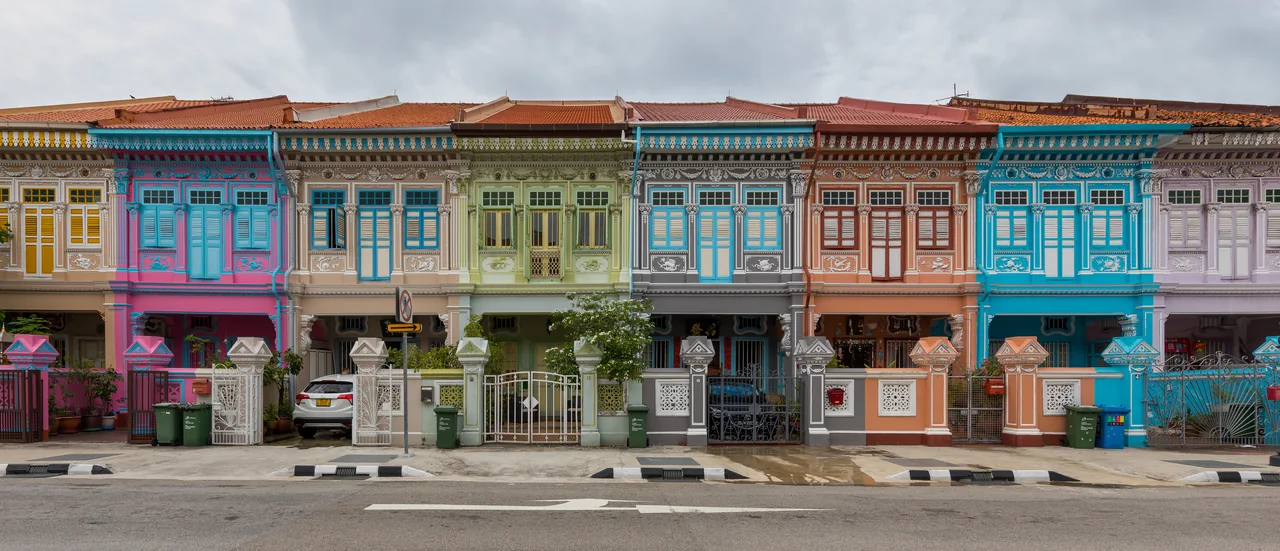
The easy plan: come for a morning, photograph the Koon Seng Road shophouses early, eat your way along East Coast Road, and soak up the Peranakan colour — it’s all within an easy, flat walk.
Katong and Joo Chiat run together as one neighbourhood out in Singapore’s east, and they’re made for slow wandering and eating. From Marine Parade MRT you’re right in the thick of it. Start early with the rainbow shophouses on Koon Seng Road (before the crowds), then drift down Joo Chiat Road and East Coast Road, where the food, the murals, the Peranakan shops and the old kopitiams are all lined up. Have a bowl of Katong laksa, some kaya toast, and a Nyonya cake or two, duck into a Peranakan museum, and keep your camera handy for the pastel facades. If you’d like the stories and the best bites without the guesswork, a guided heritage-and-food walk is a lovely way in. Allow a half-day for the neighbourhood, or a full day if you’ll add East Coast Park.
2. The story: Singapore’s Peranakan heart
Katong-Joo Chiat is the home of Peranakan culture in Singapore — and once a breezy seaside resort for wealthy families, which is why it’s so full of grand, colourful old homes.
The Peranakans — also called the Straits Chinese, or Baba (men) and Nyonya (women) — are descended from early Chinese immigrants who settled in the region and married into local Malay communities, creating a rich blended culture all their own: a distinct cuisine, the beautiful embroidered kebaya dress, intricate beadwork and porcelain, and a love of ornate, colourful homes. In the early 1900s, Katong was a seaside resort area where wealthy Peranakan and Eurasian families built grand villas and terrace houses by the water (land reclamation has since pushed the sea back to East Coast Park). That heritage is why the neighbourhood is so architecturally rich and colourful today. In recognition, Katong-Joo Chiat was named Singapore’s first Heritage Town — and it remains a living, lived-in place rather than a museum piece, which is half its charm. Sin Heng at 439 Joo Chiat Road holds a Bib Gourmand for pepper and garlic bak kut teh served in a claypot. The detail is in our bak kut teh guide.
3. Koon Seng Road & the rainbow shophouses
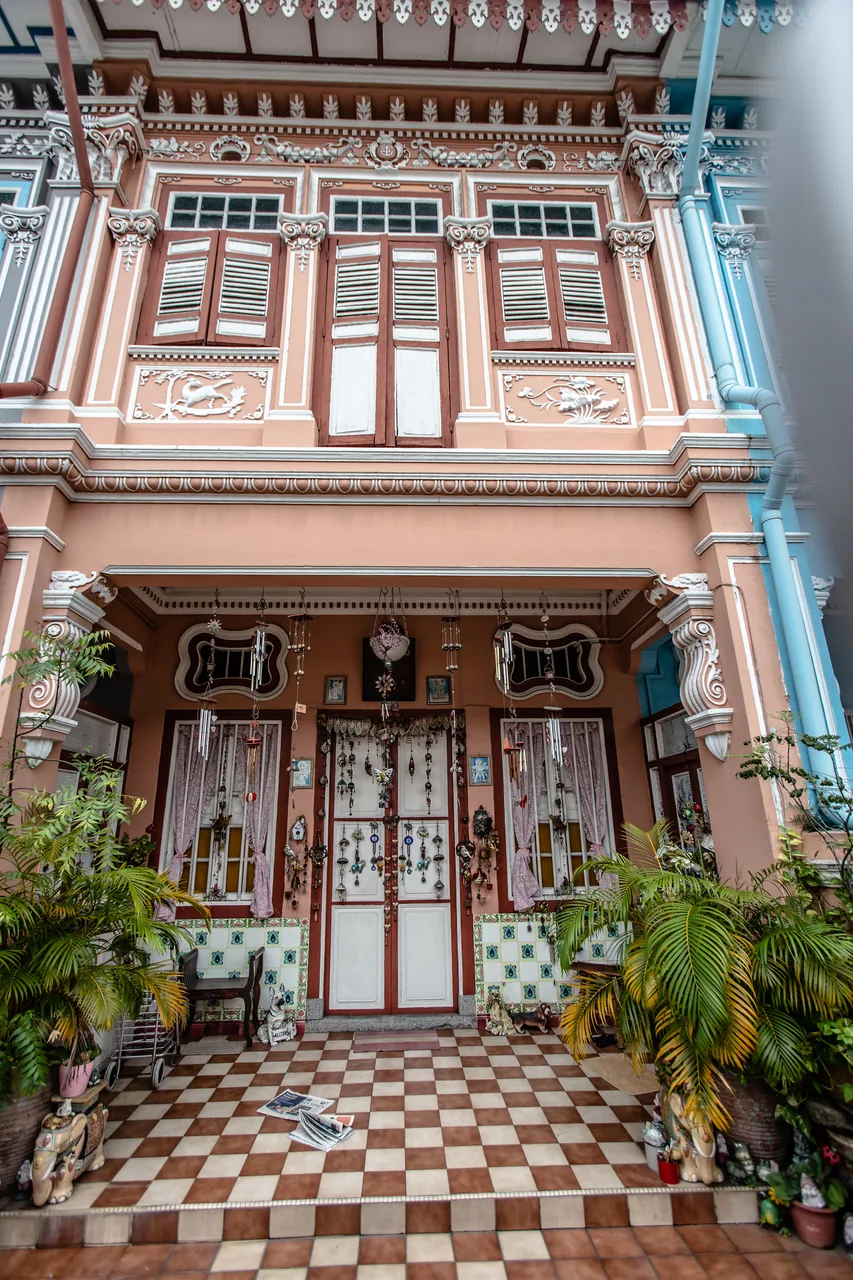
The single most famous sight here is Koon Seng Road — a row of perfectly preserved 1920s Peranakan shophouses in candy pastels, often called Singapore’s prettiest street.
Just off Joo Chiat Road, Koon Seng Road is the photo everyone comes for: two facing rows of 1920s Peranakan terrace houses, painted in pastel pinks, blues, greens and yellows, and covered in ceramic floral motifs, geometric tiles, carved details and Chinese couplets (said to bring good fortune). They’re symmetrical, immaculately kept and genuinely beautiful. It’s completely free and outdoors. The one tip that matters: go early. The street gets busy with photographers and tour groups by about 10am on weekends, so arrive before 8:30–9am for soft morning light and clear shots — and please be respectful, as these are people’s homes. Once you’ve got your photos, the rest of the neighbourhood is yours to wander.
4. Peranakan culture: museums & shops
Beyond the pretty facades, Katong-Joo Chiat lets you step right into Peranakan life through small museums and family-run heritage shops.
For the full story, visit a Peranakan museum. The Katong Antique House is a heritage home packed with antique furniture, porcelain, traditional kebaya and old photographs, with a knowledgeable owner happy to share. The Intan (on Joo Chiat Terrace) is a wonderful private home-museum run by collector Alvin Yapp, crammed with Peranakan treasures — it’s small and personal, so book ahead, especially at weekends. To take a bit of the culture home, browse the heritage shops: Kim Choo Kueh Chang for Nyonya rice dumplings and kueh, and Rumah Bebe for handmade beaded slippers and kebaya. These little places, run by families keeping the crafts alive, are what make Katong feel like a living heritage neighbourhood rather than a film set.
5. Katong laksa: the dish you came for
If you eat one thing here, make it Katong laksa — a rich, coconutty curry laksa with a clever twist: the noodles are cut short so you eat the whole bowl with just a spoon.
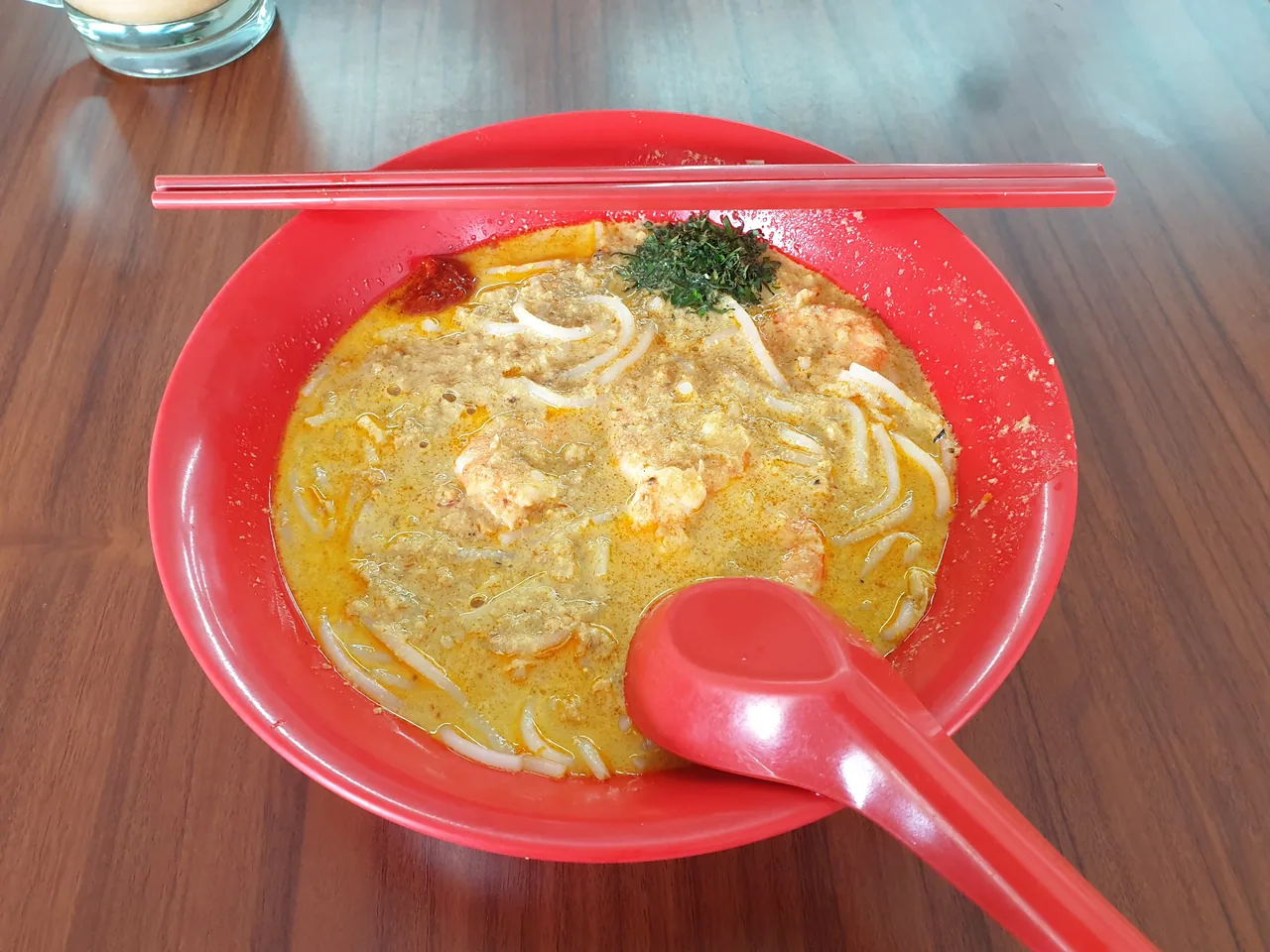
Katong laksa is the neighbourhood’s signature dish and one of Singapore’s great bowls. It’s a coconut-and-prawn curry broth, deeply savoury and a little spicy, with thick rice noodles snipped into short pieces, cockles, prawns and fish cake, topped with fragrant laksa leaf — and you eat it, famously, with a spoon alone. The dish was born here in the 1940s, when a street hawker sold his family’s curry laksa around Katong. Today the most famous spot is 328 Katong LaksaMap on East Coast Road, which is listed in the Michelin Guide and draws the longest queues; a couple of rivals nearby make the friendly ‘laksa war’ part of the fun. A bowl is around S$6–8 — order one (or two) and join the queue. More must-eat dishes are in our food guide.
6. More to eat: kopitiams, Nyonya kueh & cafés
Katong-Joo Chiat is one of Singapore’s best eating neighbourhoods, well beyond the laksa — from a beloved old kopitiam to colourful Nyonya cakes and a strong modern café scene.
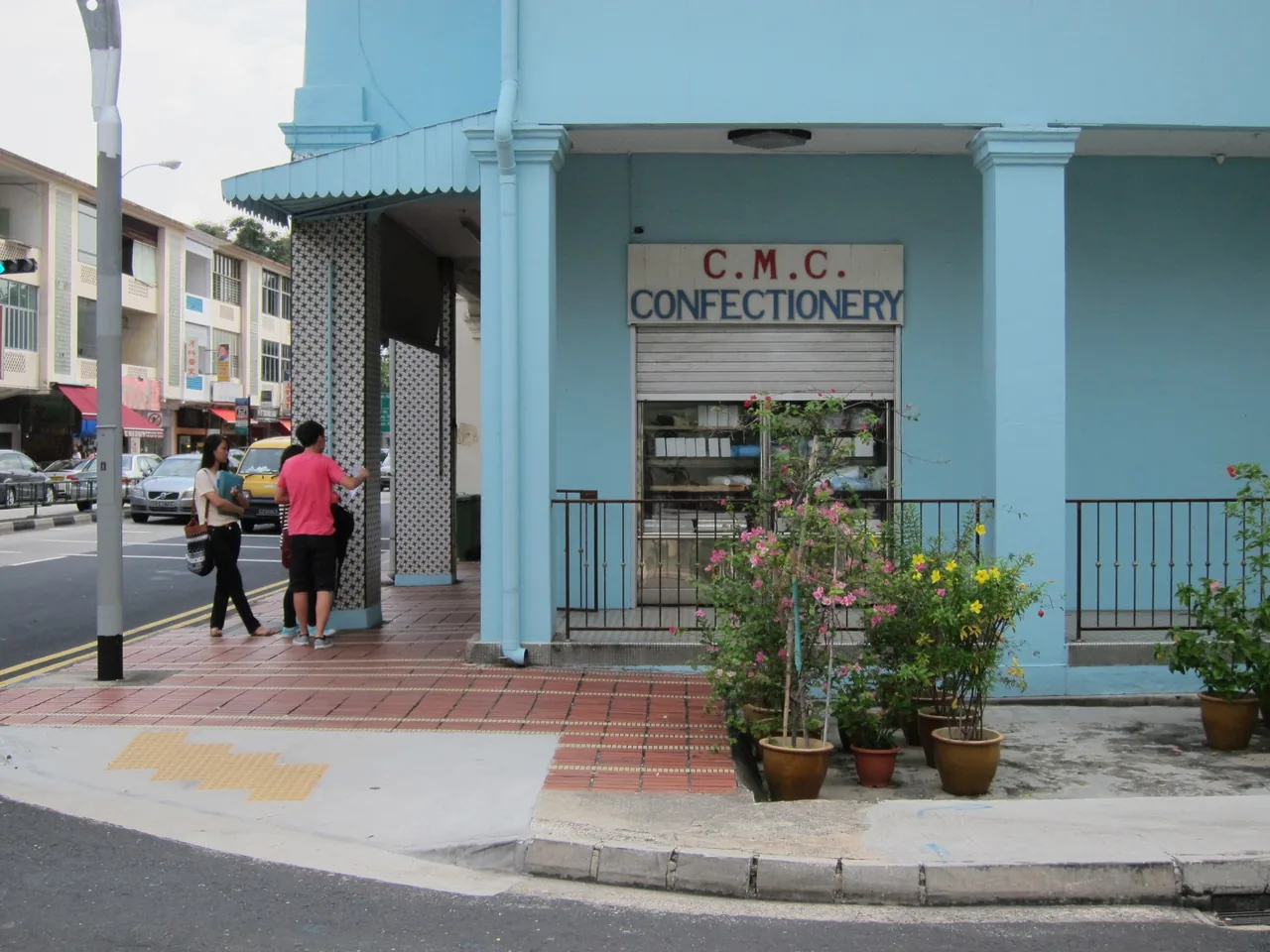
Top of the list is Chin Mee Chin Confectionery, an iconic old-school coffee shop in a beautifully restored heritage building, famous for its kaya toast, soft-boiled eggs, kopi and traditional buns — the quintessential local breakfast. For Peranakan sweets, pick up Nyonya kueh — colourful, often coconut-and-pandan cakes — and rice dumplings from Kim Choo and the old bakeries. There are classic Peranakan restaurants serving ayam buah keluak and other Nyonya dishes, excellent roti prata, and a wave of modern cafés, brunch spots and bars that have moved into the shophouses along Joo Chiat and East Coast Roads. You could eat your way around here for a whole day and not run out — come hungry.
7. Street art & murals
As you wander, look out for the colourful Peranakan-themed murals that decorate the walls — a fun, free photo trail alongside the shophouses.
Katong-Joo Chiat has embraced street art that celebrates its own heritage. Keep an eye out for the Peranakan-inspired murals around the junction of Koon Seng Road and Joo Chiat Road, and the nostalgic Katong laksa and old-school kopitiam murals near Joo Chiat Road, which paint local life and food onto the walls. They make a great addition to your shophouse photos and give a bit of structure to your wander. Combine them with the pastel facades, the ceramic tiles and the colourful shopfronts, and Katong is one of the most rewarding neighbourhoods in Singapore for a relaxed photo walk — especially in the soft light of early morning or late afternoon.
8. Temples, Joo Chiat Road & the wider area
There’s more to the neighbourhood than shophouses and laksa — Joo Chiat Road and the surrounding streets reward a longer wander, with a striking temple and a lived-in local buzz.
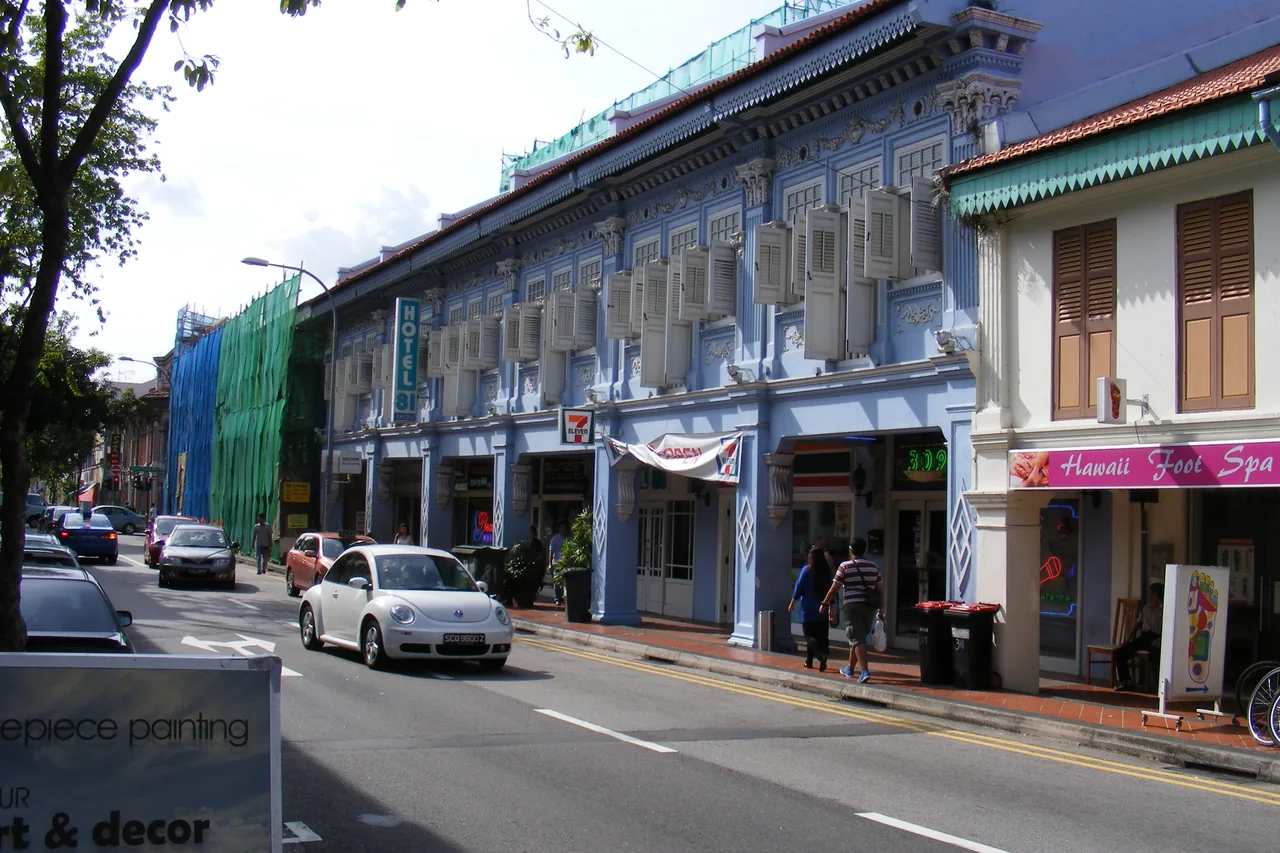
Joo Chiat Road itself is a long, characterful strip of conserved shophouses, eateries, bakeries, bars and shops — busier and more local than the postcard-perfect Koon Seng Road, and full of life. On Ceylon Road you’ll find the colourful Sri Senpaga Vinayagar Temple, a beautiful Hindu temple worth a look. The area has a layered, real-neighbourhood feel: heritage homes next to coffee shops, antique stores next to hip bars. (You may notice Joo Chiat also has a bit of an old nightlife/KTV strip in parts — it’s generally fine, and easy to steer around if you’re just here for the food and architecture.) Take your time and let yourself get a little lost; the side streets are where the texture is.
9. Shopping & i12 Katong
Katong mixes heritage craft shops with a modern mall, so it’s an easy place to browse, buy a souvenir or escape the afternoon heat.
For something to take home, the heritage shops are the best bet: hand-beaded Peranakan slippers and embroidered kebaya at Rumah Bebe, Nyonya kueh and rice dumplings at Kim Choo, and antiques and curios in the conserved shophouses. When the midday heat peaks (roughly 1–4pm), the air-conditioned i12 Katong mall on East Coast Road is a handy escape, with shops, cafés and a supermarket. It’s not a luxury-shopping destination like Orchard Road — the appeal here is the small, characterful, often family-run places — but that’s exactly what makes it feel special. Browse slowly between meals and museums.
10. Getting there, timing & tips
Katong-Joo Chiat is out east but easy to reach, and best done in the morning — here’s all you need to know.
Getting there: the simplest route is the MRT to Marine Parade station on the Thomson-East Coast (brown) line, right in Katong; you can also use Eunos or Dakota MRT and walk, or take a bus or Grab from the centre (about 20 minutes). Best time: a weekday or early weekend morning — get to Koon Seng Road before about 10am to beat the crowds and catch soft light; late afternoon (4–6pm) is also lovely as the heat drops. How long: a half-day, or a full day with East Coast Park. Tips: come hungry, wear comfy shoes and bring a camera; it’s hot and there’s limited shade, so a hat and water help, and the malls and cafés are good cool-down stops. Sort an eSIM so maps and food reviews work as you wander.
| Quick facts | Detail |
|---|---|
| Nearest MRT | Marine Parade (Thomson-East Coast line); Eunos/Dakota + walk |
| Cost to explore | Free (food, museums & shopping only) |
| Best time | Morning (Koon Seng before 10am) or late afternoon |
| Time needed | Half a day (full day with East Coast Park) |
11. Where to stay in the east
Katong-Joo Chiat is a charming, local-feeling base, with boutique stays in heritage shophouses — just remember it’s out east, away from the downtown sights.
If you’d rather wake up somewhere colourful, residential and full of great food than next to the big icons, the east is a lovely choice. You’ll find a handful of boutique hotels in restored shophouses around Joo Chiat and Katong, plus options near East Coast Park, with the airport and Changi/Jewel a quick 15 minutes away — which makes it especially handy for your first or last night. The trade-off is the distance: it’s about 20 minutes by MRT to Marina Bay and the central quarters, so you’ll commute a little for the downtown sights. Many visitors prefer to stay central and visit Katong for a day. Either works — our where to stay in Singapore guide compares the areas and trade-offs.
12. Plan it: routes & what to pair it with
Katong-Joo Chiat is an easy half-day that pairs beautifully with the seaside — here’s how to build a great day out east.
The classic plan: Marine Parade MRT → Koon Seng Road shophouses (early) → the murals and Joo Chiat Road → a Peranakan museum → Katong laksa and kaya toast → a browse of the heritage shops. From there, the obvious pairing is East Coast Park, a short walk or ride away, where you can rent a bike, stroll the beach and have a famous seafood dinner (chilli crab with a sea breeze) to end the day. Because it’s out east, Katong also works brilliantly on your first or last day, with the airport and Changi/Jewel just 15 minutes away. For another heritage half-day, pair the Peranakan colour of Katong with the old-Singapore charm of Tiong Bahru or Chinatown. Plan the rest with our complete neighbourhoods guide and Singapore travel guide.