
Tiong Bahru: Art Deco, Cafés and Singapore’s Coolest Old Estate
Singapore’s most charming old neighbourhood — curving 1930s Art-Deco flats, a beloved old market, indie cafés, street-art murals and a slow, local pace. Here’s exactly what to do, eat and see in a relaxed half-day.
- Tiong Bahru is Singapore’s oldest housing estate turned coolest old neighbourhood — quiet, walkable streets of curving 1930s Art-Deco flats, a much-loved wet market, and a tight little cluster of indie cafés, bakeries and shops.
- The two must-dos are simple: eat breakfast at the Tiong Bahru MarketMap (the chwee kueh here is legendary) and do a slow coffee-and-pastry crawl through the cafés — Tiong Bahru BakeryMap is the famous one.
- While you wander, hunt down the Yip Yew Chong murals that paint old Singapore life onto the walls, peek at the curvy Art-Deco blocks and spiral staircases, and find the quirky bits — a wartime air-raid shelter and a Monkey God temple.
- It’s free to explore, beautifully low-key, and a lovely contrast to the big sights — most people spend 2 hours to half a day here, and it’s just one MRT stop from Chinatown.
- Pair it with the rest of our Singapore neighbourhoods guide — it slots neatly next to Chinatown and the city centre.
| Where | Just south-west of Orchard and the city centre, near Chinatown |
|---|---|
| Getting there | Tiong Bahru MRT (East-West line, green), Exit A or B |
| Cost | Free to wander; hawker breakfast ~S$3–6; coffee ~S$5–7 |
| Time needed | 2 hours to half a day |
| Don’t miss | Breakfast at Tiong Bahru Market, the cafés, the Yip Yew Chong murals |
| Best time | Weekend or weekday morning (the market is liveliest early) |
| Vibe | Quiet, local, hipster-meets-heritage — bring your camera |
1. First things first: how to ‘do’ Tiong Bahru
2. The story: Singapore’s oldest housing estate
3. The Art-Deco architecture (what to look for)
4. Tiong Bahru Market: where breakfast happens
5. The café & brunch scene
6. The murals: old Singapore on the walls
7. Indie shops & bookstores
8. Hidden bits: the air-raid shelter & Monkey God temple
9. Getting there, timing & tips
10. Where to stay (and a note on the area)
11. Plan it: routes & what to pair it with
If you’ve had your fill of skyscrapers and theme parks and want to see how Singaporeans actually live, Tiong Bahru is the place to go. It’s the city’s oldest public housing estate — a quiet grid of curving, cream-coloured 1930s Art-Deco apartments — that has quietly become its most charming old neighbourhood, where third-wave cafés and indie shops have moved into the ground floors without scrubbing away the old soul. You’ll still find aunties doing their morning shopping at the wet market, kopi being poured in old coffee shops, and a Monkey God temple tucked between the flats; and right alongside them, a famous bakery with a cult croissant, a record shop, a florist and walls painted with scenes of old Singapore. It’s the kind of place you don’t ‘see’ so much as ‘spend time in’ — a slow breakfast, a coffee, a wander, a few good photos. This friendly guide walks you through all of it: the story of the neighbourhood, the lovely Art-Deco architecture, the famous market and its breakfast, the best cafés, the street-art murals, the indie shops, the hidden wartime and temple history, and the practical bits — how to get there, when to go and how long to stay. Use it with our complete Singapore neighbourhoods guide to fit Tiong Bahru into your trip.
1. First things first: how to ‘do’ Tiong Bahru
The easy plan: come in the morning, have breakfast at the market, then wander the café streets and hunt for murals — that’s Tiong Bahru, and it’s all within a few quiet blocks.
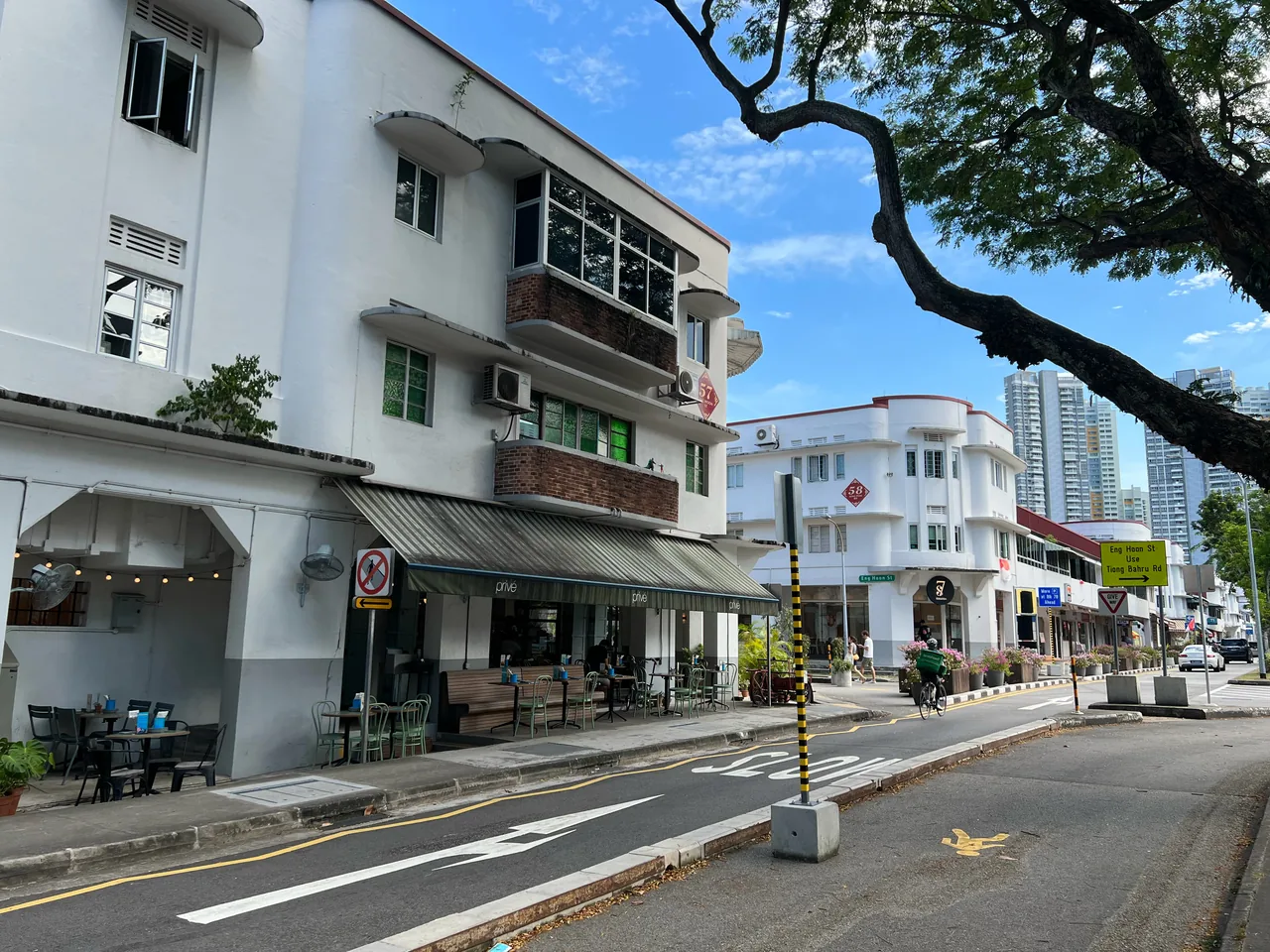
Don’t overthink this one. Tiong Bahru isn’t a place with a big ticketed sight; it’s a place to spend a relaxed morning. From Tiong Bahru MRT it’s a 5-minute walk to the heart of the estate. Start with breakfast at the Tiong Bahru Market, then drift through the little grid of streets between Seng Poh Road, Yong Siak Street and Eng Hoon Street, where you’ll find the cafés, the indie shops and the murals all mixed in among the old Art-Deco flats. Stop for a coffee and a pastry, look up at the curvy buildings, snap a few photos, and let yourself slow right down. If you’d rather have someone show you the stories and the best food, a short guided walk is a great way in. Allow two hours if you’re brisk, or a lazy half-day if you want to linger. The boneless chicken rice upstairs in the market has held its Bib Gourmand in every edition of the guide; the detail is in our Hainanese chicken rice guide.
2. The story: Singapore’s oldest housing estate
Tiong Bahru was Singapore’s first proper public housing, built in the 1930s — and that’s exactly why it looks so different from the rest of the city.
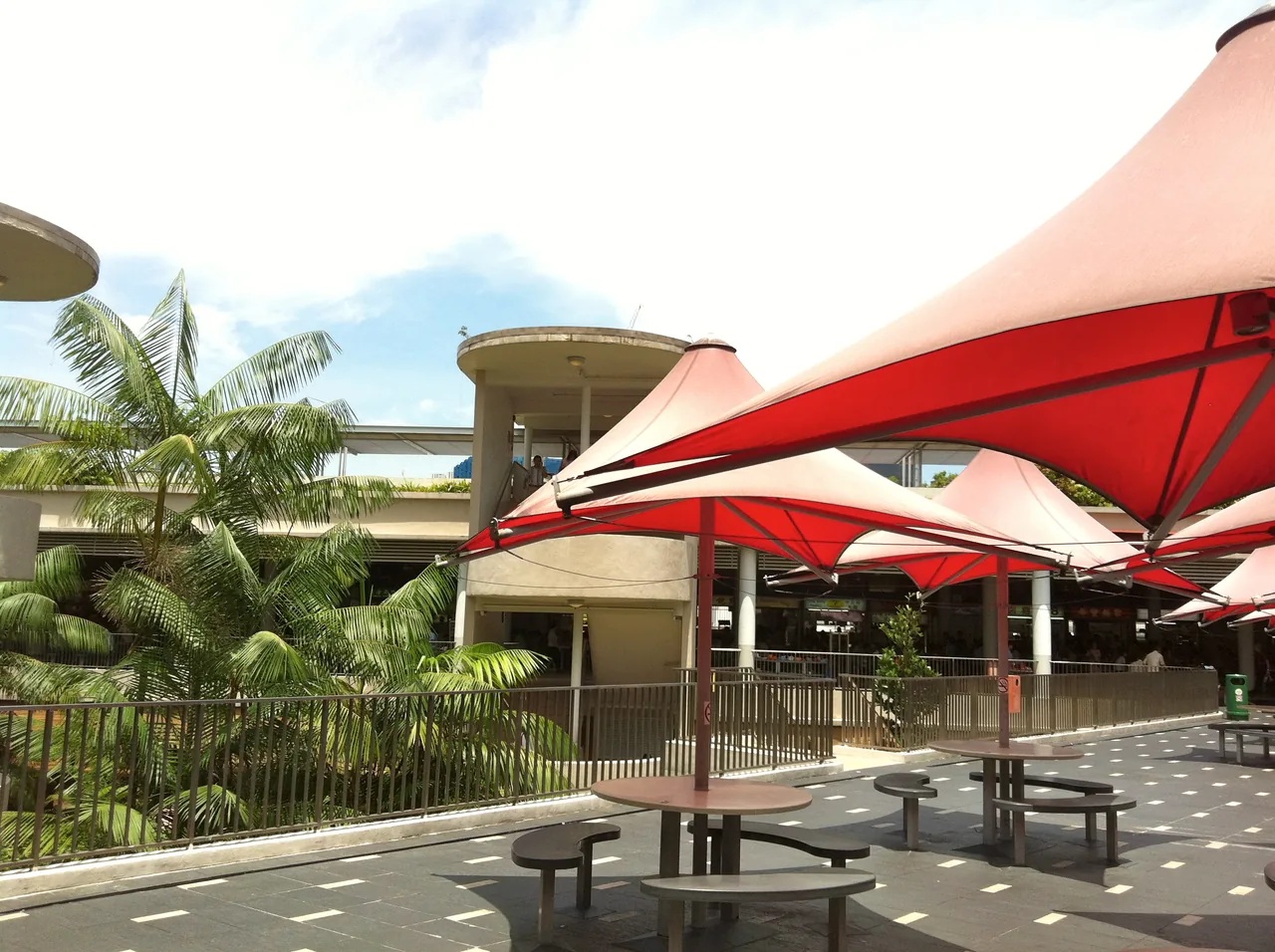
Back in the 1930s, the colonial-era Singapore Improvement Trust built this estate to rehouse people from the crowded city centre, and they did it in the style of the day: Streamline Moderne, a late, curvy form of Art Deco, with rounded corners, flat roofs, ‘horseshoe’ blocks and those lovely spiral staircases. The name is a quirky mix of two languages — tiong (Hokkien for ‘cemetery’, because the area once held graves) and bahru (Malay for ‘new’) — so it literally means ‘new cemetery’. Don’t let that put you off; today it’s one of the liveliest-yet-calmest corners of the city. Because the whole estate is conserved, it has kept its low-rise, human scale while the rest of Singapore grew upward — which is why a morning here feels like stepping back a few decades. The old air-raid shelter tells another layer of the story.
3. The Art-Deco architecture (what to look for)
Tiong Bahru’s biggest ‘sight’ is the neighbourhood itself — so as you wander, look up and notice the lovely 1930s details.
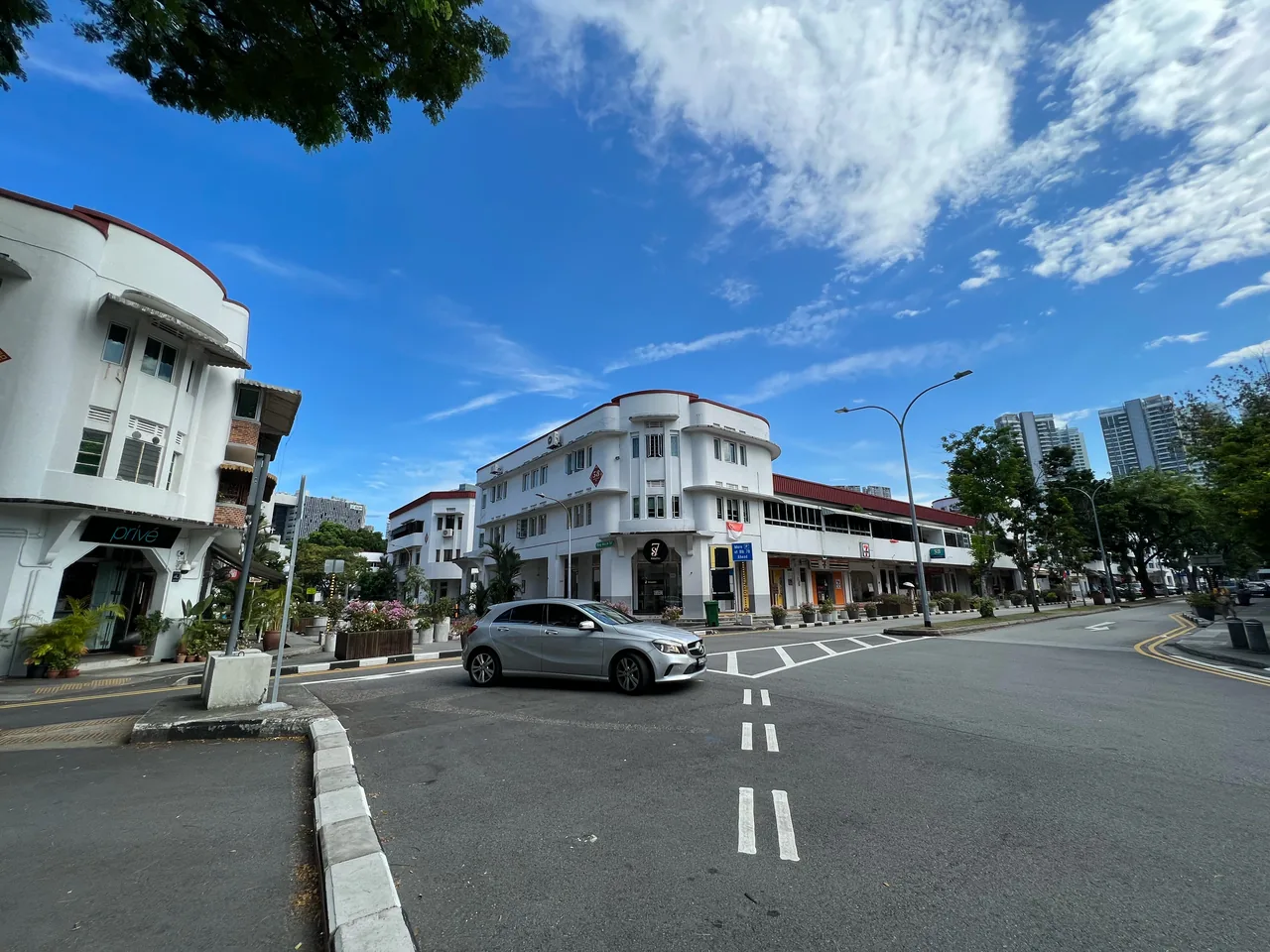
You don’t need to be an architecture buff to enjoy this. Just keep an eye out for the signatures of Streamline Moderne: the rounded, curving corners of the apartment blocks (they look a bit like the prow of a ship), the flat roofs and horizontal ‘racing stripes’, the spiral staircases spiralling up the outsides, and the famous ‘horseshoe’ block (Block 78) that curves right around. The buildings are painted in soft creams and pastels, with old-style shutters and five-foot-ways below. It’s all low-rise and walkable, and it photographs beautifully — especially in the soft morning light. Half the fun is simply strolling, coffee in hand, and spotting the details that make this estate a one-of-a-kind survivor in a city of skyscrapers.
4. Tiong Bahru Market: where breakfast happens
Start your visit here. Tiong Bahru Market is a wet market downstairs and a brilliant hawker centre upstairs — and the breakfast is the whole point.
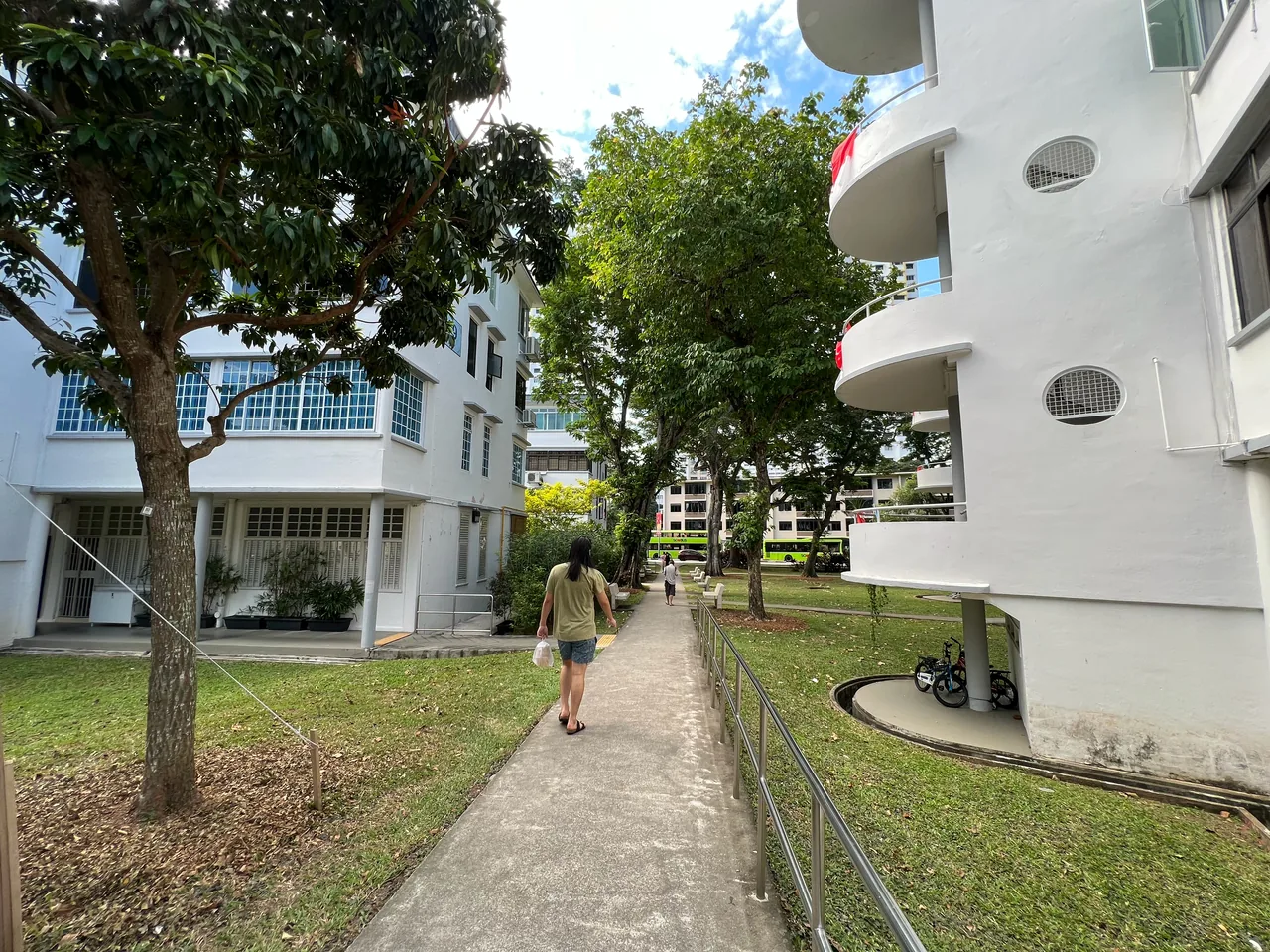
The Tiong Bahru Market & Food Centre is the heart of the neighbourhood. The ground floor is a traditional wet market (fresh produce, fish, flowers — busiest on weekend mornings), and upstairs is a much-loved hawker centre serving some of the best old-school breakfast in Singapore. The local hero is chwee kueh — soft steamed rice cakes topped with sweet-savoury preserved radish and chilli — which a couple of stalls here do better than almost anywhere else. Add lor mee (thick noodle soup), hokkien mee, fishball noodles and a strong kopi, and you’ve got a proper local breakfast for just a few dollars. Order at the stall, grab any seat, and go early — the food stalls are at their best in the morning. Our hawker food guide has the full what-to-order list.
5. The café & brunch scene
After the market, slow right down with a coffee — Tiong Bahru is one of Singapore’s original café neighbourhoods, and it does it beautifully.
This is where Tiong Bahru earned its ‘hipster’ tag, in the nicest way. The original Tiong Bahru Bakery is the famous one — come for its cult croissants and the buttery, caramelised kouign-amann — and it’s joined by a tight cluster of independent cafés and brunch spots around Yong Siak Street and Eng Hoon Street, pouring proper third-wave coffee in airy, design-led shopfronts. It’s the perfect place to sit with a flat white and a pastry, watch the quiet street go by, and do nothing in particular for an hour. Prices are higher than the hawker centre (coffee around S$5–7), but the atmosphere is half the reason to come. Mix the two — a cheap hawker breakfast and a fancy coffee — for the full Tiong Bahru morning.
6. The murals: old Singapore on the walls
As you wander, look out for three lovely wall murals that paint scenes of old Tiong Bahru life — they’re free, outdoors and make a fun little photo trail.
Local artist Yip Yew Chong grew up around here, and his detailed, nostalgic murals capture the neighbourhood as it was a few decades ago. The three to find, all within a short walk of each other, are ‘Bird Singing Corner’ (on Tiong Poh Road — old men gathering with their songbirds, a real Tiong Bahru tradition), ‘Pasar / Wet Market’ (near the market on Seng Poh Road) and ‘Home’ (on Eng Watt Street — a cross-section of an old flat). They’re full of tiny, affectionate details, and spotting them is a great way to give your wander a bit of structure. Just keep looking up as you explore the streets around the market — they’re hard to miss once you know they’re there.
7. Indie shops & bookstores
Tiong Bahru’s ground-floor shops are part of the charm — small, independent and worth a browse between coffees.
The little streets, especially Yong Siak Street, have been taken over by independent businesses rather than chains: an indie bookshop, a record store, a florist, design and homeware shops, and the odd boutique and gallery. It’s a relaxed, no-pressure kind of browsing — pop in, have a look, pick up a quirky souvenir or a book, and move on to the next coffee. Even if you don’t buy anything, the shopfronts are part of what gives Tiong Bahru its creative, lived-in feel: this is a neighbourhood where small, personal businesses sit happily among the flats and the old kopitiams. It’s a nice antidote to the giant malls of the rest of the city.
8. Hidden bits: the air-raid shelter & Monkey God temple
For a little extra, Tiong Bahru hides two only-here curiosities: a rare wartime air-raid shelter and a colourful Monkey God temple.
Tucked into the base of Block 78 on Guan Chuan Street is Singapore’s only surviving civilian air-raid shelter from the Second World War — built into the housing block and occasionally opened for guided tours, a sobering little reminder of the neighbourhood’s history (check ahead for access). A few streets away, the Qi Tian Gong (Monkey God) Temple is a small, colourful Taoist temple dedicated to the Monkey King, full of incense and character and well worth a peek. Neither takes long, but together they add a layer of history and local life to your wander, beyond the cafés and the Art Deco. They’re the sort of details that make Tiong Bahru feel like a real place rather than a film set.
9. Getting there, timing & tips
Tiong Bahru is dead easy to reach and best done in the morning — here’s all you need to know.
Getting there: take the MRT to Tiong Bahru station on the East-West (green) line; use Exit A or B and walk about 5 minutes to the market and café streets. It’s one stop from Outram Park (Chinatown) and about 5 minutes from the city centre. Best time: morning, especially a weekend morning, when the market is at its liveliest and the cafés open; it’s quieter (and some shops shut) later in the day. How long: 2 hours to half a day. Tips: wear comfy shoes, bring a camera, come hungry, and don’t try to rush — Tiong Bahru rewards a slow pace. There’s not much shade between blocks, so a hat and water help in the heat. Sort an eSIM so maps and café reviews work as you wander.
| Quick facts | Detail |
|---|---|
| Nearest MRT | Tiong Bahru (East-West line), Exit A/B |
| Cost to explore | Free (food & coffee only) |
| Best time | Weekend or weekday morning |
| Time needed | 2 hours to half a day |
10. Where to stay (and a note on the area)
Tiong Bahru is a quiet, residential neighbourhood, so it’s a lovely local base — but there are fewer hotels here than in the central quarters.
If you want to wake up somewhere calm and genuinely local, with great coffee and breakfast on your doorstep, Tiong Bahru is a charming choice — you’ll find a handful of boutique stays and serviced apartments, and you’re only a short MRT ride from the city centre, Chinatown and Orchard. The trade-off is that it’s mostly a place where people live, so there’s less hotel choice and nightlife than in the central neighbourhoods. Many visitors prefer to stay centrally and visit Tiong Bahru for a morning instead. Either way works — for a full comparison of where to base yourself, including the trade-offs, see our where to stay in Singapore guide.
11. Plan it: routes & what to pair it with
Tiong Bahru is small and central, so it slots easily into a bigger day — here’s how to chain it with the neighbours.
The classic morning: Tiong Bahru MRT → breakfast at the market → coffee and a pastry → the murals and the Art-Deco streets → a browse of the shops. From there, because it’s so central, you can easily roll into the rest of your day: Chinatown is one MRT stop (or a 15-minute walk) away for lunch and temples, the city centre and Orchard are about 5 minutes by train, and Marina Bay is a short ride for the evening. A lovely low-key Singapore day might be: Tiong Bahru breakfast, Chinatown temples and hawker lunch, then the bay and its free light shows after dark. Plan the rest with our complete neighbourhoods guide and Singapore travel guide.