
Little India Singapore: Temples, Banana-Leaf Meals and Markets
Singapore’s most sensory neighbourhood — a riot of colour, incense, garlands and South-Indian food a world away from the polished downtown. What to see, where to eat, the best shopping and how to do it in a day. Tamil as one of the four official languages, and the traces it left in place names, are covered in what language they speak in Singapore.
- Little India is the most vivid, sensory district in Singapore — gold shops, flower-garland stalls, Bollywood music and the smell of spice the moment you step off the MRT, a total contrast to the rest of the polished city.
- The spine is Serangoon Road, lined with sari shops, temples and the ornate Sri VeeramakaliammanMap Temple; the TekkaMap Centre pairs a wet market with some of the city’s best biryani and dosa.
- Shopping is an event here: the chaotic 24-hour MustafaMap Centre sells literally everything, while the Little India Arcade and Serangoon Road trade in textiles, gold, spices and garlands.
- It’s the city’s best-value food, almost all of it free to wander, and at its dazzling best during Deepavali (8 November in 2026), when the streets light up and a night bazaar takes over.
- Give it a half-day to wander and eat — pair it with the rest of our Singapore neighbourhoods guide and the nearby cultural quarters.
| Where | Along Serangoon Road, just north of Bugis and Rochor |
|---|---|
| Getting there | Little India MRT (Downtown & North-East lines) or Rochor MRT |
| Cost | Free to wander; temples free; meals ~S$4–10 |
| Time needed | Half a day to wander, eat and shop |
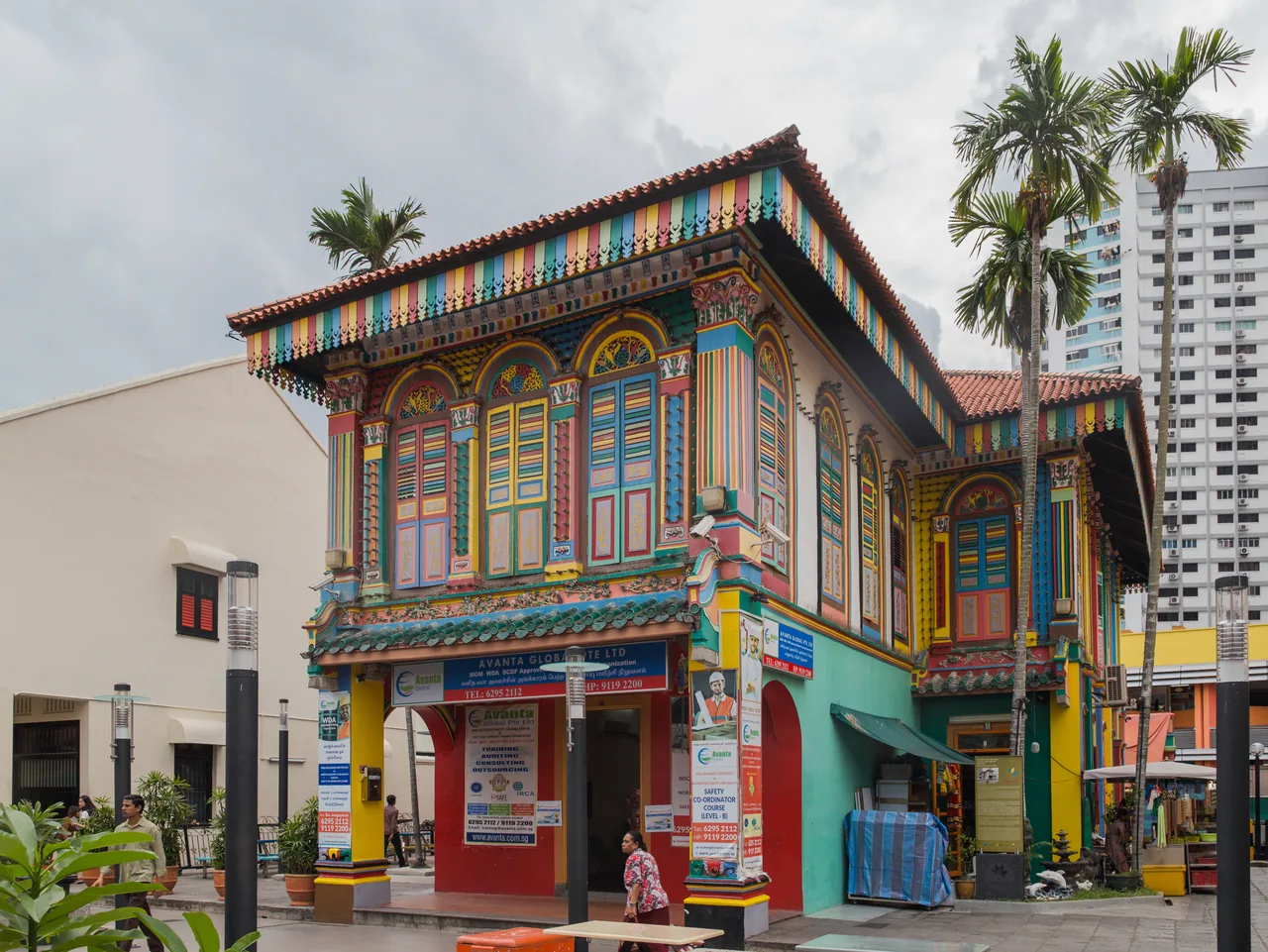
| Don’t miss | Sri Veeramakaliamman Temple, Tekka Centre, Mustafa Centre, Tan Teng NiahMap house |
| Best time | Morning or late afternoon; Deepavali for the light-up |
| Good to know | Dress modestly for temples; Mustafa is open 24 hours |
1. Little India orientation: how to do it
2. The story of Little India
3. Temples & places of worship
4. Serangoon Road & the street life
5. Tekka Centre: market & food
6. Mustafa Centre & shopping
7. What & where to eat
8. Tan Teng Niah & Instagrammable Little India
9. Indian Heritage Centre & culture
10. Deepavali, Thaipusam & festivals
11. Getting there, timing & etiquette
12. Where to stay in Little India
13. Plan it: routes & what’s nearby
Little India hits you the moment you arrive — the colour, the noise, the marigold garlands and the smell of jasmine and spice — and it feels, wonderfully, like you’ve stepped clear out of orderly Singapore and into a corner of Tamil Nadu. This is the heart of Singapore’s Indian community, built along the old cattle-trading road of Serangoon, and it remains the city’s most sensory, most photogenic and arguably most characterful quarter: a place of grand Hindu temples and a famous 24-hour bazaar, of banana-leaf feasts and S$4 biryani, of gold traders and garland-makers and the last rainbow-coloured Chinese villa in the district. It is also gloriously cheap and almost entirely free to explore. This guide covers all of it: the story of how Little India grew, the temples and mosques and what they mean, the life of Serangoon Road, the Tekka Centre market, the legendary Mustafa Centre, where and what to eat, the Instagram-famous Tan Teng Niah house and street art, the Indian Heritage Centre, how Deepavali transforms the streets, and the practical details — getting there, timing, etiquette and where to stay. Use it with our complete Singapore neighbourhoods guide and our food guide to make the most of a day here.
1. Little India orientation: how to do it
Little India is compact, vivid and made for walking — arrive at Little India or Rochor MRT, follow Serangoon Road, and let the temples, market and bazaar pull you along.
The district runs along Serangoon Road, just north-east of the city centre and Bugis. Step out of Little India MRT and the energy hits immediately: gold shops, garland stalls, the smell of spice and Bollywood music. The main spine is walkable end to end: the Tekka Centre market sits right by the MRT, the Sri Veeramakaliamman Temple is a few minutes up Serangoon Road, the rainbow Tan Teng Niah house is just off it on Kerbau Road, and the giant Mustafa Centre is over on Syed Alwi Road. A simple plan: market and breakfast first, temple and street wandering, lunch on a banana leaf, then shopping at Mustafa and the arcade. Mornings and late afternoons are best; midday can be hot and the crowds peak at weekends. Dress modestly if you’ll enter the temples.
2. The story of Little India
Little India grew up around the cattle and lime trades along Serangoon Road in the 19th century, becoming the heart of Singapore’s Indian community — mostly Tamils from southern India.
In colonial Singapore, this low-lying area along Serangoon Road drew cattle yards, brick kilns and lime pits, and with them Indian labourers, cattle traders and merchants, many of them Tamil. Over time a distinctly Indian district took shape — temples, provision shops, eateries and the trades that served the community — and it has kept that identity ever since, even as Singapore modernised around it. The street names (Buffalo Road, Kerbau or ‘buffalo’ Road) still recall the cattle days. Today Little India remains a living, working neighbourhood as much as a visitor sight: it’s where Singapore’s Indian community shops, worships and gathers, especially on Sundays. That authenticity — it was never built for tourists — is exactly what makes it so vivid. The Indian Heritage Centre tells the full story.
3. Temples & places of worship
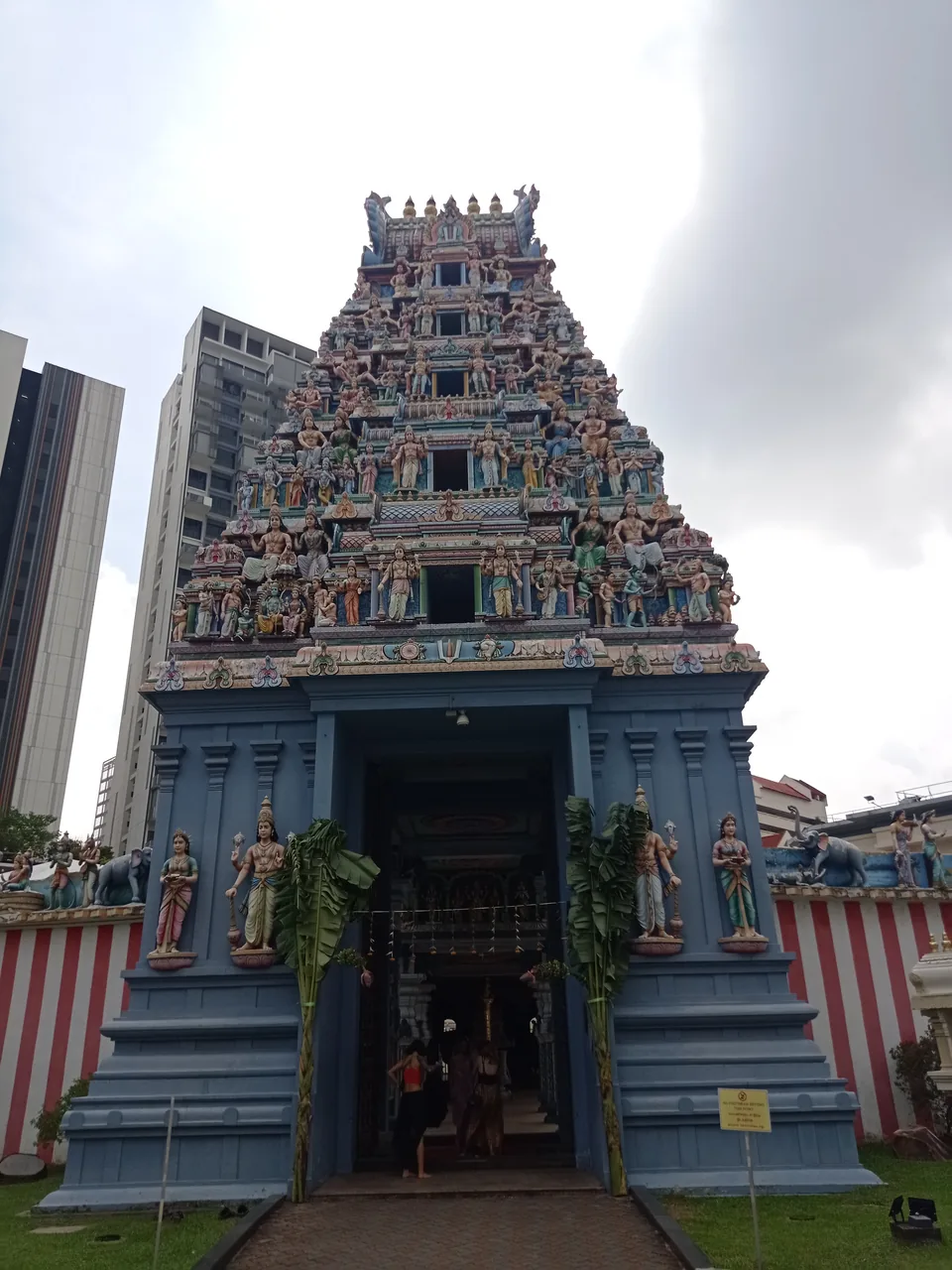
Little India’s temples are among the most colourful and welcoming in Singapore — vivid, active places of worship, all free to enter.
The showpiece is the Sri Veeramakaliamman Temple at 141 Serangoon Road, one of the city’s oldest Hindu temples, dedicated to the fierce goddess Kali. Its facade and interior are crowded with brightly painted deities, and it’s a riot of colour and ritual, especially at prayer times (roughly 8am–noon and 4–9pm; free). Further up, the Sri Srinivasa Perumal Temple has a soaring, sculpture-covered gopuram tower and is the starting point of the spectacular Thaipusam procession. The exquisite Abdul Gafoor Mosque (off Dunlop Street) and the Sri Vadapathira Kaliamman Temple add to the mix — Hindu, Muslim and more, side by side. Dress modestly, remove your shoes to enter, and ask before photographing worshippers.
| Temple / site | Faith | Don’t miss |
|---|---|---|
| Sri Veeramakaliamman | Hindu (Kali) | The painted deities, evening prayers |
| Sri Srinivasa Perumal | Hindu (Vishnu) | The gopuram; Thaipusam start point |
| Abdul Gafoor Mosque | Muslim | The ornate sundial gateway |
4. Serangoon Road & the street life
Serangoon Road is the beating heart of Little India — a long, frantic, fragrant strip of gold traders, sari shops, garland-makers and temples that’s an experience in itself.
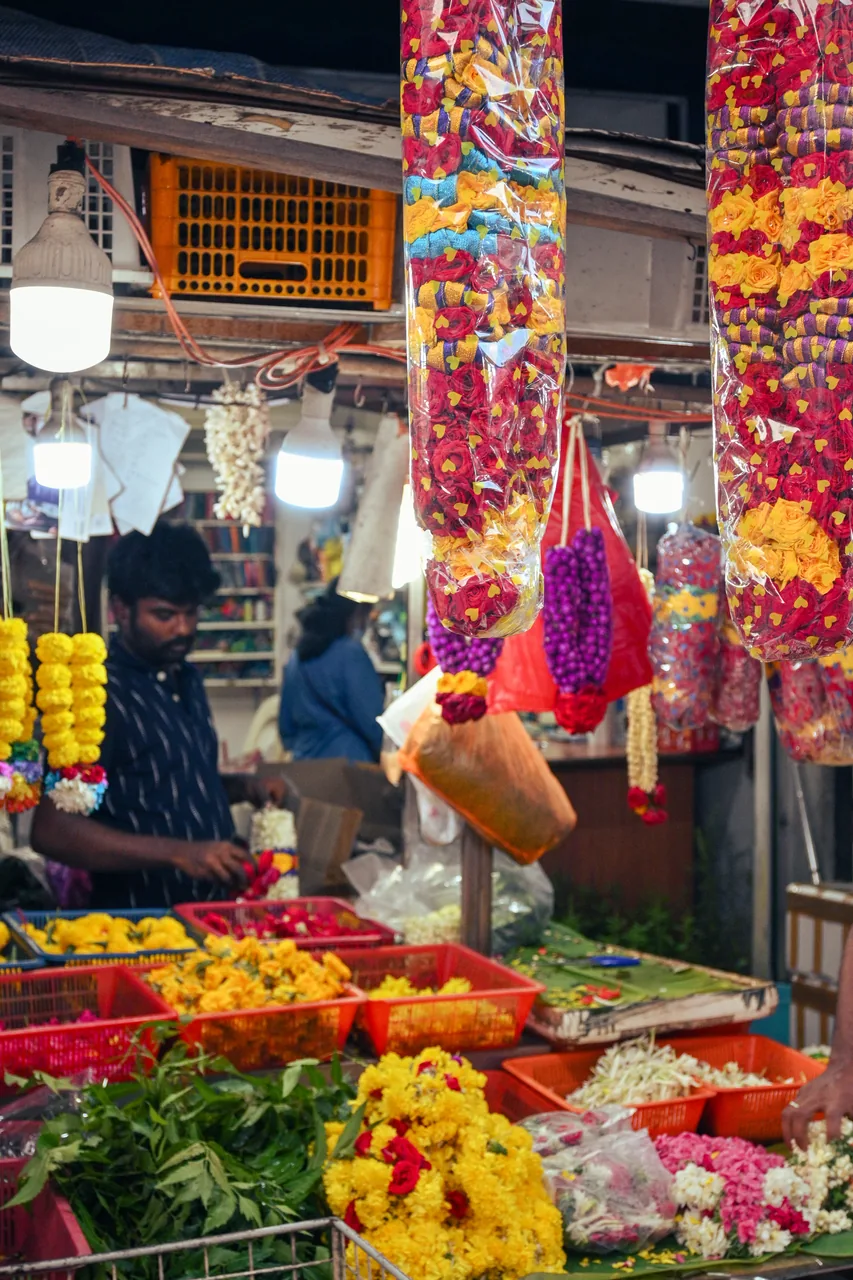
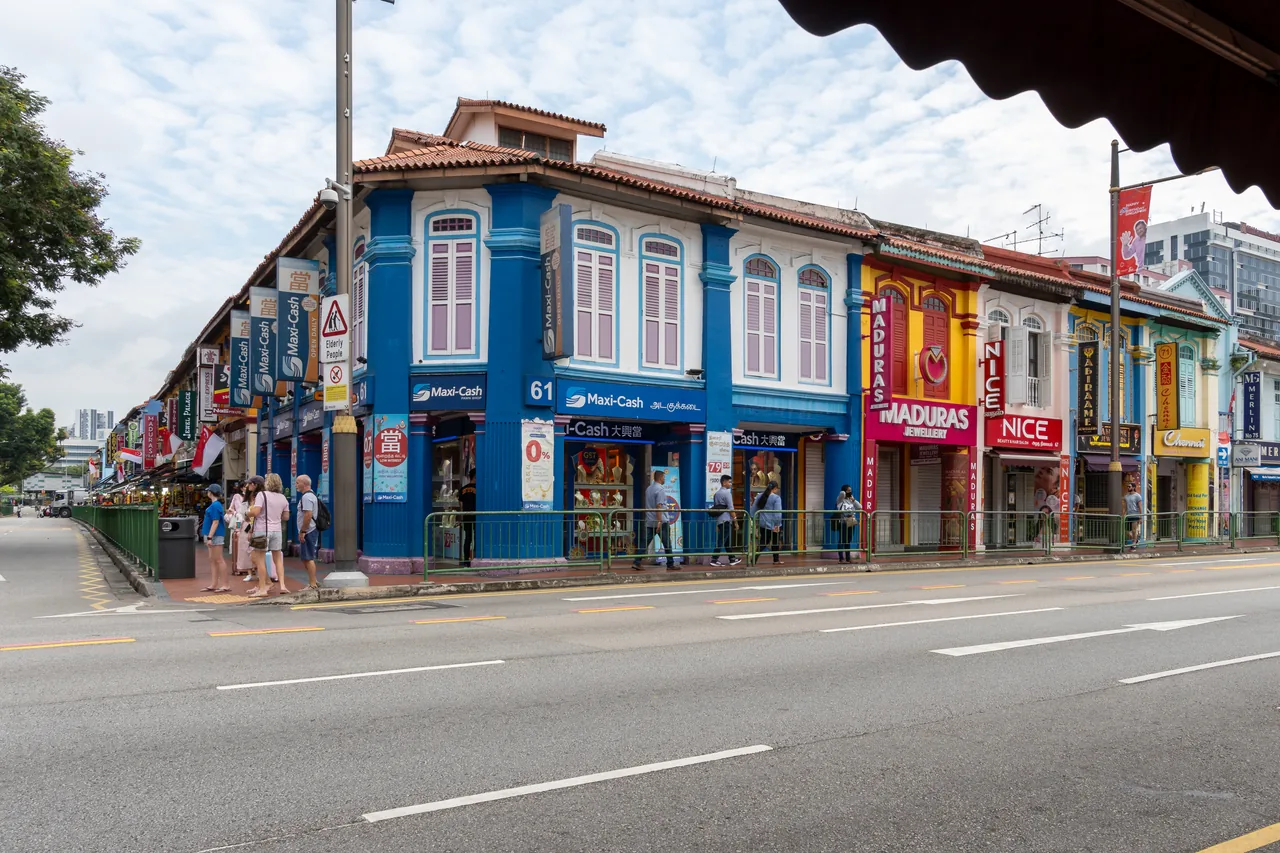
Walking the length of Serangoon Road and its side lanes is the main event. You’ll pass glittering gold and jewellery shops, fabric stores stacked with saris and silks, flower-garland stalls threading marigolds and jasmine for temple offerings, spice and provision shops, and shopfronts blaring Bollywood hits. Side streets like Campbell Lane, Dunlop Street and Buffalo Road reward wandering, with the Little India Arcade packed with textiles, bangles, incense and snacks. It’s busiest and most alive on Sunday evenings, when the area fills with the local community. It’s loud, fragrant, occasionally overwhelming — and utterly wonderful. Keep your camera ready and simply let yourself drift.
5. Tekka Centre: market & food
The Tekka Centre is Little India in one building — a heaving wet market downstairs and a brilliant Indian hawker hall upstairs, and the best place to eat in the district.
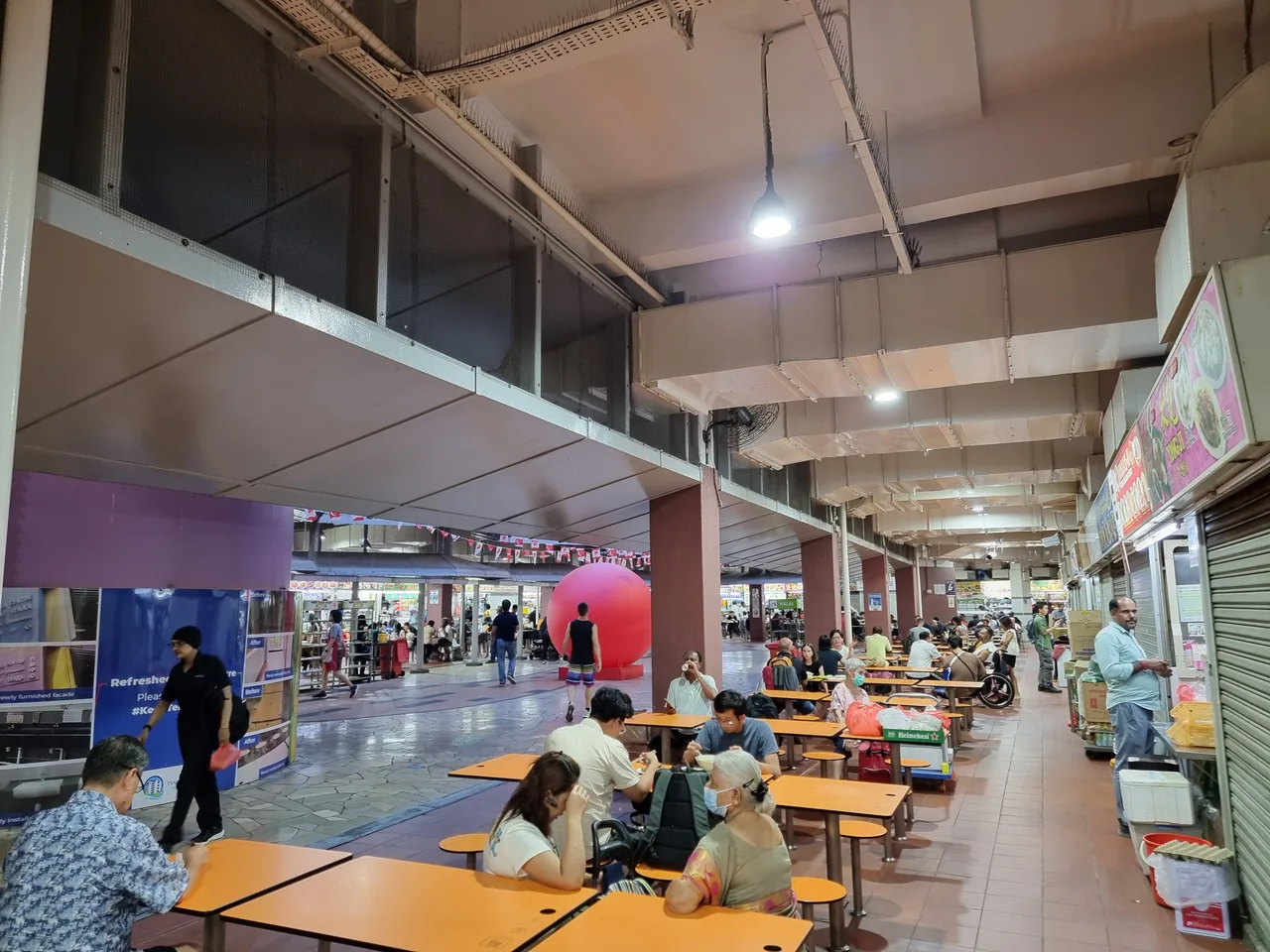
Right by the MRT, the Tekka Centre combines a colourful wet market (spices, produce, fish — including Sri Lankan crabs) with a hawker hall that serves some of the best-value Indian food in Singapore: fragrant biryani, crispy dosa (thosai) and roti prata, Indian-Muslim rice and curries, and sweet, milky teh tarik ‘pulled’ tea. There’s a clothing and textile section upstairs too, where tailors can quickly alter garments. Eat with your hands like the locals, point at what looks good, and budget just a few dollars a plate. It’s hot, busy and authentic — exactly what you came for. More on what to order in our food guide.
6. Mustafa Centre & shopping
The Mustafa Centre is a Singapore institution — a chaotic, sprawling 24-hour department store that sells literally everything, and an attraction in its own right.
Open round the clock, Mustafa Centre on Syed Alwi Road is a maze of floors packed with gold and jewellery, electronics, perfumes, spices, textiles, watches, groceries and souvenirs at famously keen prices. It’s disorienting, crowded and brilliant — locals and tourists alike come for the bargains, and the 2am shopping is a genuinely only-in-Singapore experience. Around it, the rest of Little India is one big bazaar: the Little India Arcade for handicrafts, bangles and incense; Serangoon Road for saris, gold and fresh garlands; and spice shops where you can buy curry blends to take home. Bring cash as well as cards, and don’t be afraid to compare prices. For tourists, the GST refund applies on larger purchases — see our budget guide.
7. What & where to eat
Little India is one of the best and cheapest places to eat in Singapore — South-Indian vegetarian, North-Indian, Indian-Muslim and the famous banana-leaf feast.
The signature experience is a banana-leaf meal — rice, curries and sides served on a leaf and eaten by hand — with Race Course Road the classic strip (and home to long-running fish-head curry houses). Beyond that: biryani and dosa at the Tekka Centre, South-Indian vegetarian thalis at the famous old eateries on the main road, crispy roti prata with curry for breakfast, and Indian sweets (jalebi, gulab jamun, laddu) from the colourful sweet shops. Wash it down with teh tarik or a sweet lassi. Most meals cost just a few dollars, and the vegetarian options are exceptional. It’s a food destination in its own right — see the food guide for more.
8. Tan Teng Niah & Instagrammable Little India
Little India is one of the most photogenic corners of Singapore — led by the rainbow Tan Teng Niah house and a wealth of vivid street art.
The single most photographed spot is the House of Tan Teng Niah on Kerbau Road: an eight-room villa from 1900, the last surviving Chinese villa in Little India, now painted in a riot of rainbow colours — a guaranteed photo. Around the district, walls carry colourful murals depicting old Little India life — cattle traders, garland-makers, provision shops — that make a fun photo trail (Hindoo Road, Dickson Road and the lanes off Serangoon Road are good hunting). Add the marigold garlands, the painted temple gopurams, the sari shops and the spice piles, and Little India is a photographer’s dream. Come in the softer light of morning or late afternoon for the best of it.
9. Indian Heritage Centre & culture
For the story behind the colour, the Indian Heritage Centre is a smart, modern museum that traces the South Asian community in Singapore and the region.
On Campbell Lane, the striking Indian Heritage Centre uses interactive exhibits and artefacts to tell the history of Indian and South-Asian migration, culture and contribution to Singapore — from early traders and labourers to today’s community. It’s a worthwhile, air-conditioned hour and a good counterpoint to the street bustle (small admission; open Tuesday–Sunday). Beyond it, Little India’s culture is best felt live: the temples at prayer time, the garland-makers at work, the Sunday gatherings, and the festivals. If you can, time a visit to a temple ritual or a festival for the full sensory experience. It rounds out a half-day of sights, shopping and food into a real understanding of the quarter.
10. Deepavali, Thaipusam & festivals
Little India is the epicentre of Singapore’s Indian festivals — and during them, there’s nowhere in the city more alive.
The big one is Deepavali, the Festival of Lights (8 November in 2026): for weeks beforehand, Serangoon Road blazes with illuminations and arches, and a massive festive bazaar takes over the streets with sweets, lamps, garlands, decorations and clothes, open late. It’s the most dazzling time to visit. Earlier in the year, Thaipusam (1 February in 2026) sees devotees carry ornate kavadi in a striking procession that starts at the Sri Srinivasa Perumal Temple here and winds to Tank Road — an unforgettable sight. Pongal (the harvest festival, mid-January) also colours the quarter. Each draws crowds and joy in equal measure — see our best time to visit guide for the full 2026 calendar and what to expect.
11. Getting there, timing & etiquette
Little India is easy to reach and explore — here’s the practical detail to get it right.
Getting there: take the MRT to Little India station (Downtown and North-East lines) or Rochor (Downtown line); both border the district. It’s minutes from Bugis and the centre. Best time: morning or late afternoon are most comfortable; Sunday evenings are liveliest; Deepavali is the most spectacular (and busiest). How long: a half-day for the essentials. Temple etiquette: dress modestly (cover shoulders and knees), remove shoes to enter, and ask before photographing people at worship. Money: carry some cash for the market and small shops, though cards are widely taken; Mustafa is open 24 hours. Tip: it can be crowded and hot — go early, stay hydrated, and embrace the sensory overload. Sort an eSIM so maps work from the start.
| Practical | Detail |
|---|---|
| Nearest MRT | Little India (DT/NE), Rochor (DT) |
| Cost to explore | Free (temples free; food cheap) |
| Best time of day | Morning or late afternoon; Sunday evening for buzz |
| Time needed | Half a day |
12. Where to stay in Little India
Little India is the best-value central neighbourhood to stay in Singapore — colourful, lively and well connected, if not the quietest.
This is where Singapore’s cheapest accommodation clusters: budget guesthouses, boutique hostels and a handful of mid-range hotels, many in heritage shophouses, all walkable to Bugis and a short MRT ride from the icons. It’s a great pick for budget travellers and those who want to wake up in the city’s most characterful quarter, with cheap food on every corner. The trade-off is noise and bustle — Serangoon Road is busy late, so light sleepers should choose a room set back from the main road, or look at quieter nearby Bugis. For a full comparison of where to base yourself, see our where to stay in Singapore guide.
13. Plan it: routes & what’s nearby
Little India fits neatly into a day of cultural quarters — here’s how to structure it and what to pair it with.
Half-day: Little India MRT → Tekka Centre (breakfast/market) → Sri Veeramakaliamman Temple → Serangoon Road & Tan Teng Niah house → banana-leaf lunch → Mustafa Centre. Because the cultural quarters sit close together, Little India pairs naturally with its neighbours: Kampong Glam (the Malay-Muslim quarter) is a short walk or one MRT stop south, and Chinatown is a few stops away on the same lines — many visitors do all three in one big day of temples, mosques and food. From here it’s also a quick ride to Marina Bay for the evening. A classic plan: the three quarters by day, the bay and its light shows by night. Plan the rest with our complete neighbourhoods guide and Singapore travel guide.