
Singapore Neighbourhood by Neighbourhood: Where to Go and Why
From the three cultural quarters to the riverside nightlife, hip café enclaves and Peranakan shophouse streets — every Singapore neighbourhood worth your time, what to do and eat in each, the nearest MRT, and which one to base yourself in. The only area guide you need.
- Singapore is best understood as a city of distinct neighbourhoods rather than a single downtown — each with its own food, architecture, pace and reason to visit, and almost all of them free to wander and reachable by MRT.
- The headline three are the cultural quarters — Chinatown, Little India and Kampong Glam — each a brilliant, walkable half-day of temples, shophouses, street food and markets, and the heart of the city’s heritage.
- The downtown core (the Civic District and Marina Bay) holds the icons and museums; Orchard Road is the shopping mile; and the Singapore River at Clarke QuayMap is the nightlife strip — newly reinvigorated for 2026.
- Beyond the centre, the real texture is in the heritage enclaves: Art-Deco Tiong Bahru, Peranakan Katong and Joo ChiatMap in the east, lush Dempsey Hill and Holland Village, and the seafood-and-supper belt of GeylangMap and East Coast.
- This guide walks through every district in turn — what it’s for, what to do and eat, the nearest MRT and the vibe — then helps you pick where to base yourself and how to chain neighbourhoods into a plan.
| Three cultural quarters | Chinatown, Little India & Kampong Glam — all free, walkable, half a day each |
|---|---|
| Downtown core | The Civic District & Marina Bay — icons, museums, the skyline |
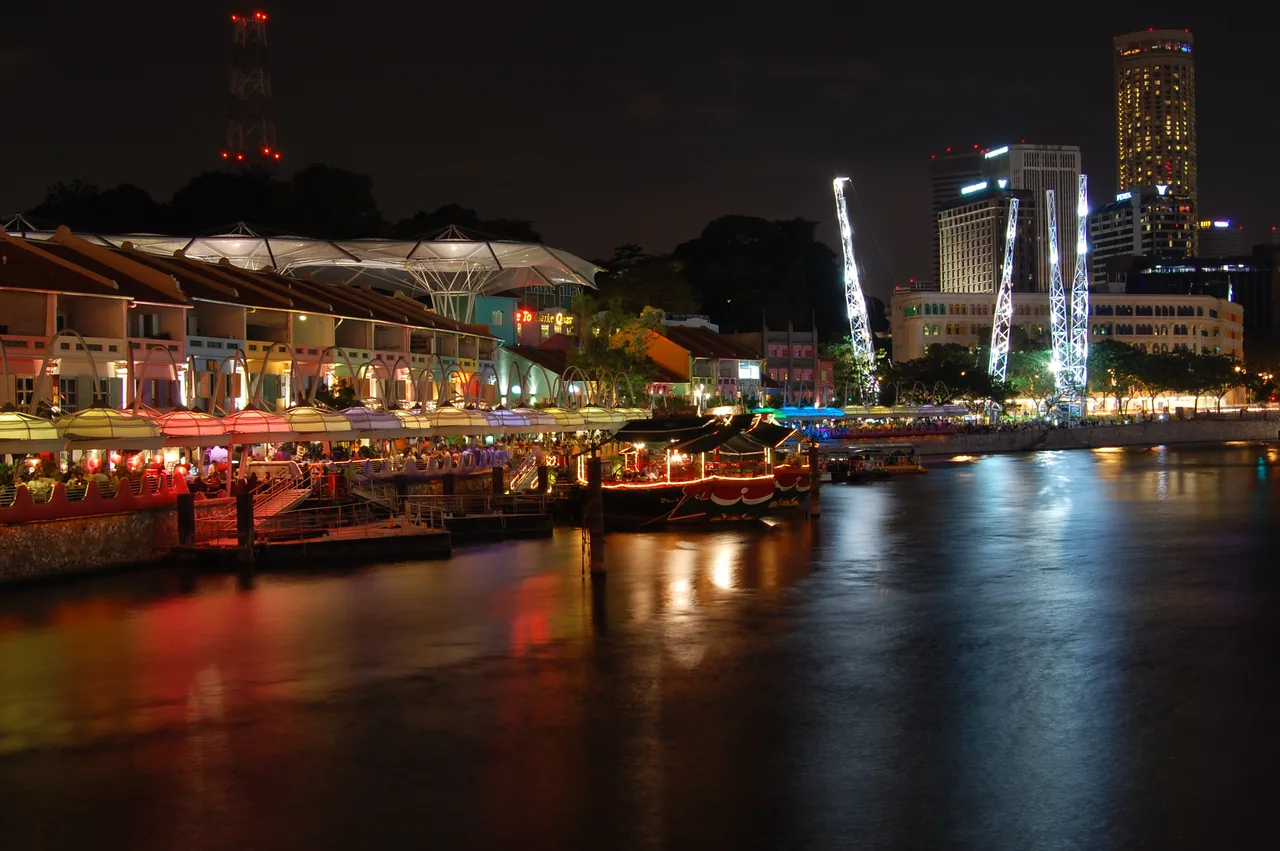
| Best for nightlife | Clarke Quay & the Singapore River (relaunched for 2026) |
| Best for cafés & heritage | Tiong Bahru and Katong/Joo Chiat (Peranakan east) |
| Best for shopping | Orchard Road — 2 km of malls |
| Getting around | The MRT reaches every district; tap in with a contactless card |
| How long per quarter | Half a day to wander and eat; a full day if you linger |
1. How to use this guide: Singapore’s neighbourhood map
2. Chinatown
3. Little India
4. Kampong Glam, Arab Street & Haji Lane
5. Bugis & Bras Basah
6. The Civic District & Marina Bay
7. Orchard Road
8. Clarke Quay & the Singapore River
9. Tiong Bahru
10. Katong & Joo Chiat: the Peranakan east
11. Geylang & the supper belt
12. Dempsey Hill & the Botanic Gardens fringe
13. Holland Village & Bukit Timah
14. East Coast & the eastern suburbs
15. Sentosa & the southern islands
16. Pulau Ubin & the outer islands
17. Where to base yourself & how to chain the districts
Most first-time visitors picture Singapore as one gleaming downtown, but the city’s real character lives in its neighbourhoods — a patchwork of distinct districts, each with its own architecture, food, history and rhythm, stitched together by one of the world’s best metro systems. You can stand under the golden dome of the Sultan MosqueMap, eat a S$4 plate of chicken rice in a Chinatown food centre, browse 24-hour saris in Little India and sip a cocktail on a restored riverside wharf, all in a single day and for the price of a few MRT taps. Understanding the neighbourhoods is the key to understanding Singapore: it tells you where to eat, where to stay, where to spend your evenings, and where the city stops being a postcard and starts feeling like a place people actually live. This is the complete map. We’ll walk through the three cultural quarters, the downtown core and its icons, the shopping and nightlife districts, and the heritage and residential enclaves most visitors never reach — covering what each is for, the standout things to do and eat, the nearest MRT station and the honest vibe — then finish by helping you choose which neighbourhood to base yourself in and how to weave them together. Use it alongside our complete Singapore travel guide and our guide to the best things to do in Singapore to turn this map into a trip.
1. How to use this guide: Singapore’s neighbourhood map
Singapore divides neatly into a handful of zones — the cultural quarters, the downtown core, the shopping belt, the river and the residential enclaves — and almost every district is a short MRT hop from the next.
Picture the island like this. At the centre is the downtown core: the Civic District (museums and colonial landmarks) flowing into Marina Bay (the skyline, Gardens by the Bay and Marina Bay Sands). Wrapped around it are the three cultural quarters — Chinatown to the southwest, Kampong Glam and Bugis to the northeast, Little India just beyond — each a walkable half-day. North runs Orchard Road, the shopping spine; west of downtown the Singapore River threads through Clarke Quay’s nightlife. Then come the heritage and residential enclaves: Tiong Bahru just south of Orchard, Katong and Joo Chiat out east, Dempsey and Holland Village in the leafy centre-west, and Geylang and East Coast to the east. This guide takes them in roughly that order. The golden rule: group neighbouring districts together so you’re walking, not crisscrossing — and let the food lead.
| Neighbourhood | Best for | Nearest MRT |
|---|---|---|
| Chinatown | Temples, hawker food, heritage bars | Chinatown |
| Little India | Colour, South-Indian food, 24h shopping | Little India / Rochor |
| Kampong Glam | Sultan Mosque, Haji LaneMap, Malay & Arab food | Bugis |
| Civic District & Marina Bay | Icons, museums, the skyline | City Hall / Bayfront |
| Orchard Road | Shopping, malls | Orchard / Somerset |
| Clarke Quay | Riverside nightlife | Clarke Quay |
| Tiong Bahru | Art-Deco, cafés, indie shops | Tiong Bahru |
| Katong / Joo Chiat | Peranakan shophouses, laksa | Marine Parade / Eunos |
2. Chinatown
Chinatown is Singapore’s Chinese heart — heritage temples and traditional medicine halls beside trendy cocktail bars, and two of the cheapest Michelin meals on earth.
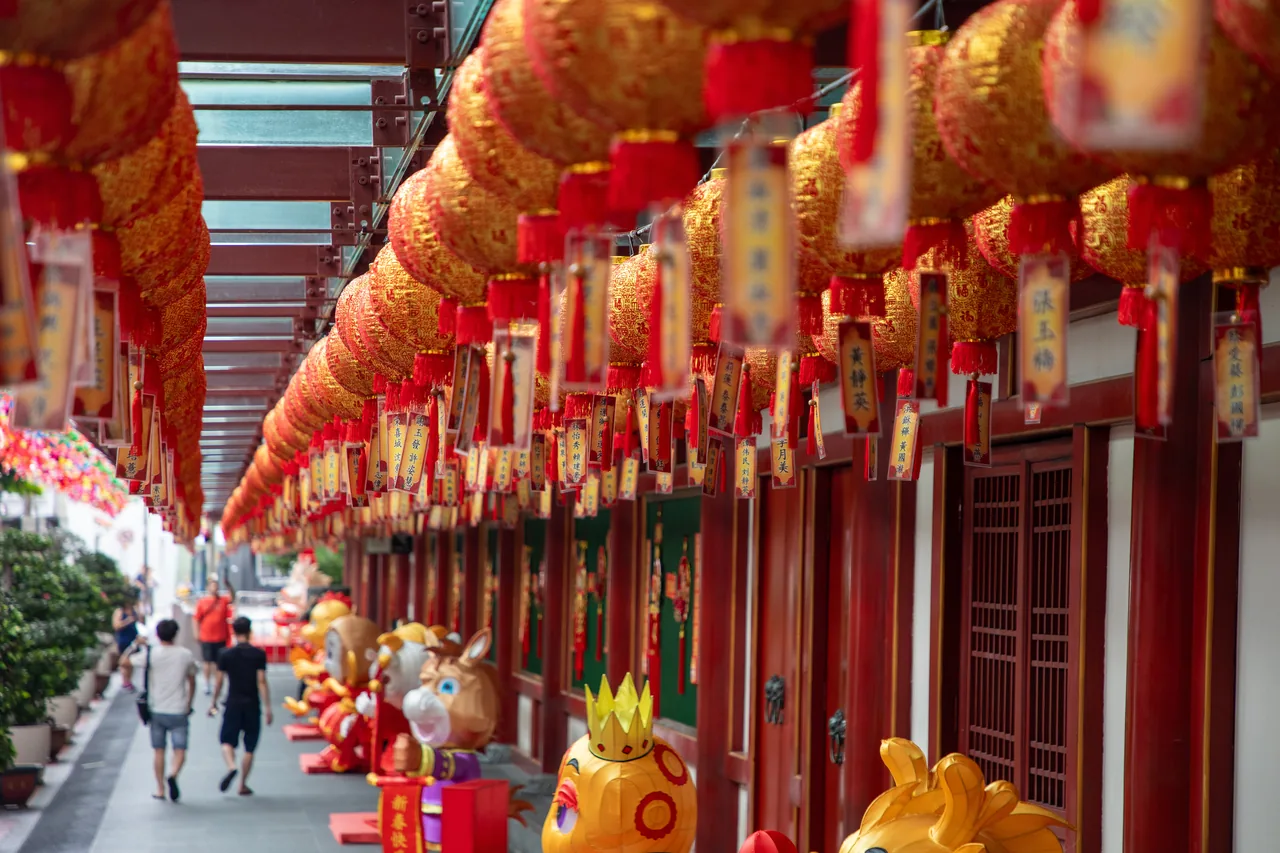
Built around the early Chinese immigrant community, today’s Chinatown is a study in contrasts. Wander the pedestrian shophouse lanes of Pagoda, Temple and Trengganu Streets for souvenirs and street food, then duck into the magnificent Buddha Tooth Relic TempleMap, the South-Indian Sri MariammanMap Temple (Singapore’s oldest Hindu temple, here in Chinatown) and the serene Thian Hock Keng on Telok Ayer Street. The food is the main event: the Chinatown ComplexMap Food Centre is the city’s biggest hawker centre and home to the world’s cheapest Michelin meal (soya-sauce chicken rice), while nearby Maxwell Food CentreMap draws queues for Tian Tian chicken rice. After dark, Ann Siang Hill and Club Street turn into a buzzy strip of restored-shophouse bars. Allow half a day, and come hungry — the full food rundown is in our hawker guide.
3. Little India
Little India is the most sensory neighbourhood in Singapore — a riot of colour, incense, garlands and South-Indian food that feels a world away from the polished downtown.
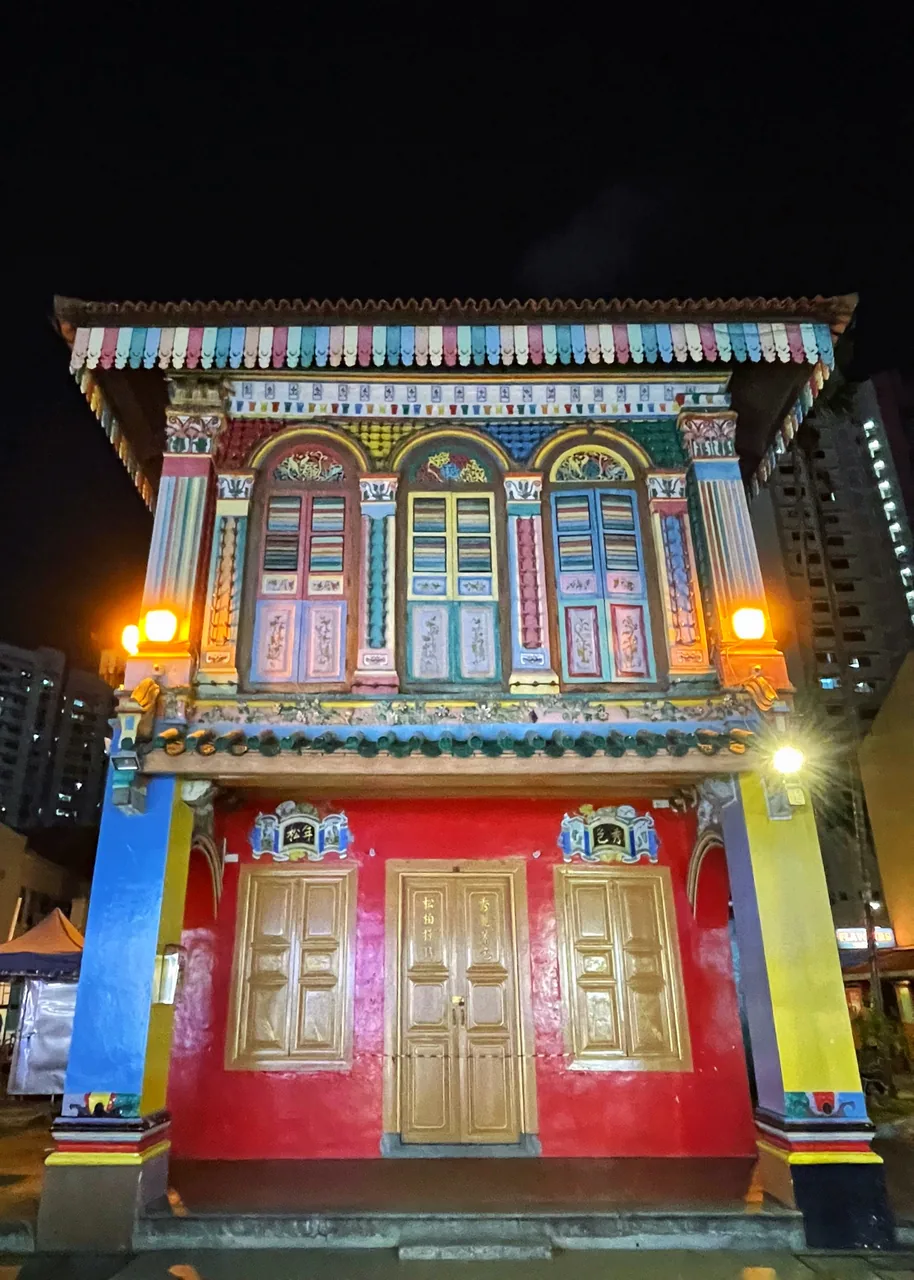
The moment you leave the MRT the energy hits: gold shops, flower-garland stalls, Bollywood music and the smell of spice. The spine is Serangoon Road, lined with sari shops, gold traders and temples — the ornate Sri VeeramakaliammanMap Temple is the showpiece. The TekkaMap Centre combines a wet market with a hawker centre serving some of the city’s best biryani, dosa and banana-leaf meals, while the famously chaotic MustafaMap Centre sells literally everything, 24 hours a day. Photographers make a beeline for the rainbow Tan Teng Niah house, the last Chinese villa in the district. Time your visit for Deepavali (early November in 2026) when the whole quarter is strung with lights and a night bazaar fills the streets — see our festival calendar.
4. Kampong Glam, Arab Street & Haji Lane
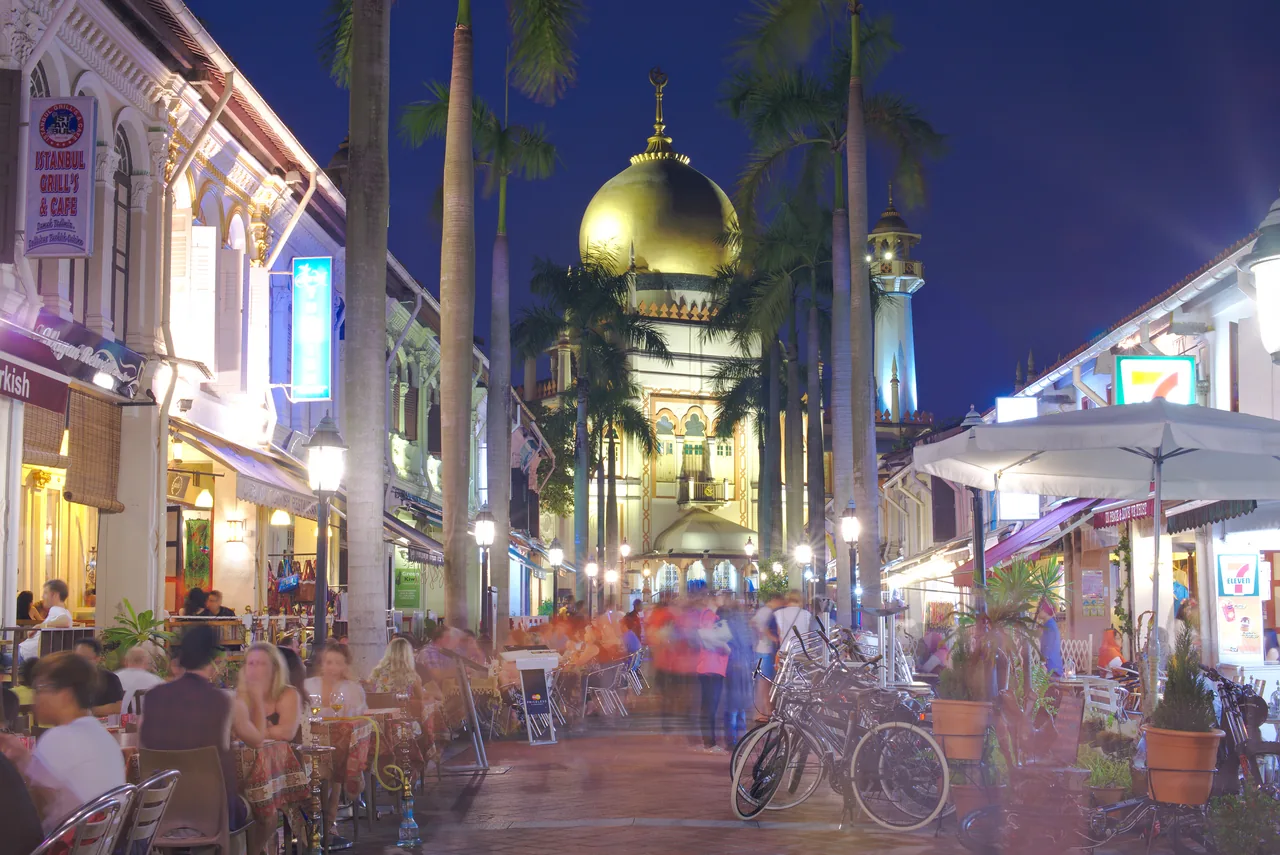
Kampong Glam is Singapore’s Malay-Muslim quarter and its most photogenic — the golden Sultan Mosque, the textile shops of Arab Street and the street-art alley of Haji Lane all in a few walkable blocks.
Kampong means ‘village’ in Malay, and this was once the seat of Malay royalty. Its centrepiece is the magnificent gold-domed Sultan Mosque (Masjid Sultan), best photographed from the café-lined Bussorah Street that runs straight to its steps. Around it, Arab Street is stacked with textile and carpet merchants, while Haji Lane — a narrow alley of independent boutiques, street murals and bars — is one of the city’s most Instagrammed spots. The food is a treat: Malay and Indonesian classics, Middle-Eastern mezze and shisha, and the famous nasi padang spreads. The Malay Heritage Centre (in the former sultan’s palace) fills in the history. It’s an easy, atmospheric half-day, and it flows straight into Bugis next door.
5. Bugis & Bras Basah
Bugis stitches the cultural quarters to the downtown core — a bustling mix of the city’s busiest street market, an arts-and-museums district and student energy.
Bugis Street is Singapore’s largest street market, a covered warren of cheap fashion, accessories and snacks beside the Bugis Junction and Bugis+ malls — the go-to for budget shopping. Just south, the Bras Basah–Bugis arts district is dense with culture: the National Library, the Singapore Art Museum, the Peranakan Museum, art schools and the colonial-era CHIJMES (a restored convent turned dining courtyard). The colourful Kwan Im Thong Hood Cho Temple draws constant streams of worshippers, with the Hindu Sri Krishnan temple right beside it — a snapshot of Singapore’s easy religious mix. It’s a natural bridge: do Kampong Glam, then wander through Bugis toward the museums and the bay.
6. The Civic District & Marina Bay
The Civic District is colonial Singapore — grand monuments and world-class museums — flowing seamlessly into Marina Bay, the futuristic waterfront that holds all the icons.
Around the open Padang field stand the city’s set-piece landmarks: the National Gallery (Southeast Asian art in the old Supreme Court and City Hall), the Victoria Theatre, the Asian Civilisations Museum and the storied Raffles Hotel, birthplace of the Singapore Sling. From here it’s a short walk across the water to Marina Bay, where the city saves its showstoppers: the Merlion, Marina Bay Sands and its SkyPark, Gardens by the Bay, the ArtScience MuseumMap and the free nightly light shows. This is the Singapore of the postcards, and the two districts make one continuous, walkable waterfront. For the evening here — show times, rooftop bars and the perfect route — see our dedicated Marina Bay at night guide. Raffles sits here as two buildings with two street addresses. Which entrance leads to what is set out in our guide to Raffles and the Long Bar.
7. Orchard Road
Orchard Road is Singapore’s famous shopping mile — a 2 km ribbon of malls, flagship stores and food halls, and the city’s best wet-weather plan.
Once a road of nutmeg plantations, Orchard is now wall-to-wall retail: the high-design ION OrchardMap, the luxury Paragon, the Japanese department store TakashimayaMap at Ngee AnnMap City, and the youthful Somerset end with 313@Somerset and *SCAPE. Even non-shoppers come for the basement food courts (some of the best-value eating in the area), the Christmas light-up (a Singapore institution from November), and the simple air-conditioned relief when the afternoon storm hits. It’s not a ‘heritage’ district — it’s a modern one — but it’s central, polished and endlessly practical. Tourists can claim the 9% GST refund on purchases over S$100 when they fly out of Changi; the how-to is in our budget guide.
8. Clarke Quay & the Singapore River
The Singapore River is the city’s nightlife and dining artery — three restored quays of warehouses-turned-bars, with Clarke Quay the loud, neon heart of it.
The river that built colonial Singapore is now lined with restaurants and bars along three quays. Clarke Quay (officially CQ @ Clarke Quay after a major rejuvenation) is the nightlife centre — open-air riverside dining giving way to clubs and bars, with the legendary ZoukMap club relaunching after a refurbishment for its 35th anniversary in 2026. Downstream, Boat QuayMap is the older, mellower row of riverside restaurants under the skyscrapers; upstream, Robertson QuayMap is the quieter, classier end favoured by residents for waterside brunch and wine bars. By day the river is a pleasant walk past the statues and old godowns; a river cruise links it to Marina Bay. By night it’s the most concentrated going-out strip in the city.
9. Tiong Bahru
Tiong Bahru is Singapore’s most charming heritage enclave — curving 1930s Art-Deco walk-ups, an old wet market and a tightly packed scene of indie cafés and bookshops.
Singapore’s first public housing estate is now its hippest old neighbourhood. The streamlined Art-Deco apartment blocks (some of the oldest in the city, and conserved) curve along quiet streets that hide some of Singapore’s best independent cafés, bakeries and design shops, plus the much-loved bookshop scene the area is known for. At its centre, the Tiong Bahru MarketMap pairs a traditional wet market downstairs with a superb hawker centre upstairs — the chwee kueh (steamed rice cakes) and lor mee here are local legends. There’s a low-key street-art trail of murals depicting old Singapore life, and the whole place is made for slow wandering: coffee, a book, a hawker breakfast. It’s a five-minute MRT hop from Orchard but feels a world quieter.
10. Katong & Joo Chiat: the Peranakan east
Katong and Joo Chiat are the colourful heart of Peranakan Singapore — rainbow shophouses, the city’s signature laksa, and a slower, residential-east mood.
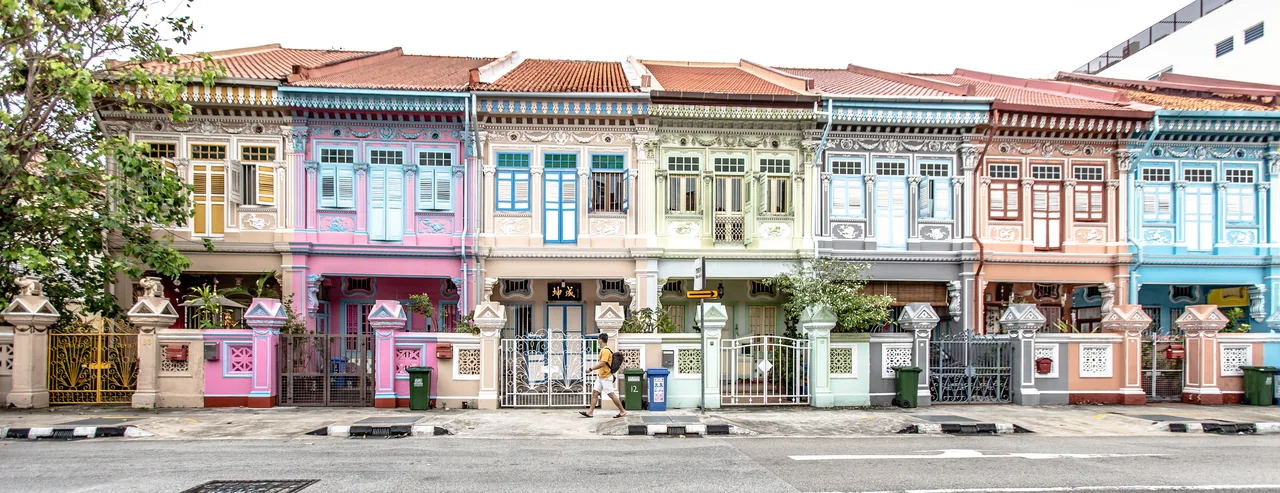
Out east, away from the towers, these twin neighbourhoods preserve the culture of the Peranakans (descendants of early Chinese-Malay marriages). The photogenic prize is Koon SengMap Road, a row of intricately tiled, pastel-painted Peranakan shophouses that’s one of Singapore’s most beautiful streets. East Coast Road is the food spine — this is the birthplace of Katong laksa (a rich coconut version eaten with a spoon), alongside Peranakan kueh, Eurasian dishes and old kopitiams. The area rewards aimless wandering: tile-fronted homes, antique shops, neighbourhood bakeries and the kind of texture the central districts have polished away. It’s about 20 minutes east of downtown by bus or MRT, and it pairs perfectly with the nearby East Coast Park beach.
11. Geylang & the supper belt
Geylang is Singapore’s great late-night food district — beloved by locals for seafood, frog porridge, beef hor fun and durian, long after the rest of the city sleeps.
Just east of the centre, Geylang is where Singaporeans go to eat late. The main road and its numbered lorongs (side-alleys) are packed with zi char seafood houses, claypot frog-leg porridge, beef kway teow, dim sum that opens past midnight, and — in season — some of the city’s best durian stalls. It’s gritty, fluorescent-lit and utterly authentic, the antidote to the polished downtown. Be aware that Geylang is also Singapore’s licensed red-light area, concentrated on certain even-numbered lorongs; it’s generally safe and trouble-free, but if you’re here for the food, stick to the main road and the food lorongs and you’ll have a brilliant, only-in-Singapore supper. Adjacent Paya Lebar adds modern malls if you want a softer landing.
12. Dempsey Hill & the Botanic Gardens fringe
Dempsey Hill is Singapore’s leafy lifestyle enclave — former British army barracks turned into a green cluster of restaurants, brunch spots, antique galleries and design shops.
Tucked into the greenery beside the Singapore Botanic Gardens (the city’s UNESCO World Heritage park, and a free must-see), Dempsey Hill trades neon for trees. The old black-and-white military buildings now house some of Singapore’s most pleasant restaurants and cafés, a famous antiques and carpet scene, art galleries, a craft-beer garden and a well-known nature-themed dining cluster. There’s no MRT at the door — it’s a short taxi or bus from Orchard — which keeps it calm and uncommercial. Pair it with a morning at the Botanic Gardens and the free National Orchid Garden next door for one of the most relaxed half-days in the city, far from the crowds.
13. Holland Village & Bukit Timah
Holland Village is Singapore’s long-standing expat enclave — a compact, walkable grid of casual restaurants, bars and shops with an easy, neighbourly buzz.
Affectionately ‘Holland V’, this is where Singapore’s international community has gathered for decades. The pedestrian-friendly heart around Lorong Mambong and Chip Bee Gardens is lined with alfresco bistros, wine bars, brunch cafés and quirky boutiques — low-rise, relaxed and genuinely local-feeling, with its own MRT station for easy access. Just north, the Bukit Timah area climbs toward the Bukit Timah Nature Reserve (home to Singapore’s highest hill and primary rainforest) and the Rail Corridor green trail — a different, outdoorsy side of the city. Together they make a good pairing: a morning forest walk, then lunch and a drink in Holland V. It’s where you go to feel how residents actually live, rather than how the city presents itself to tourists.
14. East Coast & the eastern suburbs
The East Coast is where Singaporeans go to play by the sea — a 15 km beach park for cycling, BBQs and seafood, fronting some of the city’s most liveable suburbs.
East Coast Park is the locals’ favourite stretch of coast: a long ribbon of beach, cycling and skating paths, BBQ pits, watersports and famous seafood restaurants (this is a top spot for chilli crab with the breeze off the strait). Behind it, the residential Marine Parade, Siglap and Bedok neighbourhoods offer hawker centres and a calm, lived-in feel, while the area flows naturally into Peranakan Katong just inland. It’s also the gateway to the airport: Changi and the Jewel complex are minutes away, and the rustic island of Pulau Ubin launches from Changi Point. Rent a bike, ride the coast, eat crab as the sun goes down — it’s the city at its most easygoing.
15. Sentosa & the southern islands
SentosaMap is a district in its own right — a resort island of theme parks, beaches and adventure, 15 minutes from downtown — fringed by a scatter of quieter southern islands.
Off the south coast, Sentosa packs in Universal Studios, the Singapore Oceanarium, Adventure CoveMap Waterpark, three swimming beaches, the Skyline Luge, iFly and the cable car — a full, self-contained day or two. Getting there is half the fun: the Sentosa Express monorail, the cable car or the boardwalk. Beyond it, the Southern Islands — St John’s, Lazarus and Kusu — are a quiet ferry escape with near-empty beaches, while the HarbourFront and Mount Faber mainland gateway adds malls and a cable-car-station hilltop view. If Sentosa is the high-energy south, the islands beside it are its calm counterpoint. The full plan, passes and timings are in our Sentosa guide.
16. Pulau Ubin & the outer islands
Pulau Ubin is the antidote to the skyline — a 10-minute boat ride to Singapore’s last kampong (village), all dirt tracks, mangroves and 1960s calm.
From Changi Point a short bumboat (about S$4 each way, cash) crosses to Pulau Ubin, a rural island that shows what Singapore looked like before the towers. Rent a bike at the jetty and ride red-dirt trails past wooden kampong houses, old quarries and the Chek Jawa Wetlands, a rich intertidal boardwalk of mangroves, seagrass and wildlife. There are no malls and barely any cars — just a handful of seafood shacks and birdsong. To the north, Coney Island (reached by a bridge, no boat needed) is a wild, undeveloped coastal park good for cycling and birdwatching. These outer green escapes are easy half-days and almost free — the perfect contrast after a few days of city. Bring water, cash and an eSIM for the maps; there’s little signage out here.
17. Where to base yourself & how to chain the districts
The right base depends on your trip — icons, value, character or calm — and the beauty of Singapore is that the MRT makes almost any choice work.
For a first visit chasing the icons, base in Marina Bay or the Civic District; for central character at better value, Chinatown or Bugis/Kampong Glam; for shopping, Orchard; and for a local, residential feel, Katong or Tiong Bahru. Our full where to stay guide compares them by budget and traveller type. To chain the districts into a plan, group the ones that sit together: do the three cultural quarters as one loop (Chinatown → Kampong Glam → Little India, all on connecting MRT lines), keep the downtown core and the river for the evenings, and take a half-day each for the further-out enclaves like Katong, Dempsey or Pulau Ubin.
| You want… | Base / focus here |
|---|---|
| The icons, first visit | Marina Bay & the Civic District |
| Character + value | Chinatown or Bugis/Kampong Glam |
| Shopping | Orchard Road |
| Nightlife | Clarke Quay & the river |
| Cafés & heritage | Tiong Bahru or Katong/Joo Chiat |
| Beach & easygoing | East Coast / Marine Parade |
| You have… | Neighbourhood plan |
|---|---|
| 1 day | One cultural quarter + the Marina Bay evening |
| 3 days | All three quarters + downtown + the river one night |
| 5 days | Add Katong, Tiong Bahru, Dempsey and a Pulau Ubin escape |
However you slice it, let the food and the MRT lead, group neighbours together, and weave it all into our complete Singapore travel guide and its day-by-day itineraries. Singapore’s neighbourhoods, not its landmarks, are what make the city worth a slow, repeat visit.