
Chinatown Singapore 2026: The Complete Guide to Temples, Food & Streets
Singapore’s Chinese heart, where heritage temples and traditional medicine halls sit beside trendy cocktail bars and the world’s cheapest Michelin meals — what to see, where to eat, the best streets and how to do it all in a day.
- Chinatown is Singapore’s historic Chinese quarter — a dense, walkable grid of restored shophouses, ornate temples, traditional shops and some of the best and cheapest food in the city, all a short MRT ride from Marina Bay.
- The unmissable sights are the five-storey Buddha Tooth Relic Temple, the centuries-old Hindu Sri Mariamman Temple and the Chinatown Complex and Maxwell hawker centres — home to Michelin-recognised stalls and S$4 plates of legendary chicken rice.
- By day it’s temples, street markets and hawker food; by night the restored shophouses of Ann Siang Hill, Club Street and Keong Saik Road become one of the city’s best bar-and-dining strips.
- Almost everything is free to wander, the streets are pedestrianised in the core, and it’s at its most magical during Chinese New Year (17 February in 2026), when the whole quarter glows with lanterns and a street bazaar.
- Give it a half-day at minimum — a full day if you want to eat properly, explore the temples and stay for evening drinks — and pair it with the rest of our Singapore neighbourhoods guide.
| Where | Outram / south-west of the CBD, on the Singapore River’s south side |
|---|---|
| Getting there | Chinatown MRT (Downtown & North-East lines), Exit A |
| Cost | Free to wander; temples free; hawker meals ~S$4–8 |
| Time needed | Half a day minimum; a full day to eat and linger |
| Don’t miss | Buddha Tooth Relic Temple, Chinatown Complex, Sri Mariamman, Ann Siang Hill |
| Best time | Morning for temples & markets; evening for bars; CNY for atmosphere |
| Good to know | Dress modestly for temples; remove shoes where required |
1. Chinatown orientation: how to do it
2. The story of Chinatown: Kreta Ayer
3. Temples & places of worship
4. The street-market lanes
5. Hawker food: Chinatown Complex & Maxwell
6. Heritage, museums & experiences
7. Ann Siang Hill, Club Street & Keong Saik: after dark
8. Telok Ayer & Amoy Street
9. Tanjong Pagar & Duxton
10. Chinese New Year in Chinatown
11. What & where to eat
12. Getting there, timing & etiquette
13. Where to stay in Chinatown
14. Plan it: routes & what’s nearby
If you visit only one neighbourhood in Singapore beyond the waterfront, make it Chinatown. This is the historic heart of the city’s Chinese community — a compact, intensely walkable district where a 19th-century Hindu temple, a Tang-dynasty-style Buddhist complex and a Hokkien shrine all stand within a few blocks, where traditional medicine halls and bak kwa (barbecued pork) shops trade beside third-wave coffee bars, and where the largest hawker centre in Singapore serves food good enough to have earned Michelin recognition for a few dollars a plate. It is, in other words, the full sweep of Singapore — old and new, sacred and street, cheap and chic — packed into one quarter you can cross on foot. This guide covers all of it: the story of how Chinatown came to be, the temples and what they mean, the street-market lanes and the hawker centres, the heritage museums, the buzzing nightlife of Ann Siang Hill and Keong Saik, the quieter heritage of Telok Ayer, what to eat and where, how Chinese New Year transforms the place, and the practical details — getting there, timing, etiquette and where to stay. Use it with our complete Singapore neighbourhoods guide and our hawker food guide to make the most of a day here.
1. Chinatown orientation: how to do it
Chinatown is small, dense and made for walking — arrive at Chinatown MRT, start at the street market, and let the temples, hawker centres and shophouse lanes pull you through.
The district sits just south-west of the financial district, on the south bank of the Singapore River. Step out of Chinatown MRT (Exit A) and you’re on Pagoda Street, the pedestrianised spine of the street market, with the Chinatown Heritage Centre halfway down. From here everything is a short walk: the Buddha Tooth Relic Temple and Maxwell Food Centre to the south, Sri Mariamman and the Jamae Mosque on South Bridge Road, the Chinatown Complex just west, and the bar-lined slopes of Ann Siang Hill and Club Street to the east. A simple plan: temples and market in the morning, a hawker lunch, the heritage centre or Telok Ayer in the afternoon, and drinks or dinner on Ann Siang as the light fades. Wear comfortable shoes and dress modestly if you’ll enter the temples.
2. The story of Chinatown: Kreta Ayer
Chinatown grew from the early Chinese immigrants who settled here in the 1820s — its Chinese name, Niu Che Shui (Kreta Ayer, ‘ox-cart water’), recalls the carts that once hauled fresh water to the district.
When Singapore became a trading port in 1819, Sir Stamford Raffles allotted this area to the growing Chinese community, and it quickly filled with immigrants from southern China — Hokkien, Teochew, Cantonese, Hakka and Hainanese — each clan with its own streets, temples and associations. Life was crowded and hard: families squeezed into the upper floors of shophouses while the ground floors traded everything from medicine to coffins. That density is exactly what gives Chinatown its texture today — the narrow five-foot-ways, the clan temples, the trade streets. The original shoreline ran along Telok Ayer Street (today well inland thanks to land reclamation), which is why the oldest temples and mosques cluster there: they were the first thing arriving immigrants saw, and where they gave thanks for a safe passage. Knowing this backstory turns a walk through Chinatown from sightseeing into time travel — the Chinatown Heritage Centre tells it in full.
3. Temples & places of worship
Chinatown’s greatest surprise is its temples — three faiths, side by side, and some of the most beautiful religious architecture in Singapore, all free to enter.
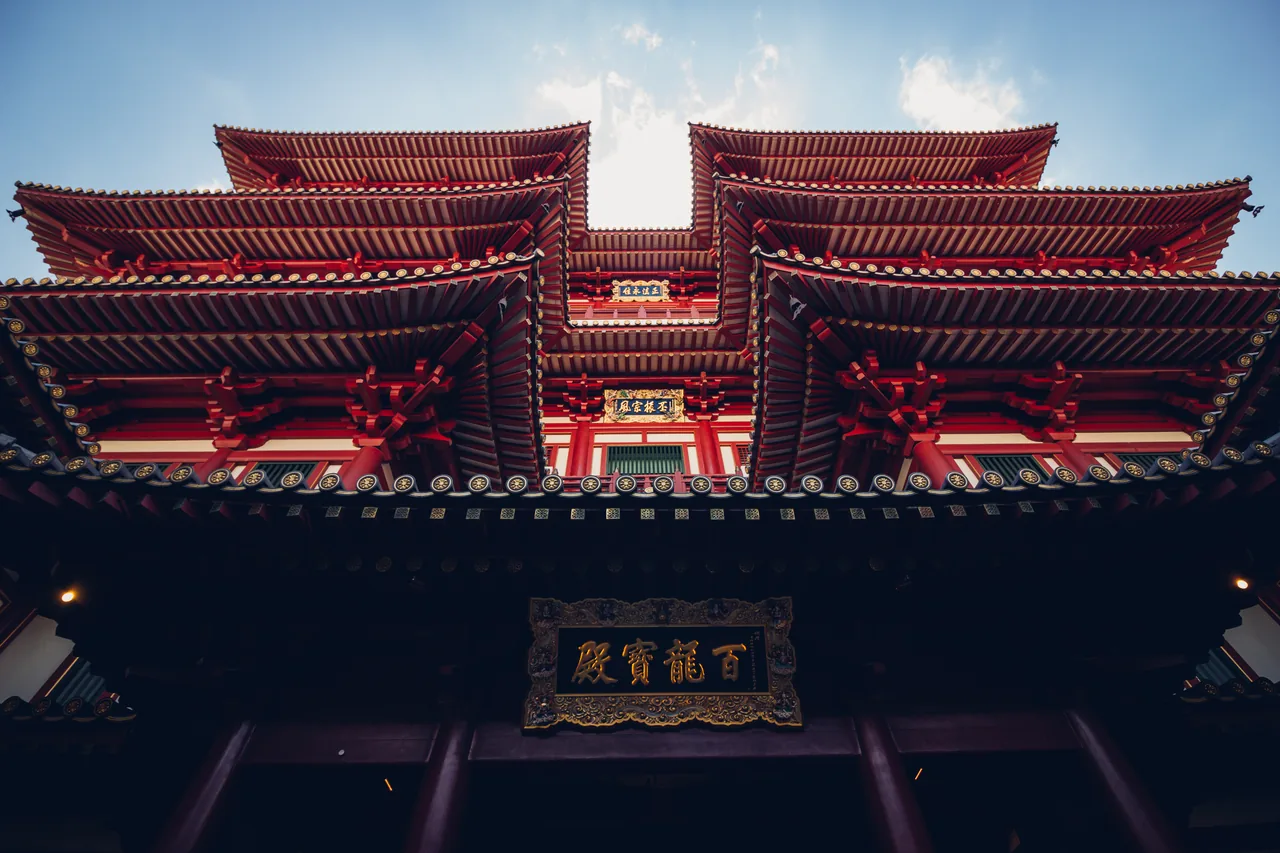
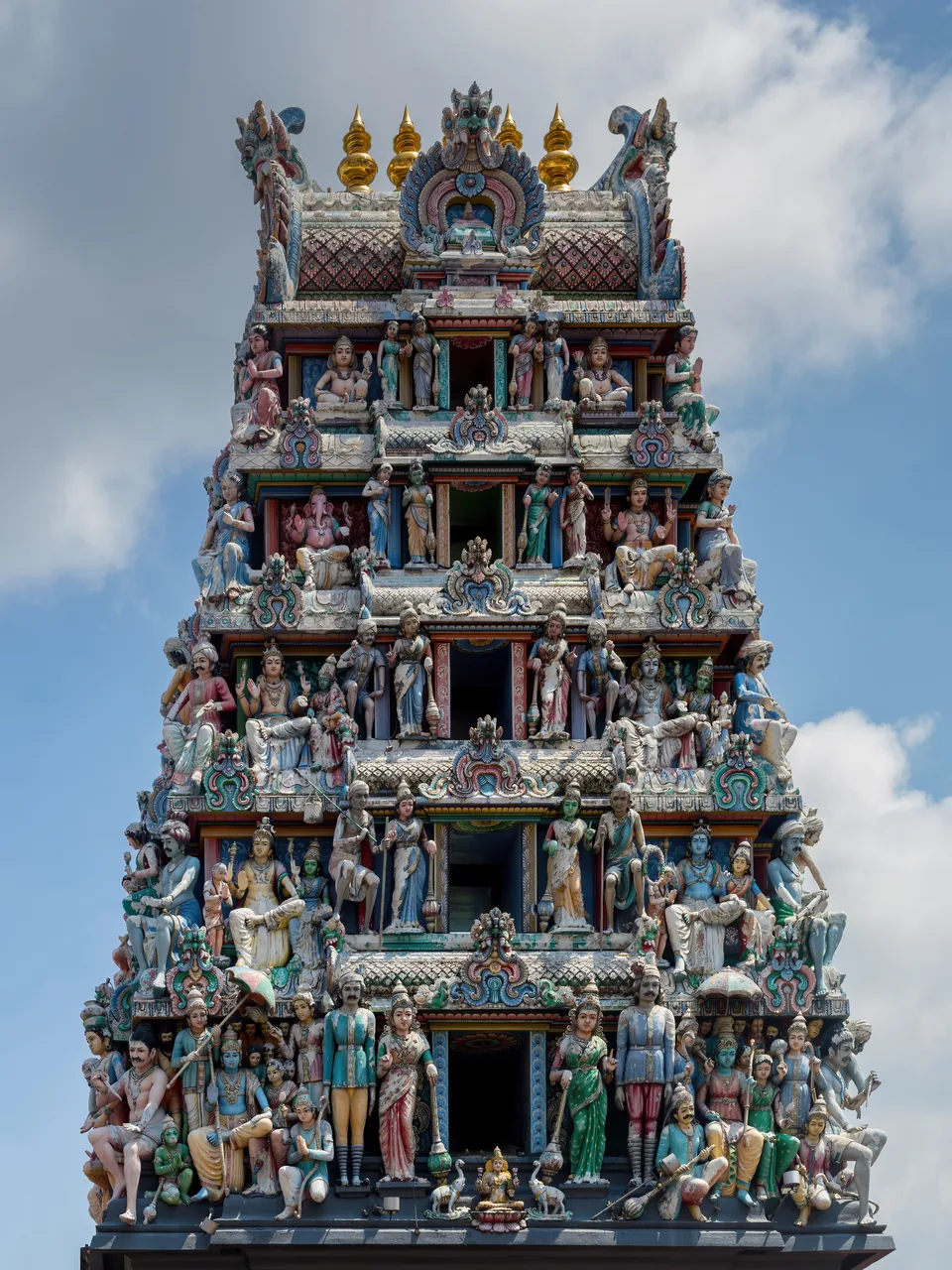
The showstopper is the Buddha Tooth Relic Temple & Museum on South Bridge Road: a five-storey, richly decorated 2007 complex built in the Tang-dynasty style, said to house a sacred tooth relic of the Buddha. Don’t miss the serene rooftop orchid pavilion and the giant prayer wheel (free; modest dress required). A block away stands the Sri Mariamman Temple, Singapore’s oldest Hindu temple, founded in 1827 — its six-tier gopuram tower is encrusted with hand-sculpted, brightly painted deities, and it hosts the dramatic fire-walking festival each year. On Telok Ayer Street, the Thian Hock Keng Temple (1839) is one of the oldest and finest Hokkien temples, built by immigrants in gratitude for a safe sea crossing, with not a single nail in its original structure. The nearby Jamae (Chulia) Mosque and the Nagore Dargah shrine complete a remarkable row of four faiths within a few minutes’ walk — a snapshot of Singapore’s multicultural soul.
| Temple / site | Faith | Don’t miss |
|---|---|---|
| Buddha Tooth Relic Temple | Buddhist | Rooftop orchid garden, prayer wheel |
| Sri Mariamman Temple | Hindu | The six-tier gopuram tower |
| Thian Hock Keng | Taoist/Hokkien | Nail-free architecture, Telok Ayer |
| Jamae (Chulia) Mosque | Muslim | Green South-Indian facade |
4. The street-market lanes
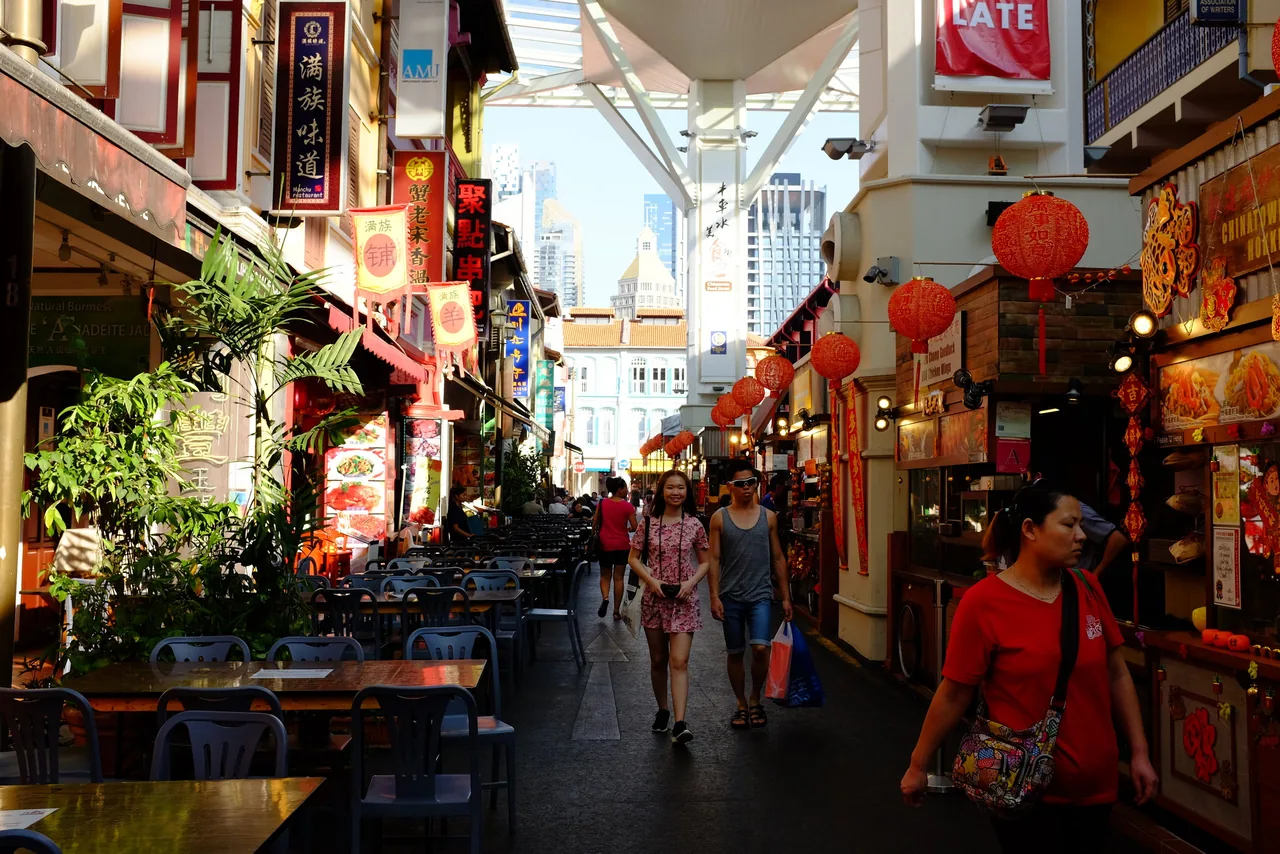
The pedestrianised heart of Chinatown — Pagoda, Trengganu, Sago and Smith Streets — is a covered warren of souvenir stalls, dried-goods shops and street food known as the Chinatown Street Market.
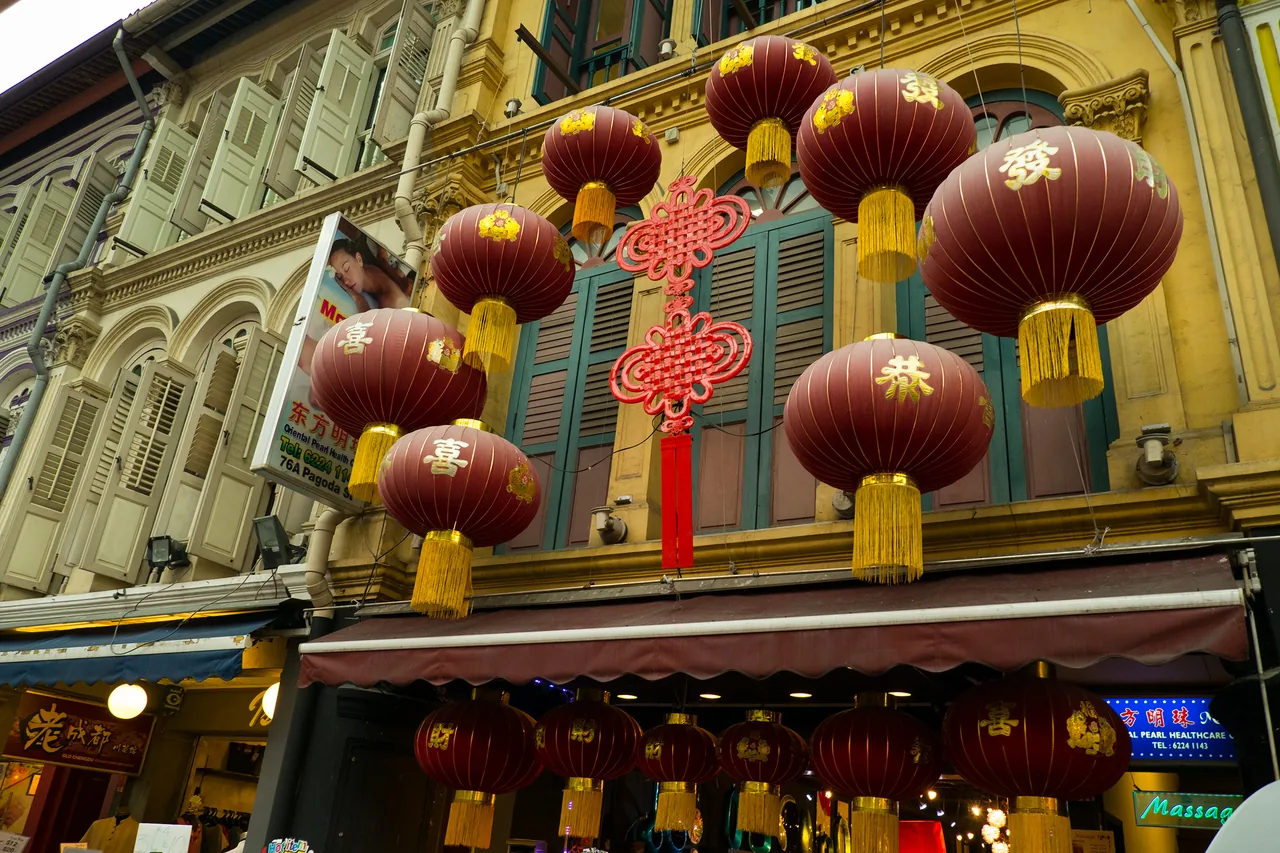
This is the Chinatown of the postcards: shophouse lanes hung with red lanterns, stalls spilling out with silk, fans, tea, calligraphy, trinkets and souvenirs, and the smell of roasting chestnuts and bak kwa (sweet barbecued pork jerky) in the air. Pagoda Street runs straight from the MRT and is the busiest; Trengganu Street crosses it; Smith Street was the old ‘food street’; and Sago Street has traditional shops. It’s touristy but genuinely fun, and good for inexpensive gifts if you haggle a little. Around the edges, the real working Chinatown continues: traditional Chinese medicine halls, tea merchants, goldsmiths and provision shops that have traded for generations. Come in the morning for calm or after dark for the lantern-lit glow.
5. Hawker food: Chinatown Complex & Maxwell
Chinatown is one of the cheapest great meals on earth — its two famous hawker centres pack Michelin-recognised stalls and S$4 plates under one roof.
The Chinatown Complex Food Centre (2nd floor of the Chinatown Complex, 200-plus stalls) is the largest hawker centre in Singapore and a destination in itself — home to the original Hawker Chan, whose soya-sauce chicken rice once earned a Michelin star, plus dozens of Bib Gourmand stalls serving everything from claypot rice to handmade noodles. Across from the Buddha Tooth temple, Maxwell Food Centre is smaller, slicker and famous for Tian Tian Hainanese Chicken Rice (expect a queue), alongside fishball noodles, Fuzhou oyster cakes and chwee kueh. Both are open through the day; go a little before or after the lunch rush for the best of it. Order at the stall, grab any free seat, and ‘chope’ (reserve) your table with a packet of tissues like a local. The complete what-to-order playbook is in our hawker food guide.
6. Heritage, museums & experiences
Beyond temples and food, Chinatown rewards the curious with a superb social-history museum and a few only-here experiences.
The Chinatown Heritage Centre on Pagoda Street is the single best way to understand the district: set inside restored shophouses, it recreates the cramped cubicles and hard lives of early immigrants, room by room, and is genuinely moving. Nearby, the Thian Hock Keng temple’s rear wall carries a long painted mural telling the story of the Hokkien community’s sea crossing. For something different, take a trishaw ride through the lanes (touristy but fun, especially at night), browse the traditional tea houses for a tasting, or seek out the working Chinese medicine halls with their walls of drawers and dried herbs. The district also hides quiet temples, clan-association buildings and street art if you wander off the main lanes — half the joy of Chinatown is getting slightly lost in it.
7. Ann Siang Hill, Club Street & Keong Saik: after dark
By night, Chinatown flips from heritage to hip — the restored shophouses of Ann Siang Hill, Club Street and Keong Saik Road are one of Singapore’s best strips for bars, cocktails and dining.
Just east of the temples, the gentle slopes of Ann Siang Hill and Club Street are lined with beautifully restored shophouses that now hold speakeasy cocktail bars, wine bars, rooftop terraces and acclaimed restaurants — the streets are closed to traffic on weekend evenings and fill with an after-work crowd. A short walk away, Keong Saik Road has evolved from its red-light past into one of the city’s most exciting dining streets, with everything from modern Cantonese to natural-wine bars and several restaurants that regularly make ‘best of’ lists. Telok Ayer and Amoy Street round out the scene with lunchtime hawker fare that turns into evening bars. It’s a more grown-up, design-led counterpoint to Marina Bay’s rooftops and Clarke Quay’s clubs — come for a relaxed cocktail among the heritage.
8. Telok Ayer & Amoy Street
Telok Ayer Street is the historic original shoreline of Chinatown — a quieter, deeply atmospheric strip of temples, shrines and converted shophouses that most visitors miss.
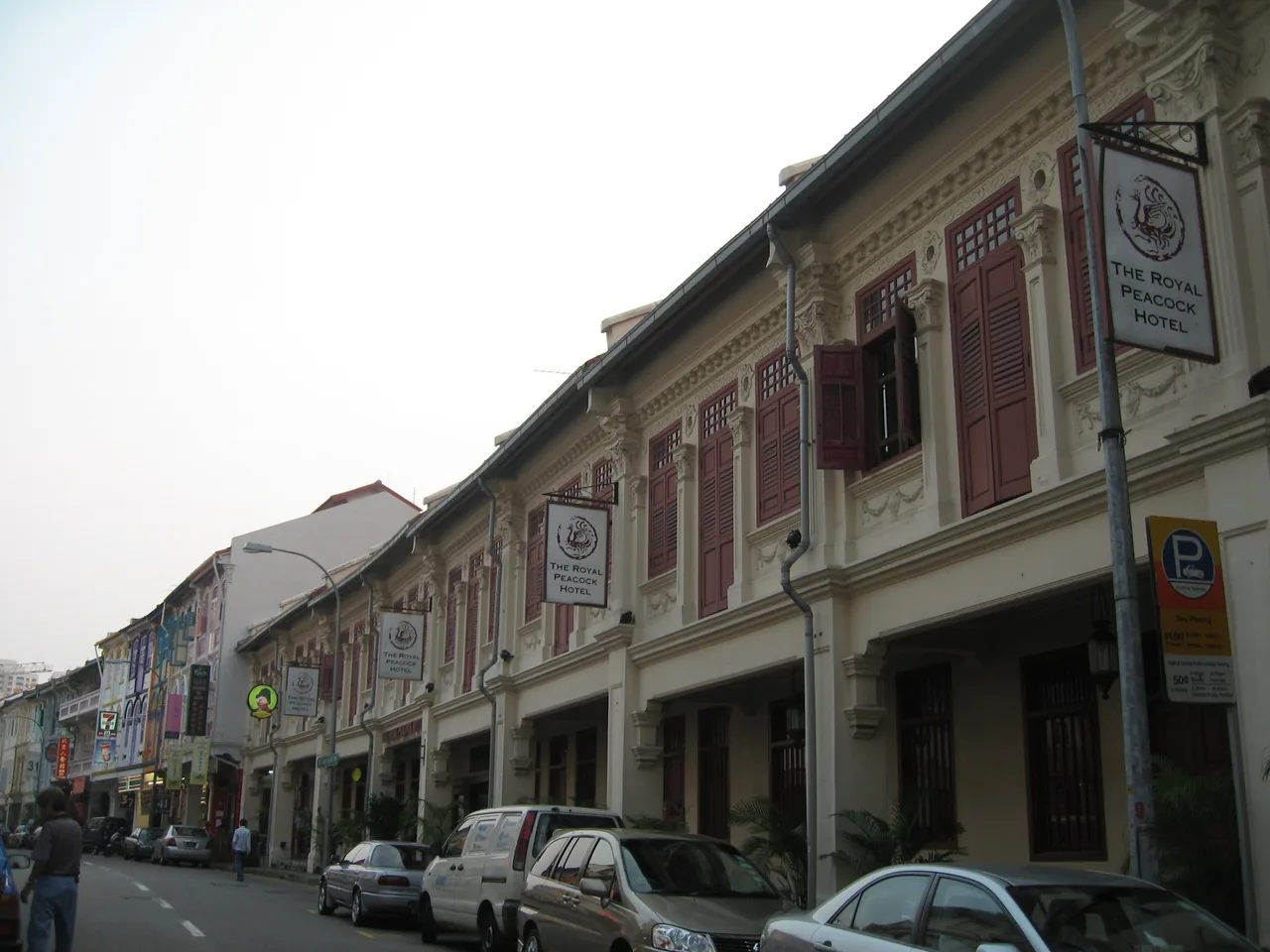
Before land reclamation pushed the sea away, immigrant ships landed roughly where Telok Ayer Street now runs, and the first arrivals built their temples and mosques here in thanks. Today it’s a wonderfully layered walk: the magnificent Thian Hock Keng temple, the Nagore Dargah Indian-Muslim shrine, the Al-Abrar Mosque and the former Ying Fo Fui Kun clan hall all sit within a couple of hundred metres, interspersed with cafes and bars in restored shophouses. The parallel Amoy Street is a lunchtime favourite of office workers, with a hawker centre and a row of shophouse restaurants. It’s the part of Chinatown to wander slowly, camera in hand — historic, photogenic and far calmer than the market lanes.
9. Tanjong Pagar & Duxton
South of the temples, Chinatown blends into Tanjong Pagar and the Duxton conservation area — a stylish extension of restored shophouses, dining and a famous public sky bridge.
The Duxton and Tanjong Pagar conservation districts are some of Singapore’s most beautifully preserved shophouse rows, now home to boutique hotels, cocktail bars, izakayas and Korean barbecue (Tanjong Pagar has a strong Korean-dining cluster). The headline sight is the Pinnacle@Duxton: a public housing complex whose 50th-floor sky bridge is open to visitors for a few dollars, giving a sweeping, local-favourite view over the city for a fraction of the cost of the paid observation decks — a genuine Singapore travel hack. It’s an easy add-on to a Chinatown day: walk south from Maxwell, explore Duxton’s lanes, ride up the Pinnacle for the view, and stay for dinner.
10. Chinese New Year in Chinatown
Chinese New Year is Chinatown’s biggest event of the year — and, if your dates line up, the single most atmospheric time to visit Singapore.
For several weeks around Chinese New Year (17 February in 2026, the Year of the Horse), the district transforms. The streets are draped with thousands of lanterns and a themed light-up, and a huge festive street bazaar takes over Pagoda, Trengganu and Sago Streets, selling new-year snacks, bak kwa, decorations, flowers and goodies late into the night. There are nightly stage performances, lion dances, and a countdown on New Year’s Eve, while the temples fill with worshippers. It’s busy, loud and joyful — expect crowds and book accommodation early. Even outside CNY, the Mid-Autumn Festival (late September) brings beautiful lantern displays. For the full 2026 festival calendar and what each means for crowds and prices, see our best time to visit guide.
11. What & where to eat
Eating is the main reason many people come to Chinatown — beyond the hawker centres, the district is full of specialist shops and restaurants worth seeking out.
Start with the hawker icons — soya-sauce chicken rice at Hawker Chan and Hainanese chicken rice at Tian Tian — then branch out. Smith Street and the surrounding lanes are good for claypot rice, roast meats (char siew, roast duck), bak kut teh (peppery pork-rib soup) and fish-head bee hoon. Pick up bak kwa (barbecued pork jerky) from one of the famous shops, try traditional pastries and tau sar piah, and finish with a tea tasting in one of the old tea houses. For something modern, Keong Saik and Ann Siang hide acclaimed restaurants and natural-wine bars. Budget S$5–10 a head to eat brilliantly at the hawker centres, more for the sit-down spots. The full dish-by-dish guide is in our hawker food guide.
12. Getting there, timing & etiquette
Chinatown is one of the easiest districts to reach and explore — here’s the practical detail to get it right.
Getting there: take the MRT to Chinatown station (Downtown and North-East lines, Exit A for the market); Maxwell and Telok Ayer MRT also border the district. It’s a quick ride from anywhere central. Best time: mornings are calm and good for temples and markets; evenings are best for the bars; Chinese New Year is the most atmospheric (and crowded). How long: half a day for the essentials, a full day to do it justice. Temple etiquette: dress modestly (cover shoulders and knees), remove shoes where indicated, ask before photographing people at worship, and step over (not on) temple thresholds. Money: hawker stalls are increasingly cashless but carry some small notes; the street market expects a little gentle haggling. Sort an eSIM so maps and payment apps work from the start.
| Practical | Detail |
|---|---|
| Nearest MRT | Chinatown (DT/NE), Maxwell, Telok Ayer |
| Cost to explore | Free (temples free; food cheap) |
| Best time of day | Morning (temples) / evening (bars) |
| Time needed | Half to full day |
13. Where to stay in Chinatown
Chinatown is one of the best-value central bases in Singapore — characterful, walkable and superbly connected, with stays for every budget.
The district and neighbouring Tanjong Pagar are full of boutique hotels in restored shophouses, smart mid-range options and some of the city’s best hostels and capsule pods — a rare pocket of affordability in an expensive city. You’re on two MRT lines, walkable to the CBD, the river and (in 25 minutes) Marina Bay, and surrounded by cheap food and nightlife. It suits first-timers who want atmosphere and value over five-star polish. Light sleepers should note the livelier bar streets (Ann Siang, Keong Saik) can be noisy at weekends — pick a quieter lane if that matters. For a full neighbourhood-by-neighbourhood comparison of where to base yourself, see our where to stay in Singapore guide.
14. Plan it: routes & what’s nearby
Chinatown slots neatly into any Singapore itinerary — here’s how to structure a visit and what to pair it with.
Half-day (morning): Chinatown MRT → Pagoda Street market → Buddha Tooth Relic Temple → Sri Mariamman → hawker lunch at Maxwell or Chinatown Complex. Full day: add the Chinatown Heritage Centre, the Telok Ayer heritage walk, the Pinnacle@Duxton view, and evening drinks on Ann Siang Hill. Because it’s so central, Chinatown pairs naturally with the rest of the core: it’s one MRT stop or a 25-minute riverside walk from Marina Bay and Gardens by the Bay, a few minutes from Marina Bay Sands and Clarke Quay, and an easy hop to the other cultural quarters. A classic Singapore day: icons and gardens by day, Chinatown temples and a hawker dinner by evening. Plan the rest with our complete neighbourhoods guide and Singapore travel guide.