
Pulau Ubin Day Trip: Singapore’s No-Passport Island Escape by Bumboat
No cars, no ATMs, and no visa required — just a ten-minute bumboat ride to kampong houses, a mountain-bike park, and one of Singapore’s richest wetlands. Here’s exactly how to plan it.
| What it is | A rustic, car-free island off Singapore’s northeast coast, with a kampong village, Chek Jawa wetlands, and a mountain-bike park |
|---|---|
| How to get there | Bumboat from Changi Point Ferry TerminalMap, about 10 minutes, roughly S$4 per person one-way, cash only, no fixed timetable |
| Passport or visa | None needed — Pulau Ubin is still legally part of Singapore |
| Getting around | Rent a bicycle at the jetty for about S$8-25 a day, cash only — the default way to see the island |
| Star attraction | Chek Jawa WetlandsMap boardwalk, best near low tide, plus the 21-metre Jejawi TowerMap |
| Money | Singapore dollars, cash only on the island — there are no ATMs |
| Best for | Families, cyclists, and anyone curious about old Singapore; skip it if you want air-conditioned comfort or a fast, easy outing |
| Best time | Year-round; weekday mornings are quietest — go early to beat weekend bike-rental queues and the midday heat |
| Name & history | Ubin is Malay for granite; the island was quarried for it from Singapore’s earliest colonial days until the last quarry closed in 1999 |
| Trail network | Four named NParks routes — Sensory, Western, Eastern and Northern — link the jetty, Chek Jawa, Puaka HillMap and the campsites |
1. Is a Pulau Ubin Day Trip Worth It?
2. Getting There: The Changi Point Bumboat
3. Getting to Changi Point Ferry Terminal
4. Getting Around Pulau Ubin: Bike, Foot, or Shared Van
5. Chek Jawa Wetlands: Why Most People Come
6. Ketam Mountain Bike Park: For the More Adventurous
7. Puaka Hill and the Old Granite Quarries
8. The German Girl Shrine and Other Ubin Curiosities
9. The Island’s History: From Granite Quarry to Nature Retreat
10. A Half-Day Pulau Ubin Plan (~4 Hours)
11. A Full-Day Pulau Ubin Plan
12. Food on the Island (and Off It)
13. Wildlife and Staying Safe Around It
14. Money, Signal, and Other Practical Logistics
15. Camping Overnight on Pulau Ubin
16. Best Time to Visit Pulau Ubin
17. First-Timer Mistakes to Avoid
18. Who Pulau Ubin Suits, and Planning the Rest of Your Trip
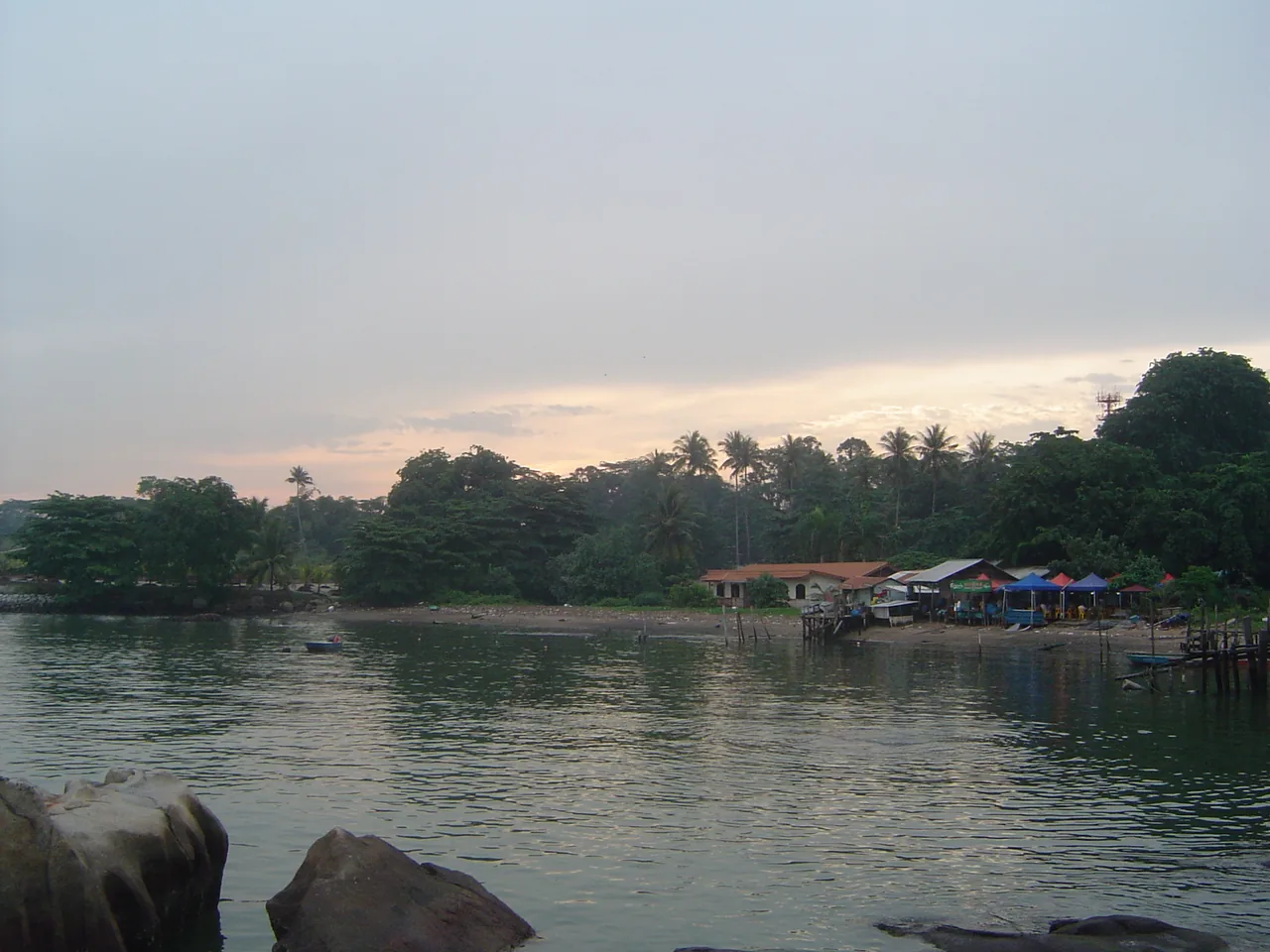
Pulau Ubin is a small, car-free island off Singapore’s northeast coast, reachable only by a shared bumboat from Changi Point, and it is the closest thing the country has to a time machine. Kampong houses on stilts, a mountain-bike park, flooded granite quarries, and Chek Jawa’s tidal flats sit a ten-minute boat ride from the mainland, for about S$4 in cash. Unlike the region’s other classic day trips from Singapore, such as Johor Bahru or Batam and Bintan, Ubin needs no passport at all — it’s still legally part of Singapore, which makes it one of the easiest half-day escapes on the whole Singapore itinerary.
1. Is a Pulau Ubin Day Trip Worth It?
Yes, if you want a slower, greener side of Singapore for the cost of a bus ticket and a S$4 boat fare — Pulau Ubin rewards cyclists, families and anyone curious about the country’s kampong past, but it’s not the trip for anyone chasing air-conditioning or a fast, curated outing.
The island itself is tiny by Singapore standards: no cars, a scattering of kampong houses, a mountain-bike park, and Chek Jawa’s wetlands at the eastern tip. The cost floor is low, too. Round-trip bumboat fare runs about S$8 per person, and a basic bike rental adds roughly S$8-15 for the day, so a full day of cycling and exploring can come in well under S$30 without any extras. For the rest of what to see around the country, our Singapore travel guide covers the bigger picture.
Who it suits: families with kids old enough to cycle, mountain bikers looking for actual trails, birdwatchers, photographers, and travellers who want to see what Singapore looked like before land reclamation and high-rises took over. Who should skip it: anyone short on time who wants a quick, polished attraction, or travellers who’d rather not deal with heat, unpaved paths, and cash-only everything.
2. Getting There: The Changi Point Bumboat
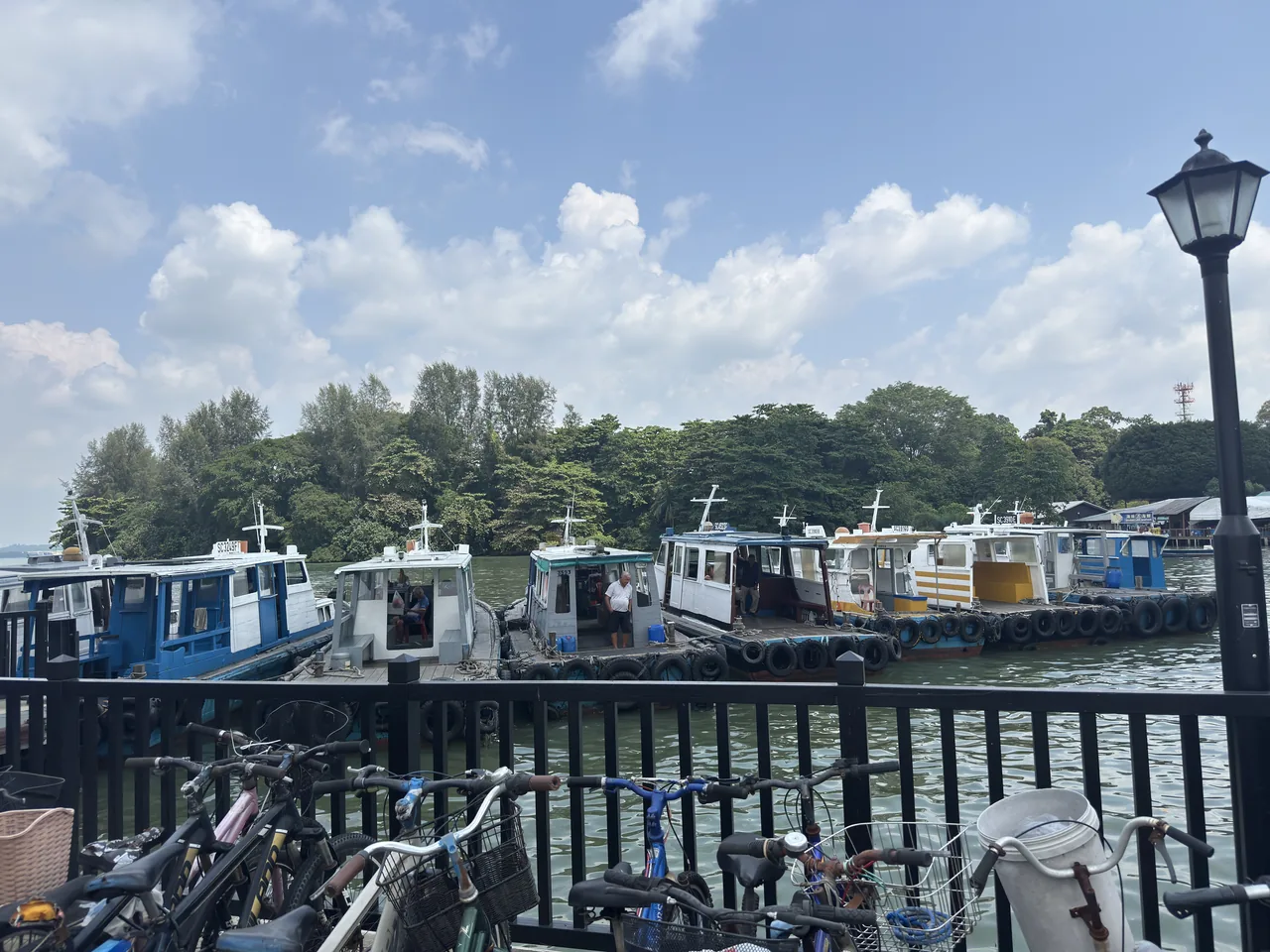
The only way to Pulau Ubin is a bumboat from Changi Point Ferry Terminal — a small motorised boat that departs once roughly a dozen passengers are aboard, not on a printed schedule.
Bumboats run on demand, roughly from 6am to 7pm daily. There’s no fixed departure time; the boat leaves when it’s reasonably full, so on a quiet weekday morning you might wait a little longer than on a busy weekend. The crossing itself takes about ten minutes. Fare is about S$4 per person, one-way, cash only — bring smaller notes and coins, since operators may not be able to break a large bill. If you’re bringing your own bicycle across, expect a fixed extra S$2 for it.
If you’re heading back to the mainland and no boats happen to be waiting at Ubin’s jetty, NParks operates a helpline (1800-471 7300) for stranded visitors. Outside the usual operating hours, or if there simply aren’t enough passengers for a shared trip, it’s usually possible to arrange a boat privately for a higher fare.
3. Getting to Changi Point Ferry Terminal
From central Singapore, the fastest route is MRT to Tanah Merah, then Bus 2 to Changi Village Bus Interchange, followed by a short walk to the ferry terminal.
- Take the MRT to Tanah Merah station on the East-West Line.
- Board Bus 2 from the station and ride to Changi Village Bus Interchange. Buses 29 and 59 also serve the area if you’re coming from elsewhere.
- Walk about 3 minutes from the bus interchange to Changi Point Ferry Terminal, where the bumboats to Pulau Ubin depart.
For getting around the rest of Singapore before or after your Ubin trip, see our Singapore transport guide.
4. Getting Around Pulau Ubin: Bike, Foot, or Shared Van
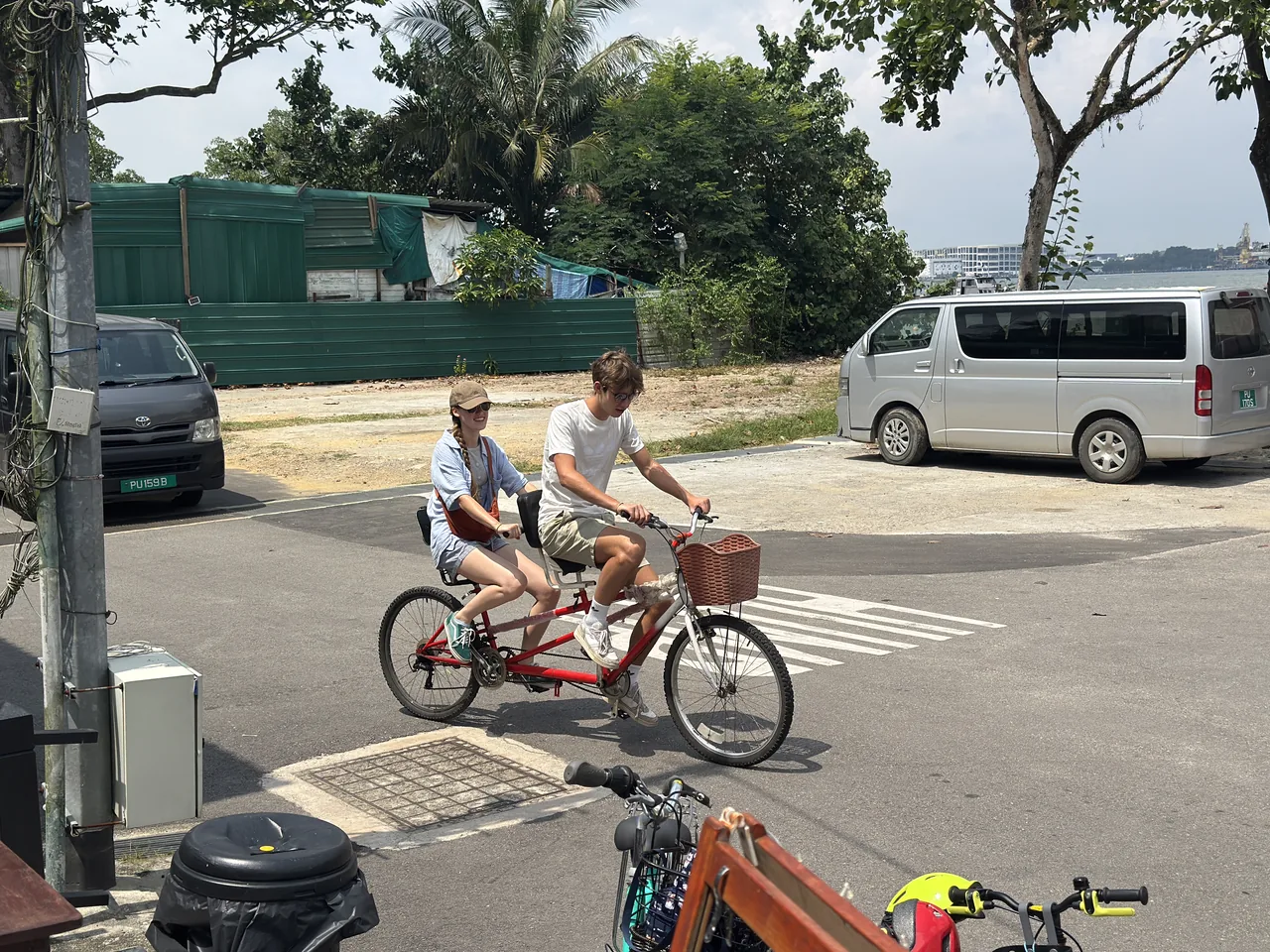
Renting a bicycle at the jetty, for roughly S$8-25 a day in cash, is how most visitors cover ground on Pulau Ubin — the island is compact enough to see plenty in half a day, but too spread out to comfortably walk everywhere.
Rental shops cluster right by the main jetty and open roughly 8am to 6pm. A basic single-speed bike with a basket costs about S$8-15 for the day; better-geared or mountain bikes, some from brands like Polygon or Trinx, run up to roughly S$20-25 and sometimes come with a helmet and a bottle of water. No booking is needed — just show up, compare a stall or two, and expect to pay cash. If you want a noticeably better bike than the village rentals offer, it’s also possible to rent one on the mainland at Changi Point and bring it over on the bumboat, though that adds a small boat fee.
Walking is fine for the area right around the jetty and village, but slow going if you want to reach Chek Jawa or Ketam Mountain Bike ParkMap on foot. A handful of shared taxis and vans, run informally by villagers, wait near the jetty and charge a flat fee — a useful backup if cycling isn’t for you, though seats are limited.
| Option | Cost | Best for |
|---|---|---|
| Bicycle rental at the jetty | ~S$8-25/day, cash | Most visitors — flexible, covers the whole island |
| Bike rented at Changi Point (mainland) | Rental fee + boat surcharge | Wanting a better-quality bike |
| Walking | Free | The village and jetty area only |
| Shared van/taxi | Flat fee, cash | Backup option, limited availability |
Beyond the basic choice of bike, foot or van, NParks has informally named four routes that criss-cross the island, and knowing roughly where each one goes makes it much easier to plan a loop instead of doubling back on yourself. A printed island map, worth grabbing on arrival since mobile signal can be patchy once you’re away from the jetty, is available at the NParks Visitor/Volunteer Hub near the main jetty.
| Route | Leads to |
|---|---|
| Sensory Trail | A short, easy loop past kampong heritage fruit trees and herbs villagers once grew — good for families and first-timers |
| Western route | Pekan Quarry, the Ah Ma Drink Stall, Puaka Hill, and Ketam Mountain Bike Park |
| Eastern route | Through the Sensory Trail loop out to Chek Jawa Wetlands |
| Northern route | Mamam Campsite and the NPCC (National Police Cadet Corps) Camp area — quieter and less touristed |
Most people simply rent from the villagers at the jetty and pay cash on arrival — it’s the cheapest, simplest default, and no one books it in advance. If you’d rather have the ferry and a bike pre-arranged and skip any queuing or haggling, especially on a busy weekend, a guided tour is worth comparing — see the full-day itinerary below for a bookable option.
5. Chek Jawa Wetlands: Why Most People Come
Chek Jawa Wetlands, at Pulau Ubin’s eastern tip, packs an unusually wide range of habitats into a small area — sandbar, seagrass lagoon, mangroves, and both rocky and coral-rubble shore — and it’s the single biggest reason many day-trippers make the crossing.
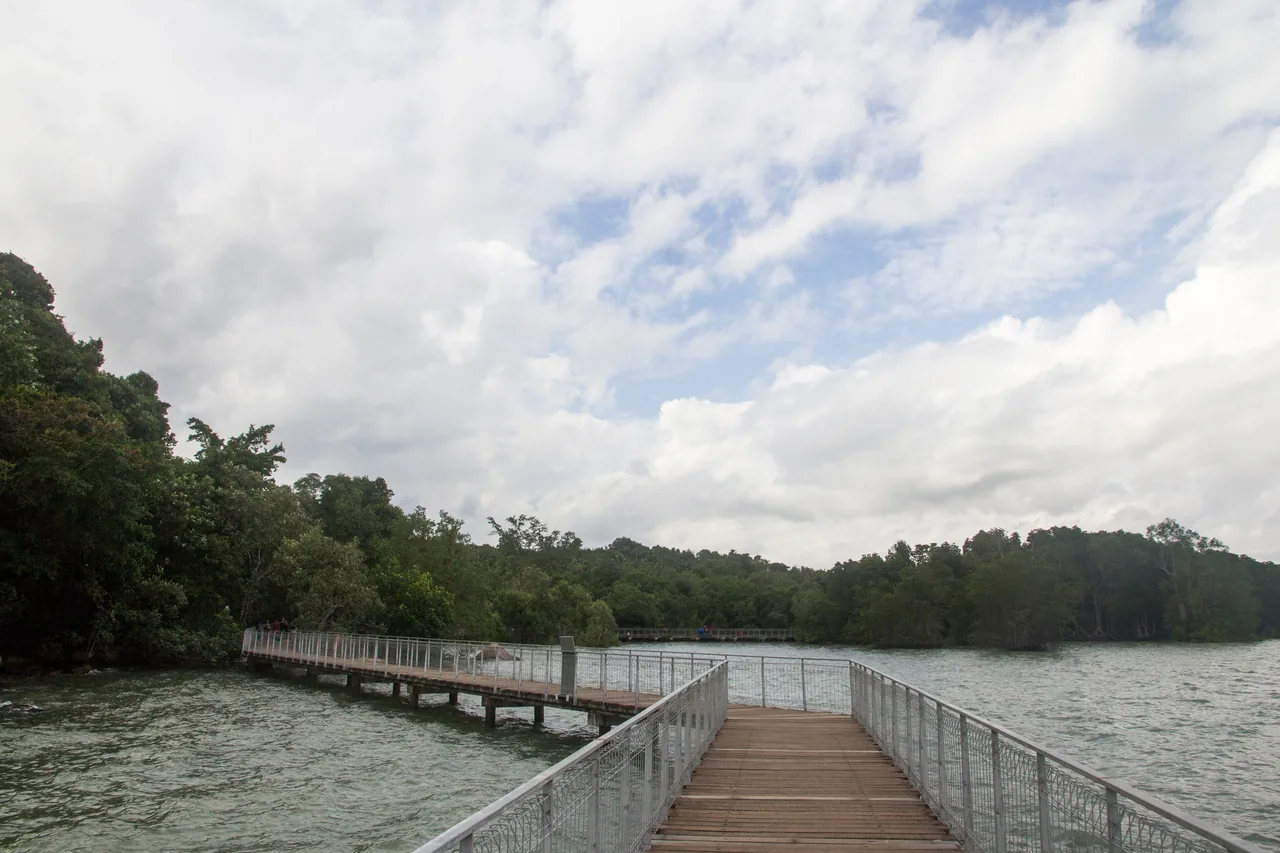
A Visitor Centre anchors the site, and a roughly 1km boardwalk lets you move through the ecosystem without trampling it, split into the Coastal Loop (about 600m) and the Mangrove Loop (about 500m). The 21-metre Jejawi Tower adds a treetop view over the mangroves and the strait beyond. The wider area, including the Visitor Centre, is open daily from 7am to 7pm, though the boardwalk itself is only accessible from 9am to 5pm.
Timing matters here more than at most Singapore attractions. Chek Jawa is at its best near low tide, when the sandbar’s marine life is actually exposed and visible — check a tide table before you plan the day around it. A separately guided Chek Jawa Boardwalk Tour has existed at various points, and pontoon-boat tours have occasionally been suspended for maintenance, so check the NParks Pulau Ubin page ahead of your trip rather than assuming a specific tour will be running.
The mudflats and sandbar reward a slow, close look. Fiddler crabs are easy to spot at low tide — males carry one oversized claw used to signal and display, while females have two smaller, evenly sized claws built for feeding. Hermit crabs shuffle across the sandbar in borrowed shells, sea stars turn up exposed on the open seabed, and Haddon’s carpet anemones have reportedly been doing especially well in Chek Jawa’s southern waters. Naturalists estimate the surrounding waters support around 500 marine species in total, and it’s rare for a low-effort, easily walked outing to turn up this much biodiversity in such a small area. Dugong feeding trails have occasionally been reported in the seagrass lagoon by naturalist observers, though this should be read as an occasional sighting rather than a guarantee — dugongs are shy and are rarely seen directly, so a feeding trail in the seagrass is a far more realistic thing to look for than the animal itself.
6. Ketam Mountain Bike Park: For the More Adventurous
Ketam Mountain Bike Park is a roughly 45-hectare, purpose-built trail network with about 10km of single-track, built to international mountain-biking standards — Singapore’s first park of its kind, and it’s aimed more at capable riders than at a wobble on a rental cruiser.
Trails range from easy, leisurely loops to genuinely technical sections with roots, berms and elevation changes, so the experience varies a lot depending on which part of the park you ride. Not all of it suits the basic single-speed bikes rented at the jetty; if you’re planning to tackle the more technical trails, a better-geared or full mountain bike, rented either on Ubin or brought over from Changi Point, is worth the extra cost.
Casual cyclists who just want a relaxed ride, rather than a workout, are often happier sticking to the flatter kampong paths near the village and heading to Chek Jawa instead, and saving Ketam for a trip focused specifically on more active things to do in Singapore.
7. Puaka Hill and the Old Granite Quarries
Puaka Hill, Pulau Ubin’s highest point, is a short but genuinely steep climb that rewards you with a panoramic view over the island and its flooded former granite quarries.
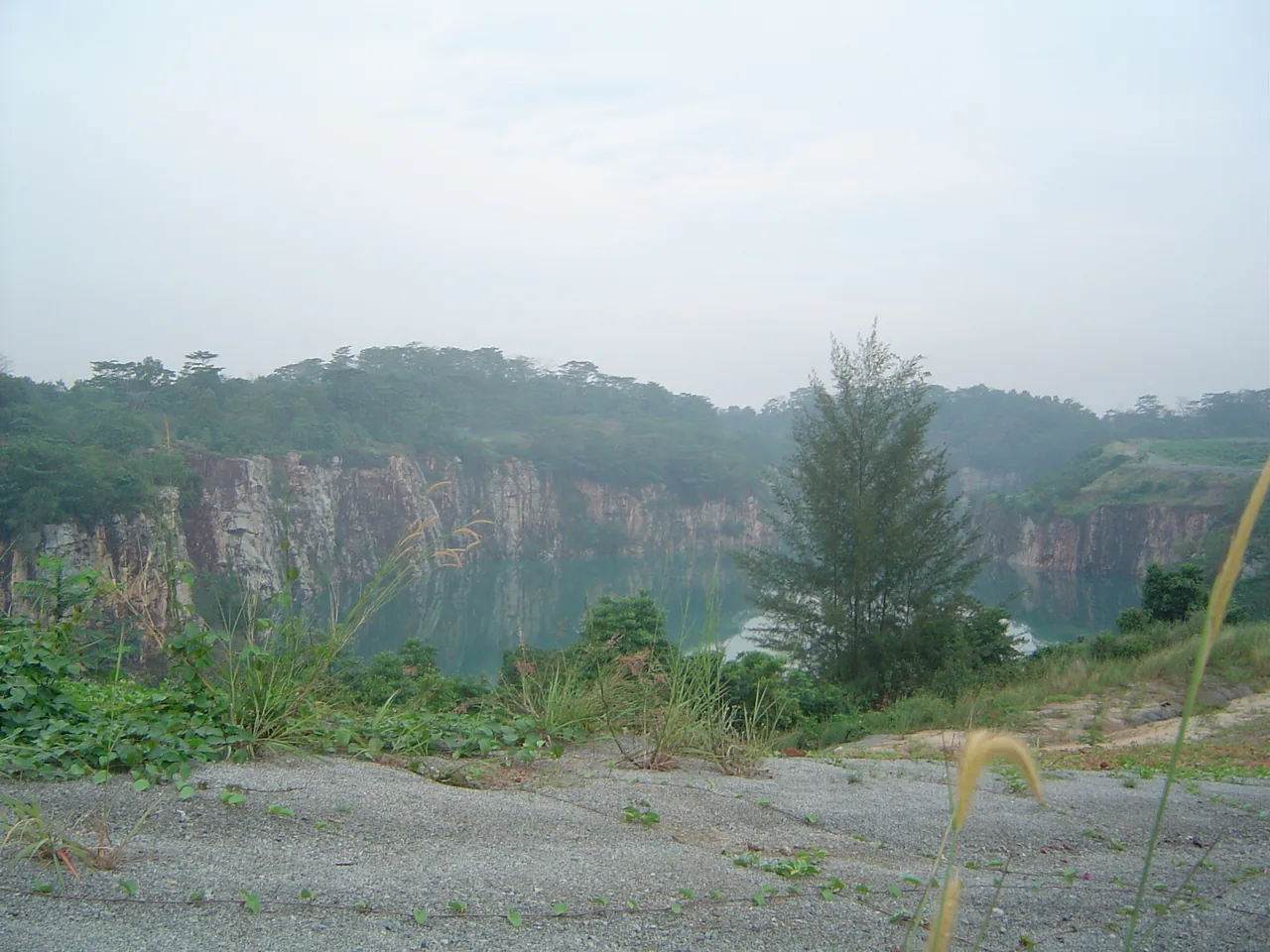
The old quarries — Ketam, Pekan, Kekek, Ubin and Balai — are visible from several of the island’s paths and roads, now still, quiet bodies of water where granite was once cut for the mainland’s early construction. Ubin itself takes its name from the Malay word for granite, and these flooded pits are what’s left of a quarrying industry that once supplied stone as far as the Horsburgh Lighthouse and the Johor-Singapore Causeway; the fuller story, including who lived and worked here and for how long, has its own section further down this guide. Pekan Quarry in particular has become a reliable spot for birdwatching, with hornbills, herons, egrets and sunbirds reported by regular visitors.
Neither Puaka Hill nor the quarries require much specialist gear, just decent shoes and a bit of patience on the climb, and they pair well with a bike ride if you’re spending a full day on the island rather than a quick half-day loop.
8. The German Girl Shrine and Other Ubin Curiosities
The German Girl ShrineMap, tucked near Ketam Quarry, is local legend rather than verified history — a small shrine built around the unmarked grave of a young woman local lore says was a German national who died fleeing British forces during the World War I-era internment of German nationals in Singapore.
Over time it became a place locals, including some gamblers seeking luck, would visit and leave offerings, and dolls and toys are still commonly left there today. It’s reachable via signposted paths off the Ketam bike trail, and it’s worth treating as folklore rather than confirmed fact — no verified historical record backs the specific story, but it remains one of the island’s more talked-about stops.
Two other things worth knowing about: Butterfly Hill, reported to host dozens of butterfly species drawn to nectar and host plants along its paths, and the kampong village itself, clusters of traditional wooden houses on stilts near the main settlement, some of which are still lived in. Treat the village as someone’s home rather than a photo backdrop, and keep noise and intrusion to a minimum.
9. The Island’s History: From Granite Quarry to Nature Retreat
Pulau Ubin takes its name from the Malay word for granite, and the kampong feel that draws visitors today survives from a real quarrying and fishing community that has been shrinking for more than 50 years — not a re-creation staged for tourists.
Granite has been cut from the island since Singapore’s earliest colonial days. Blocks quarried on Ubin were ferried out by tongkang boats to help build the Horsburgh Lighthouse on Pedra Branca between 1850 and 1851, and the island’s granite later went into the Johor-Singapore Causeway as well. Several private quarries operated on the island at the same time, and quarrying activity peaked in the 1930s, decades before most of the kampong houses still standing today were built.
The island’s population tells the rest of the story. The 1970 census counted 2,028 residents living on Ubin — a working village, not a handful of holdouts. That number had roughly halved by 1987, as the quarries began winding down and resettlement schemes moved families into HDB flats on the mainland. The last granite quarry on the island closed in 1999, ending the livelihood that had shaped Ubin for most of the 20th century. Today only around a few dozen villagers remain, down from over 2,000 at the 1970 peak.
That long decline is the real reason Ubin feels different from the rest of Singapore. It isn’t a theme-park version of a kampong built for day-trippers — it’s what’s left after a genuine quarrying and fishing community shrank to a fraction of its former size, with the empty quarries, quiet paths and remaining houses standing as the physical trace of that history.
10. A Half-Day Pulau Ubin Plan (~4 Hours)
A half-day on Pulau Ubin, about four hours from bumboat to bumboat, comfortably covers the jetty village and a ride out to Chek Jawa and back, and it’s the plan that suits most first-time visitors.
- Morning arrival: catch an early bumboat from Changi Point (soon after boats start running avoids both crowds and the heat) and rent a bicycle at the jetty — allow 10-15 minutes.
- Ride to Chek Jawa: cycle to the eastern tip, timed close to low tide if possible, and walk the boardwalk loops and Jejawi Tower — 1.5 to 2 hours.
- Return via the village: ride back through the kampong houses near the main settlement, stopping at a jetty-side stall for a drink or a simple lunch.
- Return bumboat: head back to the jetty and catch a boat to Changi Point before the afternoon heat peaks.
| Item | Rough cost per person (SGD) |
|---|---|
| Bumboat, round trip | ~S$8 |
| Bicycle rental, half day | ~S$8-15 |
| Food and drinks at a jetty stall | ~S$5-10 |
| Miscellaneous (extra water, snacks) | ~S$3-5 |
| Rough total | ~S$25-40 |
This plan leaves comfortable slack for a slower walk through the boardwalk loops or an extra stop at the German Girl Shrine on the way back, without pushing into the hottest part of the afternoon. To stretch the day further, see the full-day plan below.
11. A Full-Day Pulau Ubin Plan
A full day on Pulau Ubin adds Ketam Mountain Bike Park, the climb up Puaka Hill, and more unhurried time around the kampong, quarries and history stops — worth choosing if you’d rather slow down than rush through the half-day loop.
- Early arrival & Chek Jawa: take one of the first boats from Changi Point, rent a bike, and head straight to Chek Jawa near low tide before the day heats up.
- Mid-morning: detour to Ketam Mountain Bike Park if you’re on a geared or mountain bike, or take the flatter kampong paths if you’re on a basic rental.
- Midday: lunch at a jetty-area stall such as Ah Ma Drink Stall or Encik Hassan’s, or a pre-booked kelong seafood boat trip if you arranged one from Changi Point.
- Afternoon: climb Puaka Hill for the view over the old quarries, with a stop at Pekan Quarry if you’re birdwatching.
- Late afternoon: a slower ride through the kampong village, with an optional detour to the German Girl Shrine, before catching one of the last comfortable boats back.
| Item | Rough cost per person (SGD) |
|---|---|
| Bumboat, round trip | ~S$8 |
| Bicycle rental, full day (geared/mountain bike) | ~S$20-25 |
| Food across two stops | ~S$15-25 |
| Miscellaneous (water, snacks, extras) | ~S$5-10 |
| Rough total | ~S$50-70 |
If a kelong seafood lunch is part of the plan, book that boat from Changi Point ahead of time — it runs separately from the Ubin bumboat and needs its own arrangement, as covered in the food section below.
12. Food on the Island (and Off It)
Food right at Pulau Ubin’s jetty comes from a small handful of named, family-run stalls rather than a food court, and it’s worth knowing them by name since they’re easy to walk past — the island’s more substantial seafood experiences, by contrast, are a separate boat trip from Changi Point, not something arranged from Ubin itself.
Ah Ma Drink Stall, near Jelutong Bridge, has been run for decades by Madam Ong Ang Kui and her daughter, selling drinks and fruit grown on their own trees — the kind of stop that only exists on Ubin. Near the main jetty, Encik Hassan’s has served homemade Malay dishes, including mee rebus, mee siam and nasi lemak, for more than 30 years. For a proper sit-down meal, Season Live Seafood Restaurant, near the NParks Volunteer Hub, has alfresco seating facing the jetty and the mainland and is known for its drunken prawns, while Cheong Lian Yuen is a smaller seafood spot nearby with its own alfresco tables. All four are walk-up, no-booking places — a simpler, separate category from the kelong-restaurant boat trips below, which require arranging a separate boat in advance.
Even with these named stops, don’t expect an extensive menu or late hours everywhere; bring extra cash and water regardless, and treat the jetty-area food as a solid lunch option rather than a guaranteed one, since some stalls keep irregular hours. For a fuller seafood meal further from the jetty, kelong (offshore fish-farm) restaurants like Smith Marine Floating Restaurant and Uncle Tan’s Kelong are reachable by a separate, bookable private boat from Changi Point — Uncle Tan’s has historically run around S$70 per boat round-trip with a semi-fixed zichar-style seafood menu and free-flow rice. These are a distinct, book-ahead experience layered on top of a Changi Point visit, not part of the basic Ubin bumboat trip.
One common mix-up worth clearing up: New Ubin Seafood is a well-known Singapore zichar restaurant brand that originated as a kelong restaurant on Pulau Ubin decades ago, but it now operates on the Singapore mainland rather than on the island itself — so don’t plan an Ubin day trip around eating there.
13. Wildlife and Staying Safe Around It
Wild boars are a real, generally low-risk presence on Pulau Ubin, and the standard advice is simple: don’t feed them, keep food out of sight, and give them space, especially a sow with piglets.
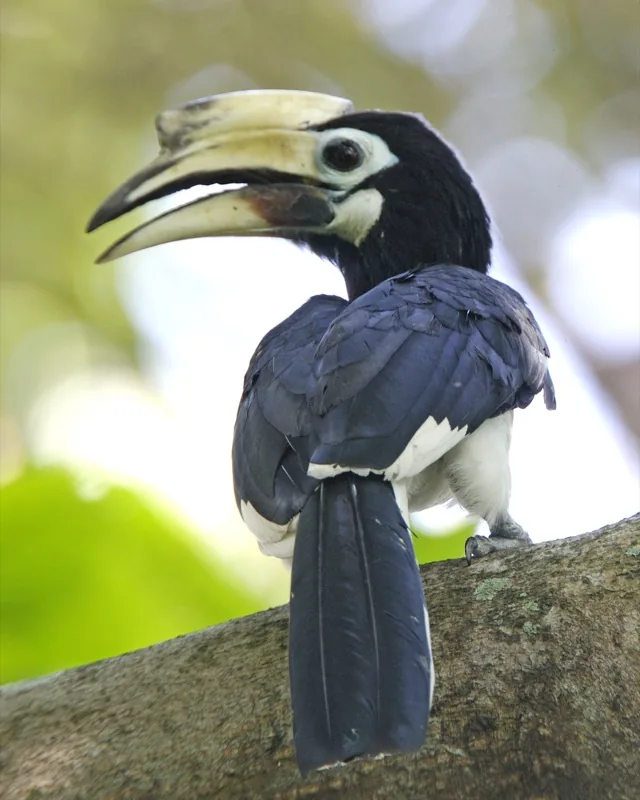
Other wildlife reported on the island includes long-tailed macaques, Malayan water monitors, Oriental pied hornbills, and a range of other birds — treat all of it as wild and keep a respectful distance rather than approaching for photos.
Beyond wildlife, ordinary outdoor sense applies: there’s little shade on the open trails, so bring sun protection; pack insect repellent and more drinking water than you think you’ll need, since buying more on the island is limited; wear sturdy, closed shoes for the unpaved and sometimes uneven bike paths; and take extra care on loose gravel or muddy sections after rain.
14. Money, Signal, and Other Practical Logistics
There are no ATMs on Pulau Ubin, so cash isn’t a convenience but a necessity — for the bumboat, the bike rental and anything you eat — while unlike a trip to Johor Bahru or Batam and Bintan, you need no passport, visa or currency exchange at all, since Ubin is still legally part of Singapore.
Currency is the Singapore dollar, same as the mainland, so there’s nothing to exchange. Mobile signal can be patchy or weaker in parts of the island, particularly in the nature reserve areas, so it’s worth downloading offline maps or noting your planned route before you lose reception. Toilets are available near the jetty and village and at the Chek Jawa Visitor Centre; facilities elsewhere on the island are limited, so plan around those points.
If you’re budgeting the day alongside the rest of your trip, our Singapore on a budget guide has more on keeping costs down without cutting corners on the experience.
15. Camping Overnight on Pulau Ubin
Yes, you can camp overnight on Pulau Ubin, but only with an NParks permit applied for at least two weeks ahead, at one of three designated campsites: Jelutong, Mamam, and Endut Senin.
Singaporeans and permanent residents apply through the AXS system, while short-term visit pass holders and tourists use an online form instead. Campers must be 16 or older, and one permit covers one tent of up to six people. There’s a cap of 4 camping days per month per applicant, and each booking runs from 9am to 9am the following day.
One detail worth flagging before you book: permits are non-cancellable and non-changeable once confirmed, so there’s no refund if it rains or plans change. Treat camping as an option for a longer, more deliberate trip to Ubin rather than something to add on impulsively to a standard day visit.
16. Best Time to Visit Pulau Ubin
Pulau Ubin works year-round, but the best conditions are a cool, dry weekday morning — rain turns the trails slippery and muddy, and the open paths offer little shade once the sun climbs.
Weekday visits are noticeably quieter than weekends, when queues can form at the bike rental shops near the jetty and the more popular trails see far more traffic. School holidays add to the crowds too. Arriving early, soon after the first boats start running around 6-7am, avoids both the worst of the heat and the rental queues, and gives you first pick of bikes before the better ones are gone.
If your Ubin trip is one stop in a longer visit, our best time to visit Singapore guide covers how the wider weather patterns and event calendar might shape the rest of your dates.
17. First-Timer Mistakes to Avoid
Most Pulau Ubin mistakes come down to the same root cause: assuming the island runs like the rest of Singapore, when in fact it’s cash-only, on-demand, and mostly unshaded.
| Mistake | Why it bites | Fix |
|---|---|---|
| Not enough cash | No ATMs, no cards anywhere on the island | Bring small notes for the boat, bike and food |
| No water or sun protection | Little shade on open trails | Pack more water than feels necessary, plus sunscreen and a hat |
| Expecting a fixed ferry schedule | Bumboats leave on demand, not on a timetable | Build in flexibility and don’t time the day to the minute |
| Missing low tide at Chek Jawa | Sandbar life is only visible when the tide is out | Check a tide table before you plan the visit |
| Feeding wild boars | Encourages boars to approach visitors and food | Keep food hidden, don’t feed or corner them |
| Underestimating trail distances on a basic bike | Single-speed rentals are slow on longer or hilly routes | Upgrade to a geared bike for a full-day plan |
| Forgetting cash is the only payment method | Card payment is essentially unavailable outside pre-booked tours | Treat cash as non-negotiable, not a backup |
18. Who Pulau Ubin Suits, and Planning the Rest of Your Trip
Pulau Ubin suits families, cyclists, photographers and anyone curious about pre-HDB Singapore, and it’s an easy skip for travellers who’d rather have air-conditioned comfort or a fast, low-effort outing.
| Traveller type | Ubin verdict |
|---|---|
| Families with older kids | Good fit — cycling and wetlands make an easy, active day |
| Cyclists / mountain bikers | Strong fit — Ketam Mountain Bike Park is a genuine draw |
| Photographers / birdwatchers | Good fit — quarries, Chek Jawa and kampong scenes reward patience |
| History and heritage buffs | Good fit — one of the few surviving kampong settings left |
| Travellers wanting AC comfort or a fast outing | Skip it — better suited to a mall or indoor attraction day |
Ubin pairs naturally with a lazier, greener day elsewhere on the island — the Botanic Gardens makes a gentle counterpoint if you want more nature without the boat ride, while Sentosa covers the opposite end of the spectrum if the rest of your group wants beaches and rides instead. Families planning a broader trip might also check our Singapore with kids guide, and budget-conscious travellers can see how a day like this fits into a wider Singapore on a budget guide. For getting to and from Changi Point, our Singapore transport guide has the details, and if you’re weighing up other cross-border day trips, Johor Bahru and Batam and Bintan are the two most popular alternatives. For more ideas closer to home, browse our roundups of things to do in Singapore and our guides to Singapore’s neighbourhoods and districts.
None of this needs much advance planning. Bring cash, start early, and Pulau Ubin delivers a genuinely different day out for very little money — a reasonable trade for a country as compact and polished as Singapore usually is.