
Singapore Oceanarium 2026 (Former S.E.A. Aquarium): Tickets, Zones & Full Guide
The S.E.A. Aquarium has been reborn as the Singapore Oceanarium — three times bigger, with 22 themed zones, 100,000+ marine animals and the giant Open Ocean tank. Here’s everything to plan your visit.
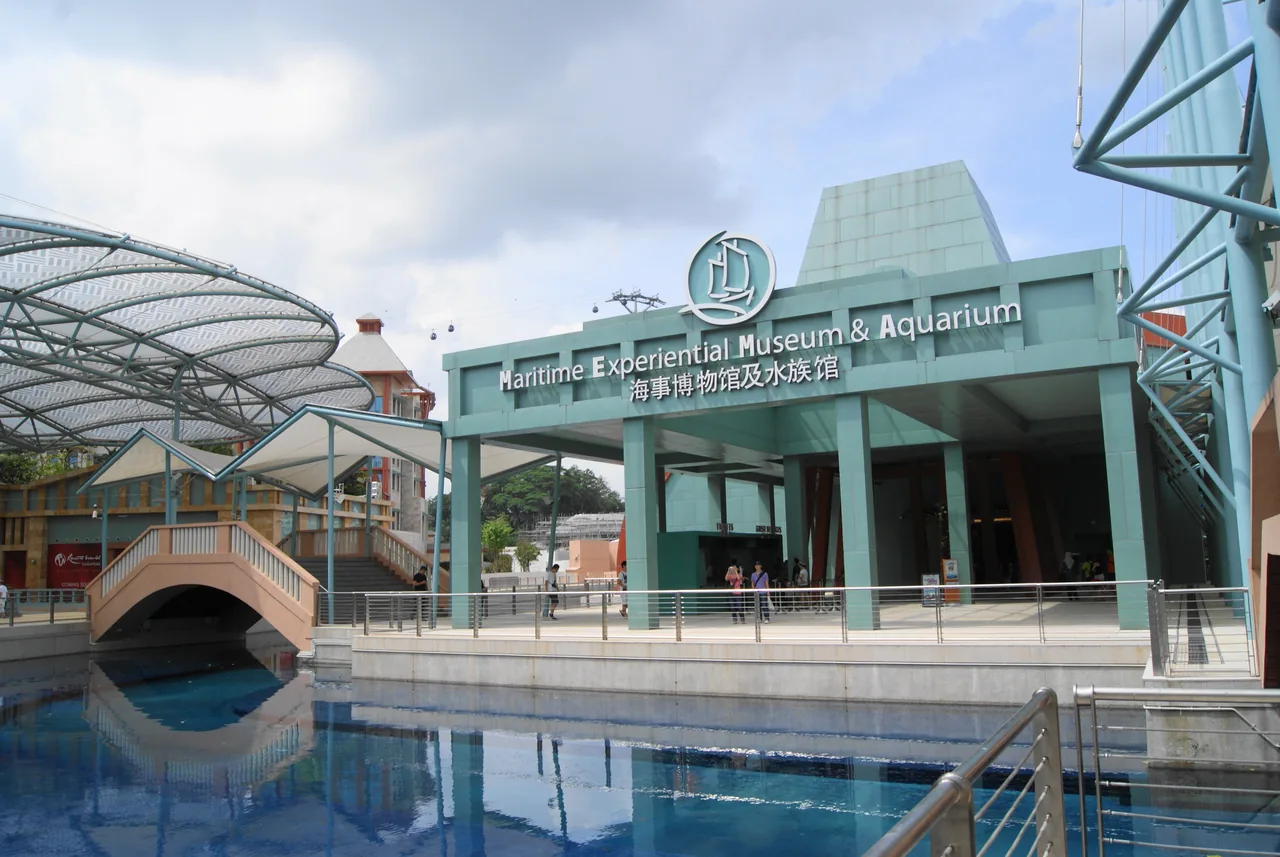
- The S.E.A. Aquarium on Sentosa closed in April 2025 and reopened on 24 July 2025 as the Singapore Oceanarium — a far bigger, reimagined attraction that is now three times the size of the old aquarium.
- It’s home to more than 100,000 marine animals from over 1,000 species, displayed across 22 themed zones grouped into six ‘chapters’ that tell the story of the ocean from the shallows to the deep sea.
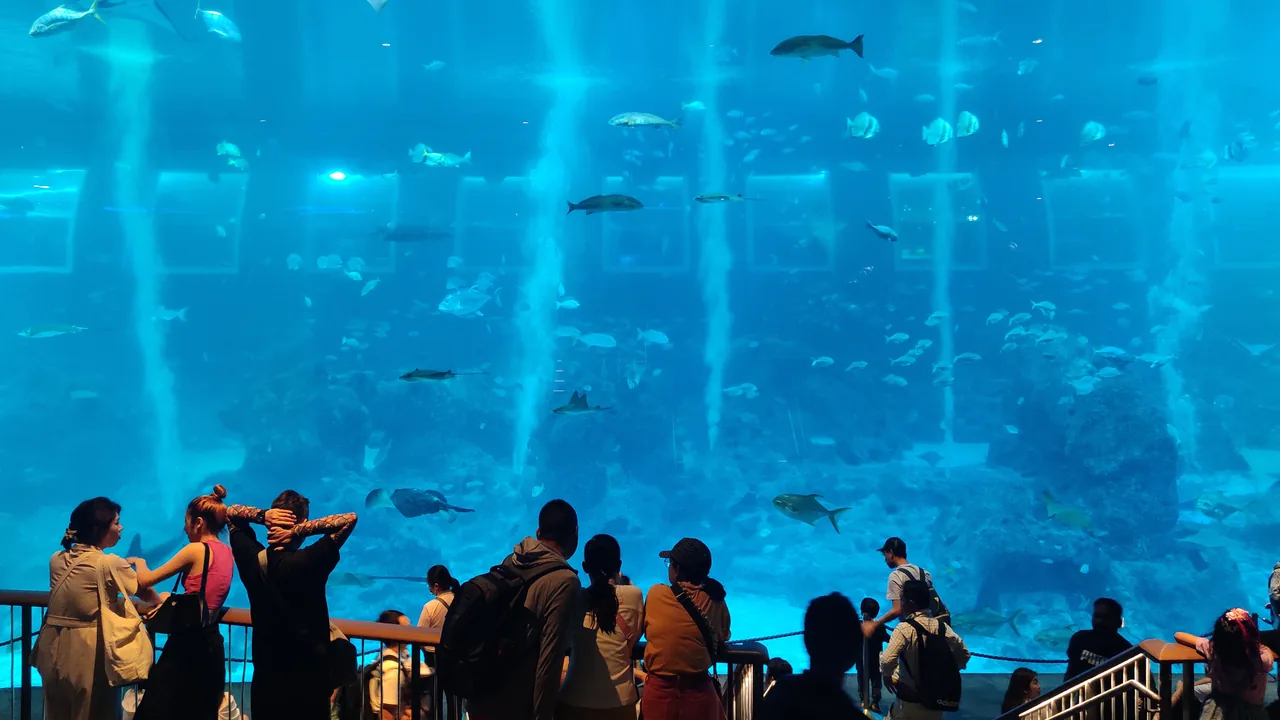
- The star is still the Open Ocean — one of the world’s largest viewing panels, holding around 18 million litres of water with manta rays, sharks, barracudas and shoals of 50,000 fish gliding past.
- It’s fully indoor and air-conditioned, stroller- and wheelchair-friendly, and a perfect rainy-day or hot-afternoon outing. Standard adult tickets are roughly S$50 (more at peak), with children, seniors and residents paying less.
- It sits at Resorts World Sentosa, easily reached via the Sentosa Express, cable car, bus or a walk — ideal to combine with Universal Studios and the rest of Sentosa.
| Location | Resorts World Sentosa, Sentosa Island |
|---|---|
| Opening hours | Daily ~10am–7pm (last entry ~6pm) |
| Tickets | Adult ~S$50 (peak ~S$55); under-4 free |
| Time needed | 2–3 hours (half-day with kids) |
| Getting there | Sentosa Express to Resorts World station |
| Best for | Families, a rainy day or hot afternoon |
| Highlight | The giant Open Ocean tank; 22 themed zones |
1. From S.E.A. Aquarium to Singapore Oceanarium: what’s changed
2. The Open Ocean: the giant tank
3. The 22 zones across six chapters
4. Shark Seas
5. Ocean Wonders: the jellyfish galleries
6. The Deep Sea & Whale Fall
7. Tickets & 2026 prices
8. Opening hours & best time to visit
9. How to get there
10. How long to spend & is it worth it?
11. Visiting with kids
12. Special experiences & dining
13. Tips for the best visit
14. What’s nearby on Sentosa
15. Practical info & planning
If you’re researching the “S.E.A. Aquarium,” here’s the key update: it has been transformed. In 2025 the much-loved S.E.A. Aquarium on Sentosa closed for a major rebuild and reopened as the Singapore Oceanarium — three times larger, with 22 themed zones, new deep-sea galleries and a stronger focus on marine science and conservation, while keeping the spectacular giant tank that made the original famous. It remains one of the largest oceanariums in the world, home to more than 100,000 animals across 1,000-plus species, and because it’s entirely indoor and air-conditioned it’s one of Singapore’s best wet-weather and midday-heat attractions. This guide covers exactly what’s changed, the 22 zones and their highlights, the giant Open Ocean tank, 2026 ticket prices and opening hours, how to get there on Sentosa, how long to spend, visiting with kids, and the tips that make the most of a visit. Pair it with our Sentosa Island guide and our complete Singapore travel guide to plan the rest of your trip.
1. From S.E.A. Aquarium to Singapore Oceanarium: what’s changed
The S.E.A. Aquarium on Sentosa has been completely transformed: it closed at the end of April 2025 and reopened on 24 July 2025 as the Singapore Oceanarium — about three times larger, with 22 themed zones and a new focus on marine science and conservation, while keeping the famous giant tank.
If you’ve seen older guides referring to the ‘S.E.A. Aquarium,’ they’re describing the previous version of this same attraction at Resorts World Sentosa. The rebuilt Singapore Oceanarium is bigger and far more immersive, telling the story of the ocean across six themed ‘chapters’ — from sunlit shallows down to the crushing deep sea — with new galleries, shows and interactive, educational exhibits alongside the spectacular marine life. It remains one of the largest oceanariums in the world, home to more than 100,000 animals from over 1,000 species. The headline experiences old fans loved, above all the enormous Open Ocean viewing panel, have been kept and enhanced. So whether you remember the S.E.A. Aquarium or are visiting for the first time, this guide reflects the current, expanded attraction — and what to expect in 2026.
2. The Open Ocean: the giant tank
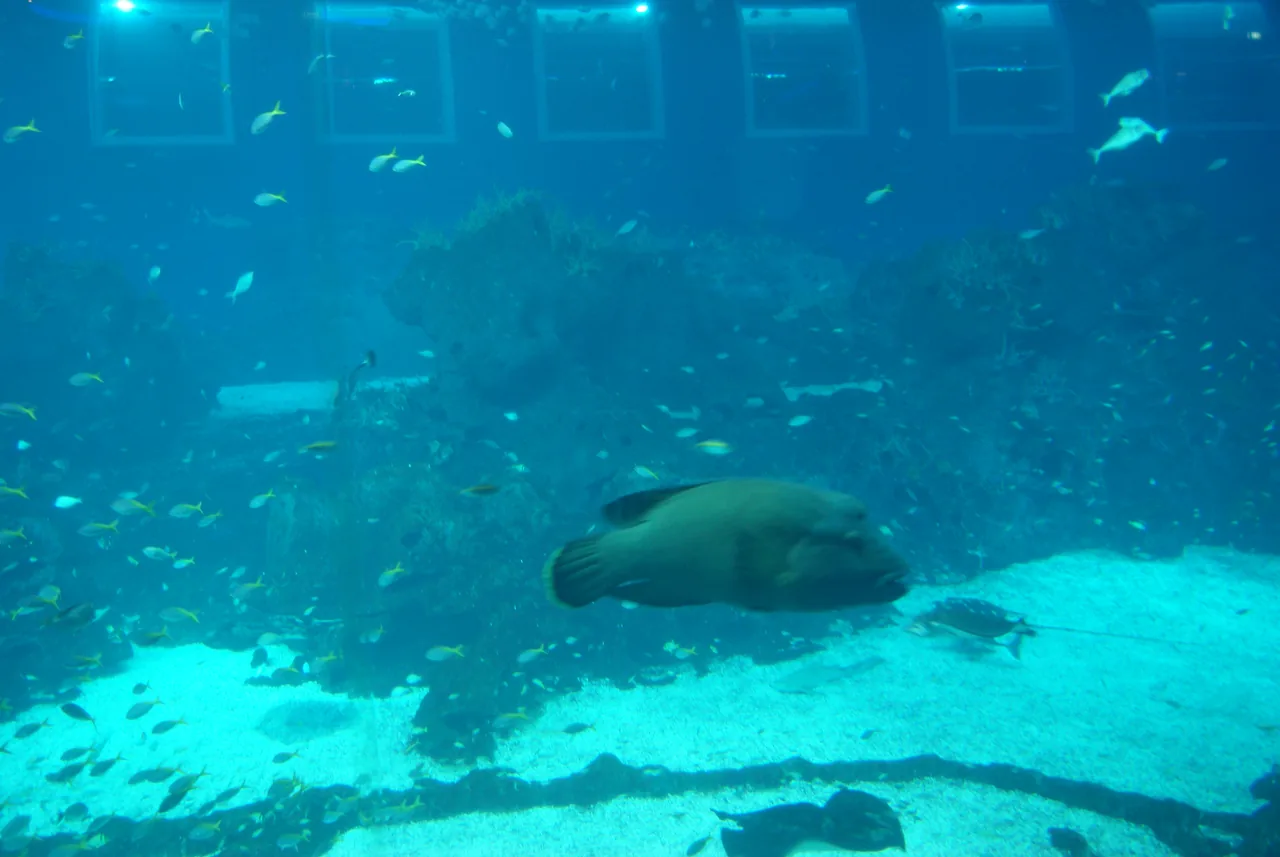
The undisputed highlight is the Open Ocean habitat — one of the world’s largest aquarium viewing panels, holding around 18 million litres of water, where manta rays, sharks, barracudas, giant groupers and shoals of tens of thousands of fish drift past a window the size of a cinema screen.
Kept from the S.E.A. Aquarium era and still the centrepiece, the Open Ocean is genuinely mesmerising: there’s seating in front of the vast acrylic panel, and visitors of every age happily sit and watch the slow, hypnotic parade of marine life. Graceful manta rays bank past, sharks cruise the blue, and a living river of 50,000 schooling fish shimmers and turns as one. It’s the kind of sight that makes children gasp and adults lose track of time, and it’s the single best reason the Oceanarium remains a must-see. Time your visit so you can sit here without the crowds — ideally a weekday morning soon after opening.
3. The 22 zones across six chapters
The Singapore Oceanarium organises its 100,000-plus animals into 22 themed zones grouped into six ‘chapters,’ taking you on a journey from the shallow, sunlit coast down to the dark, mysterious deep sea.
Rather than a single big hall, the new layout is a story you walk through, with each chapter building on the last. You’ll move from coastal and reef habitats teeming with colour, through open-water and shark zones, into jellyfish galleries and finally the deep-sea chapter, where the lighting drops and the creatures get stranger. Along the way are feeding presentations, talks and interactive, educational displays that lean into the Oceanarium’s conservation mission. Below is a quick map of the experience.
| Chapter / area | What you’ll see |
|---|---|
| Coast & reefs | Colourful tropical fish, coral habitats, shallow-water life |
| Open Ocean | The giant 18-million-litre tank — manta rays, sharks, schooling fish |
| Shark Seas | 200+ sharks, including scalloped hammerheads and silvertips |
| Ocean Wonders | Glowing sea jellies (jellyfish) galleries |
| The Deep Sea | Bottom-dwellers, sunken-ship habitats, low-light galleries |
| Whale Fall & Seamount | A near life-sized whale fall skeleton and deep-sea ecosystem |
Exact zone names and order can evolve, so treat this as a guide to the experience rather than an exact floor plan — follow the signed route and let the story unfold.
4. Shark Seas
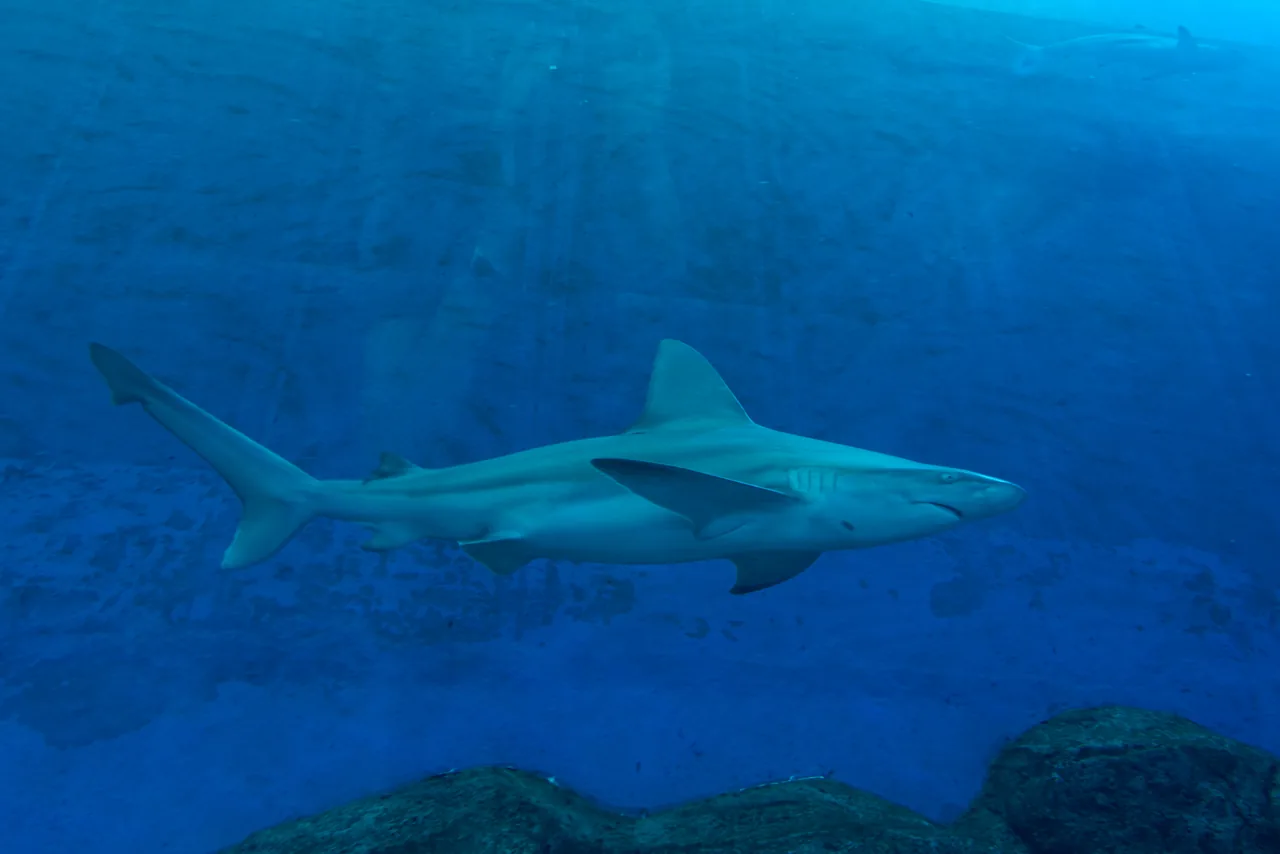
One of the most thrilling zones is Shark Seas, home to more than 200 sharks of many species — including the unmistakable scalloped hammerhead and the silvertip shark — some of them endangered.
Walking through tunnels and past floor-to-ceiling windows, you come eye to eye with these apex predators as they glide overhead and alongside. It’s a powerful, slightly spine-tingling experience, and a great chance to see how graceful and varied sharks really are, far from their fearsome reputation. The Oceanarium uses the zone to highlight shark conservation — many species are threatened by overfishing — so it’s as educational as it is exciting. For families, it’s reliably one of the kids’ favourite parts of the visit.
5. Ocean Wonders: the jellyfish galleries
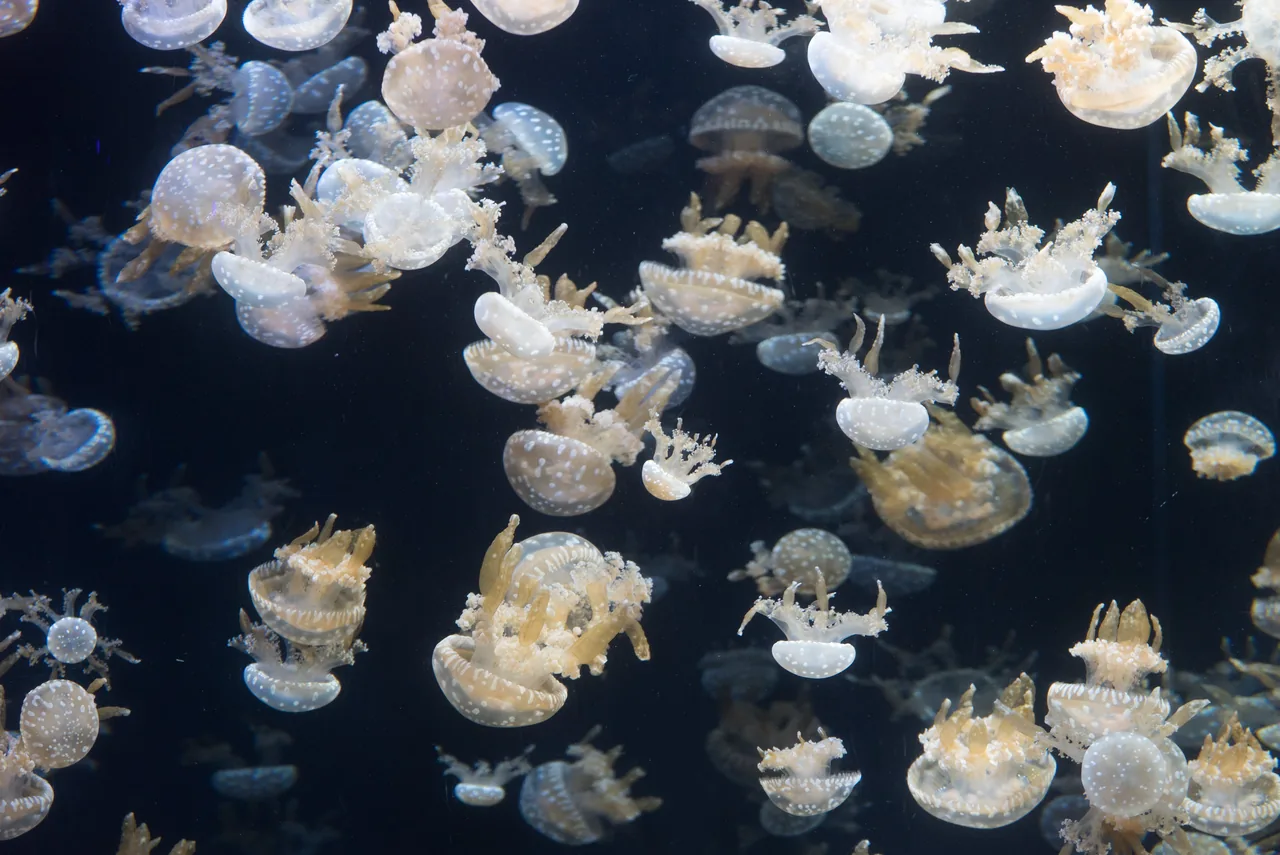
The Ocean Wonders zone, a favourite carried over from the old S.E.A. Aquarium, is dedicated to mesmerising sea jellies — glowing, pulsing jellyfish lit in shifting colours against dark backdrops.
Jellyfish are among the ocean’s oldest survivors, drifting through the seas for more than 500 million years, and seeing them up close — translucent bells trailing delicate tentacles, lit in blues, purples and pinks — is hypnotic and beautiful. The darkened galleries make them seem to float in space, and they’re one of the most photogenic parts of the whole Oceanarium (turn off your flash). Allow a few minutes to simply watch them drift; it’s a calm, almost meditative contrast to the big-tank drama elsewhere.
6. The Deep Sea & Whale Fall
The newest chapter takes you into the deep sea — the dark, high-pressure world far below the surface — with low-light galleries of bottom-dwelling creatures, artificial habitats like sunken ships, and the dramatic Whale Fall zone.
This is where the expanded Oceanarium really shows its ambition. As the lighting drops and the music deepens, you enter a realm most people never glimpse, meeting the strange, beautiful creatures adapted to crushing depths and eternal darkness. The standout is the Whale Fall and Seamount zone, built around a near life-sized replica of a whale fall skeleton — the way a dead whale sinking to the seabed becomes an entire ecosystem that feeds deep-sea life for decades. It’s a striking, slightly eerie highlight that didn’t exist in the old aquarium, and a memorable end to the journey from shallows to abyss.
7. Tickets & 2026 prices
The Singapore Oceanarium uses dynamic pricing, with cheaper non-peak and pricier peak rates — peak generally covers weekends, public holidays and the whole of June and December. Approximate 2026 prices are below; always confirm on the official site and book online to save.
| Ticket (one-day) | Non-peak | Peak |
|---|---|---|
| Standard adult | ~S$50 | ~S$55 |
| Standard child (4–12) / senior | ~S$39 | ~S$43 |
| Singapore resident adult | ~S$42 | ~S$49 |
| Singapore resident child / senior | ~S$35 | ~S$39 |
| Children under 4 | Usually free (confirm) | |
To get the best value: book online in advance (typically cheaper than the gate and lets you secure a date), visit on a non-peak weekday to dodge the higher peak pricing and crowds, and if you’ll do several Sentosa attractions, check combo tickets and passes. Booking platforms often discount the Oceanarium, so it’s worth comparing prices before you pay at the door. For more ways to save across your trip, see our Singapore budget guide.
8. Opening hours & best time to visit
The Singapore Oceanarium is open daily, generally from 10am to 7pm, with last admission about an hour before closing — and the best time to go is a weekday morning right after opening, when it’s quietest.
Arriving at 10am on a weekday means you can stand at the Open Ocean panel and walk the zones before the crowds build, which makes a big difference to the experience (and the photos). The busiest — and peak-priced — times are weekends, public holidays, and the June and December school holidays, so avoid those if you can. Because the whole attraction is indoor and air-conditioned, it’s also the ideal thing to schedule for the hottest part of the afternoon or a sudden tropical downpour. Hours can change on special dates, so check the official site before you go. For when to plan your overall trip, see our best time to visit Singapore guide.
9. How to get there
The Singapore Oceanarium is at Resorts World Sentosa on Sentosa Island, and the easiest way to reach it is the MRT to HarbourFront, then the Sentosa Express monorail to the Resorts World station, from where it’s a short signposted walk.
You have several options to get onto Sentosa and to the Oceanarium:
- Sentosa Express (easiest): take the MRT to HarbourFront, go up to VivoCity Level 3, and ride the Sentosa Express monorail to the Resorts World stop; the Oceanarium is a short walk.
- Singapore Cable Car (scenic): a memorable, view-filled way over to Sentosa — a treat in itself, especially with kids.
- On foot: walk across the sheltered Sentosa Boardwalk from VivoCity — pleasant and easy.
- Bus / Grab / taxi: buses serve Resorts World, and a Grab or taxi drops you close to the entrance.
For all the ways onto Sentosa, costs and tips, see our Sentosa Island guide, and our MRT & transport guide for getting around the city.
10. How long to spend & is it worth it?
Allow about 2 to 3 hours for a comfortable visit, taking in all 22 zones, the Open Ocean tank and the deep-sea galleries — and for most visitors, especially families, it’s well worth it.
That timing lets you walk the full journey without rushing, sit a while at the giant tank, catch a feeding presentation and explore the new Whale Fall and deep-sea zones. With young children who want to linger, or if you stop for every show, it can comfortably fill half a day. Is it worth the ticket? The expanded Oceanarium is bigger and more immersive than the old S.E.A. Aquarium, and the Open Ocean panel alone is a genuine wow — so as long as you pre-book, avoid peak dates and don’t rush, it delivers. If you only do one indoor attraction on Sentosa, make it this. Combine it with the rest of the island for a full, varied day out.
11. Visiting with kids
The Singapore Oceanarium is one of the city’s best family attractions — entirely indoor, air-conditioned, flat and stroller-friendly, with big tanks, sharks and jellyfish that captivate children of every age.
The whole route is accessible by ramp and lift, so prams and wheelchairs are no trouble, and there are baby-care facilities on site. Little ones love pressing up to the glass as sharks and rays glide past, and the glowing jellyfish galleries are a hit with all ages. It’s a brilliant rainy-day or hot-afternoon plan, easy to pace with breaks, and under-4s usually enter free (confirm current policy). Bring a light layer — the air-conditioning is strong — and let kids set the pace at the Open Ocean tank, where they’ll happily watch for ages. For more family planning, see our Singapore with kids guide.
12. Special experiences & dining
Beyond the standard visit, the Singapore Oceanarium offers special experiences — including behind-the-scenes tours, talks and even an overnight ‘Ocean Dreams’ sleepover beside the tanks — plus dining options on site.
The reimagined Oceanarium leans into its role as a marine-science and education hub, so look out for guided programmes, feeding sessions and interactive talks that go deeper than a standard walk-through. The headline add-on is Ocean Dreams, a glamping-style overnight experience that lets guests sleep beside the marine life — a bucket-list treat for ocean-loving families (book well ahead). There are cafes and dining options at the Oceanarium and across Resorts World Sentosa, so it’s easy to make a meal of it. Check the official site for the current line-up of experiences, show times and any that need separate booking.
13. Tips for the best visit
A few simple moves make a big difference to your Oceanarium visit — from beating the crowds to getting better photos.
- Book online in advance — usually cheaper than the gate, and you can pick a non-peak date.
- Go on a weekday morning right after the 10am opening for the quietest views of the Open Ocean tank.
- Avoid peak dates (weekends, public holidays, June and December) for lower prices and smaller crowds.
- Turn off your camera flash — it’s better for the animals and gives far nicer photos, especially of the jellyfish.
- Bring a light layer: the air-conditioning is strong throughout.
- Allow 2–3 hours, and sit a while at the Open Ocean panel — it’s the highlight.
- Combine with Sentosa: pair it with Universal Studios or the beaches for a full day, and consider a combo ticket.
14. What’s nearby on Sentosa
The Oceanarium is at Resorts World Sentosa, in the heart of Singapore’s resort island, so it’s easy to build a full day around it with theme parks, beaches and rides close by.
Right next door is Universal Studios Singapore, making the classic combo of a morning at the theme park and an afternoon in the cool Oceanarium. Elsewhere on the island you’ll find the free beaches (Siloso, Palawan and Tanjong), the Skyline Luge, the cable car, the SkyHelix and the Adventure Cove Waterpark — plenty to fill one or two days. The Oceanarium’s indoor, air-conditioned setting makes it the perfect midday or rainy-spell anchor for a Sentosa itinerary. For the whole island, beaches and how to get around it, see our complete Sentosa Island guide.
15. Practical info & planning
Here’s the essential practical information for planning your Singapore Oceanarium visit in 2026.
- Name: Singapore Oceanarium (formerly S.E.A. Aquarium), at Resorts World Sentosa, Sentosa Island.
- Opening hours: daily, generally 10am–7pm (last entry ~1 hour before close); check the official site for special dates.
- Tickets: dynamic pricing; standard adult ~S$50 (more at peak); children, seniors and residents pay less; under-4s usually free. Book online to save.
- Time needed: about 2–3 hours (up to half a day with kids).
- Accessibility: fully indoor, air-conditioned, flat, ramp- and lift-served — easy for strollers and wheelchairs.
- Getting there: Sentosa Express to Resorts World, or cable car, bus or the Sentosa Boardwalk.
- Best for: families, a rainy day or hot afternoon, and anyone who loves marine life.
With your visit planned, use our complete Singapore travel guide to map out the rest, dive into the Sentosa and Universal Studios guides, and check our best time to visit and budget guides to fine-tune your trip.