
Singapore Layover Guide: What to Do in 6, 8, 12 or 24 Hours
The complete playbook for a stopover at Changi: whether you can leave the airport, exactly how much time you need, how to reach the city and back, and a tested hour-by-hour plan for every layover length.
| Can you leave the airport? | Yes, if you can enter Singapore (visa-free or with a visa); strict airside transit needs nothing |
|---|---|
| Must-do before you exit | Submit the free SG Arrival Card online within 3 days of arrival (only if you leave) |
| Minimum layover to explore | About 5–6 hours; 7+ is comfortable |
| Changi → city (MRT) | ~30–40 min, ~S$2 (one transfer at Tanah Merah)Map |
| Changi → city (taxi/Grab) | ~20–30 min, ~S$20–40 incl. airport surcharge |
| Free option | Free Singapore Tour — 2.5 hrs, for layovers of 5.5–24 hrs |
| Sleep | Transit hotels (Aerotel, Ambassador, YOTELAIR) + free snooze lounges |
| Luggage | Left-baggage counters in every terminal, from ~S$3–9 per bag/day |
1. Can you leave the airport on a Singapore layover?
2. How much layover time do you actually need?
3. Quick decision: should you leave or stay?
4. The Free Singapore Tour (yes, it’s actually free)
5. Getting from Changi to the city — every option
6. A 6-hour layover: the one-stop dash (hour by hour)
7. An 8–12 hour layover: see Marina Bay properly
8. A 12–24 hour (overnight) layover: a real taste of the city
9. Staying airside: the best of Changi & Jewel
10. Free things to do inside the terminals
11. Where to rest or sleep at Changi
12. Luggage storage during your layover
13. Layover by traveller type
14. Arriving at night or on a red-eye
15. Money, SIM, Wi-Fi & connectivity
16. Practical tips & common mistakes
17. Is a Singapore layover worth it?
A layover at Changi is one of the few anywhere that’s worth building a trip around. The airport is a real attraction in its own right, the city is famously safe and easy to dip into, and the train drops you in the middle of the skyline in about half an hour. So the only real call to make is how to split your stopover: how long to stay airside, and when it’s worth clearing immigration to see the city itself. This guide settles it by the clock. You’ll learn whether you can leave at all, the one document you must submit first (the SG Arrival Card), exactly how much time you need, the fastest ways into the city and back, where to sleep and store bags, and a tested, hour-by-hour plan for a 6, 8, 12 or 24-hour layover — plus the things to do without ever leaving the terminal. Read it alongside our Changi & Jewel guide for the airport itself and our complete Singapore guide for everything beyond it.
1. Can you leave the airport on a Singapore layover?
For most travellers, yes — if your passport lets you enter Singapore, you clear immigration, spend a few hours in the city, and come back for your onward flight. The one catch almost everyone forgets: you must submit the free SG Arrival Card online before you arrive.
If you hold a passport that enters Singapore visa-free (most of Europe, North America, the UK, Australia, Japan, South Korea and many ASEAN countries), leaving is as simple as following the ‘Arrival’ signs, clearing immigration and walking out — there’s no special transit pass to arrange. When you return, you re-enter through departures and check in as normal. If you’d normally need a visa to enter Singapore, you usually need that visa to leave the transit area; the exception is the Visa Free Transit Facility (VFTF), which lets eligible passengers — including many Indian and Chinese nationals with a confirmed onward ticket — stay up to 96 hours. Rules change, so confirm with the official ICA (Immigration & Checkpoints Authority) for your nationality before you fly.
And remember: staying inside Changi requires no card and no visa at all, so a layover is never wasted even if you can’t or don’t want to leave.
2. How much layover time do you actually need?
Give yourself a layover of at least 5–6 hours before you plan to leave the airport — and the more buffer, the calmer your stop. Under five hours, stay airside.
Work backwards from your onward flight and the numbers make the decision for you. Immigration and walking to the train eat about 45 minutes; the train is 30–40 minutes each way; and you should be back through security 2.5–3 hours before departure for re-check-in and screening. Whatever is left is your real time in the city.
| Step | Rough time |
|---|---|
| Clear immigration + walk to the MRT | ~45 min |
| Train into the city | 30–40 min each way |
| Back at the airport before the flight | 2.5–3 hrs (re-check-in + security) |
| So, city time on a 6-hour layover | ~1–1.5 hrs (one quick sight) |
| City time on a 9-hour layover | ~4 hrs (Marina Bay properly) |
| City time on a 12-hour layover | ~6–7 hrs (two areas + a meal) |
3. Quick decision: should you leave or stay?
If you can enter Singapore, have 6+ hours, and it isn’t the middle of the night, leave. Otherwise, the airport is a genuinely great place to wait.
Run your layover through this quick filter before you commit:
| Your situation | Best move |
|---|---|
| Under 5 hours | Stay airside — Jewel + a garden + a meal |
| 5–6 hours, daytime | One quick city sight (Marina Bay) or the Free Singapore Tour |
| 7–12 hours, daytime | Leave — do the full Marina Bay loop and eat in the city |
| 12–24 hours, overnight | City highlights + sleep (transit hotel or city room) |
| Arrive after ~10pm | City is winding down — light shows then airport rest |
| Visa needed / no SG Arrival Card | Stay airside; sort documents for next time |
When in doubt, lean conservative. Singapore is one of the only airports where staying in is a pleasure rather than a penalty, so there’s no shame in skipping the city run if the timing is tight.
4. The Free Singapore Tour (yes, it’s actually free)
Changi runs a complimentary 2.5-hour guided bus tour for transit passengers of any nationality — the easiest way to see a slice of the city with zero planning and a guaranteed on-time return.
To qualify, your layover must be between 5.5 and 24 hours and your flight times must line up with a departure. There are normally two themes: a City Sights tour (Marina Bay, the civic district and the colonial core) and a Heritage tour (Chinatown, Little India and Kampong Glam)Map, each lasting about two and a half hours with a guide and air-conditioned coach. Register at the Free Singapore Tour counters in the transit areas of Terminal 2 (near Gate F50) and Terminal 3 (near Gates A1–A8), or book online in advance. The money changers and ATMs in the airport all run 24 hours; where they are is set out in our guide to money in Singapore.
Two things to get right: arrive at the counter at least 90 minutes before your tour, and make sure your checked bags are tagged through to your final destination so you’re not tied to the baggage hall. The trade-off versus going solo is freedom — you follow the bus’s route and timing — but for a first visit, or a tight 6-hour stop, it’s a brilliant, risk-free way to step into the city and be handed back to the airport on schedule.
5. Getting from Changi to the city — every option
The MRT is the cheapest and most dependable way in (about S$2, 30–40 minutes); a taxi or Grab is faster door-to-door for around S$20–40.
| Option | Time | Cost | Notes |
|---|---|---|---|
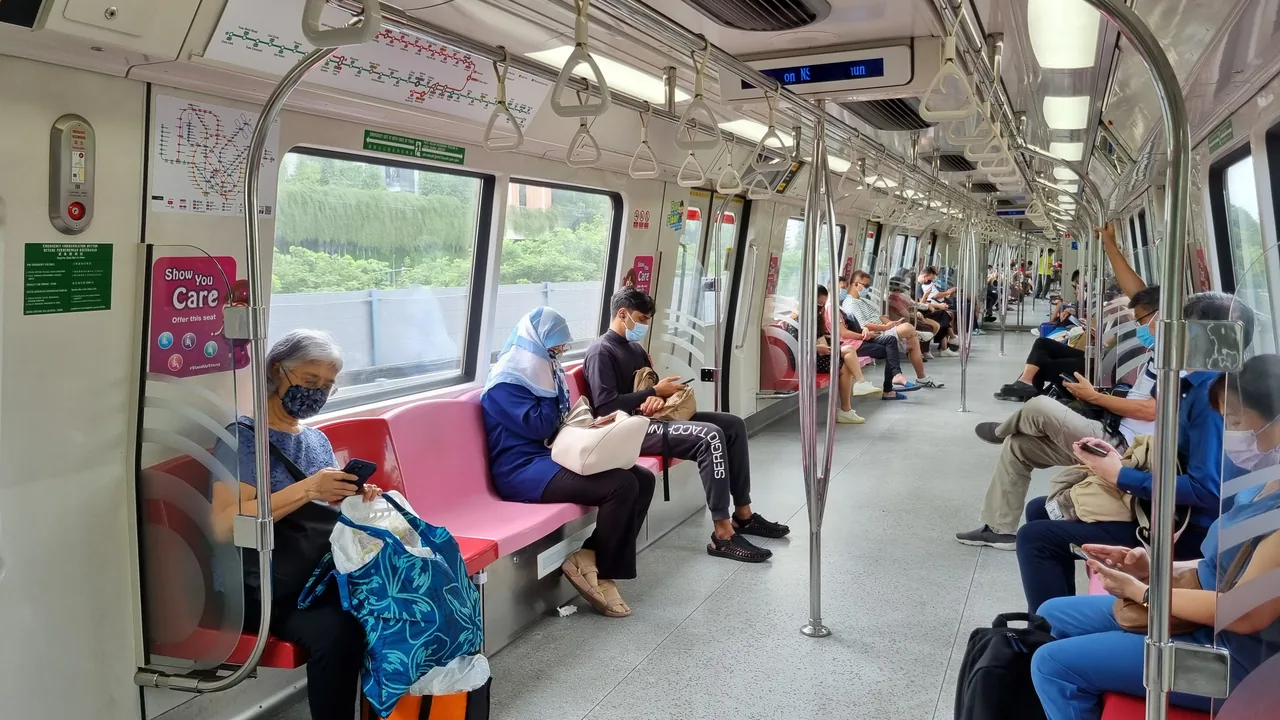
| MRT | 30–40 min | ~S$2 | One transfer at Tanah Merah; tap a card/phone |
| Taxi | 20–30 min | ~S$20–40 | + airport surcharge S$3 (S$5–6 Fri–Sun eve) |
| Grab (ride-hail) | 20–30 min | ~S$18–35 | Fixed fare upfront; needs the app + data |
| Hop-on hop-off bus | flexible | day ticket | Good for sightseeing without planning |
By MRT, step by step: the station sits under Terminals 2 and 3; if you land at Terminal 1 or 4, ride the free Skytrain over first. Take the short shuttle train two stops to Tanah Merah, cross the platform onto the East–West (green) line, and stay on it into the centre — Bugis, City Hall and Raffles Place all sit right by Marina Bay. Trains run roughly 5:30am to 11:18pm, so a very late arrival may need a taxi. By taxi or Grab, you’re dropped at the door — worth it when your window is tight, you’re in a group, or it’s late. For the full network, fares and passes, see our Singapore MRT and transport guide.
6. A 6-hour layover: the one-stop dash (hour by hour)
Six hours is the realistic minimum to leave. Pick one thing, do it well, and watch the clock — Marina Bay is the obvious choice.
Here’s a tested timeline that keeps your safety buffer intact:
| Clock | What you’re doing |
|---|---|
| 0:00 | Land; submit SG Arrival Card if you haven’t; clear immigration |
| 0:45 | Store carry-on; tap into the MRT at T2/T3 |
| 1:20 | Arrive Bayfront; walk the Marina Bay waterfront |
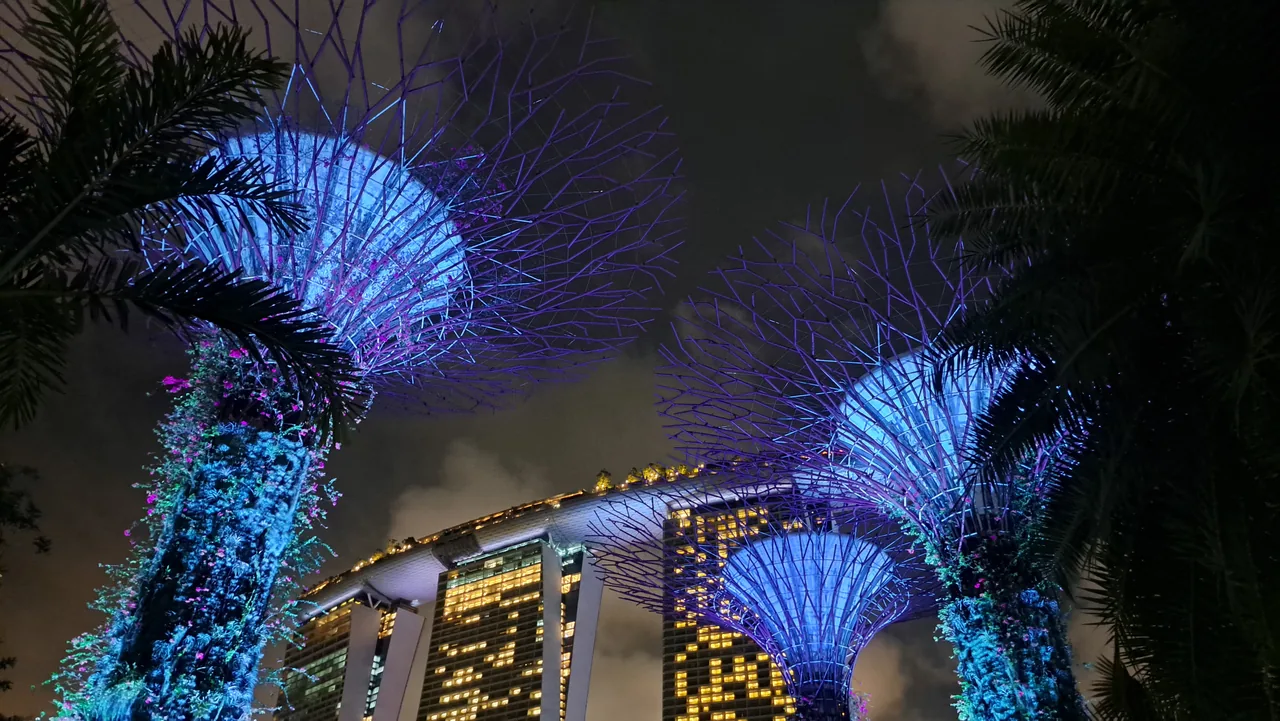
| 1:30–2:45 | Gardens by the BayMap outdoor Supertrees, MBS waterfront, the Merlion; quick local bite |
| 2:45 | Back on the MRT to Changi |
| 3:25 | Collect bag; back through security |
| 3:30 onward | ~2.5 hrs buffer before a 6-hour flight connection |
It’s tight but real, and a single Marina Bay loop — the Supertrees, the Marina Bay Sands waterfront and the Merlion — tells you exactly why people stop here on purpose. If anything runs late, cut the visit short rather than the buffer.
7. An 8–12 hour layover: see Marina Bay properly
Eight to twelve hours is the sweet spot — enough to see the heart of Singapore without rushing, eat well, and still make your flight in comfort.
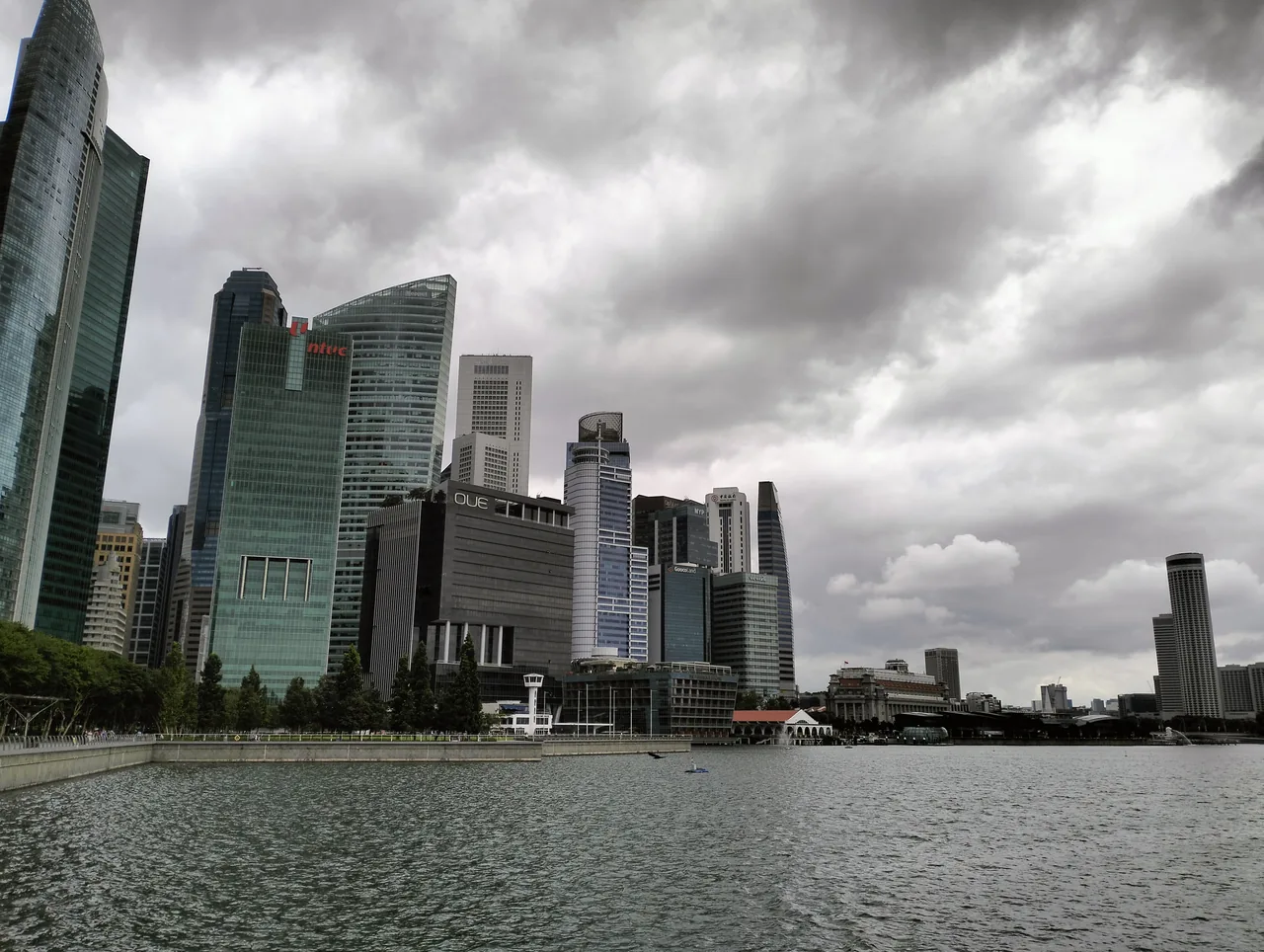
Take the train to Bayfront and walk the whole Marina Bay loop at a relaxed pace: the Gardens by the Bay (the cooled Flower DomeMap and Cloud ForestMap are worth the ticket in the heat), the Marina Bay Sands SkyPark or shops, the Helix BridgeMap, and round to the Merlion and the EsplanadeMap. Break for a proper meal at a hawker centre — Lau Pa SatMap and Maxwell are both close — and if the timing fits, you’re perfectly placed for the free evening light shows in our Marina Bay at night guide. With an hour or two to spare, add the temples and street food of Chinatown, a short ride or walk away.
8. A 12–24 hour (overnight) layover: a real taste of the city
With a half to full day, treat it as a mini one-day trip: cover the highlights, add a second neighbourhood, eat properly, and — crucially — sleep.
Do the Marina Bay loop as above, then add an area with its own character: Chinatown for temples and food, Little India or Kampong Glam for colour and markets, or Orchard Road for air-conditioned shopping between flights. If your stop runs overnight, the rhythm is simple: light shows and a hawker dinner in the evening, then a few hours’ sleep, then one morning sight before you head back. Where you sleep depends on whether you’ve entered the country — a transit hotel keeps you airside, a city or Jewel-connected room is an option once you’re through immigration. Keep it loose; an overnight layover is for a taste, not a marathon. Use our budget guide to keep a one-day stop cheap and our weather guide to plan around afternoon heat or rain.
9. Staying airside: the best of Changi & Jewel
If you can’t leave — or simply don’t want to — Changi is one of the few airports that’s a destination in itself. You can fill four or five hours without ever clearing immigration.
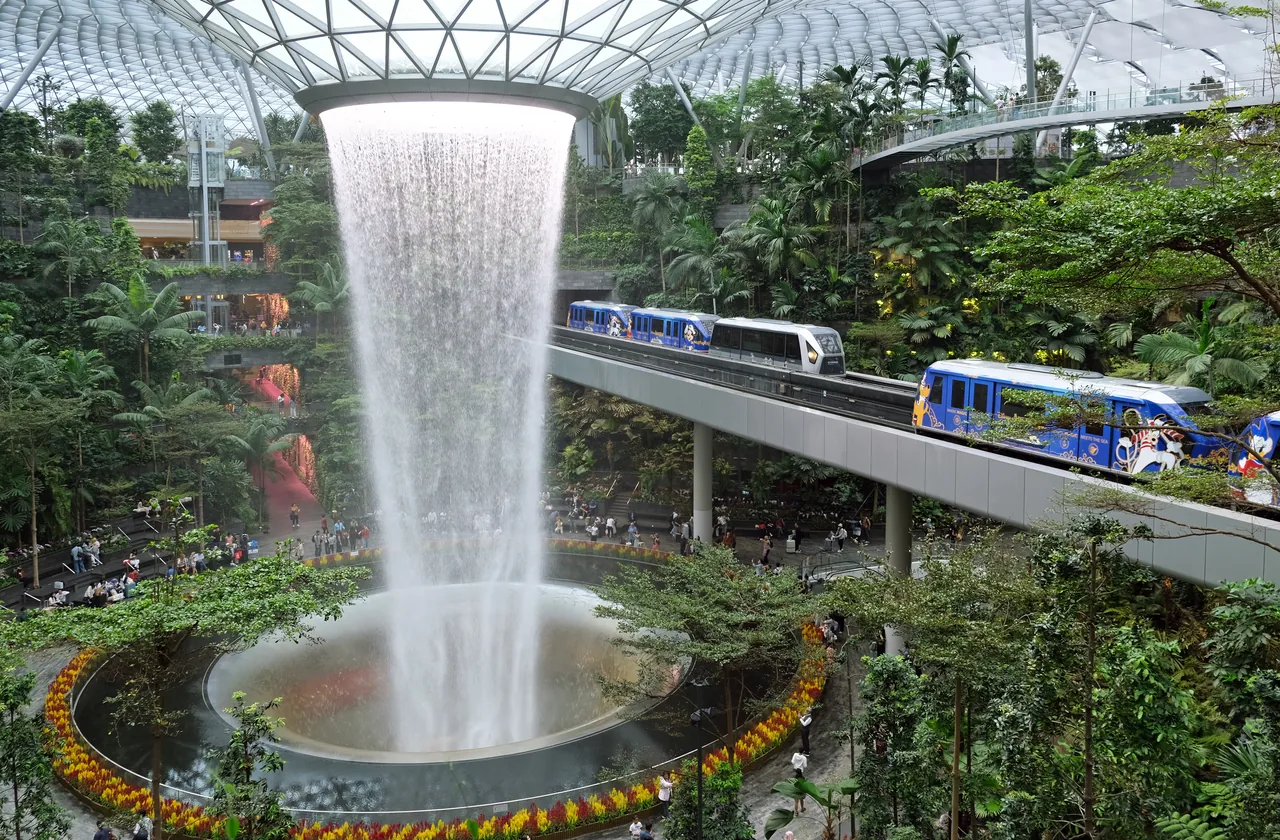
The headline is Jewel, the nature-and-retail complex at the heart of the airport, where the Rain Vortex — the world’s tallest indoor waterfall — pours seven storeys through a glass dome ringed by the lush Shiseido Forest Valley (both free). Up on Level 5, Canopy Park (a small paid entry, around S$8, with extra-charge add-ons) packs in hedge and mirror mazes, the bouncing and walking Sky Nets, the Discovery Slides, foggy bowls and topiary. The Changi Experience Studio is a paid interactive attraction for a longer wait. Note that Jewel sits landside, so reaching it from the transit area means clearing immigration — most strict-transit passengers enjoy the terminals instead, which are loaded with their own free attractions (next section). Our full Changi & Jewel guide maps it out terminal by terminal.
10. Free things to do inside the terminals
Each terminal hides free gardens, art and entertainment, so you can fill a wait without spending a cent — and most of it is airside, no immigration required.
- Themed gardens: the Butterfly Garden (Terminal 3), Sunflower Garden (Terminal 2), Cactus Garden (Terminal 1 rooftop), Orchid Garden and Water Lily Garden — green, calm, and free.
- The tallest slide in any airport (Terminal 3) and play areas for kids.
- Free 24-hour movie theatres (Terminals 2 and 3) plus entertainment and gaming decks.
- Art installations like the Kinetic Rain sculpture and the Social Tree (Terminal 1).
- Snooze lounges, foot-reflexology paths and free Wi-Fi throughout.
String two or three of these together with a meal and a wander and a five-hour airside layover disappears comfortably. For families especially, the gardens, slides and play zones are a lifesaver between flights — more in our Singapore with kids guide.
11. Where to rest or sleep at Changi
From a free reclining chair to a private transit-hotel room, Changi is built for resting between flights — pick by how much real sleep you need.
| Option | Where | Rough cost |
|---|---|---|
| Snooze lounges & rest areas | All terminals (airside) | Free |
| Pay-per-use lounges (shower, food) | All terminals | From ~S$50 |
| Aerotel transit hotel | Terminal 1 (airside) | ~S$90–130 / 6-hr block |
| Ambassador Transit Hotel | Terminals 2 & 3 (airside) | ~S$100–150 / 6-hr block |
| YOTELAIR | Jewel (landside) | From ~S$110 / short stay |
The big advantage of the transit hotels in Terminals 1–3 is that they’re airside: you can shower and sleep without clearing immigration, which is ideal if you can’t enter the country or just don’t want the hassle. YOTELAIR at Jewel is landside, so it suits travellers who’ve already entered Singapore. On a 12–24 hour overnight stop, even a single six-hour block transforms the onward flight; prices rise around peak travel periods, so book ahead if you can. For a full breakdown of Changi’s pay-per-use lounges (Plaza Premium, SATS Premier, Ambassador Transit) and which one is worth it, see our Changi Airport lounge guide.
12. Luggage storage during your layover
Don’t drag your bags around the city — Smarte Carte left-baggage counters operate in every terminal, and most connecting passengers only have carry-on to store anyway.
| Item | First 24 hours (approx.) |
|---|---|
| Loose item | from ~S$3 |
| Small bag (under 10 kg) | ~S$3–5 |
| Large bag (over 10 kg) | ~S$5–9 |
| Odd-sized item | ~S$9+ |
Each additional 24-hour period costs a little more. If your checked bags are tagged through to your final destination, they stay in the system — you won’t see them, and you travel into the city with just a day bag. If your bags are only checked to Singapore (common on separate tickets), collect them, store them here, and re-check them when you return. Confirm at the transfer desk before you leave the transit area.
13. Layover by traveller type
Short on time? Match your one outing to whatever matters most to you — it beats trying to see everything.
- Foodies: go straight to a hawker centre for chicken rice, laksa, satay and a kopi — the fastest, cheapest taste of the city.
- Photographers: the Marina Bay waterfront, the Merlion, and the Supertrees after dark, plus Jewel’s Rain Vortex if you stay in.
- Families with kids: the Gardens’ domes, the airport’s gardens, slides and play zones, and the easy, stroller-friendly MRT — see our Singapore with kids guide.
- Culture seekers: the temples and shophouses of Chinatown, or the Heritage Free Singapore Tour.
- First-timers on a tight clock: the Free Singapore Tour or a hop-on hop-off loop — maximum sights, minimum logistics.
- Just need to rest: stay airside with Jewel, a garden and a snooze lounge — no immigration, no stress.
14. Arriving at night or on a red-eye
A late arrival changes the maths: the city quietens after about 10–11pm, but the airport never sleeps and a couple of evening sights still work.
If you land in the early evening, you’re in luck — time a quick city run around the free light shows: Garden Rhapsody at the Supertrees (around 7:45pm and 8:45pm) and Spectra at Marina Bay Sands (around 8pm and 9pm, with a later show on weekends), both detailed in our Marina Bay at night guide. Land much later and most attractions and the MRT will be closing, so the smart play is to rest at the airport, sleep a few hours in a transit hotel or lounge, and either catch an early flight or head out when the city wakes. Don’t gamble a red-eye connection on a midnight taxi dash for a closed skyline — the airport itself is open, lit and comfortable all night.
15. Money, SIM, Wi-Fi & connectivity
For a few hours in Singapore you barely need cash — contactless cards run the MRT and most hawker stalls, and free Wi-Fi blankets the airport.
Tap a credit card or phone straight at the MRT gates and at the great majority of food stalls and shops; Visa, Mastercard and most contactless cards work, and you’ll rarely need to find an ATM for a short stop. Changi has fast free Wi-Fi throughout, but maps and ride-hailing in the city are easier with your own data — an eSIM activated on landing keeps Google Maps and Grab working the moment you step out, with no shop visit. We cover the best options in our transport guide. If you do want cash, withdraw a small amount at the airport rather than changing money in the city.
16. Practical tips & common mistakes
A smooth layover comes down to a few habits — and avoiding the handful of mistakes that turn a stopover stressful.
- Do submit the SG Arrival Card before you fly if you’ll leave the airport — it’s free and required.
- Don’t cut your return buffer — be back through security 2.5–3 hours before departure, full stop.
- Store your carry-on in left-baggage so you’re not hauling it around the city.
- Check your bag tags — know whether your checked luggage is through to your final destination or only to Singapore.
- Keep an indoor backup for the afternoon heat or a sudden storm — the Gardens’ domes, a mall, or Jewel.
- Don’t over-schedule — one or two sights done calmly beats five done in a panic.
- Don’t chase far-flung attractions (SentosaMap, Universal Studios)Map on a short layover — they eat your whole window.
17. Is a Singapore layover worth it?
If you have six hours or more and can enter the country, leaving the airport is one of the best-value short experiences in travel. If not, Changi is the rare airport you’ll be glad to be stuck in.
Few cities are as forgiving of a flying visit: it’s safe, signposted in English, effortless to get around, and the very best of it — the Marina Bay skyline, the Supertrees, a hawker meal — sits in a compact, fast-to-reach core. Know your numbers, submit your arrival card, keep a generous buffer, and let one good loop of the city be the highlight between flights. When you’re ready to plan a proper stay, our complete Singapore guide takes it from here — and our Changi & Jewel guide covers the airport in full.